
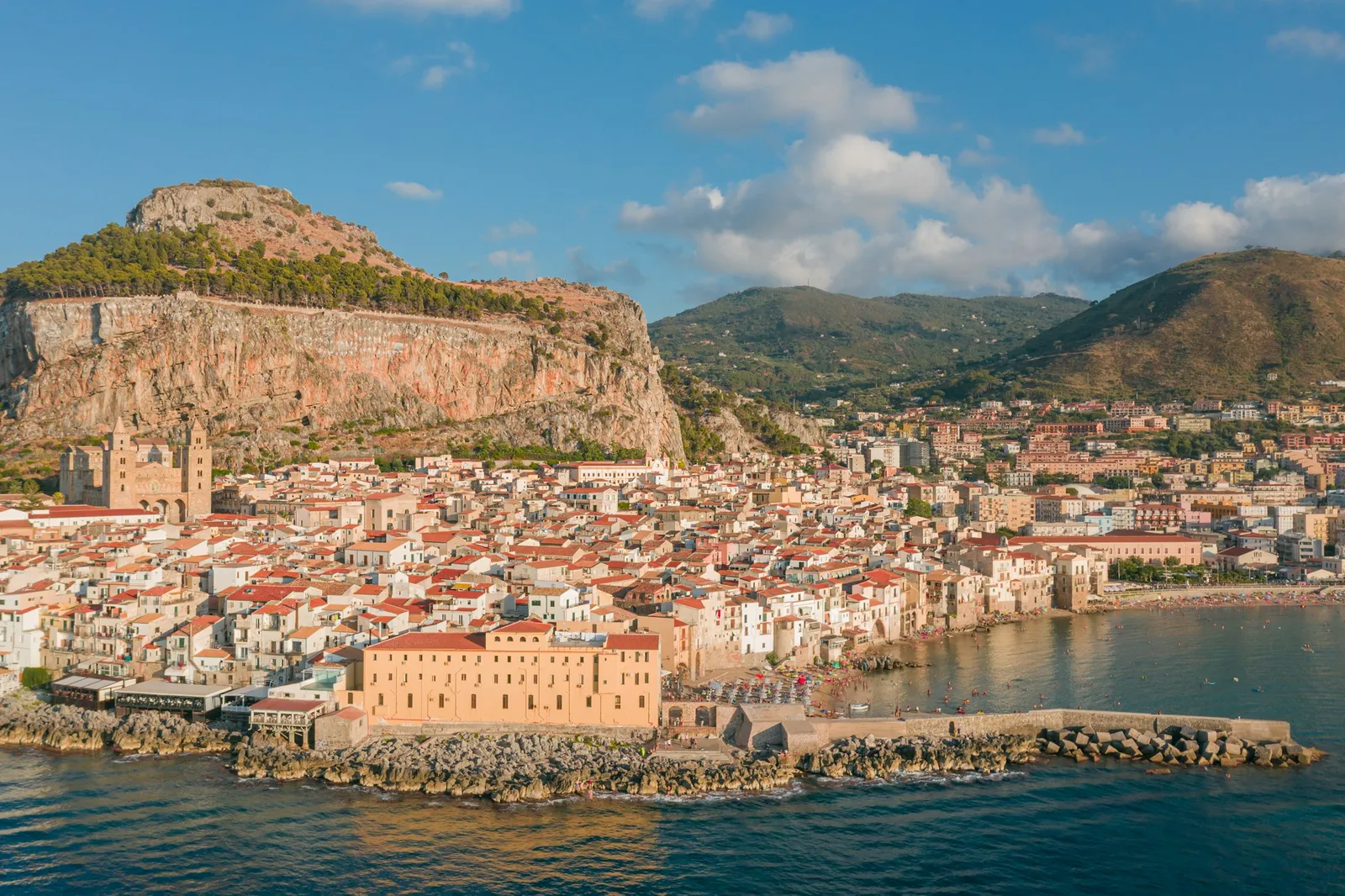
Best places to stay in Sicily for a first trip
The question I get most from American friends is not "which hotel?" but "which town?". Get the town right and the trip works; get it wrong and you spend your vacation in the car. My rule is to choose your bases from what you want to see, not the other way round. If you have not decided that yet, start with the best things to do in Sicily, then come back here.
Sicily splits naturally into an east, with Etna, Taormina, Catania, Syracuse and the baroque towns, and a west, with Palermo, Monreale, Cefalù, Segesta, Trapani and the islands off it. Each has its own airport, so a one-week trip usually means one side and two bases; my map of Sicily with its cities and airports shows where each one sits. Here is how they compare.
| Base | Best for | Car needed? | Good second base |
|---|---|---|---|
| Taormina | First-timers, couples, the theatre and sea views | No, but the hill town is a squeeze for cars | Ortigia (Syracuse) |
| Catania | Etna, food, value, the airport | No in town; yes for Etna on your own | Ortigia or Taormina |
| Ortigia, Syracuse | Walking, evenings, Noto and the southeast | No for Ortigia; yes for the baroque towns | Taormina or Ragusa |
| Ragusa or Modica | The baroque towns, quieter nights | Yes | Ortigia |
| Palermo | City lovers, markets, Monreale, street food | No (a car is a burden in the city) | Cefalù or Trapani |
| Cefalù | Beach plus history, families, trains to Palermo | No | Palermo |
| Trapani | Erice, the salt pans, ferries to the Egadi | Helps for day trips | Palermo or a farm near Segesta |
| Agrigento | One night for the Valley of the Temples | Yes | Crossing from east to west |
If you cannot decide between the two sides, my region-by-region guide to which part of Sicily is right for you goes deeper into the character of each area, and the quiz further down this page asks a few questions and suggests one.
Where to stay in eastern Sicily
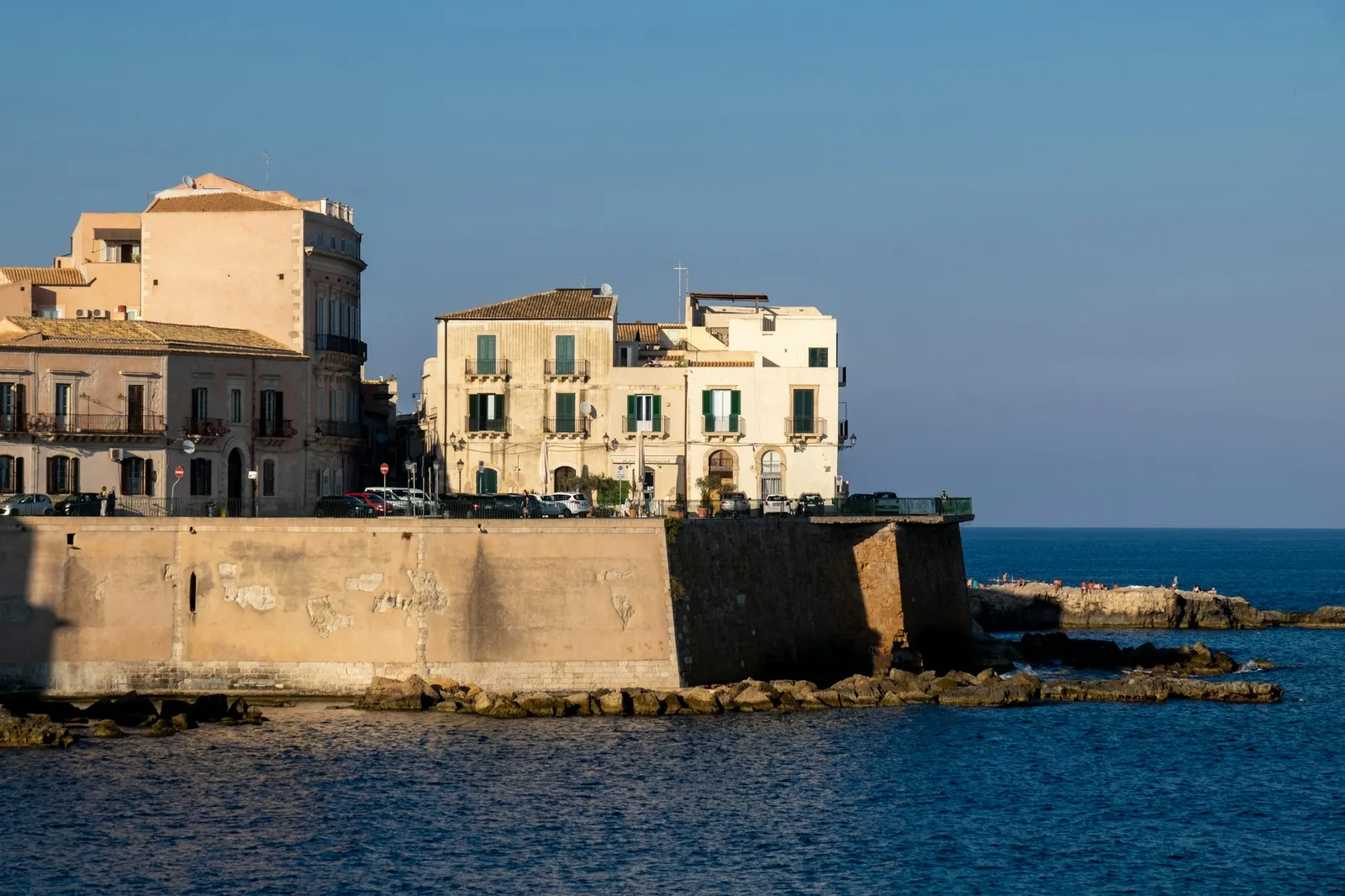
Taormina: the classic first base
Taormina is where most first-time visitors stay, and for good reason: the ancient theatre, the views of Etna and the coast, and a pedestrian main street with everything in walking distance. It is also very small and very much a tourist town. ISTAT, the national statistics office, counts about 7,430 registered tourist beds in Taormina for a population of about 10,480, which tells you who the town is built around in summer. Below it on the coast, Giardini-Naxos has about 6,760 beds for some 9,370 residents and is the beach-side alternative, usually with easier parking. My things to do in Taormina page covers the town itself.
Catania: the practical base
Catania is a real city of almost 300,000 people, with the eastern airport, the island's main coach hub and the easiest drive or bus to Etna. It is louder and rougher at the edges than Taormina, but the food is better value and the baroque centre is a World Heritage town in its own right. If your flight lands late or leaves early, a night in Catania is the sensible choice; my Catania airport guide explains the transfers, and things to do in Catania covers the city.
Ortigia, Syracuse: the best place to spend evenings
Ortigia, the island old town of Syracuse, is my pick for the second half of an eastern trip. It is compact, walkable and lovely after dark, and from there Noto is an easy day trip. Stay on Ortigia itself, not in the newer city, and if you arrive by car, ask your host where to park before you drive onto the island. See Syracuse and Ortigia for the sights.
Ragusa and Modica: for the baroque towns
If the baroque towns are the point of your trip, a night or two in Ragusa Ibla or Modica puts you among them. Both are hill towns of steps and lanes, so pack light. You will want a car here. The towns are covered in my guide to the baroque towns of the Val di Noto.
Noto: a smaller baroque base
Most people see Noto on a day trip from Ortigia, but it works as a base of its own if you want the baroque towns without the steps of a hill town. ISTAT counts about 4,460 tourist beds for some 24,610 residents, so it is busy by day in summer and much calmer at night. A car makes the most of it.
The Aeolian Islands: Lipari as a base
The Aeolian Islands, off the north coast, are a trip of their own rather than a day out, and they reward a few nights. Lipari is the largest island and the practical base, with the most hotels, restaurants and boat connections; hydrofoils and ferries leave mainly from Milazzo. My guide to the Aeolian Islands compares all seven.
Where to stay in western Sicily
Palermo: for city people
Palermo is the capital and the largest city on the island, with more than 620,000 residents. Stay in the historic centre, between the cathedral, the Quattro Canti and the markets, and you can walk to almost everything. Do not bring a rental car into the old town if you can avoid it; pick it up on the way out. Palermo is the base for Monreale and an easy train ride from Cefalù, and my Palermo airport guide covers the train, bus and taxis into town. Read things to do in Palermo before you choose a neighbourhood.
Cefalù: beach and history, by train
Cefalù is the best compromise in the west: a Norman cathedral, a long sandy beach in town and trains along the coast to Palermo. ISTAT counts about 6,450 tourist beds for some 13,870 residents, and it does fill up in August. It suits families, people without a car and anyone who wants a beach without giving up sightseeing. See things to do in Cefalù.
Trapani and the far west
This is my corner of the island. Trapani is a working port town with ferries and hydrofoils to the Egadi Islands, Erice on the mountain above it and the salt pans to the south. It has far fewer tourist beds than the big names, about 2,610 for a city of some 54,950, which is part of its charm.
With a car, the farms and small towns inland between Trapani, Segesta and Marsala make a quieter base. For beaches, San Vito Lo Capo is the big resort of the northwest coast: ISTAT counts about 6,220 tourist beds there for only about 4,860 residents, so expect it to be busy in high summer and very quiet in winter.
Agrigento: one night on the way through
Agrigento sits on the south coast between east and west. Most people see the Valley of the Temples in a day while crossing the island, and one night nearby lets you visit at the cooler ends of the day. My Agrigento guide covers the timing.
How many tourist beds each base has
A useful way to judge how touristy a town will feel is to compare the beds on offer with the people who live there. These figures are ISTAT's count of registered tourist beds in 2024 (hotels, B&Bs, vacation rentals, agriturismi and campsites together) and its resident population. They measure capacity, not how full the beds are.
| Town | Tourist beds | Residents |
|---|---|---|
| Palermo | 13,900 | 628,700 |
| Siracusa | 10,640 | 115,800 |
| Catania | 8,820 | 298,100 |
| Taormina | 7,430 | 10,480 |
| Ragusa | 7,450 | 73,900 |
| Giardini-Naxos | 6,760 | 9,370 |
| Cefalù | 6,450 | 13,870 |
| San Vito Lo Capo | 6,220 | 4,860 |
| Agrigento | 4,560 | 55,250 |
| Noto | 4,460 | 24,610 |
| Trapani | 2,610 | 54,950 |
The pattern is clear. In Taormina, Giardini-Naxos and San Vito Lo Capo there are almost as many beds as residents, or more, so in July and August the town is mostly visitors. In Palermo, Catania and Trapani tourism is a small part of a working city, and that is exactly why some people prefer them. Every town also has its own page in my Sicily towns guide, with the same figures and more.
Staying in Sicily with or without a car
Your choice of base and your choice about a car are the same decision. Without a car, stay in a town centre close to the station: Palermo, Cefalù, Catania, Taormina (with its bus link to the station below) and Ortigia all work, and you link them by train, coach or a day tour. I have written the full plan for that in Sicily without a car, so I will not repeat it here.
With a car, the island opens up: farm stays, the baroque towns, Segesta and Selinunte, and the quieter beaches. The trade-off is parking. Old town centres have limited traffic zones (ZTL) and narrow lanes, so the best car-friendly bases are just outside a historic centre, or in the countryside. When you book, ask two things: is there parking, and is the property inside a ZTL? My guide to renting a car in Sicily covers licences, insurance and the ZTL fines.
A pattern that works well for many people is to start in a city without a car, then pick one up for the countryside half of the trip.
Agriturismo in Sicily: what a farm stay really is
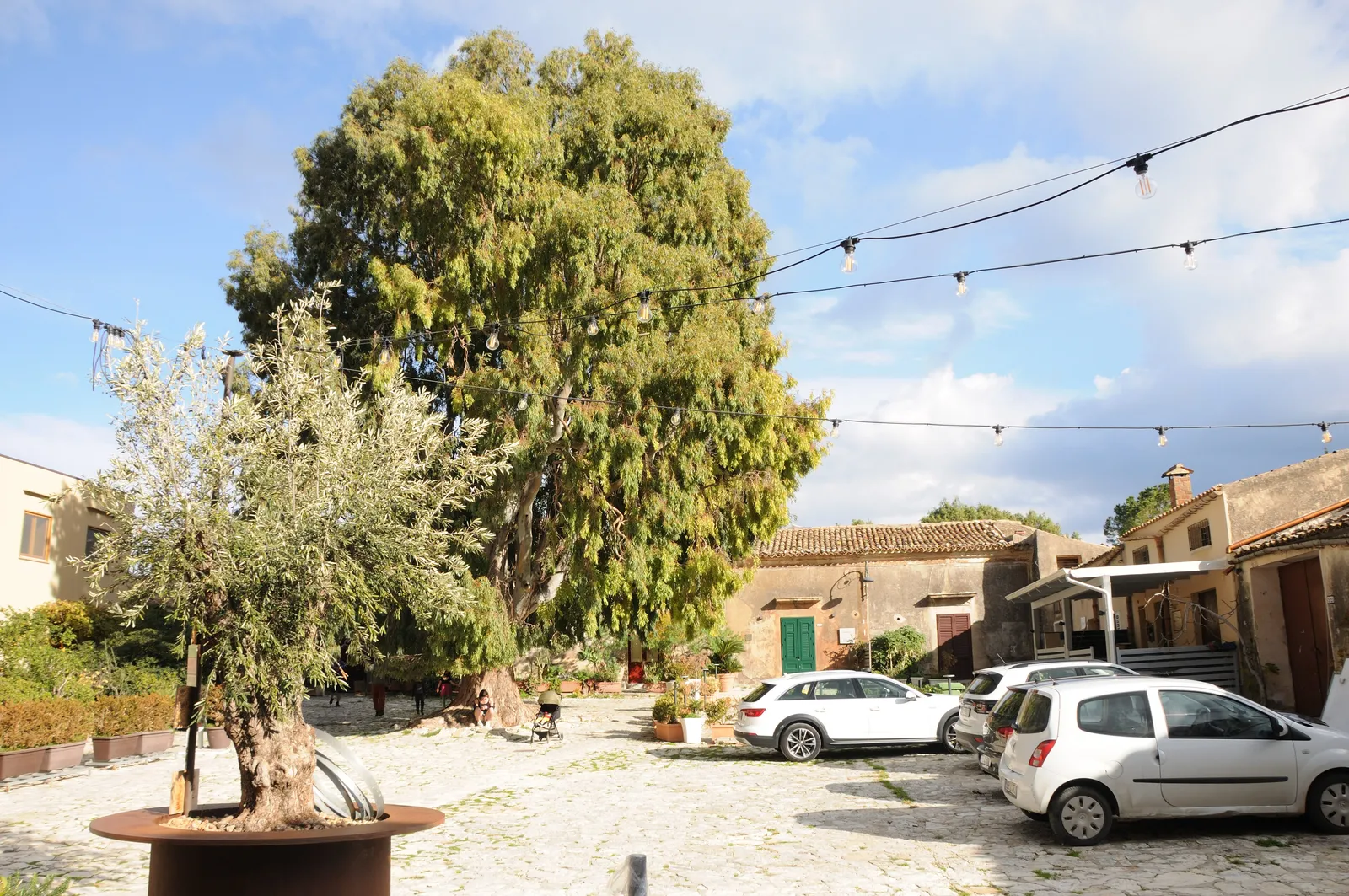
An agriturismo is not just a hotel in the country. In Italian law (law 96 of 2006) it is hospitality offered by a farmer, on their own farm, and the farming must remain the main activity; the tourism is meant to be connected to growing crops, forestry or raising animals. The word "agriturismo" is reserved for farms that are authorised for it. Sicily has its own regional law on top of the national one.
What that means for you in practice:
- Food. Many agriturismi serve dinner, often with their own produce, and for me that is the best reason to stay. Ask when you book whether dinner is offered and whether you need to reserve it.
- A car. Farms are in the countryside, often down an unpaved track. You will need a car, and you will drive to dinner if the farm does not serve it.
- Size. Some are a few rooms in a farmhouse; others have a pool and dozens of rooms. Photos tell you which.
- Season. The law lets a farm open all year or only in the periods it chooses, so check the dates, especially in winter.
Good areas for a farm stay are the countryside inland from Trapani and Segesta, the slopes of Etna, the hills around Ragusa and Modica, and the villages of the Madonie mountains above Cefalù. They pair best with a city base: two or three nights in Palermo or Ortigia, then two or three on a farm.
Vacation rentals and Airbnb in Sicily
Vacation rentals are a big part of what is on offer, especially in Palermo, Ortigia, Cefalù and the beach towns, and they suit families and longer stays. Two rules are worth knowing.
- The CIN code. Since 1 January 2025, every tourist accommodation and short-term rental in Italy needs a national identification code, the CIN, and it must be shown in every listing. The Ministry of Tourism says hosts face fines of €800 to €8,000 for having no CIN, and €500 to €5,000 for not displaying it, with the listing removed. As a guest, a listing with no CIN is a reason to look elsewhere.
- The tourist tax. Some towns charge a nightly tourist tax per person, collected by your host. In Palermo, for example, the city sets the rate by type of accommodation and charges it for at most four consecutive nights. The amount is usually listed separately from the room price, so do not be surprised at checkout.
For a longer stay, my cost of living in Sicily page shows what everyday life costs.
Are there all-inclusive resorts in Sicily?
A few, but the all-inclusive model you may know from Mexico or the Caribbean is not how Sicily works, and I would not plan around it. Most hotels sell rooms with breakfast; some resort hotels on the coast offer half board (breakfast and dinner) or full board (all meals), which Italians call mezza pensione and pensione completa. Drinks and excursions are usually extra unless a package says otherwise.
Honestly, eating out is one of the main reasons to come. A trattoria lunch, an evening walk and a granita are the vacation. If you like the idea of everything arranged for you, a guided tour or a vacation package is usually a better fit than a resort; I compare them in Sicily tours and vacation packages. And if you want a beach first and foremost, start with my guide to the best beaches in Sicily and choose a base near the one you like.
Mistakes to avoid when choosing where to stay
- One base for the whole island. From Palermo, Taormina is a long day's drive there and back. Use two or three bases.
- Moving every night. The opposite mistake. Two nights is the minimum that feels like a stay.
- A car in an old town. Check the ZTL and the parking before you book in Palermo, Ortigia, Cefalù or Taormina.
- A remote farm without a car. Lovely photos, no way to get to dinner.
- Ignoring the season. Beach towns are full in August and some close in winter; cities work all year. My best time to visit Sicily guide goes month by month.
Once you have your bases, my Sicily itineraries page shows how to string them together day by day, and the Sicily airports guide tells you which airport to fly into.
Frequently asked questions
Where is the best place to stay in Sicily?
For a first trip, Taormina or Catania plus Ortigia in Syracuse in the east, or Palermo or Cefalù plus Trapani in the west. Taormina is the classic choice for views and the ancient theatre; Ortigia is the best place to spend evenings; Palermo suits people who love cities; Cefalù combines a beach with history and trains.
Is it better to stay in Taormina or Catania?
Taormina for atmosphere, views and a walkable centre; Catania for value, food, the airport and the easiest access to Etna. Taormina is small and very touristy in summer. Catania is a real working city. Many people do a night in Catania on arrival and then move to Taormina.
Do I need a car to stay in Sicily?
Not if you stay in town centres near a station: Palermo, Cefalù, Catania, Taormina and Ortigia in Syracuse all work without one, linked by train or coach. You do need a car for farm stays, the baroque hill towns and the quieter beaches. For bases and a full itinerary without a car, see my guide to Sicily without a car.
Should I stay in one place or move around Sicily?
Move, but not every night. Sicily is too big for one base, so use two bases for a week and three for two weeks, with at least two nights in each.
What is an agriturismo in Sicily?
A farm that takes guests. Under Italian law, the hospitality has to be run by the farmer on their own land and farming must stay the main activity. Many serve dinner with their own produce. You will need a car to reach most of them.
Are there all-inclusive resorts in Sicily?
Only a few, and the all-inclusive model is not typical. Most hotels include breakfast; some coastal resorts offer half or full board. Drinks and excursions are usually extra. Eating out is a big part of a Sicilian vacation.
Is it better to stay in Palermo or Cefalù?
Palermo if you want a big city with markets, churches and street food; Cefalù if you want a beach and a smaller town, with Palermo an easy train ride away. Families often prefer Cefalù.
Is Airbnb legal in Sicily?
Yes, short-term rentals are legal, but since 2025 every listing must show a national CIN code, and towns such as Palermo charge a nightly tourist tax. A listing with no CIN is a warning sign.
Sources and small print
- ISTAT, capacity of tourist accommodation by municipality (2024) and resident population, as held in the town data on this site
- Legge 20 febbraio 2006, n. 96, the national law on agriturismo (Italian Parliament)
- Ministero del Turismo, FAQ on the national database of accommodation and the CIN code
- Comune di Palermo, the tourist tax (imposta di soggiorno)
Bed and population figures are rounded. No booking links or named hotels appear on this page by design.
Credits
Photo: Henrique Ferreira, Unsplash Licence, via Unsplash.
Photo: Alexandra Smielova, Unsplash Licence, via Unsplash.
Photo: Josep M. Gracia, CC BY-SA 4.0, via Wikimedia Commons.
 The weekly YouTube series