
Where is Catania, and is it worth visiting?
Catania is on the east coast of Sicily, roughly halfway between Messina and Syracuse, with Mount Etna rising behind it to the north and the flat farmland of the Piana di Catania to the south. It is a real city of about 298,000 people, with a big university, a port and constant traffic, not a resort, and that is exactly why I like it.
Many visitors only pass through on the way from the airport to Taormina or Syracuse. That is a mistake. After the lava of 1669 and the earthquake of January 1693 destroyed most of it, Catania was rebuilt with broad, straight streets and Baroque churches and palaces in dark volcanic stone, and in 2002 its center joined the UNESCO World Heritage list with seven other Late Baroque towns of the Val di Noto. Nowhere else in Sicily looks like it.
For the history of the city and the region, read my eastern Sicily guide; for living here and house prices, the Catania town page. This page is what to see and do.
Piazza del Duomo, the cathedral and Saint Agatha
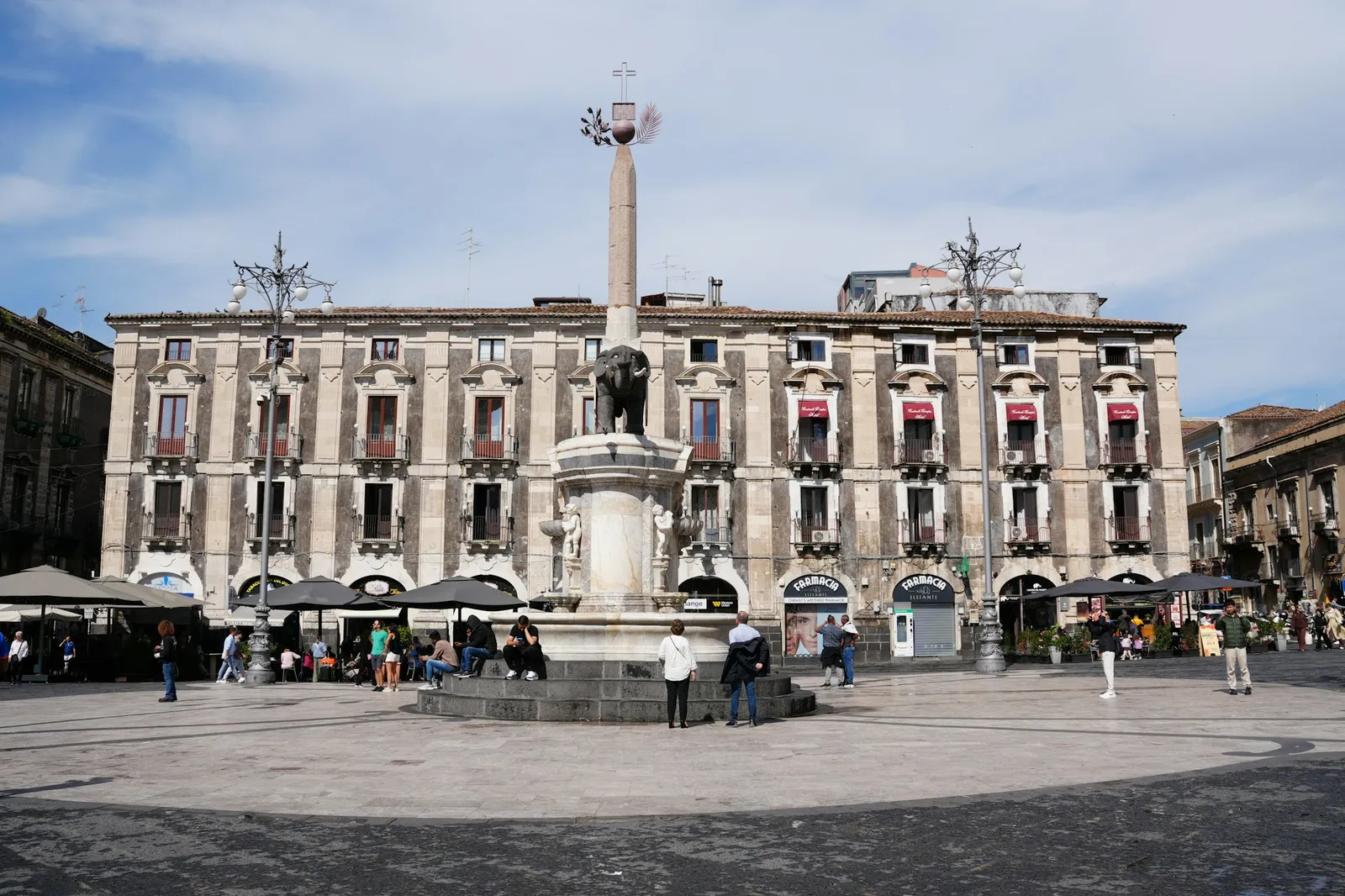
Start in Piazza del Duomo, the heart of the city. In the middle stands u Liotru, the lava stone elephant carrying an obelisk that Giovanni Battista Vaccarini built into a fountain in 1736 and that has become the symbol of Catania. Facing it is the cathedral of Sant'Agata, and close by is the Badia di Sant'Agata, another of the city's great Baroque churches.
Saint Agatha is the city's patron, and her feast from 3 to 5 February is one of the great religious festivals of Italy: her silver reliquary bust, made in 1376, is carried through the streets for days, and the pastry shops fill with cassatelle and olivette made for her.
If you are in Sicily in early February, it is worth building a trip around; my guide to the feast of St Agatha sets out each of the three days, and the same page has the other big feasts of the year. At any other time of year, the cathedral is still the place to start.
The Catania fish market (La Pescheria)
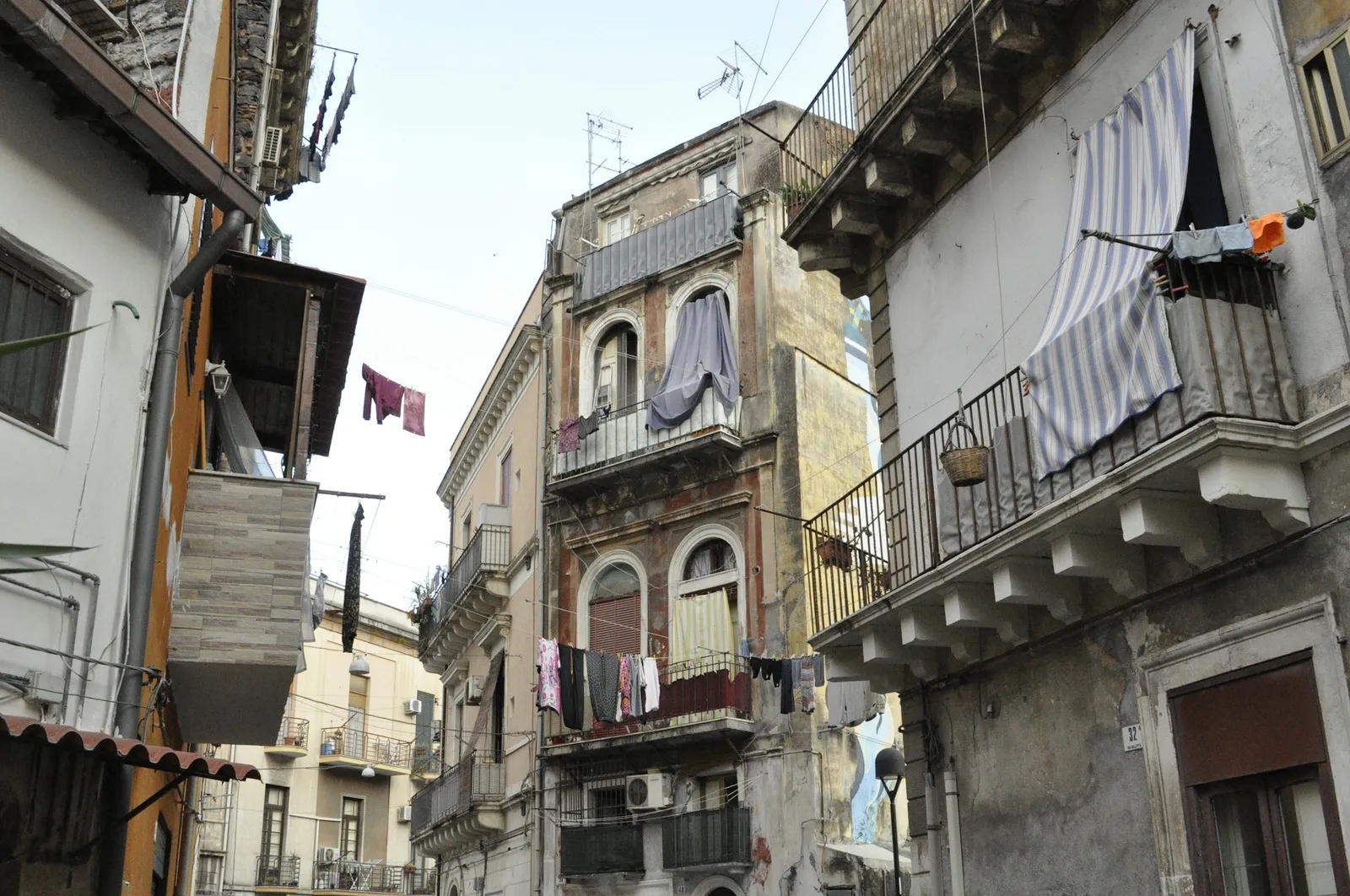
La Pescheria, or a Piscaria in Sicilian, is Catania's historic fish market, just off Piazza del Duomo. It is loud, wet and wonderful, with the day's catch laid out on ice and stallholders shouting prices across the alleys, and it spills into the streets around with fruit, vegetables and more.
- It is a morning market, Monday to Saturday, and closed on Sundays. There is no single official timetable, so go early: by lunchtime the stalls are packing up.
- Wear shoes you do not mind getting wet, and keep a hand on your phone and wallet in the crowd, as in any busy market.
- Around the market you can eat fish cooked on the spot, which makes for one of the best seafood lunches in the city.
Catania's other big market is the Fera 'o Luni in Piazza Carlo Alberto, for clothes, fruit and vegetables. Both are part of everyday life here, not put on for visitors.
Via Etnea and the historic center on foot
Via Etnea runs straight north from Piazza del Duomo for about 3 km (2 miles), framed at the far end by Etna itself when the sky is clear. Walk it for the shops and the cafés, and for what you pass on the way:
- Piazza Università, with the old university palace. The University of Catania, founded in 1434, is the oldest in Sicily.
- The Collegiata, one of the city's Baroque churches.
- Piazza Stesicoro, where you can look down into the Roman amphitheatre, about 10 m (33 ft) below the street.
- Villa Bellini, the city's main public garden, a good place to stop in the shade.
Via dei Crociferi packs four churches into about 200 m (650 ft) and is often called the finest street of 18th century Catania. It is quiet by day and lively at night.
The Roman theatre, the monastery and the museums
| Sight | What it is | Visiting |
|---|---|---|
| Roman theatre and Odeon, Via Vittorio Emanuele 266 | A Roman theatre and a smaller odeon, half buried among the houses of the old town | Open every day, 9am to 7pm; about €8 ($9), according to the regional archaeological park |
| Monastero dei Benedettini, Piazza Dante | The vast former monastery of San Nicolò l’Arena, now part of the university | Guided tours every day in Italian and English, run by Officine Culturali |
| Castello Ursino | The castle of Frederick II, now the civic museum; the lava of 1669 flowed around it | Museum hours vary; check before you go |
| Teatro Massimo Bellini | The opera house, opened in 1890 | Performances through the season |
| Museo Storico dello Sbarco in Sicilia 1943, Le Ciminiere | The museum of the Allied landings | Check opening times before you go |
The regional archaeological park lists the Roman theatre's current hours and tickets, and Officine Culturali has the times of the monastery tours. If you only have time for one of the two, I would choose the monastery tour.
The composer Vincenzo Bellini was born in Catania in 1801, and his birthplace is a museum; so is the house of the novelist Giovanni Verga. If the war is your interest, the 1943 museum is the one to see, and my guide to the Allied invasion of Sicily gives the background.
What to eat in Catania
Catania takes its street food seriously, and it is different from Palermo's. What to look for:
- Arancini. Here they are often pointed, a shape said to recall Etna, and the fillings include ragù, ham and mozzarella, pistachio and alla norma. My guide to arancini explains why Palermo says arancina and Catania arancino.
- Pasta alla Norma. Fried eggplant, tomato and salted ricotta, named after Bellini's opera Norma. My guide to Sicilian pasta dishes covers it with the island's other classic pastas.
- Granita and brioche. The summer breakfast of eastern Sicily. See my guide to Sicilian desserts.
- Cipollina and crispelle. Puff pastry with onion, and fried dough with ricotta or anchovies, from the bakeries and fry shops.
- Horse meat. A Catania tradition, grilled at roadside stalls. Not for everyone, but very local.
- Seltz al limone e sale. Soda water with lemon and a pinch of salt from the city's drinks kiosks, an institution since 1896.
For the whole island, dish by dish, see my Sicily food guide.
Mount Etna from Catania
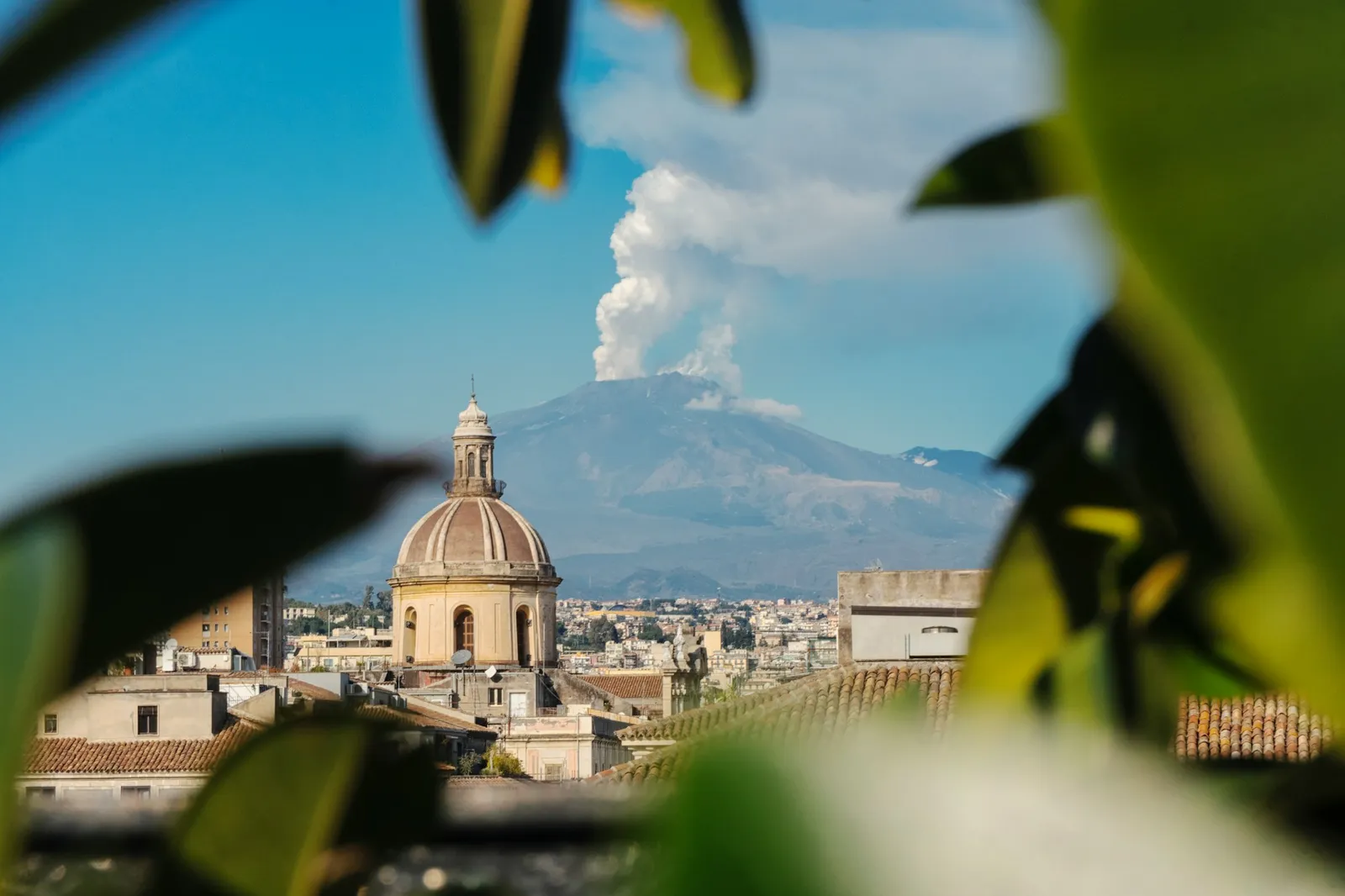
Catania is the easiest base for Etna without a car. AST runs one bus a day from Piazza Giovanni XXIII, outside Catania Centrale station, at 8:15am to the Rifugio Sapienza on the south side, coming back at 4:30pm, for a return fare of about €6.60 (about $7). By car the Rifugio Sapienza is about 41 km (25 miles), roughly 70 minutes, from the center.
From there you can walk the old Silvestri craters, ride the cable car to 2,500 m (8,200 ft), or go higher with a licensed guide. My guide to Mount Etna tours and hikes covers the cable car, the tours and the rules for the summit, and the volcano itself is in my Mount Etna guide. For what the volcano is doing now, look at INGV's Osservatorio Etneo, and if an eruption is in the news, my guide to Etna eruptions and Catania flights explains what it means for the airport.
Day trips from Catania
| From Catania to | How | Time |
|---|---|---|
| Taormina | Train to Taormina-Giardini, then a town bus up; or the Etna Trasporti coach | About 35 to 55 minutes on the train |
| Syracuse (Ortigia) | Interbus coach from beside Catania Centrale; or about 67 km (41 miles) by car | About 70 to 80 minutes by coach, about an hour by car |
| Mount Etna (south side) | AST bus at 8:15am, back at 4:30pm | About 2 hours each way |
| Aci Castello and Aci Trezza | About 13 km (8 miles) north along the coast | About half an hour by car |
- My guide to things to do in Taormina covers the Greek theatre, Isola Bella and Castelmola.
- My guide to Syracuse and Ortigia covers the island old town and the Greek theatre.
- Aci Castello, with its Norman castle on a black lava rock above the sea, and the fishing village of Aci Trezza, facing the Cyclops sea stacks, are the easy half day up the coast; Acireale, a Baroque town famous for its carnival and its granita, is just beyond.
Beaches in Catania
Catania has two very different seasides. South of the center, La Playa is a long stretch of sand lined with lidos, where the whole city goes in summer. North of the center, the coast is black lava rock: San Giovanni Li Cuti is a small cove of black sand, good for an evening drink as much as a swim. Further south, by the mouth of the Simeto river, the Oasi del Simeto is a nature reserve with birds as well as beach.
Where to stay in Catania, and how many days
Stay in the historic center, anywhere between Piazza del Duomo, Via Etnea and Via dei Crociferi, and you can walk to everything. If you are using trains and coaches a lot, somewhere between the center and Catania Centrale station saves time, but the station is about 1.4 km (just under a mile), 15 to 20 minutes on foot, from the cathedral. From the airport, the Alibus runs to the center and the station every 25 minutes for about €4 ($4.40); my Catania airport guide has the rest.
One full day is enough for the market, the cathedral, Via Etnea and the Roman theatre; two let you add the monastery, a museum and the coast at Aci Trezza; three or more make Catania a base for Etna, Taormina and Syracuse, which is how I would use it. If you are arriving by ship, my Messina and Catania cruise port guide covers what fits in a port day.
Frequently asked questions
What is Catania, Sicily, known for?
Mount Etna, which towers over the city, its Baroque center rebuilt in black lava stone after the 1693 earthquake and listed by UNESCO, its noisy fish market, the elephant fountain in Piazza del Duomo, the feast of Saint Agatha in February, and its street food, from pointed arancini to pasta alla Norma.
What are the top things to do in Catania?
Go to the fish market just off Piazza del Duomo in the morning, see the cathedral of Saint Agatha and the elephant fountain, walk up Via Etnea, visit the Roman theatre and the Benedictine monastery, eat arancini and granita, and take a day trip up Mount Etna.
Where is Catania in Sicily?
On the east coast, at the foot of Mount Etna, roughly halfway between Messina and Syracuse. It is Sicily’s second city, with about 298,000 people, and its airport, Catania Fontanarossa, is a few minutes from the center.
When is the Catania fish market open?
In the mornings, Monday to Saturday; it is closed on Sundays. There is no single official timetable, and stalls start packing up around lunchtime, so go early.
Is Catania worth visiting?
Yes. It is a real working city rather than a resort, but its black-stone Baroque center is a UNESCO site, the market and street food are among the best in Sicily, and it is the most practical base for Mount Etna, Taormina and Syracuse.
How many days do you need in Catania?
One full day for the market, the cathedral, Via Etnea and the Roman theatre, two to add the monastery, museums and the coast, and three or more if you use the city as a base for Etna, Taormina and Syracuse.
Can you see Mount Etna from Catania?
Yes, on a clear day it fills the view at the top of Via Etnea and from many rooftops. A daily AST bus goes from outside Catania Centrale station to the Rifugio Sapienza on Etna’s south side at 8:15am and comes back at 4:30pm.
How far is Catania from Taormina and Syracuse?
Taormina is about 35 to 55 minutes by train, plus a short bus ride up from the station, or about an hour by coach or car. Syracuse is about 67 km (41 miles), about an hour by car or 70 to 80 minutes by coach.
Sources and small print
- Parco archeologico di Catania e della Valle dell'Aci, the Roman theatre and Odeon
- Officine Culturali, guided tours of the Monastero dei Benedettini
- UNESCO, the Late Baroque Towns of the Val di Noto, including Catania
- AST, the Catania to Etna bus
- INGV Osservatorio Etneo, the national volcano institute, for Etna's current activity
History, the markets and the food are from my town data for Catania. Driving times are from Mapbox directions and rounded; train and coach times are from a journey planner and change with the timetable.
Credits
Photo: Dmitry Romanoff, Unsplash Licence, via Unsplash.
Photo: Kristin Snippe, Unsplash Licence, via Unsplash.
Photo: Samir Kharrat, Unsplash Licence, via Unsplash.
 The weekly YouTube series