
Is Taormina worth visiting?
Yes, with one warning. Taormina is the most famous town in Sicily for a reason: it sits on a terrace of Monte Tauro, about 200 m (650 ft) above the Ionian Sea, with Etna on one side and the coast of Calabria on the other. It has drawn travelers since the Grand Tour, and it still lives mainly from visitors. The warning is that a town of about 10,500 people takes a great many of them from spring to fall, so the main street is shoulder to shoulder at midday and prices are the highest on the island.
I live at the other end of Sicily, in the west, and when friends ask me about Taormina my advice is always the same: stay at least one night, so you see it early in the morning and late in the evening when the day visitors and the cruise coaches have gone. That is when it is at its best.
My eastern Sicily guide tells the stories behind the town, from Goethe to the Englishwoman who made its gardens, and the Taormina town page covers what it is like to live there. This page is the practical list of what to see and do.
The Greek theatre in Taormina (Teatro Antico)
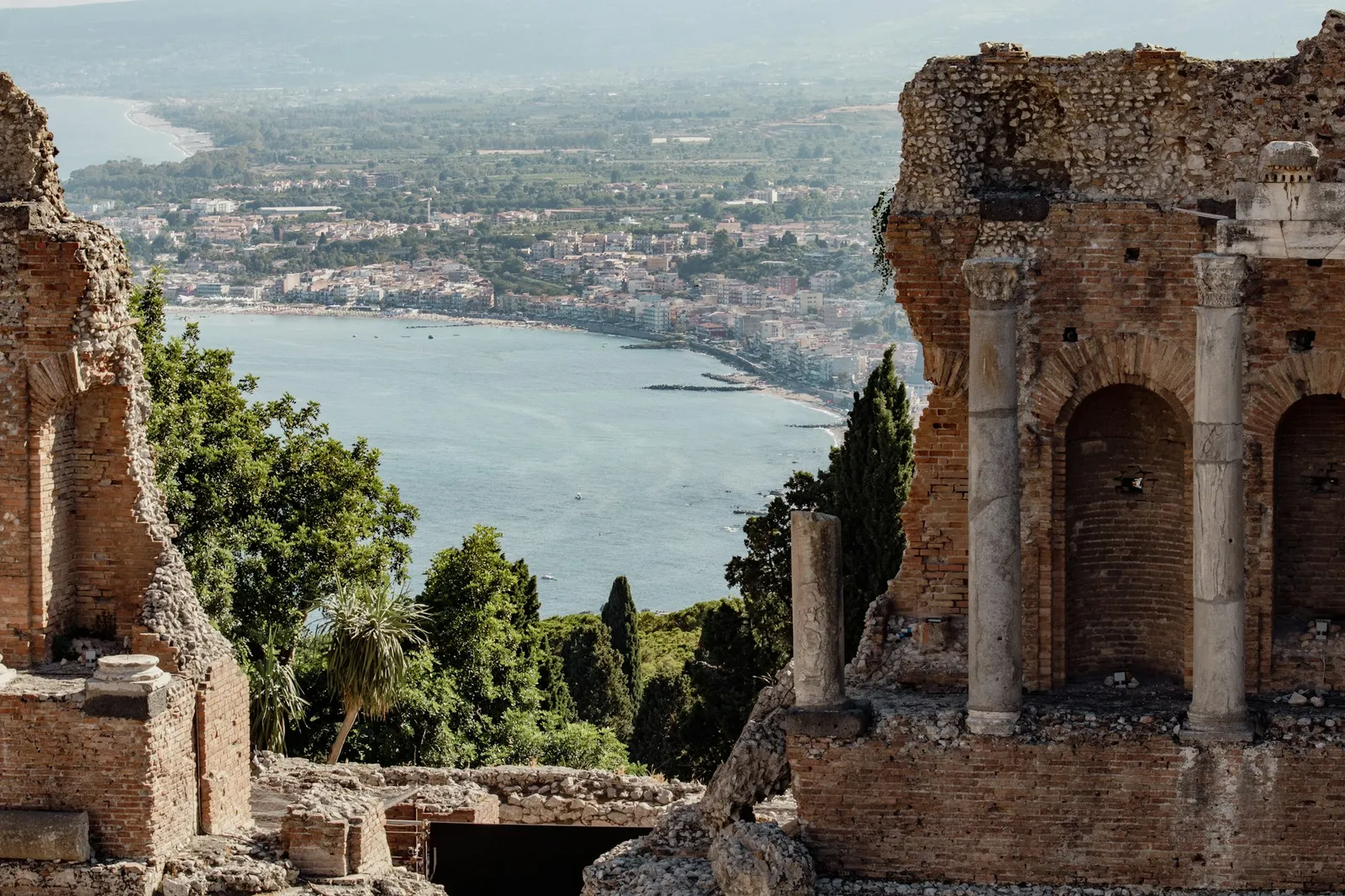
The ancient theatre is the one sight nobody should miss. It was built in the 3rd century BC and largely rebuilt in brick by the Romans, which is why most of what you see is red brick rather than Greek stone. It is the second largest ancient theatre in Sicily, after the one in Syracuse: the seating is more than 100 m (330 ft) across, and the park estimates it held at least 10,000 people in antiquity. What makes it famous is the view through the ruined stage wall, down to the bay of Naxos and, on a clear day, to Etna.
- Tickets cost about €14 (about $15), with a reduced price for EU citizens aged 18 to 25, and visitors under 18 go free. You can buy them online from Aditus, the park's official ticket office, or at the gate.
- It opens every day from 9am. Closing time changes with the season, from the late afternoon in winter to about 7:45pm in summer, so check the park's ticket page for the day you go.
- On the first Sunday of each month, entry to the state sites of eastern Sicily is free, with tickets issued only at the gate. Expect a crowd.
- Luggage is not allowed inside, so do not come straight from the bus with a suitcase.
- A visit takes about an hour. Go at opening time or late in the day: the light is better and the tour groups are elsewhere.
In summer the theatre is a working venue again, with concerts, opera and the Taormina Film Fest. Seeing a show there is a different experience from a daytime visit, and worth planning a trip around.
Corso Umberto and the old town
Corso Umberto is Taormina's main street, closed to traffic and running between two old town gates, Porta Messina at the northern end and Porta Catania at the southern end. Walking it slowly, with detours up the side alleys, is the best free thing to do in town. Along the way:
- Palazzo Corvaja, where the Sicilian parliament met in 1410.
- Piazza IX Aprile, the wide terrace halfway along, with the view over the coast and Etna that ends up on every postcard.
- The Duomo of San Nicolò di Bari, with a Baroque fountain of 1635 in its square.
- The Villa Comunale public gardens, just below the Corso, laid out by Florence Trevelyan in the late 19th century, with her odd little follies and a long view down the coast.
For a wider view, a stepped path climbs from the town to the sanctuary of the Madonna della Rocca, and above it is the Norman castle on Monte Tauro, which the archaeological park opens daily for about €10 ($11). It is a stiff climb in the heat, so go early or late.
Isola Bella and the beaches below Taormina
Taormina's beaches are at sea level, below the town, so you need the cable car, a bus or a car to reach them. The cable car (funivia) runs from Via Pirandello, near Porta Messina, down to Mazzarò. It is run by ASM, the town's transport company, and costs about €8 ($9) one way, €15 ($17) return or €20 ($22) for a day pass. In winter it runs from 8am to 8pm, every 15 minutes, with longer hours in summer. It sometimes closes for a few weeks of maintenance in the quieter months, with a replacement bus.
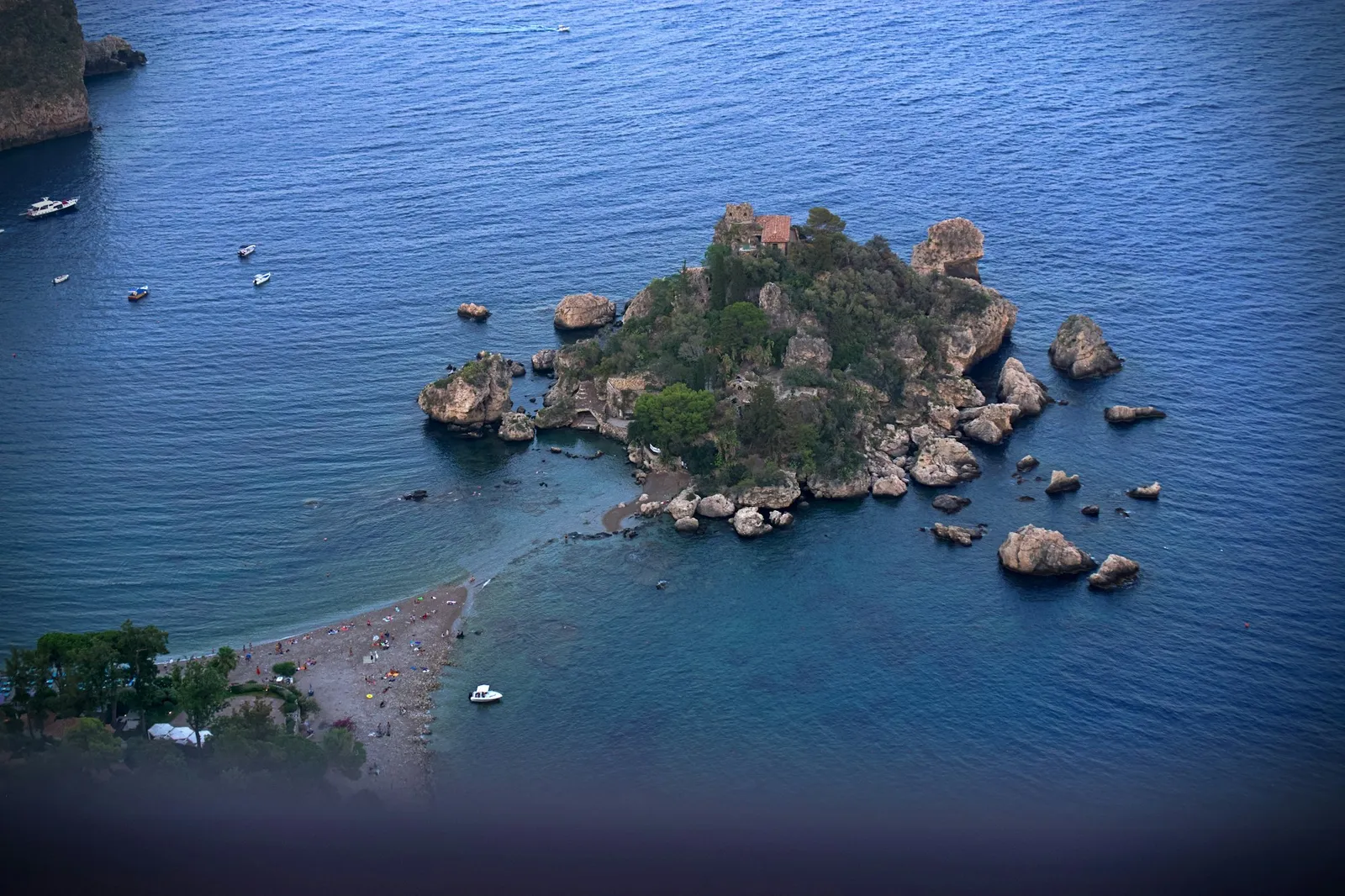
From the lower station, Isola Bella is a short walk south and down a flight of steps. It is a pebble beach facing a tiny wooded island, joined to the shore by a strip of sand you can usually wade across, and the whole bay is a nature reserve. The island itself is run by the archaeological park, with visits for about €5 ($5.50) in daytime hours. My beach page has the details: getting there, the lidos, what to bring and when to arrive.
If Isola Bella is packed, which in July and August it will be by mid morning, there are other beaches along the same stretch: Mazzarò by the cable car, and Spisone, Villagonia and Mazzeo further along, served by ASM's Beach Bus (the Linea Blu) from the town center towards Letojanni. Boats from Mazzarò also run to the sea caves on Capo Sant'Andrea, the headland next to Isola Bella.
Castelmola: the village above Taormina
Castelmola is a small hilltop village of about 1,100 people on the rock above Taormina, and in effect it was the old town's lookout. Day visitors come up for the views over Etna, the bay of Naxos and Calabria, and for the sweet almond wine served chilled in the bars on the square, one of which has been collecting visitors' signatures in albums since 1907. Climb to the castle ruins and look into the Duomo, which has a 10th century Byzantine Greek inscription.
You can walk up on a steep path, but most people take ASM's Linea Verde bus, which links Castelmola, the Madonna della Rocca, Taormina and Taormina-Giardini station. A single ride is about €2 ($2.20), and a 24-hour ticket is about €3.50 (about $4). Go in the late afternoon and stay for the sunset, then come back down for dinner.
Taormina and the movies
Many Americans first saw Taormina on HBO. The second season of The White Lotus was based at the San Domenico Palace, a 15th century monastery that has been a hotel since 1896, with scenes at the theatre and around town. My guide to The White Lotus and other films shot in Sicily lists the locations.
The other film pilgrimage starts here too. The Sicilian scenes of The Godfather were shot in Savoca and Forza d'Agrò, two villages in the hills north of Taormina, including Bar Vitelli and the church where Michael marries Apollonia. See my Godfather filming locations guide for how to visit both in a morning.
Day trips from Taormina
Taormina makes a good base for the north of eastern Sicily. These are the trips I would choose, with driving distances and times from the town:
| Day trip | Distance by road | Driving time | What it is |
|---|---|---|---|
| Mount Etna (south side, cable car) | About 55 km (34 miles) | About 80 minutes | Old craters, the cable car to 2,500 m (8,200 ft), guided tours higher |
| Alcantara gorges | About 24 km (15 miles) | About 40 minutes | A river gorge cut through columns of lava |
| Forza d’Agrò and Savoca | About 15 km (9 miles) and 27 km (17 miles) | About 30 and 45 minutes | The Godfather villages |
| Giardini Naxos | Just below the town | A short bus ride | The long beach and the site of ancient Naxos |
| Syracuse and Ortigia | About 120 km (75 miles) | About 1 hour 30 minutes | The Greek city and its island old town |
- Mount Etna. There is no public bus from Taormina to Etna, so you drive or book a tour with a pickup. My guide to Mount Etna tours and hikes explains the cable car, the guided tours and the rules for the summit, and my Mount Etna guide has the facts and eruption history of the volcano itself. For the volcano's current activity, look at INGV's Osservatorio Etneo, not social media.
- The Alcantara gorges. The Alcantara river has worn a narrow gorge through basalt near Motta Camastra. The river park says entry to the gorges by the town's public stairway is free; private parks nearby charge for their own entrances and gear. The water is cold even in August. My guide to hiking in Sicily covers the walk through the gorges.
- Giardini Naxos. Giardini Naxos has the long beach Taormina lacks and the archaeological park of Naxos, with a small museum for about €5 ($5.50). It is also where Taormina's station is.
- Syracuse. A long day, but the one I would choose for history. My guide to Syracuse and Ortigia covers what to see.
How to get to Taormina from Catania airport, Palermo and Messina
Taormina has no airport of its own; the nearest is Catania, about 69 km (43 miles) and about an hour away by car. My Catania airport guide has the full details. In short:
- Coach: Etna Trasporti runs coaches from the airport to Giardini Naxos and to the bus terminal on Via Pirandello in Taormina, without a change, in about an hour and a half.
- Train: trains from Catania to Messina stop at Taormina-Giardini station, which is at sea level below the town. From the station, ASM's buses (the Taormina Link, or the Linea Verde) climb to the center in a few minutes. Do not try to walk up with a suitcase.
- Car: the A18 motorway runs from Catania past Taormina. Cars are kept out of the old town, so use the big Lumbi or Porta Catania parking garages, which ASM links to the center with a shuttle and the Linea Rossa circular bus.
- From Messina: about 52 km (32 miles), roughly 45 minutes by car, or the train south along the coast. My cruise port guide covers a day trip from a ship.
- From Palermo: about 270 km (168 miles), roughly three hours by car on the motorways via Messina. By public transport it takes most of a day, so fly into Catania if Taormina is your first stop.
Taormina is one of the few places in Sicily where you do not need a car once you are there; my guide to Sicily without a car explains why, and if you do rent one, read my guide to renting a car in Sicily as an American first.
Where to stay in Taormina, and how many days
Where you sleep changes the trip more than in most Sicilian towns, because the town and the sea are 200 m (650 ft) apart:
- The old town, around Corso Umberto: best for a first visit without a car. You walk to everything, and take the cable car to the beach.
- Mazzarò and Isola Bella: beach hotels at sea level, quieter at night, with the cable car up for dinner.
- Giardini Naxos: a seaside town with a long beach and usually lower prices, next to the station and on the bus line up the hill.
- Castelmola: higher, cooler and calmer, a bus ride above it all.
Two full days covers the theatre, the old town, Castelmola and a beach afternoon; three or four let you add Etna and one more day trip. Taormina is busiest from spring to fall. In winter many hotels and restaurants close or slow down, the town is quiet and the light is beautiful, but it is not beach weather. My guide to the best time to visit Sicily and the month-by-month pages, such as Sicily in May, give the temperatures in °F and °C.
If you are choosing between Taormina and Cefalù, the other famous seaside town, the short version is that Taormina has the theatre, Etna and a grander setting, and Cefalù has the long town beach and an easy train from Palermo. If you are planning a honeymoon here, see my Sicily honeymoon guide.
Frequently asked questions
What is Taormina, Sicily, known for?
Its ancient Greek and Roman theatre, which looks out over the sea towards Mount Etna, its pedestrian main street, Corso Umberto, and Isola Bella, the small island and nature reserve in the bay below. It has been a resort since the Grand Tour, and more recently it was the setting of The White Lotus season 2.
What are the top things to do in Taormina?
Visit the Teatro Antico early or late in the day, walk Corso Umberto from Porta Messina to Porta Catania, take the cable car down to Isola Bella to swim, ride the bus up to Castelmola for the sunset, and spend a day on Mount Etna or at the Alcantara gorges.
How much does it cost to visit the Greek theatre in Taormina?
About €14 (about $15) for a full ticket, with a reduced price for EU citizens aged 18 to 25 and free entry for visitors under 18. Entry to the state sites of eastern Sicily is free on the first Sunday of each month, with tickets issued only at the gate.
Where is Taormina in Sicily?
On the east coast, in the province (metropolitan city) of Messina, between Messina and Catania. It sits on a hillside about 200 m (650 ft) above the Ionian Sea, about 69 km (43 miles) by road from Catania airport and about 52 km (32 miles) from Messina.
How do I get from Catania to Taormina?
Etna Trasporti coaches run from Catania airport and the city to Taormina in about an hour and a half. Trains from Catania towards Messina stop at Taormina-Giardini station below the town, and a town bus takes you up the hill. By car it is about an hour on the A18 motorway.
How many days do you need in Taormina?
Two full days for the theatre, the old town, Castelmola and a beach, and three or four if you want day trips to Mount Etna, the Alcantara gorges or the Godfather villages of Savoca and Forza d’Agrò. Stay at least one night to see the town without the day crowds.
Do you need a car in Taormina?
No. The old town is closed to most traffic, town buses run to Castelmola, the beaches and the station, and the cable car goes down to Mazzarò and Isola Bella. A car only helps for day trips such as Etna, where there is no public bus from Taormina.
Is Taormina or Cefalù better?
Taormina has the ancient theatre, views of Etna and a grander setting, but the beaches are below the town and it is pricier. Cefalù has a long beach right by the old town and a direct train from Palermo. If you can, see both: they are on opposite sides of the island.
Sources and small print
- Parco archeologico Naxos Taormina, the regional archaeological park, tickets and opening times for the theatre, the castle, Isola Bella and the Naxos museum
- Aditus, the park's official ticket office, the theatre's history, reductions and visitor notices
- ASM Taormina, the town's transport company, bus lines and fares, the cable car and the car parks
- Parco Fluviale dell'Alcantara, the river park, access to the gorges at Motta Camastra
- INGV Osservatorio Etneo, the national volcano institute, for Etna's current activity
Driving times are from Mapbox directions without traffic and rounded. Opening times and prices change with the season, so check them for the day you go.
Credits
Photo: Marco Biondi, Unsplash Licence, via Unsplash.
Photo: Stepan Dudycha, Unsplash Licence, via Unsplash.
 The weekly YouTube series