
In this episode
- A villa nobody had lived in for over 20 years, with no mains water and no working electricity
- Two years and over 1,500 hours of DIY, from September 2024
- Electrics, drains, plumbing, oak lintels and a rebuilt water well
- New window openings, marble sills and a concrete terrace poured by pump
- Ends with the first floor primer and the finished look planned for the villa
An abandoned house renovation, two years in 41 minutes
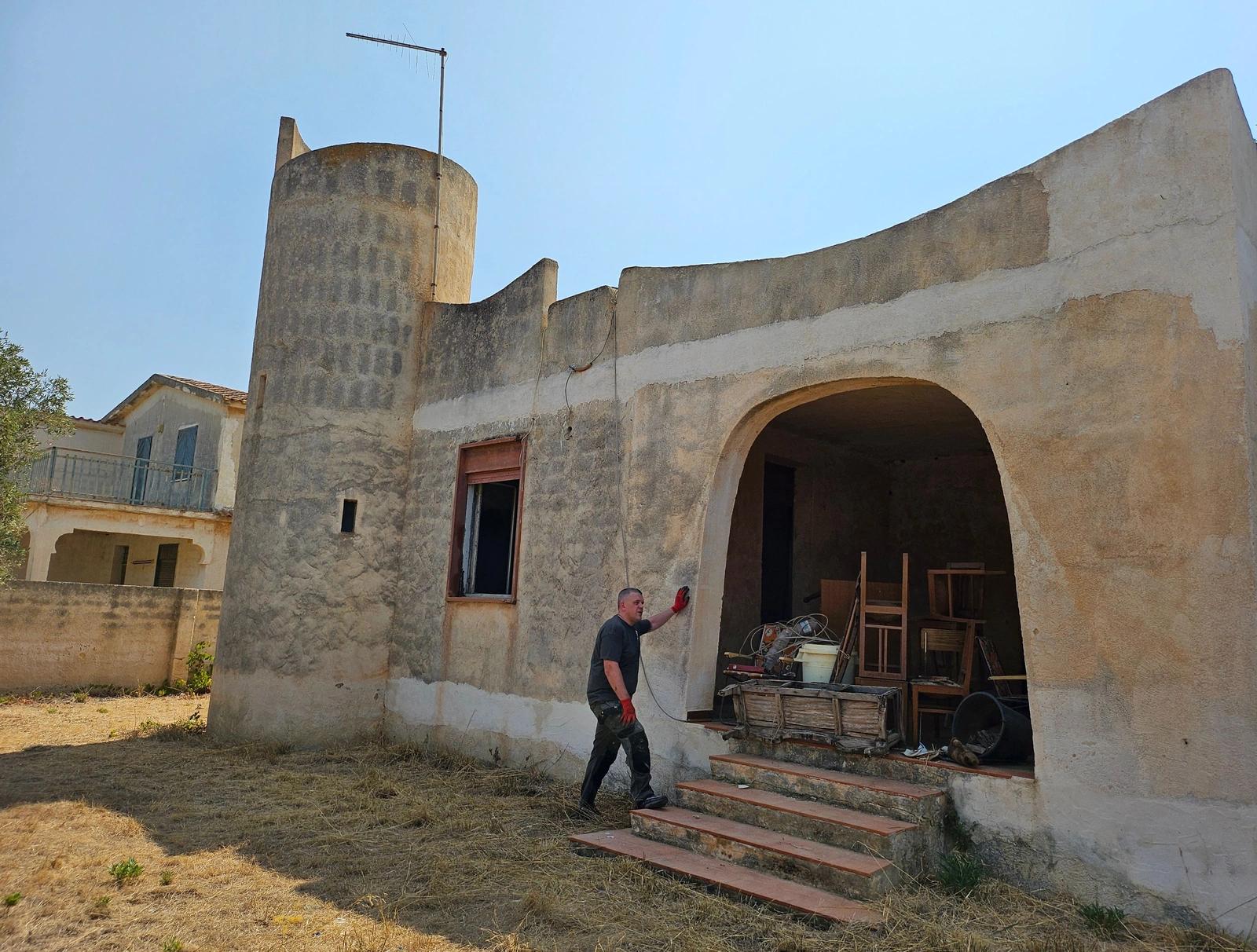
This is my abandoned house renovation in Sicily as one continuous timelapse: two years of work on a villa that nobody had lived in for over 20 years. When I first walked through the gates there was no mains water, no working electricity, no gas, and decades of damage and neglect. What it did have was potential. The timelapse opens with three lines on screen: one man, no experience, no contacts, no language. That was me in September 2024.
I bought the villa for a little over €20,000, after it had sat on the market for years at €100,000. How I negotiated that price, and every fee on top of it, is in episode 9, how much I paid for my villa. Everything since has been done DIY, off-grid, with no big budget and no building crew. If you want the first twelve months on their own, they are in the one year timelapse. This film covers both years in one.
The only words spoken are at the very start: two years ago, someone hit refresh on my life. I am fitter and sharper, I have learned more than I ever did sat in an office, and I am only just getting started.
Clearing and cleaning out the villa
The first few minutes are the clean-out. Old cabinets, broken mattresses and rusted bed frames come out of the kitchen and bedrooms and go onto a pile in the yard. Then the floors are swept of thick dust and mopped, and the old yellow floral bathroom is sprayed with disinfectant and scrubbed, toilet and bidet included. The full story of clearing the rooms, rats and all, starts in episode 3.
Electrics, groundwork and the water well
Next comes the rewire. Routes for the cables are marked on the walls with a level and spray paint, then chases and back boxes are cut into the masonry with an angle grinder and an SDS drill. Corrugated ducting goes in and the chases are filled flush with mortar. The first chases are cut in episode 19.
Outside, a mini digger clears the ground, gravel arrives on a tipper truck and stone blocks go up as retaining walls for the garden terraces. A round reinforced concrete pad is poured around the old water well, which is later rebuilt with courses of terracotta bricks and finished with a circular metal lid made in two halves.
Oak lintels and opening up the tower
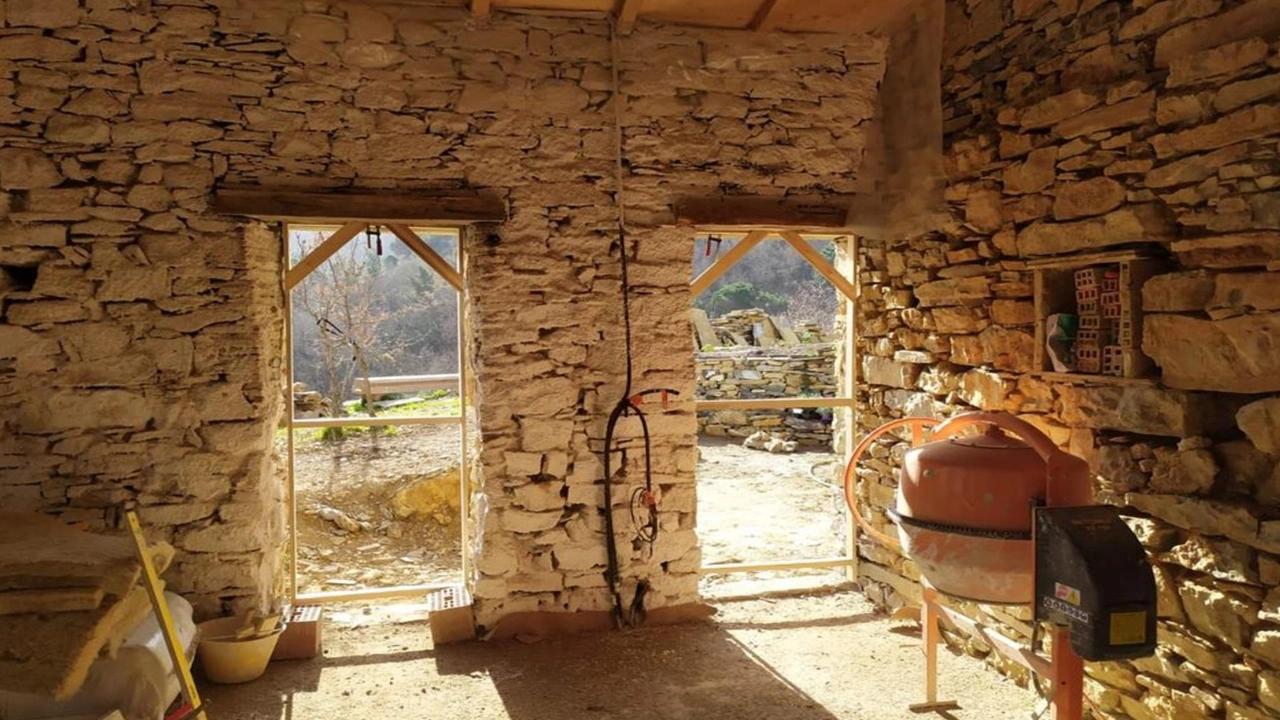
Some of the biggest moments in the timelapse are structural. Steel props hold up the ceiling while old door headers are knocked out. Solid timber beams are cut to size with a chainsaw, cleaned up with a belt sander and set in place as lintels. A doorway is cut through into the round tower, and later the masonry above it is taken down so the opening is taller. The oak beams going in, on my own, are in episode 35.
New drains, a new bathroom floor and plumbing
The drainage takes up a big part of year two. Long trenches are dug around the outside of the house and orange PVC sewer pipe is laid in them. Inside, the bathroom floor is broken out with a breaker, the old toilet comes out, and new soil pipes for the toilet, sink and bidet are glued together under the floor. Outside, the manhole inspection chambers are rebuilt in brick and rendered. The new soil pipe run to the cesspit is in episode 53.
Then the water supply. A cross-line laser marks the runs, deep chases are cut, and insulated red and blue multilayer pipes go in to brass manifolds and wall elbows before the chases are filled again.
Windows, lintels and marble sills
The old metal roller shutters and window frames come out, the openings are cut larger and boarded up with OSB to keep the weather out. Above the new openings, timber formwork is built and concrete lintels are cast in place. Once the openings are ready, polished marble window sills are bedded in mortar. You can see the first window come out in episode 58. Along the way, an internal wall is cleaned back with a wire brush to show the stone underneath.
The terrace, the rainwater tank and a concrete pump
Near the end, string lines go out in the garden and the mini digger starts a deep excavation. This is the underground rainwater tank, a key part of living off-grid with no mains water, and the soil that comes out builds up the level of the new terrace. The digging is in episode 76. A plate compactor goes over the base, drainage sleeves and ducting are laid, then steel mesh goes down and a concrete pump with a long boom pours the terrace slab, which is screeded and floated flat.
The first floor primer and the finished look
The timelapse ends inside. The floors are vacuumed and a grey primer is rolled over the old tiles, ready to tile straight over them, as shown in episode 84. Then the closing words appear on screen: this is just the beginning. Over 1,500 hours of renovating, planning and problem solving, learning a different language and a completely different building system, all for one vision.
The last frame is that vision as a mood board: warm, natural, authentic and timeless. Limewashed walls, porcelain and handmade Sicilian ceramics, olive wood, antique brass, black steel, terracotta, linen and natural fibres. If you have ever thought about buying a cheap property in Italy and doing it yourself, this is what it really looks like: the costs, the setbacks and the moments that make it worth it. To plan a budget for your own project, try the renovation contingency calculator.
Frequently asked questions
How long does it take to renovate an abandoned house in Sicily?
My villa has taken over two years and more than 1,500 hours of my own work so far, doing nearly everything myself with no building crew.
How much did the abandoned villa in Sicily cost?
I bought it for a little over €20,000 after it had been listed at €100,000 for years. Episode 9 breaks down the price, the negotiation and every fee.
Can you renovate a house in Italy with no building experience?
I started with no building experience, no contacts and no Italian. I learned each job as I went, from rewiring and drainage to oak lintels and a rebuilt water well.
What does the two year renovation timelapse cover?
Both years from September 2024: clearing the villa, electrics, drains and plumbing, oak lintels, new window openings with marble sills, the rainwater tank and a pumped concrete terrace, ending with the first floor primer.
More episodes on the same job: Moving to Sicily
 The weekly YouTube series