
What makes Sicilian desserts different?
Three ingredients run through almost every Sicilian sweet: sheep's ricotta, almonds and candied citrus, with pistachio, honey and cinnamon close behind. Sugar cane, citrus and almonds are usually linked to the Arab period of Sicilian history, and many of the most elaborate pastries were developed in convents, where nuns made and sold sweets for centuries. The result is a style of pastry that is richer and more decorated than in most of Italy.
The other thing to understand is the calendar. Many sweets are made only for one feast: if you are in Palermo on 2 November or 19 March, or in Catania in early February, you will see things that are not in the shop windows the rest of the year. The Italian Ministry of Agriculture's list of traditional products (PAT) includes dozens of Sicilian sweets, from cannoli and cassata to granita, ossa di morto and pupi di zucchero.
My Sicily food guide has a short section on pastries alongside street food, markets and wine. This page is the long version.
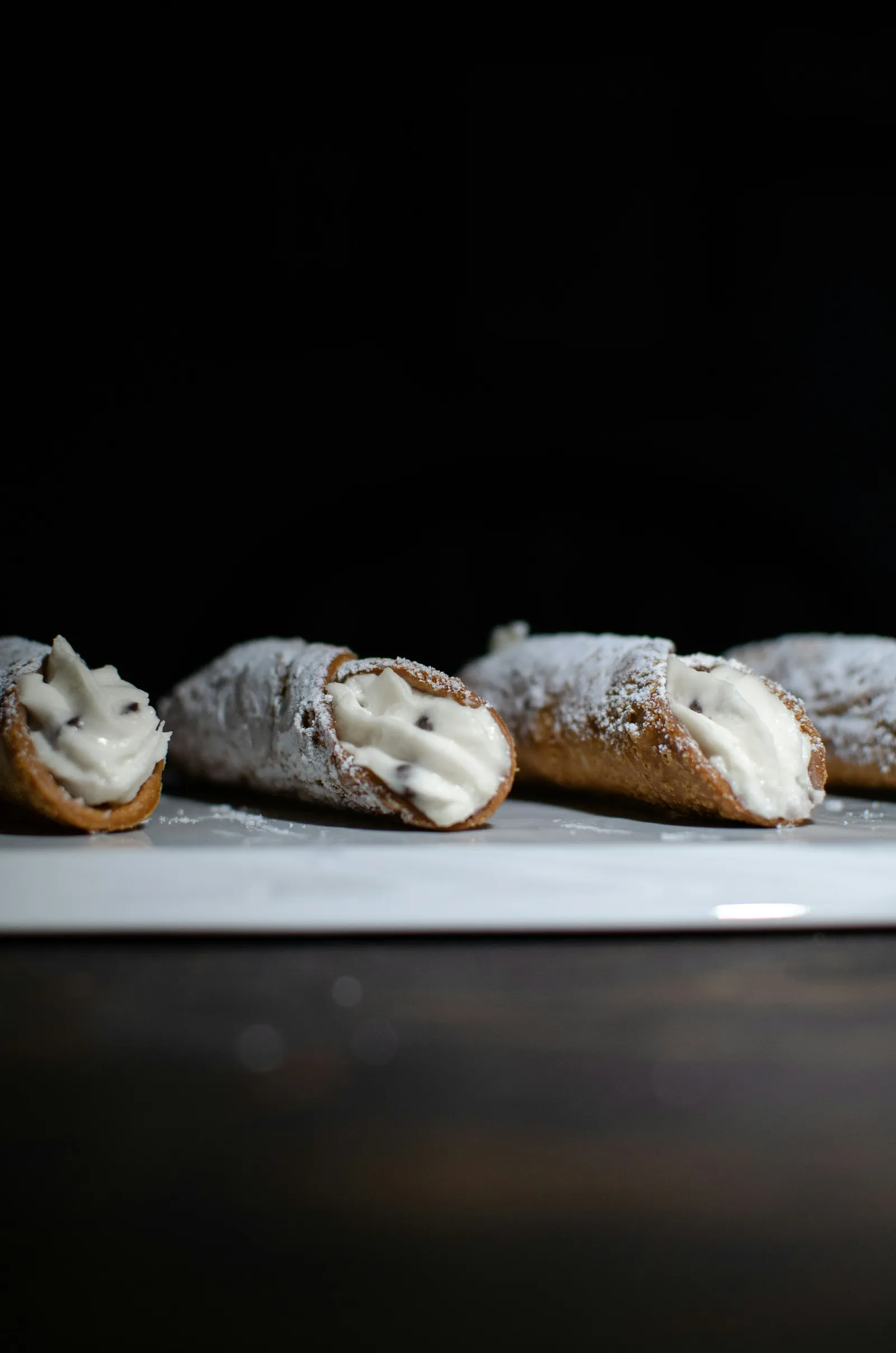
What are Sicilian cannoli, and how do you spot a good one?
A cannolo (plural cannoli) is a tube of thin, crisp fried pastry filled with sweetened ricotta. The classic filling is sheep's milk ricotta, sieved smooth with sugar, sometimes with chocolate chips or candied fruit, and the ends are often dipped in chopped pistachio or finished with a piece of candied orange or a candied cherry. Cannoli were traditionally a Carnival sweet, and they are on the Ministry's list of traditional Sicilian products.
How to spot a good cannolo
- Filled to order. The shell softens within hours of being filled. A good pasticceria fills it in front of you; a row of pre-filled cannoli in a fridge is a warning sign.
- Sheep's ricotta. It is creamier and tangier than cow's milk ricotta. Ask; good shops are proud to tell you.
- A blistered, crunchy shell. It should shatter when you bite it, not bend.
- Not too sweet. The ricotta should still taste of milk.
The town most associated with cannoli is Piana degli Albanesi, an Arbëreshë (Italo-Albanian) town in the hills above Palermo, whose large cannoli are listed separately on the Ministry's list of traditional products, together with those of neighbouring Santa Cristina Gela. In the rest of Sicily, any busy pasticceria will fill them for you. Sheep's ricotta is at its best from autumn to spring; my guide to Sicilian cheese explains why.
What is cassata siciliana?
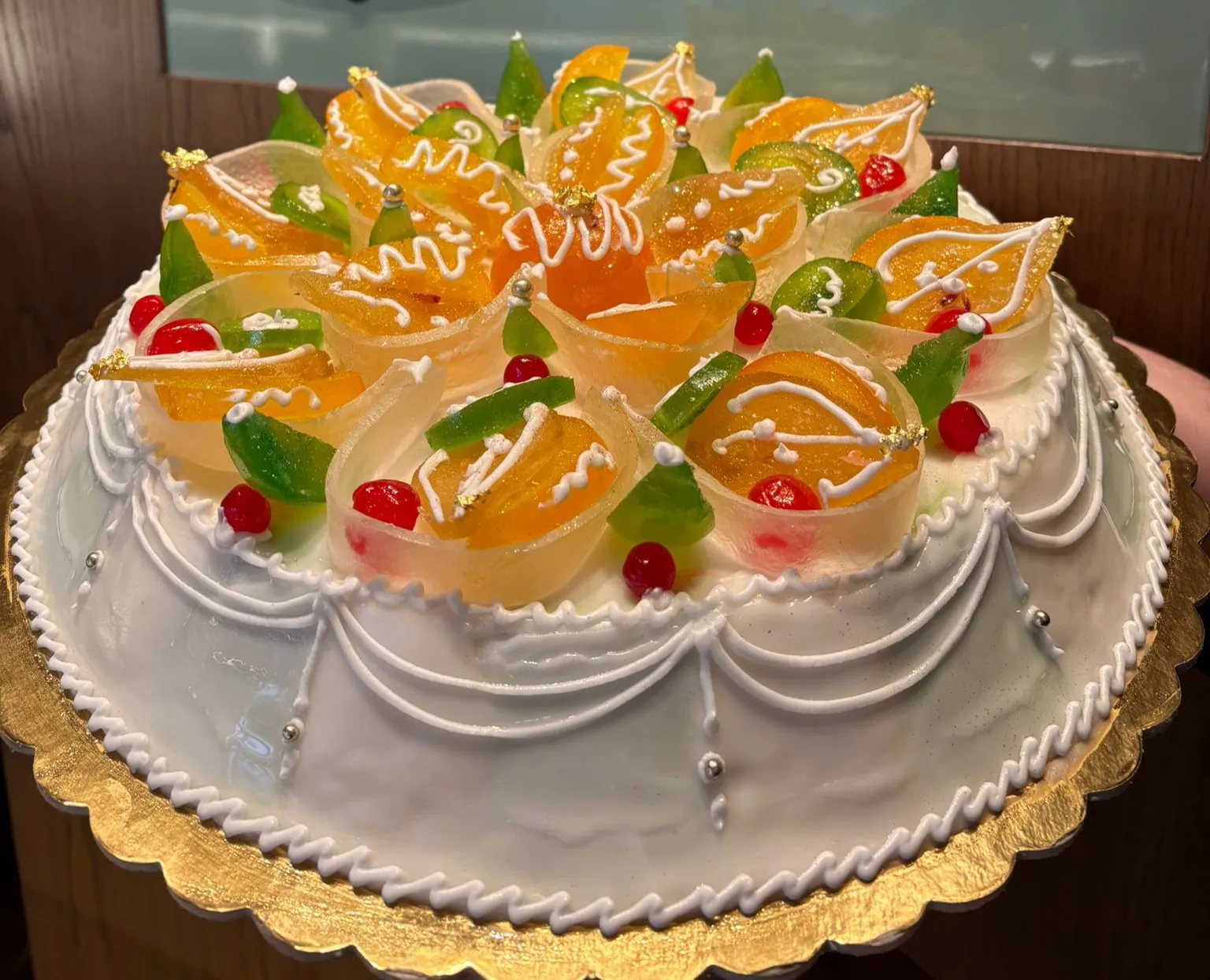
Cassata is the great showpiece of Sicilian pastry: a round cake of sponge soaked in liqueur or syrup, filled with sweetened ricotta and chocolate, wrapped in a band of pale green marzipan (pasta reale), covered in white icing and crowned with candied fruit, often a whole candied orange or a slice of candied pumpkin. It is very sweet and very rich, and a little goes a long way.
Cassata is the traditional Easter cake, especially in Palermo, but pastry shops make it all year, and you will also see small individual cassatine. Smaller relatives include the cassatelle, which vary from town to town.
A good cassata is judged on the ricotta, as cannoli are: it should be fresh, smooth and only lightly sweet, so that it balances the marzipan and icing. Buy it by the slice the first time, because a whole cake feeds a family. There is also a baked version, cassata al forno, a shortcrust tart filled with ricotta, which is plainer and, to many Sicilians, just as good. Cassata keeps for a day or two in the fridge, no more.
Minne di Sant'Agata
In Catania, the feast of Sant'Agata, the city's patron saint, runs from 3 to 5 February. For it, pastry shops make minne di Sant'Agata, small dome-shaped cassatine of sponge or shortcrust filled with ricotta, covered with white icing and topped with a candied cherry. Their shape recalls the saint's martyrdom, in which, according to tradition, her breasts were cut off. They are sold all year now, but February is when everyone eats them. Do not confuse them with the minni di virgini of Sambuca di Sicilia in the west, a shortcrust pastry of a similar shape filled with milk cream, candied pumpkin and chocolate, created in a convent there in 1725 and listed among Sicily's traditional products.
Granita and brioche: how do Sicilians eat granita?
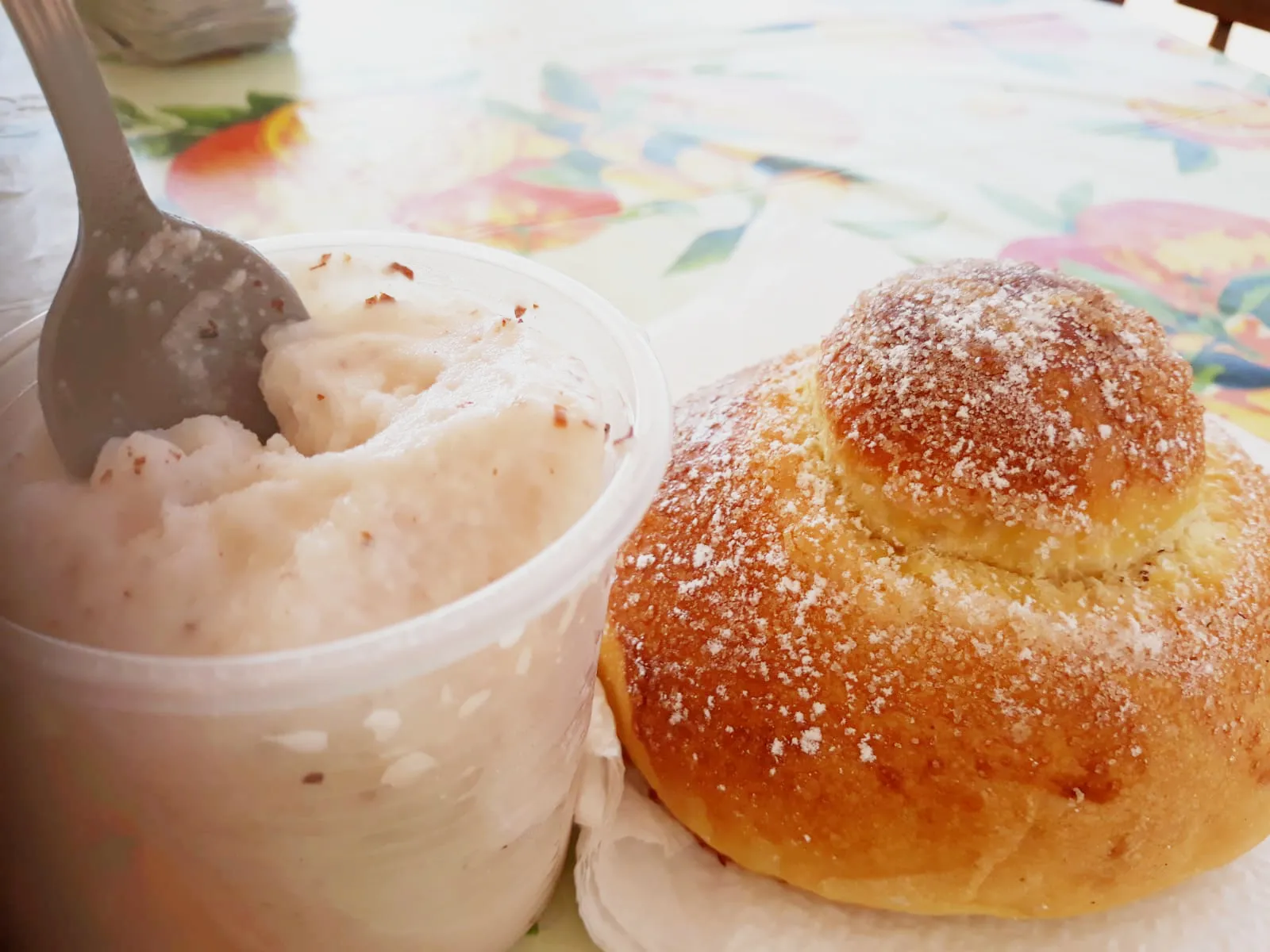
Sicilian granita is a semi-frozen dessert of water, sugar and fruit or nuts, stirred as it freezes so that it is smooth and spoonable rather than crunchy ice. The classic flavours are lemon, almond, black mulberry (gelsi neri) and coffee, often topped with whipped cream, with pistachio, peach and fig in season. Lemon, almond and mulberry granita are all on the Ministry's list of traditional Sicilian products.
In eastern Sicily, especially around Catania, Messina and Siracusa, granita is breakfast in summer: a glass of granita with a soft, slightly sweet brioche, the round one with a knob on top (brioche col tuppo), which you tear and dip. Many people order coffee granita with cream, or almond with a shot of coffee. In the west, granita is more of an afternoon treat, and you will find fewer bars making it fresh, especially out of season.
A good granita is made on the premises from real fruit or nuts, and the colour gives it away: almond granita is ivory, not white, and lemon is cloudy, not bright yellow. If a bar has a choice of a dozen neon colours, keep walking.
Frutta martorana and almond pastries
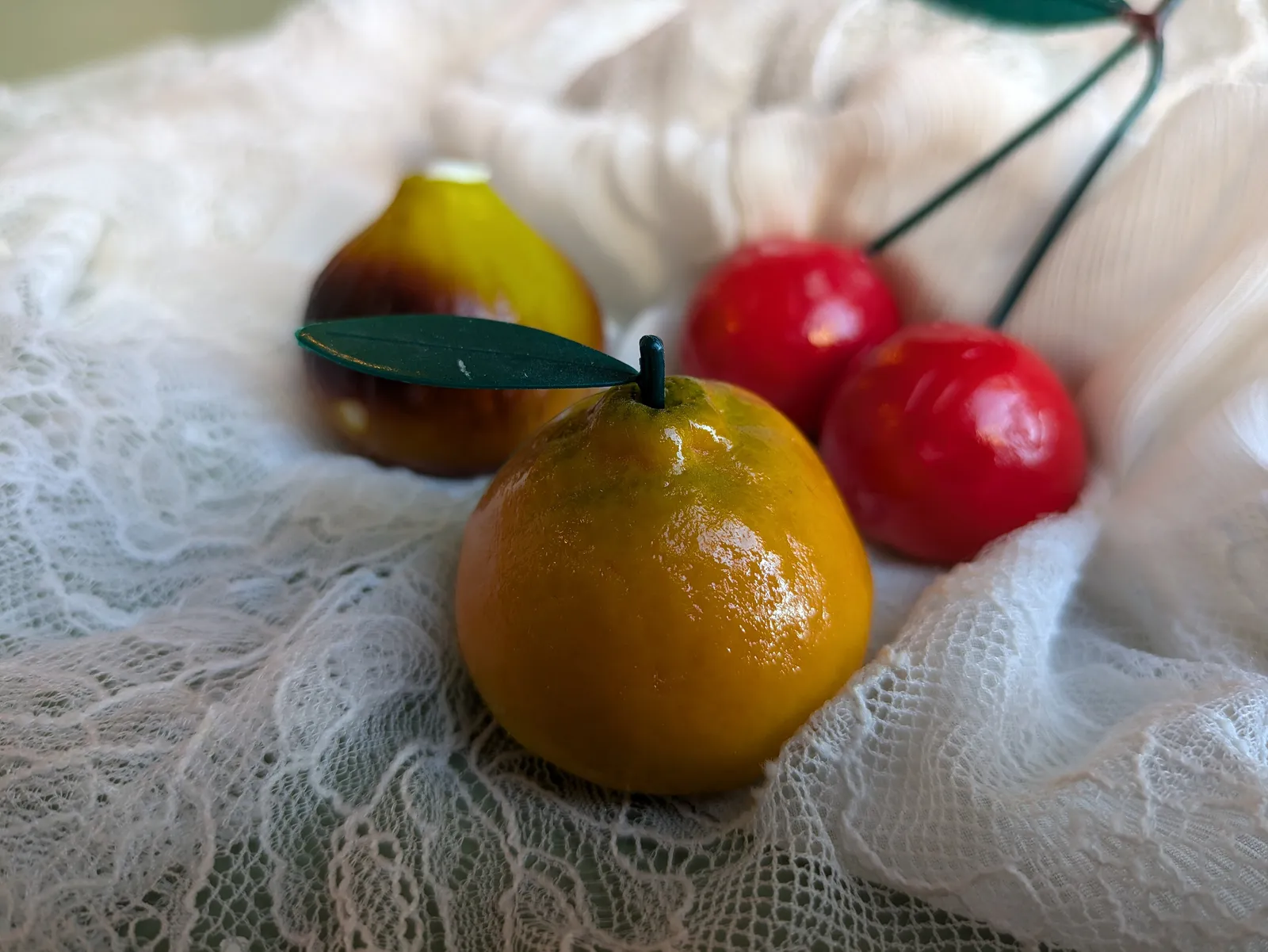
Almond paste (pasta di mandorle, or pasta reale when it is the fine marzipan used for decoration) is the base of a whole family of Sicilian sweets.
Frutta martorana
Frutta martorana is marzipan shaped and painted to look exactly like fruit: prickly pears, figs, oranges, even chestnuts. It takes its name from the Martorana church and convent in Palermo, where, as tradition has it, the nuns first made it. It is the sweet of the Festa dei Morti on 2 November, when Sicilian children traditionally received presents from their departed relatives. Around that date you will also see ossa di morto ("dead men's bones"), hard white and brown biscuits, and pupi di zucchero, painted sugar figures. All three are on the Ministry's list of traditional products.
Almond pastries
Every pasticceria sells paste di mandorla: soft, chewy almond biscuits, sometimes topped with a whole almond, a candied cherry or pine nuts, sometimes flavoured with pistachio or orange. They keep for a week or two, travel well and make a good present. The pasta reale of Erice is listed in its own right among Sicily's traditional products.
The best Sicilian almonds are worth looking for in their own right. Slow Food runs a presidium for the almond of Noto, in the south east, grown for the pastry shops of the Baroque towns; my guide to the Val di Noto covers Noto and its neighbours.
What are the genovesi of Erice?
The genovese (plural genovesi) is the sweet of Erice, the medieval town on its mountain above Trapani: a half-moon of crumbly shortcrust pastry, made partly with durum wheat semolina, filled with custard and dusted with icing sugar. It is at its best warm, a few minutes out of the oven, and people queue for them. Like many Sicilian sweets, it comes from the convent tradition.
Erice's best-known pastry shop is Maria Grammatico's, whose almond pastries and marzipan fruit follow recipes from the convent tradition of the town; my Trapani guide covers a day in Erice. Other bakers in the town make genovesi too, and the important thing is to eat one warm.
What is Modica chocolate?
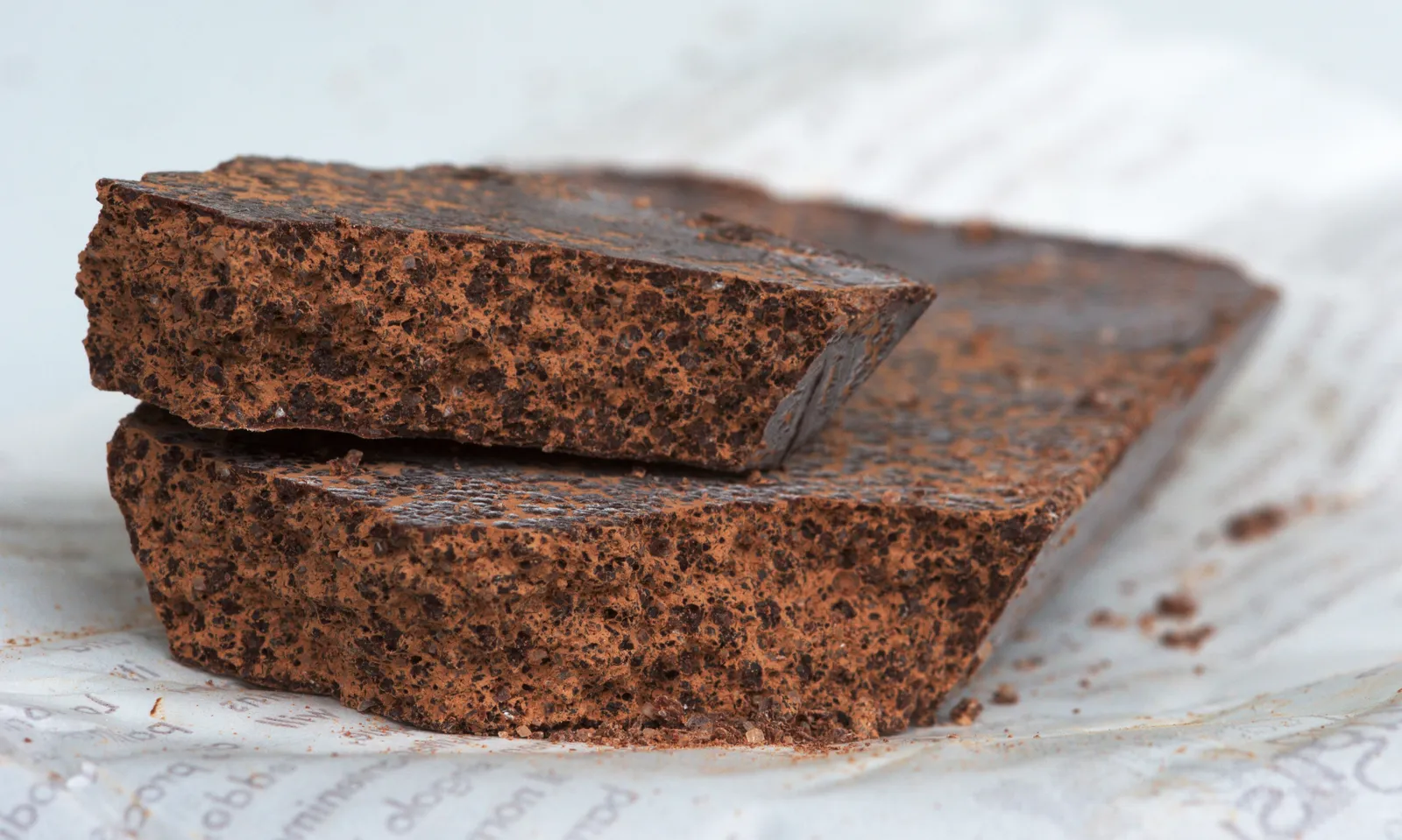
Modica chocolate is unlike any other chocolate you will have eaten. It is made by working bitter cocoa mass with granulated sugar at a low temperature, so the sugar never melts: the bar is grainy, almost sandy, and the chocolate tastes intensely of cocoa. In October 2018 Cioccolato di Modica became the first chocolate in the EU to receive protected geographical indication (IGP) status.
The IGP specification, published by the Ministry of Agriculture, sets out what that means:
- It must be made in the town of Modica, in the province of Ragusa.
- It contains between 50% and 99% cocoa mass, with no added cocoa butter or other fats, and it is not conched.
- The mass is worked at no more than 50°C at its core, which is what keeps the sugar crystals whole.
- The classic bar is rectangular with sloping sides and weighs no more than 100 g.
- It may be flavoured with spices (cinnamon, vanilla, chilli, nutmeg), natural flavours (citrus, wild fennel, jasmine, ginger), nuts (pistachio, hazelnut, almond) or salt, each with a minimum quantity.
The method is usually traced back to the Spanish period, when cocoa arrived from the Americas, though the details of that history are debated. In Modica you can taste before you buy in most shops; try plain, cinnamon and chilli side by side. Modica also holds a chocolate festival, ChocoModica, whose dates move from year to year, anywhere from late October to December. Because it contains no milk, plain Modica chocolate keeps well and travels well.
What is Bronte pistachio?
Pistacchio Verde di Bronte is the pistachio of the west slopes of Etna, and the most prized pistachio in Italy. It has been an EU protected designation of origin (DOP) since January 2010, and the specification sets out the details:
- It is grown in the territories of Bronte, Adrano and Biancavilla, in the province of Catania.
- The orchards are on volcanic soils between about 400 and 900 metres above sea level.
- The variety is the local Napoletana, also called Bianca or Nostrale, and the kernel is an intense green.
- The harvest runs from the second ten days of August to the first ten days of October. Growers remove the buds in the off year, so the trees crop every other year.
You will find Bronte pistachio in cannoli, granita, gelato, pesto, cream spreads and the soft pistachio cakes and biscuits sold all over the east. Because the DOP pistachio is scarce and expensive, plenty of "pistachio" products in Sicily use pistachios from elsewhere. If it matters, look for the words Pistacchio Verde di Bronte DOP and the EU DOP logo, and check the percentage of pistachio on the label.
Bronte holds a pistachio festival, the Sagra del Pistacchio, usually over two long weekends at the end of September and the start of October (in 2026 it ran from 25 to 27 September and 2 to 4 October). My guide to eastern Sicily and Etna covers the area around it.
Sicilian sweets by festival: buccellato, sfince, cuccìa and more
If you want to plan a trip around sweets, this is the calendar. Dates for movable feasts, such as Easter and Carnival, change every year.
| When | Feast | Sweets | Where it is strongest |
|---|---|---|---|
| 3 to 5 February | Sant'Agata | Minne di Sant'Agata | Catania |
| February or March | Carnival | Cannoli and fried sweets | Everywhere |
| 19 March | San Giuseppe | Sfince and other ricotta-filled fritters | Palermo and the west |
| Easter | Easter | Cassata | Palermo and across the island |
| Summer | Granita with brioche | Catania, Messina, Siracusa | |
| End of September, start of October | Sagra del Pistacchio | Pistachio everything | Bronte |
| 2 November | Festa dei Morti | Frutta martorana, ossa di morto, pupi di zucchero | Palermo and the west |
| 13 December | Santa Lucia | Cuccìa, arancine | Palermo, Siracusa |
| Christmas | Christmas | Buccellato, cassata, cannoli | Everywhere |
Sfince di San Giuseppe
For the feast of San Giuseppe on 19 March, which is also Father's Day in Italy, Palermo's pastry shops make sfince: large, irregular puffs of choux-like dough fried in lard, split and filled with sweet ricotta, then decorated with chocolate, candied orange, a candied cherry and chopped pistachio.
Cuccìa
On 13 December, the feast of Santa Lucia, Palermo eats cuccìa: whole boiled wheat berries mixed with sweet ricotta (or, in some families, with chocolate cream or honey). The tradition remembers a ship loaded with grain that, according to legend, reached Palermo on that day in 1646 and ended a famine, and many families still avoid bread and pasta on Santa Lucia, eating arancine instead.
Buccellato
Buccellato is the Christmas sweet of much of Sicily: a ring or roll of shortcrust pastry filled with dried figs, dried fruit, nuts, spices and jam, often decorated with icing and sprinkles. Smaller versions are called cucciddati. My guide to Christmas in Sicily covers the other festive food.
Where to try Sicilian desserts
Almost every town has a good pasticceria, and you do not need a famous name to eat well. These are the places most worth a detour for sweets:
- Palermo: cannoli, cassata, sfince in March and frutta martorana around 2 November. My guide to Palermo, Cefalù and Monreale covers the city.
- Piana degli Albanesi: the large cannoli of the hill town above Palermo.
- Catania, Messina and Siracusa: granita with brioche for breakfast, and minne in February.
- Modica: chocolate, tasted side by side in the shops on Corso Umberto and around the old town.
- Noto: almond pastries and granita in the Baroque town of the Noto almond.
- Bronte: pistachio in every possible form.
- Erice: warm genovesi and almond pastries.
How to order in a pasticceria
- Pastries are often sold by weight (a peso), especially biscuits and almond pastries. Ask for a vassoio (tray) and point.
- Ask for cannoli da riempire al momento, filled on the spot.
- Stand at the counter and eat; it is cheaper than sitting down in many bars, and that is how locals do it.
- If you are taking a tray to someone's house, as Sicilians do on Sundays, the shop will wrap it in paper and ribbon for you.
Which Sicilian sweets can you take home?
Anything filled with ricotta or cream (cannoli, cassata, sfince, minne) is best eaten in Sicily. It does not keep, and for travellers to Great Britain there is a stricter reason: GOV.UK currently says you cannot bring cheese, milk or other dairy products from the EU into Great Britain, and ricotta is a dairy product. Check the GOV.UK page "Bringing food into Great Britain" for anything containing dairy before you pack.
The sweets that travel well are the dry ones: Modica chocolate, almond pastries, buccellato, torrone and shelled Bronte pistachios. A few practical tips:
- Buy almond pastries on your last day; they are best within a week or two.
- Pistachio cream in jars counts as a liquid or paste for hand luggage, so put it in the hold.
- Modica chocolate does not like heat; keep it out of a hot car in summer.
To go with them, a glass of Passito di Pantelleria or sweet Marsala is the local choice; my Sicilian wine guide covers the sweet wines, and my piece on Sicilian honey covers the other great sweet thing the island makes.
Frequently asked questions
What is the most famous Sicilian dessert?
The cannolo is the most famous: a crisp tube of fried pastry filled with sweetened sheep's milk ricotta, often finished with pistachio or candied fruit. Cassata, a rich cake of sponge, ricotta and marzipan topped with candied fruit, is the great showpiece. Both appear on the Italian Ministry of Agriculture's list of traditional Sicilian products, along with granita and frutta martorana.
Where do cannoli come from in Sicily?
Cannoli are made all over Sicily, and were traditionally a Carnival sweet. The town most associated with them is Piana degli Albanesi, an Italo-Albanian town in the hills above Palermo, whose large cannoli are listed separately on the Ministry's list of traditional products together with those of neighbouring Santa Cristina Gela. Wherever you are, the best cannoli are filled to order.
What is the difference between cannoli in Sicily and abroad?
In Sicily the filling is traditionally sheep's milk ricotta, sieved smooth and lightly sweetened, which is creamier and tangier than the cow's milk ricotta or mascarpone often used abroad. Good Sicilian pastry shops also fill the shells to order, so they stay crisp. Pre-filled cannoli in a fridge, with soft shells, are a sign of a shop to skip.
What is Modica chocolate?
Modica chocolate is a grainy, intensely cocoa-flavoured chocolate made in Modica by working bitter cocoa mass and sugar at no more than 50°C, so the sugar crystals stay whole. It contains 50% to 99% cocoa mass, with no added cocoa butter, and is not conched. In 2018 it became the first chocolate in the EU with protected geographical indication (IGP) status.
Why is Bronte pistachio so expensive?
Pistacchio Verde di Bronte DOP can only come from Bronte, Adrano and Biancavilla on the volcanic slopes of Etna, between about 400 and 900 metres. The trees crop only every other year, harvesting on rough lava ground is slow work, and production is small compared with demand. Many pistachio products in Sicily use cheaper imported nuts, so check the label for the DOP name.
How do you eat granita in Sicily?
In eastern Sicily, especially Catania, Messina and Siracusa, granita is a summer breakfast: a glass of granita with a soft brioche, which you tear and dip. Classic flavours are lemon, almond, black mulberry and coffee, the coffee one often with whipped cream. Elsewhere it is more of an afternoon treat. The best granita is made fresh on the premises from real fruit or nuts.
What is frutta martorana?
Frutta martorana is marzipan shaped and hand-painted to look like real fruit, named after the Martorana church and convent in Palermo, where tradition says the nuns first made it. It is the sweet of the Festa dei Morti on 2 November, when Sicilian children traditionally received presents from their departed relatives, and you will find it in Palermo pastry shops above all in late October and early November.
What are minne di Sant'Agata?
Minne di Sant'Agata are small dome-shaped cassatine from Catania: sponge or shortcrust filled with sweet ricotta, covered in white icing and topped with a candied cherry. Their shape recalls the martyrdom of Sant'Agata, Catania's patron saint. They are made above all for her feast, from 3 to 5 February, though Catania's pastry shops now sell them all year.
What desserts are eaten in Sicily at Christmas?
Buccellato is the main Christmas sweet: a ring or roll of shortcrust filled with dried figs, nuts, spices and jam, with smaller versions called cucciddati. Cassata, cannoli, nougat (torrone), mustazzola biscuits and Modica chocolate also appear on Christmas tables. Earlier in December, on 13 December, Palermo eats cuccìa, boiled wheat with sweet ricotta, for Santa Lucia.
What are the genovesi of Erice?
Genovesi are the signature pastry of Erice, the hilltop town above Trapani: half-moons of crumbly shortcrust, made partly with durum wheat semolina, filled with custard and dusted with icing sugar. They come from the town's convent pastry tradition and are best eaten warm, minutes out of the oven, from one of the pastry shops in the old town.
Sources and small print
- MASAF: Cioccolato di Modica IGP specification and announcement of the first chocolate IGP (15 October 2018)
- Commission Implementing Regulation (EU) 2018/1529 registering Cioccolato di Modica (PGI)
- MASAF: Pistacchio Verde di Bronte DOP specification and Commission Regulation (EU) No 21/2010
- MASAF: list of traditional agri-food products (PAT); the Sicilian entries are summarised on Wikipedia
- Visit Sicily (Regione Siciliana): Christmas food in Sicily and Slow Food presidia in Sicily
- ChocoModica and the Comune di Bronte: Sagra del Pistacchio 2026
- Cuccìa, Sfincia di San Giuseppe and Sant'Agata (Wikipedia, for the traditions and dates)
- GOV.UK: bringing meat, dairy and animal products into Great Britain
Festival dates change from year to year; check with the town before you travel.
Credits
Photo: Claudio Pantoni, Unsplash Licence, via Unsplash.
Photo: Giuseppe Cosenza, CC BY-SA 4.0, via Wikimedia Commons.
Photo: Stella, CC BY-SA 4.0, via Wikimedia Commons.
Photo: Auregann, CC BY-SA 4.0, via Wikimedia Commons.
Photo: Mussklprozz, CC BY-SA 3.0, via Wikimedia Commons.
 The weekly YouTube series