
Christmas in Sicily: the dates at a glance
Most of what happens follows the church calendar, so the key dates are the same every year. Exact times and the days each event opens do change, so treat this as the frame and check the details for the year you travel.
| Date | What happens | Public holiday? |
|---|---|---|
| 8 December | The Immaculate Conception (l’Immacolata). The start of the season: trees and nativity scenes go up, and many markets and light shows open around this weekend. | Yes |
| 13 December | Santa Lucia. The great procession in Siracusa; in Palermo, a day of arancine and cuccìa. | In Siracusa only |
| 16 to 24 December | The Christmas novena, nine days of evening prayers before Christmas, still accompanied by bagpipers in some towns. | No |
| 20 December | In Siracusa, the statue of Santa Lucia returns to the Cathedral (the Ottava). | No |
| 24 December | Christmas Eve (la Vigilia): the big family dinner and midnight Mass. Many shops close early. | No |
| 25 December | Christmas Day: a long family lunch. Many living nativity scenes open from today or the day after. | Yes |
| 26 December | Santo Stefano: more family visits, and one of the busiest days for living nativities. | Yes |
| 31 December and 1 January | New Year’s Eve (San Silvestro) with fireworks, and New Year’s Day. | 1 January only |
| 6 January | Epiphany (la Befana): stockings for children, Epiphany rites such as the one at Piana degli Albanesi, and the end of the season. | Yes |
For the weather, sea temperature and what else is on, see my guides to Sicily in December and Sicily in January.
Living nativity scenes: the must-see of a Sicilian Christmas
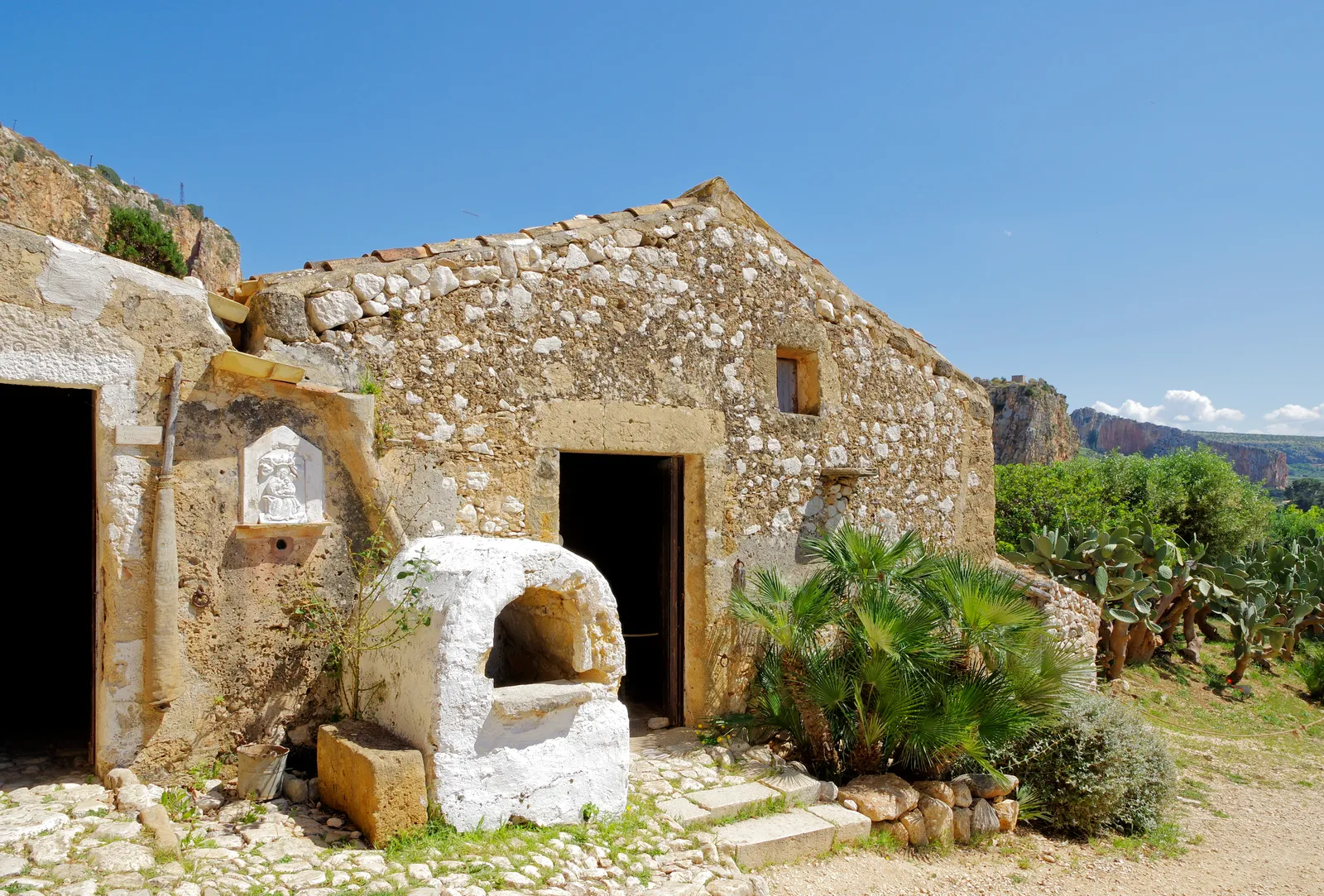
If you see one thing, make it a presepe vivente, a living nativity. Whole villages turn their old streets, caves and courtyards into Bethlehem, with local people in costume working at the old trades: bread baking in wood ovens, cheese being made, blacksmiths, basket weavers and carters. You walk through it at your own pace, usually after dark, and the nativity itself is the last scene. They are a real community effort, and some have run for decades.
| Town (province) | Setting |
|---|---|
| Custonaci (Trapani) | A whole hamlet of stone houses inside the vast Mangiapane cave at Scurati, listed on the Region’s register of intangible heritage |
| Ispica (Ragusa) | The natural caves of the Cava d’Ispica, with old trades such as the blacksmiths and carters brought back to life |
| Monterosso Almo and Giarratana (Ragusa) | Hilltop villages in the Iblei mountains whose old centres become a nativity spread through the streets |
| Modica (Ragusa) | An open-air nativity in the historic centre of the baroque town |
| Gangi (Palermo) | The Santa Lucia quarter of a medieval village in the Madonie mountains, at about 1,000 metres |
| Pollina (Palermo) | The lanes of the old centre, high above the coast near Cefalù |
| Sutera (Caltanissetta) | The Rabato, the old Arab quarter, filled with costumed figures and lights |
| Calatafimi-Segesta (Trapani) | The historic centre of the town near the temple of Segesta |
| Licodia Eubea (Catania) | A village nativity with wood-fired bakeries and local food to taste |
| Castanea delle Furie (Messina) | The gardens of Villa Costarelli in the hills above Messina, with a reconstruction of Herod’s palace |
| Cavagrande del Cassibile (Siracusa) | Outdoors near the famous small lakes of the nature reserve, between Avola and Cassibile |
The one closest to us is Custonaci, in the province of Trapani, and it is the one I would pick first. The Mangiapane cave is enormous, and the houses built inside it were lived in until well into the 20th century, so the scene does not feel staged. For 2026/27 it opens from 25 to 27 December 2026 and from 3 to 6 January 2027, with tickets sold online in advance through the Grotta Mangiapane website. That is a typical pattern: most living nativities open on a handful of evenings between Christmas Day and Epiphany, not every day. Many smaller ones publish their dates only in December, so check the organisers’ own pages before you drive anywhere.
| Living nativity | Dates 2026/27 | Opening times |
|---|---|---|
| Custonaci (Grotta Mangiapane) | 25 to 27 December 2026; 3 to 6 January 2027 | Evenings, on the ticket site |
| Ispica | 20, 25, 26 and 27 December 2026; 1, 3 and 6 January 2027 | 4pm to 8pm |
| Most others | Usually announced in early December | On the organisers’ pages |
Practical points: they are outdoors and in the evening, often on uneven stone, so wear warm clothes and proper shoes. Hill villages such as Gangi and Monterosso Almo get cold after dark. Weekends and 26 December are the busiest times, and some ask for a small ticket or donation. Ispica, Modica, Monterosso Almo and Giarratana are all in the south-east, and my guide to the Baroque towns of the Val di Noto helps you plan the area.
Caltagirone and the nativity scene tradition
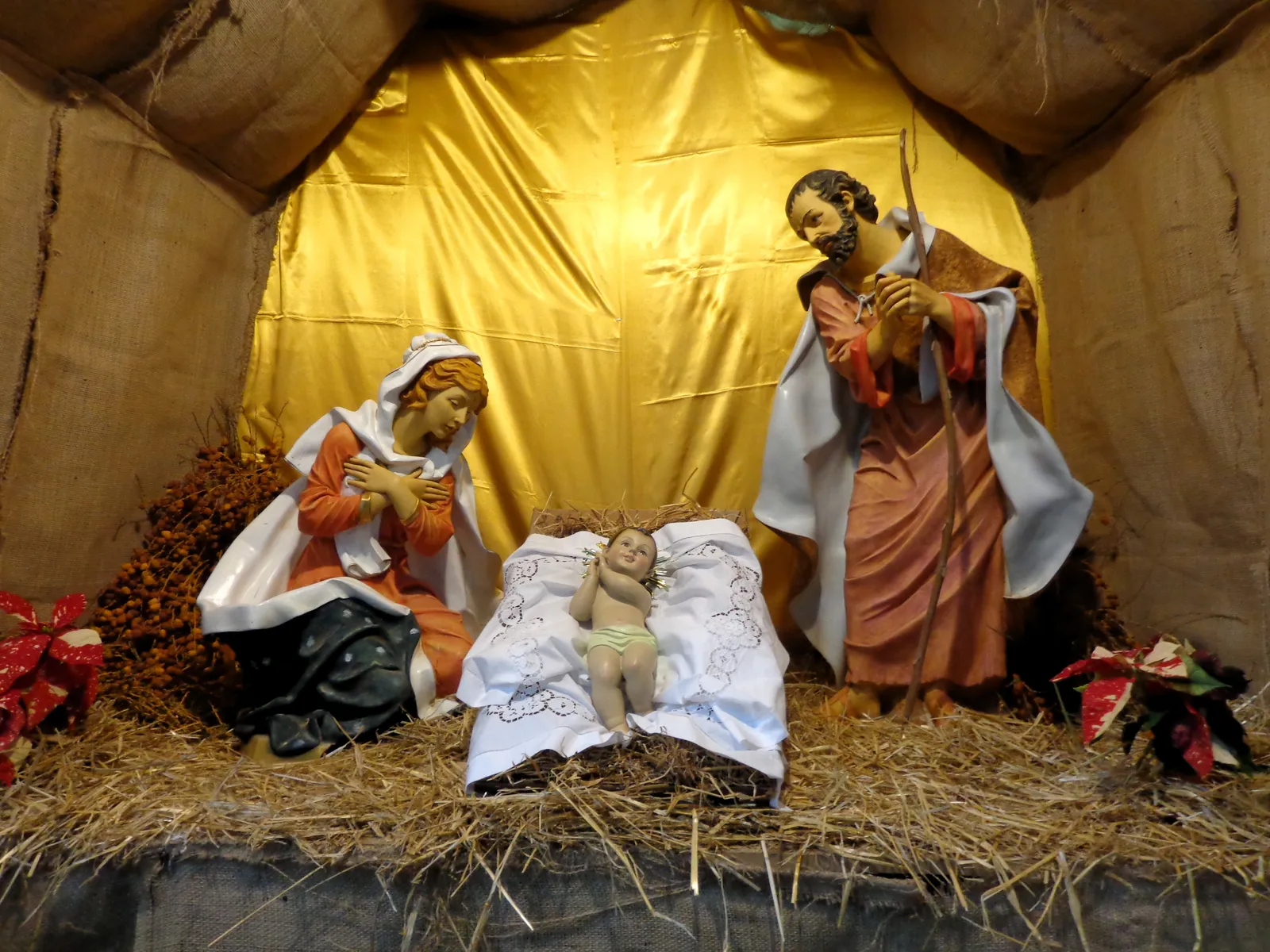
Sicilians build a presepe at home as much as a tree, and churches, museums and town halls put up their own. The place to see the craft at its best is Caltagirone, the ceramics town in the province of Catania, famous for the 142 steps of its Santa Maria del Monte staircase, each faced with hand-painted tiles. The nativity at the top of this page is inside the church of Santa Maria del Monte at the top of those steps.
From 1 December 2026 to 6 January 2027, Caltagirone’s Christmas nativity route includes an animated nativity in terracotta and fabric, a nativity made of cotton, and a House of Nativity Scenes with a life-size scene inside an 18th-century stable. There are also some unusual ones: a nativity built from 10,000 toothpicks, others set inside a Fiat 500 and a vintage Vespa, and an Adoration of the Magi in marble powder made so that visually impaired visitors can explore it by touch. Prices and the programme are on the organisers’ website.
On the other side of Etna, Acireale runs a similar trail of nativity scenes, L’incanto dei presepi, through December to Epiphany. And if you want to bring one home, the Christmas markets sell Caltagirone ceramic figures and nativities made with Trapani coral.
Santa Lucia on 13 December: Siracusa and Palermo
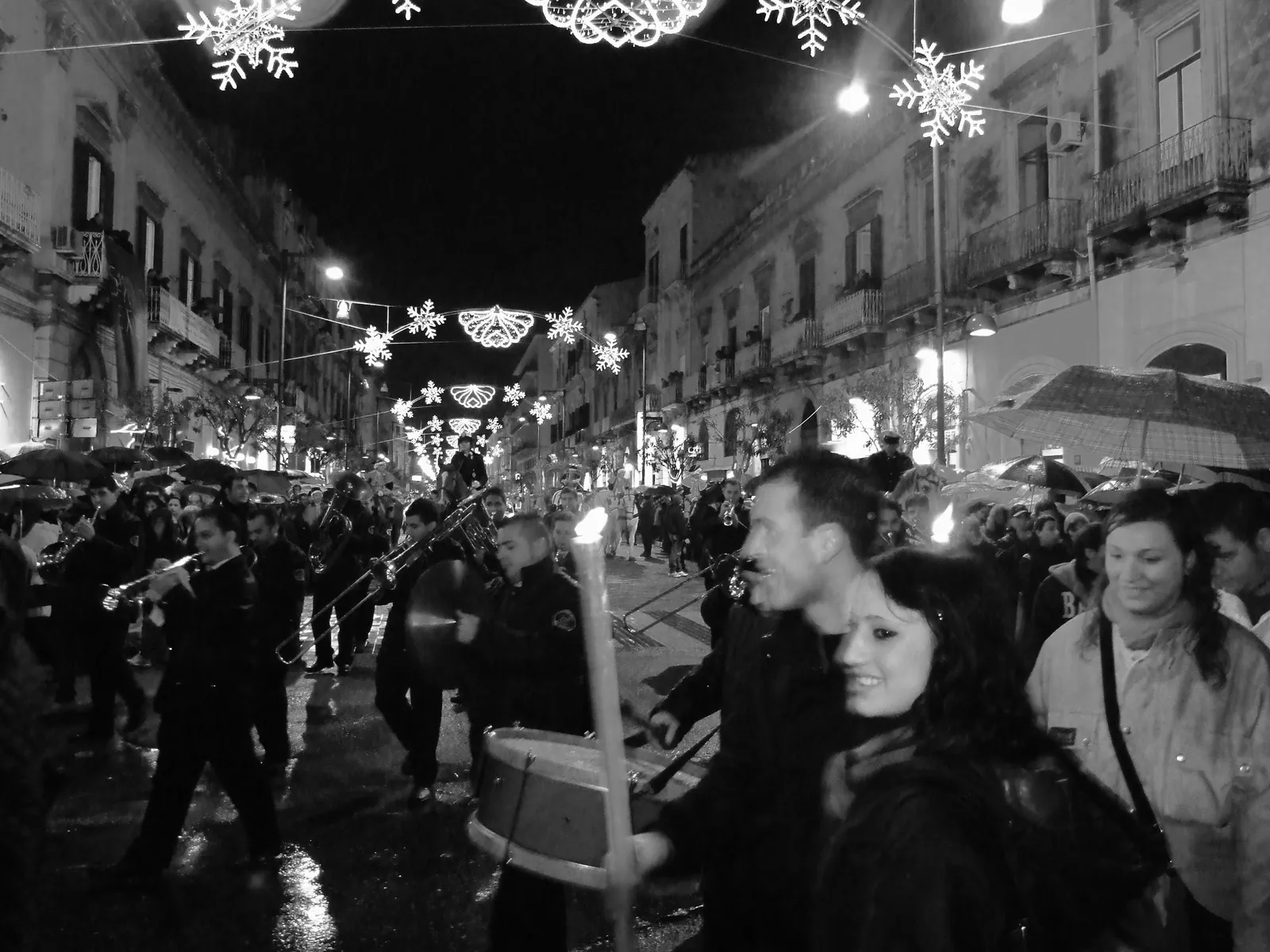
Lucy was a young woman of Siracusa (Syracuse) martyred in the city in 304, and she is its patron saint. On 13 December her silver statue and relics are carried in procession from the Cathedral on Ortigia to the Basilica of Santa Lucia al Sepolcro in the Borgata district, the place of her burial, followed by huge crowds. A week later, on 20 December (the Ottava), the statue is carried back to the Cathedral. If you are in the east of the island in mid-December, it is one of the great religious festivals of Sicily. For the rest of the east, see my guide to Etna, Taormina, Catania and Siracusa.
In Palermo the day is about food. Tradition says that on 13 December 1646, during a famine, a ship full of wheat arrived in the port, and people were so hungry they boiled the grain instead of milling it. So on Santa Lucia many Palermo families skip bread and pasta for the day and eat cuccìa, boiled wheat with sweetened ricotta, and arancine, the fried rice balls (in Palermo they are feminine: arancina, not arancino). Siracusa tells its own version of the wheat-ship story, and cuccìa is made in both cities.
Christmas markets and lights
Sicily does not have the big alpine-style markets of northern Europe, but most towns put on lights, music and a few weeks of stalls. The ones that stand out:
- Palermo: wooden huts in Piazza Castelnuovo and Via Emerico Amari, selling crafts, Caltagirone ceramics and Trapani coral nativities, with sfince (Christmas fritters) and other treats. A smaller, family market sets up under the giant fig trees of Piazza Marina in the Kalsa. If you are short of time, my guide to a day in Palermo maps the old centre, and my Palermo, Cefalù and Monreale guide covers the rest of the city and the coast.
- Erice: for EricèNatale the whole medieval village, at about 750 metres above Trapani, fills with light installations, concerts, exhibitions and nativity displays, from 6 December to 6 January in 2025/26. In fog or a light frost it is magical.
- Marzamemi: the fishing village of Pachino in the far south-east holds a Christmas Village in the old tuna fishery from 8 December 2026 to 6 January 2027.
- Catania, Cefalù and Scicli all ran full Christmas programmes in 2025/26, from about 6 December to Epiphany.
Programmes are usually announced in late November or early December. The Region lists them on its tourism site, Visit Sicily, which is the most reliable single place to check.
What Sicilians eat at Christmas
Every province has its own dishes, and every family will tell you theirs is the right way. These are the ones you will meet everywhere:
| Food | What it is | When |
|---|---|---|
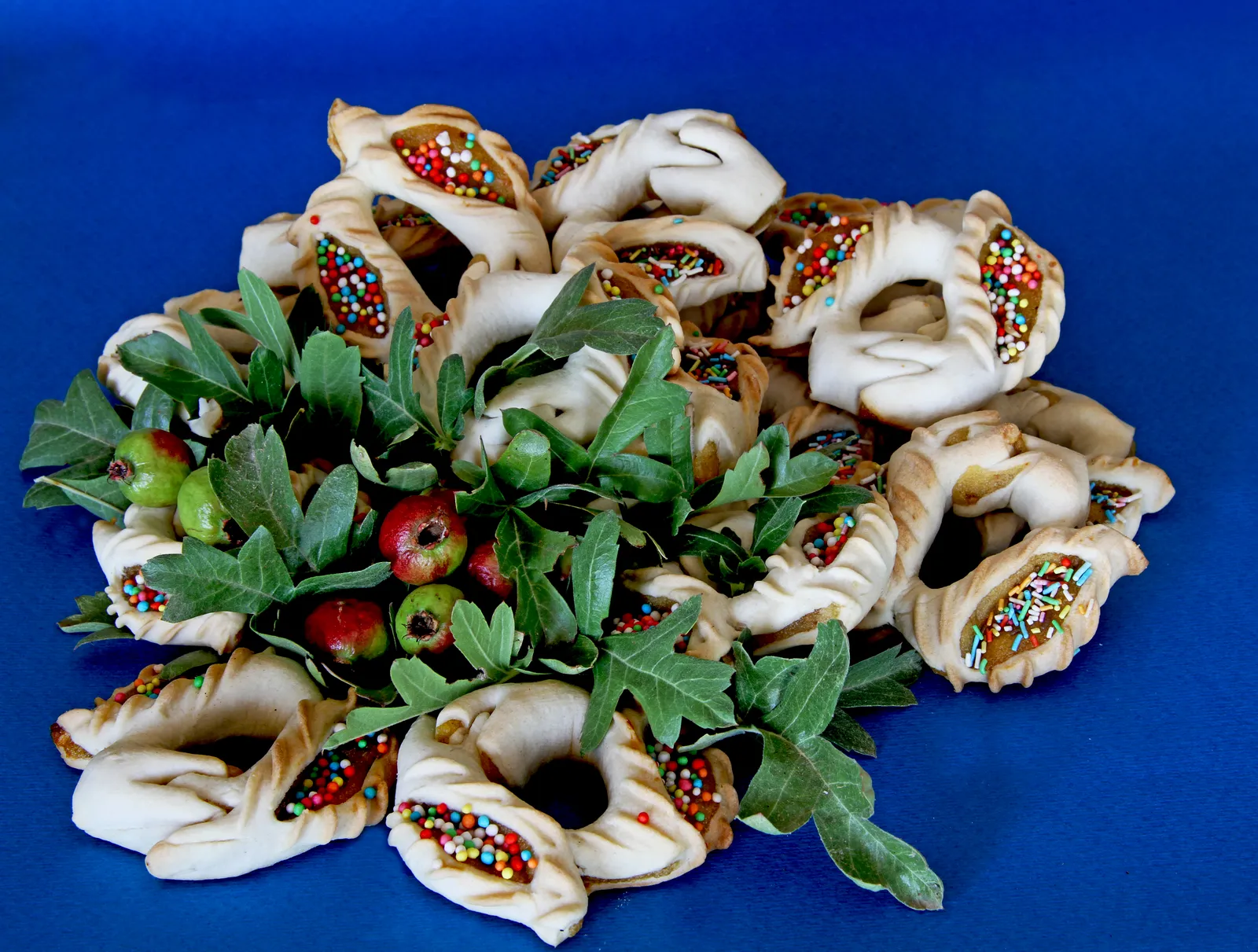
| Buccellato (cucciddatu) | A ring of shortcrust pastry filled with dried figs, almonds, raisins and orange peel, often given as a present. Smaller versions are called buccellatini. | All through the season |
| Cuccìa | Boiled wheat with sweetened ricotta, chocolate and candied fruit | 13 December |
| Arancine | Fried rice balls, usually with a meat ragù or butter and ham | 13 December in Palermo, and all year |
| Sfincione | Palermo’s thick, soft pizza with tomato, onion, anchovy and breadcrumbs | All winter, and on the holiday tables |
| Crispelle | Fried dough, either rice with honey or savoury with anchovy or ricotta, a Catania speciality | Around 8 December and Christmas |
| Fried cardoons (carduna) | A humble winter vegetable fried in batter, still on many Christmas Eve tables | Christmas Eve |
| Cassata and cannoli | The great ricotta sweets of Sicily, made in huge numbers for the holidays | Christmas and New Year |
| Mustazzola | Hard spiced biscuits, made with cooked wine or honey depending on the town | The weeks before Christmas |
Christmas Eve is traditionally a meatless dinner in many families, with fish and vegetables, and Christmas Day is the big lunch, often baked anelletti (ring pasta) and falsomagro, a stuffed meat roll. At New Year, lentils are eaten for luck, as all over Italy. Panettone and pandoro from the north are on sale everywhere, but a buccellato from a good pastry shop is the gift to take home, and it keeps well in a suitcase.
Epiphany on 6 January: Piana degli Albanesi and the end of the season
On the night of 5 January, Italian children hang up stockings for the Befana, the old woman on a broomstick who brings sweets (or coal). The next day is a public holiday, and there is a saying that Epiphany takes all the holidays away: the decorations come down and the living nativities close.
The most striking way to spend it is in Piana degli Albanesi, in the hills about 25 kilometres south of Palermo. The town was founded by Albanian refugees in the 15th century and still follows the Byzantine rite. On 6 January it celebrates the Theophany: after the Mass in the Cathedral of San Demetrio, the clergy bless the waters at the Fontana dei Tre Cannoli in the main square, and a white dove is sent gliding on a wire from the bell terrace of the Odigitria sanctuary down to the fountain. Blessed oranges are then handed out to the crowd. Many people wear the town’s magnificent embroidered traditional costume.
Practical tips for Christmas in Sicily
- Weather: on the coast, December averages highs of about 16°C (61°F) and lows of 9 to 11°C, with rain on 9 to 12 days of the month. Hill towns such as Erice, Gangi and Piana degli Albanesi sit between 700 and 1,000 metres and can be close to freezing at night, and Etna is usually white. The sea is about 16 or 17°C. Read what Sicily is really like in winter and what to pack.
- What closes: on 25 December and 1 January almost everything is shut: shops, banks, post offices and most museums and sites, or they keep short hours. On 8 and 26 December and 6 January many shops close too. On 24 and 31 December many places close early.
- Eating out: plenty of restaurants open for Christmas lunch and New Year’s Eve dinner, but they fill with local families and often serve a fixed menu, so book ahead.
- Getting around: trains and buses run holiday timetables on public holidays, with far fewer services, and on 25 December and 1 January some routes do not run at all. Check the timetable for that exact date. If you are not hiring a car, read Sicily without a car. Living nativities in the hills are much easier to reach by car.
- Where to stay: many smaller hotels and beach places close for the winter, but city hotels stay open, and prices only rise around New Year. Flights to Palermo and Catania fill up in the week before Christmas, so book early.
- Dates: every event’s dates change from year to year. Check the town or organiser’s own page, or Visit Sicily’s Christmas listings, before you travel.
My first Christmas at the villa
Christmas 2026 is a special one for me. I am planning to spend my first night at the villa on Christmas Day, after all the work of clearing, securing and repairing a house that stood empty for over 20 years. I will be filming it, so if you want to see what a Sicilian Christmas looks like from inside an abandoned villa, follow along in the weekly series.
Frequently asked questions
What is Christmas like in Sicily?
Christmas in Sicily is a month-long season from 8 December to 6 January, centred on family, church and food rather than shopping. The highlights are living nativity scenes in villages and caves, the nativity route in Caltagirone, the feast of Santa Lucia on 13 December, Christmas markets and lights in towns such as Palermo and Erice, and Epiphany on 6 January. The weather on the coast is mild, with highs around 16°C.
Where is the best living nativity in Sicily?
The best known is in the Mangiapane cave at Scurati near Custonaci, in the province of Trapani, where a whole hamlet of stone houses inside a vast cave becomes Bethlehem; it is on the Region’s register of intangible heritage. Others worth the trip include the caves of Cava d’Ispica, Monterosso Almo and Giarratana near Ragusa, Gangi in the Madonie, and the Rabato quarter of Sutera. Most open on selected evenings between 25 December and 6 January.
When is the feast of Santa Lucia in Siracusa?
On 13 December, when the silver statue of Santa Lucia is carried in procession from the Cathedral on Ortigia to the Basilica of Santa Lucia al Sepolcro. It returns to the Cathedral on 20 December, a week later. In Palermo, 13 December is marked by eating arancine and cuccìa instead of bread and pasta.
What do Sicilians eat at Christmas?
Christmas Eve is often a meatless dinner with fish and vegetables, such as fried cardoons, and Christmas Day is a long family lunch, often with baked anelletti pasta. The typical sweets are buccellato (a pastry ring filled with dried figs and nuts), cassata, cannoli, mustazzola and, around 13 December, cuccìa. Sfincione and crispelle are favourite holiday snacks.
Is everything closed on Christmas Day in Sicily?
Almost. On 25 December and 1 January shops, banks, post offices and most museums are closed or keep short hours, and public transport is much reduced. Many restaurants open for Christmas lunch but need booking. 8 December, 26 December and 6 January are also public holidays, when many shops close.
What is the weather like in Sicily at Christmas?
Mild rather than warm. On the coast, December daytime highs average about 16°C (61°F) and nights 9 to 11°C, with some rainy days. Hill towns such as Erice and Gangi are much colder at night, and Etna is usually covered in snow. The sea is around 16 to 17°C, too cold for most swimmers.
Is Sicily worth visiting at Christmas?
Yes, if you want traditions rather than sunshine. You get living nativities, Santa Lucia, Christmas markets and food you will not find in summer, with few tourists and lower prices before New Year. The trade-offs are short days, some rain, closed beach resorts and very little open on 25 December and 1 January, so plan those two days around a booked lunch.
Where should I stay in Sicily for Christmas?
Stay in a city, where hotels and restaurants stay open. Palermo has the biggest markets and is about 25 kilometres from Piana degli Albanesi for Epiphany; Trapani puts you near Erice and the Custonaci nativity; Siracusa is the base for Santa Lucia and the nativities around Ragusa and Ispica; Catania suits Acireale and Caltagirone.
When does the Christmas season end in Sicily?
On 6 January, Epiphany, which is a public holiday. Living nativities, markets and lights close that day or soon after, and in Piana degli Albanesi the day is marked with the Byzantine-rite Theophany and the blessing of the waters.
Sources and small print
- Regione Siciliana, Visit Sicily: tour of the living nativities of Sicily, the feast of Santa Lucia in Siracusa, Christmas markets in Palermo, Christmas in Caltagirone 2026/27, EricèNatale, Christmas at the table in Sicily and the Sicilian buccellato
- I Presepi di Caltagirone, the organisers’ site for the Caltagirone nativity exhibition (Associazione Culturale Eventi d’Arte)
- Grotta Mangiapane, run by the Associazione Culturale Museo Vivente di Custonaci
- Visit Piana: the Theophany (Piana degli Albanesi)
- Italian Wikipedia: Festa di santa Lucia (Siracusa) and Cuccìa (Sicilia)
Weather figures are the long-term averages used in my month guides. Event dates are those published for the 2025/26 season unless the 2026/27 dates are given, and they can change.
Credits
Photo: Effems, CC0, via Wikimedia Commons.
Photo: Berthold Werner, CC BY-SA 4.0, via Wikimedia Commons.
Photo: Salvo Cannizzaro, CC BY-SA 3.0, via Wikimedia Commons.
Photo: Salvatore Farina, CC0, via Wikimedia Commons.
 The weekly YouTube series