
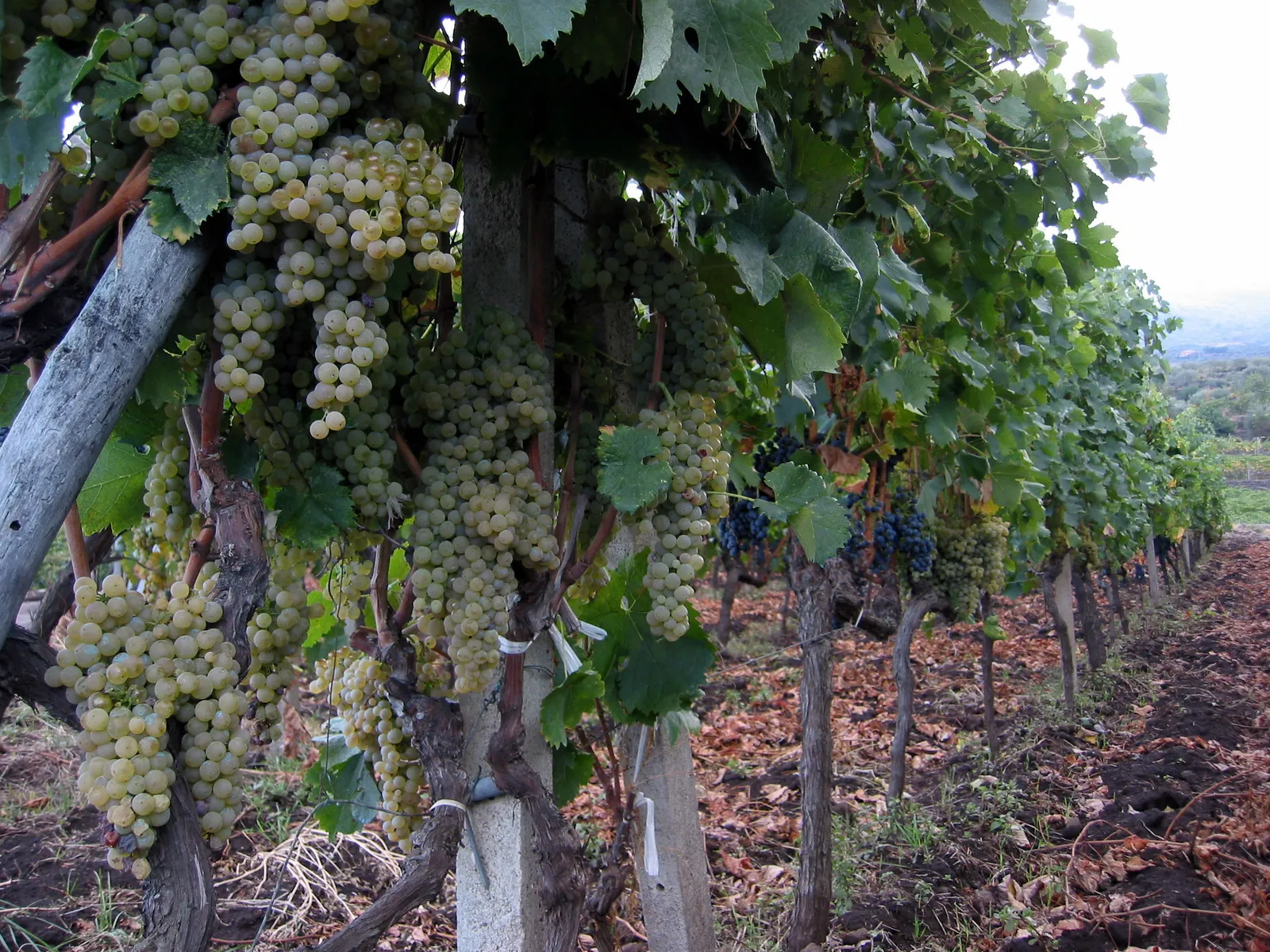
Why Sicilian wine is worth knowing
Sicily is the largest island in the Mediterranean and, by area, the biggest vineyard in Italy: around 119,000 hectares of vines in 2022, more than any other region. For most of the twentieth century that meant volume rather than character. A great deal of Sicilian wine left the island in bulk, and what stayed was often sold as anonymous house red.
Over the last thirty years the picture has turned round. Growers replanted native grapes, the wines on the slopes of Etna found an international audience, and in 2011 the island-wide Sicilia DOC was created to put a quality name on the bottles that used to go out as table wine. Today the island has one DOCG, 23 DOCs and a handful of IGP names, and wines at DOC level now make up close to 40 percent of what is produced.
I live in western Sicily, where vines are part of the countryside in the way olive trees are. My Sicily food guide has a short section on wine; this page goes much further.
What are the main Sicilian grape varieties?
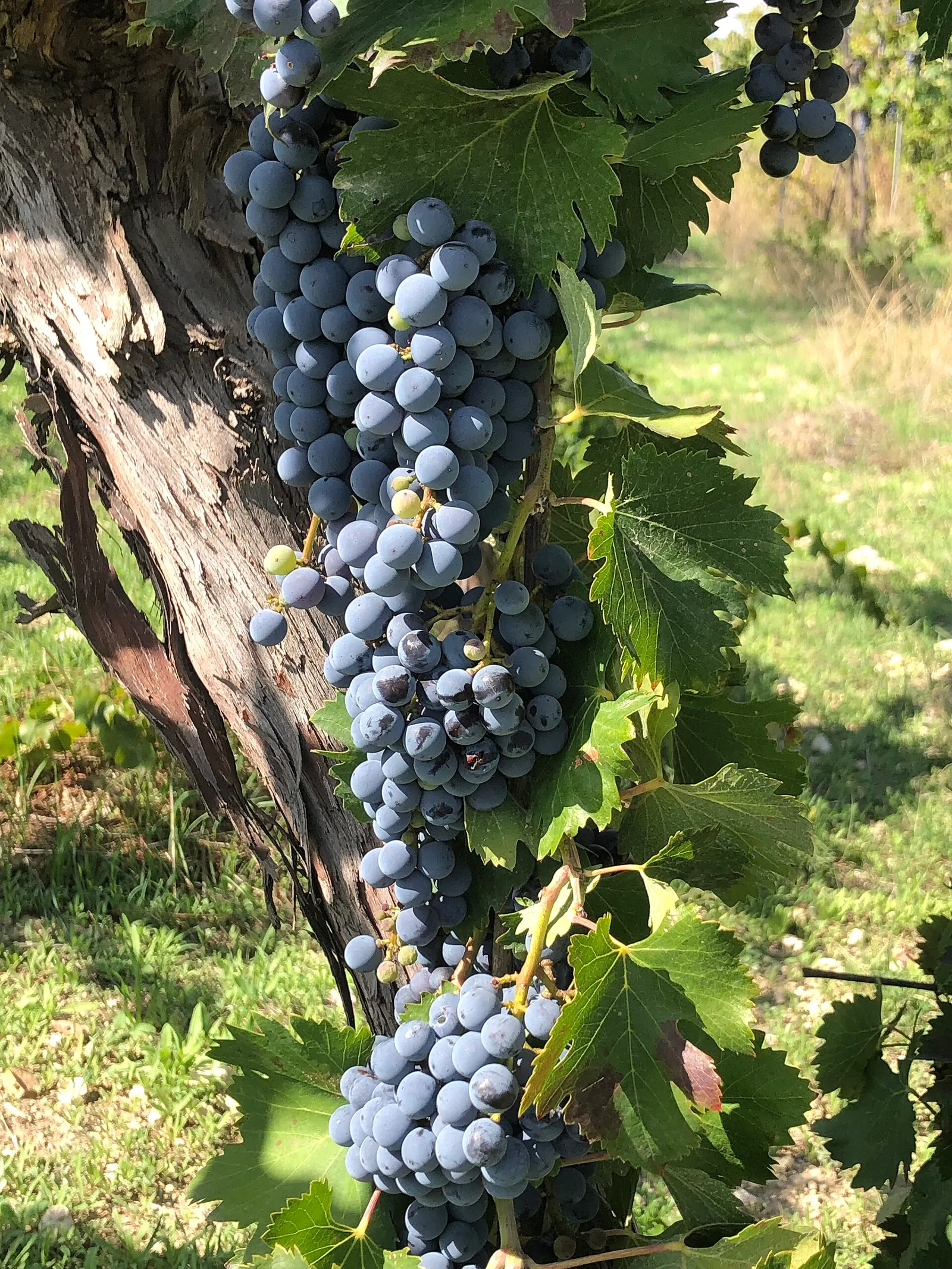
Sicily grows plenty of international grapes, Chardonnay, Syrah and Merlot among them, but the reason to drink wine here is the native varieties. These are the nine names you will meet most often.
Red grapes
- Nero d'Avola. The island's signature red, officially called Calabrese, with around 20,000 hectares planted, almost all of it in Sicily. It makes deep-coloured wines with dark cherry and plum fruit, from easy everyday bottles to serious oak-aged ones. It is the backbone of Cerasuolo di Vittoria and of countless Sicilia DOC reds.
- Frappato. Light in colour and tannin, with strawberry, violet and herbs. Grown almost only in the south east around Vittoria, it is delicious served cool and is the other half of Cerasuolo di Vittoria.
- Nerello Mascalese. The red grape of Etna. Pale, high in acidity and fine in tannin, it is often compared with Pinot Noir and Nebbiolo. Etna Rosso must be at least 80 percent Nerello Mascalese.
- Perricone. Also called Pignatello, a rare, robust red of the west, with only a couple of hundred hectares left. It is one of the grapes allowed in red Marsala (Marsala Rubino).
White grapes
- Grillo. Crisp, lemony and herbal, with a flavour profile some compare to Sauvignon Blanc. It is a cross of Catarratto and Zibibbo and the classic grape of Marsala, but it now makes some of the island's best dry table whites too.
- Catarratto. Once the most planted white grape in Italy and still the most planted in Sicily, at over 30,000 hectares. It gives medium-bodied whites with citrus, herbs and a slightly bitter finish, and is the main grape of Alcamo DOC.
- Inzolia. The Sicilian name for Ansonica: soft, nutty and gently aromatic. It turns up in blends, as a varietal, and in Marsala.
- Carricante. The white grape of Etna, sharp and mineral, and the main grape in Etna Bianco (at least 60 percent, and at least 80 percent in Etna Bianco Superiore).
- Zibibbo. The local name for Muscat of Alexandria. Grapey and floral, it is the grape of Pantelleria's famous sweet passito, and also makes dry, aromatic whites.
| Grape | Colour | Style | Where to find it |
|---|---|---|---|
| Nero d'Avola | Red | Dark fruit, full bodied | Island wide; Cerasuolo di Vittoria; Sicilia DOC |
| Frappato | Red | Light, red fruit, serve cool | Vittoria and the south east |
| Nerello Mascalese | Red | Pale, fresh, fine tannin | Etna |
| Perricone | Red | Robust, rustic | The west; Marsala Rubino |
| Grillo | White | Crisp, citrus, herbal | The west; Marsala; Sicilia DOC |
| Catarratto | White | Medium bodied, herbal | The west; Alcamo |
| Inzolia | White | Soft, nutty | The west and centre; Marsala |
| Carricante | White | Mineral, high acidity | Etna |
| Zibibbo | White | Aromatic, dry or sweet | Pantelleria; the west |
What do DOC, DOCG and IGT mean on a Sicilian wine label?
Italian wine names come in three tiers. A DOCG (Denominazione di Origine Controllata e Garantita) is the strictest, a DOC (Denominazione di Origine Controllata) is next, and an IGT or IGP (Indicazione Geografica Tipica or Protetta) is a broader regional name with looser rules. Each DOC and DOCG has its own disciplinare, a legal production code that fixes the area, the grapes, the yields, the minimum alcohol and any ageing.
A few points that are specific to Sicily:
- Sicilia DOC covers the whole island. It became a DOC in 2011 and is by far the largest Sicilian DOC by volume. A varietal Sicilia DOC wine must contain at least 85 percent of the grape on the label.
- Terre Siciliane IGT is the island-wide regional name below it. Since a change to the rules, upheld by Italy's Council of State in 2020, the words Grillo and Nero d'Avola can no longer appear on an IGT label: a bottle that names either grape is a DOC wine.
- Riserva and Superiore mean extra ageing or stricter rules, but what they require differs from one DOC to the next.
- Passito means wine made from dried grapes, usually sweet. Liquoroso means fortified with added alcohol, as in Marsala.
- Contrada on an Etna label names a specific traditional vineyard area, much like a single vineyard in Burgundy. The Etna rules list 133 of them.
What are the wine regions and DOCs of Sicily?
You do not need all 24 names. These are the ones you are most likely to see, and the ones that tell you most about what is in the glass.
Cerasuolo di Vittoria DOCG
Sicily's only DOCG, from the south east around Vittoria, made a DOC in 1973 and raised to DOCG in 2005. The wine is a blend of 50 to 70 percent Nero d'Avola and 30 to 50 percent Frappato: bright cherry red, juicy and not too heavy. The Classico version comes from the historic heart of the zone and is aged for longer. The same area also has a Vittoria DOC, which includes a varietal Frappato.
Etna DOC
Etna was Sicily's first DOC, in 1968, and has around 1,300 hectares of vines on the slopes of the volcano. Etna Rosso is at least 80 percent Nerello Mascalese, with Nerello Cappuccio allowed; Etna Bianco is at least 60 percent Carricante; and there are rosato and traditional-method sparkling wines too. The more you read, the more you meet the contrade, the old named vineyard areas. More on Etna in the next section.
Sicilia DOC
The island-wide name, created in 2011, covering around 24,600 hectares. Most of the varietal Nero d'Avola and Grillo you will find in a Sicilian supermarket is Sicilia DOC, and quality ranges from simple to very good.
Marsala DOC
The fortified wine of the province of Trapani, made from Grillo, Catarratto, Inzolia and Damaschino for the golden and amber styles, and from red grapes for Rubino. It has its own rules on colour, sweetness and ageing, from one year for Marsala Fine to at least ten for Vergine Stravecchio. I explain all of it in my Marsala wine guide.
Alcamo DOC
A DOC since 1972, in the hills between Palermo and Trapani around Alcamo. Its white is built on Catarratto (at least 60 percent, or 80 percent in the Classico zone), and it also makes Grillo, Inzolia and Nero d'Avola varietals.
Menfi DOC
A DOC since 1995 on the south west coast around Menfi, between Sciacca and Selinunte. The rules allow a long list of native and international grapes, so the label grape matters more than the name. It is a good corner for combining a winery visit with a beach such as Porto Palo di Menfi.
Pantelleria DOC
The volcanic island of Pantelleria, closer to Tunisia than to Sicily, grows Zibibbo. Its best-known wine is Passito di Pantelleria, made from grapes dried in the sun, rich and apricot-sweet, but the DOC also covers dry whites, sparkling wine and fortified Moscato. The island's way of growing low bush vines in hollows, sheltered from the wind, was added to UNESCO's list of Intangible Cultural Heritage in 2014.
Malvasia delle Lipari DOC
A tiny DOC (around nine hectares) in the Aeolian Islands, named after Lipari, the largest of them. The wine is 92 to 95 percent Malvasia with a little Corinto Nero, usually made as a sweet passito or a fortified liquoroso.
The others
Smaller DOCs include Contessa Entellina, Monreale, Sambuca di Sicilia, Santa Margherita di Belice, Salaparuta, Delia Nivolelli and Erice in the west, Noto, Eloro and Siracusa in the south east, Faro and Mamertino near Messina, and Riesi and Contea di Sclafani in the interior. Noto is worth knowing for Nero d'Avola, and pairs well with my guide to the baroque towns of the Val di Noto.
What is Etna wine, and why is it so talked about?
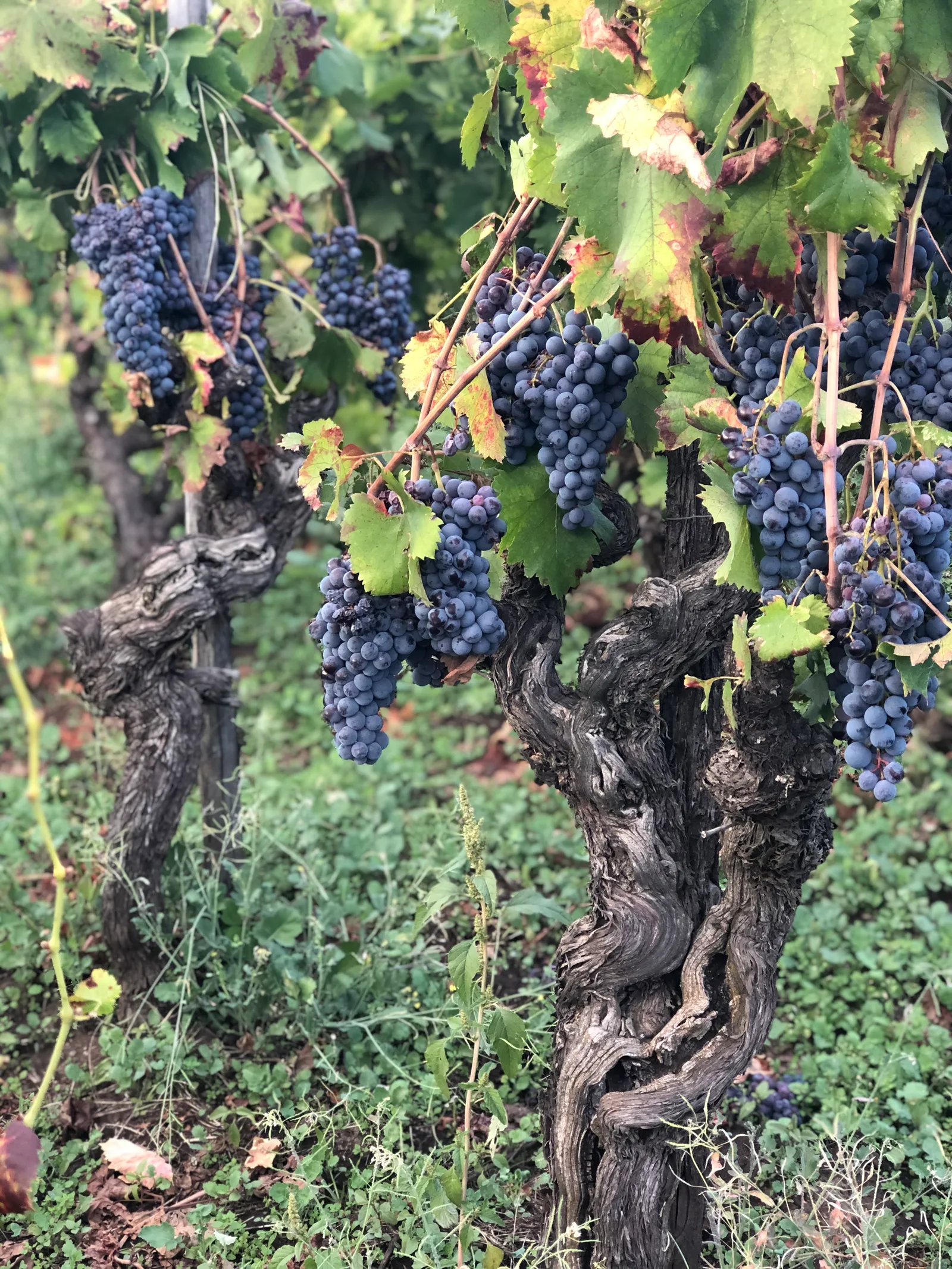
Etna wine comes from vineyards on the slopes of Europe's highest active volcano, mostly on the north, east and south sides, with some vineyards climbing to around 1,000 metres. The combination of altitude, cool nights and young volcanic soils gives wines that are fresher and lighter than most people expect from southern Italy.
Etna Rosso, from Nerello Mascalese, is pale and perfumed, with red fruit, herbs and firm acidity. Etna Bianco, from Carricante, is lean and mineral, and Etna Bianco Superiore, the stricter version, can only be made in the commune of Milo on the eastern slope. Many producers bottle wines from single contrade, so two Etna Rossos from neighbouring hillsides can taste quite different.
The revival is recent. A handful of outside winemakers arrived around the turn of the century and began restoring old estates on the north slope; Andrea Franchetti's Passopisciaro estate, founded in 2000, is often cited as part of that wave. Since then Etna has become one of the most discussed wine regions in Italy, and prices have climbed with the attention.
Older vineyards on Etna are often trained as alberello, low free-standing bush vines, and some plots are field blends of red and white grapes planted together. Riserva Etna Rosso must be aged for at least four years, including twelve months in wood.
What is the best Sicilian wine to try first?
There is no single best Sicilian wine, and I am not going to push particular bottles. What I can do is suggest a tasting path that shows you the island in six glasses, all of which are easy to find in Sicily.
- A Sicilia DOC Grillo: crisp, citrusy, the everyday white of the west.
- An Etna Bianco: Carricante from the volcano, sharper and saltier than you expect.
- A Frappato, slightly chilled: light, fragrant, a red for hot evenings.
- A Cerasuolo di Vittoria: Nero d'Avola and Frappato together, the island's only DOCG.
- An Etna Rosso: Nerello Mascalese, pale but serious.
- A dry Marsala Vergine or a Passito di Pantelleria to finish: the first dry and nutty, the second sweet and apricot.
If you prefer big reds, add an oak-aged Nero d'Avola from Noto or the south east. If you like aromatic whites, try a dry Zibibbo. Ask in a good enoteca (wine shop) for the same styles from two different producers and you will learn more in an evening than from any list.
What wine goes with Sicilian food?
The local rule works well: drink the wine of the place with the food of the place. A few pairings that make sense on the island:
- Raw red prawns, crudo and grilled fish: Grillo, Catarratto or Etna Bianco. Their acidity and saltiness suit seafood.
- Pasta con le sarde and couscous trapanese: a fuller Grillo or Inzolia. The fennel, saffron and raisins in pasta con le sarde want a white with some body.
- Swordfish and tuna: Carricante, or a chilled Frappato. Tuna is meaty enough to take a light red.
- Pasta alla Norma and caponata: Frappato or Cerasuolo di Vittoria. The sweet and sour of caponata makes heavy, oaky reds taste bitter.
- Arancine, street food and pizza: almost anything cold; a simple Nero d'Avola or a rosato.
- Grilled sausage, lamb and involtini: Nero d'Avola, Etna Rosso or Perricone.
- Aged pecorino and caciocavallo: Nero d'Avola, or a dry Marsala Vergine with the strongest cheeses. My guide to Sicilian cheese explains the cheeses.
- Cannoli, cassata and almond biscuits: Passito di Pantelleria, Malvasia delle Lipari or a sweet Marsala Superiore. More on the sweets in my guide to Sicilian desserts.
For the dishes themselves, and where to eat them, see my Sicily food guide. Olive oil is the other half of the Sicilian table; I have five mature Nocellara olive trees, and I have written separately about what makes Sicilian olive oil different.
How to visit wineries and go wine tasting in Sicily
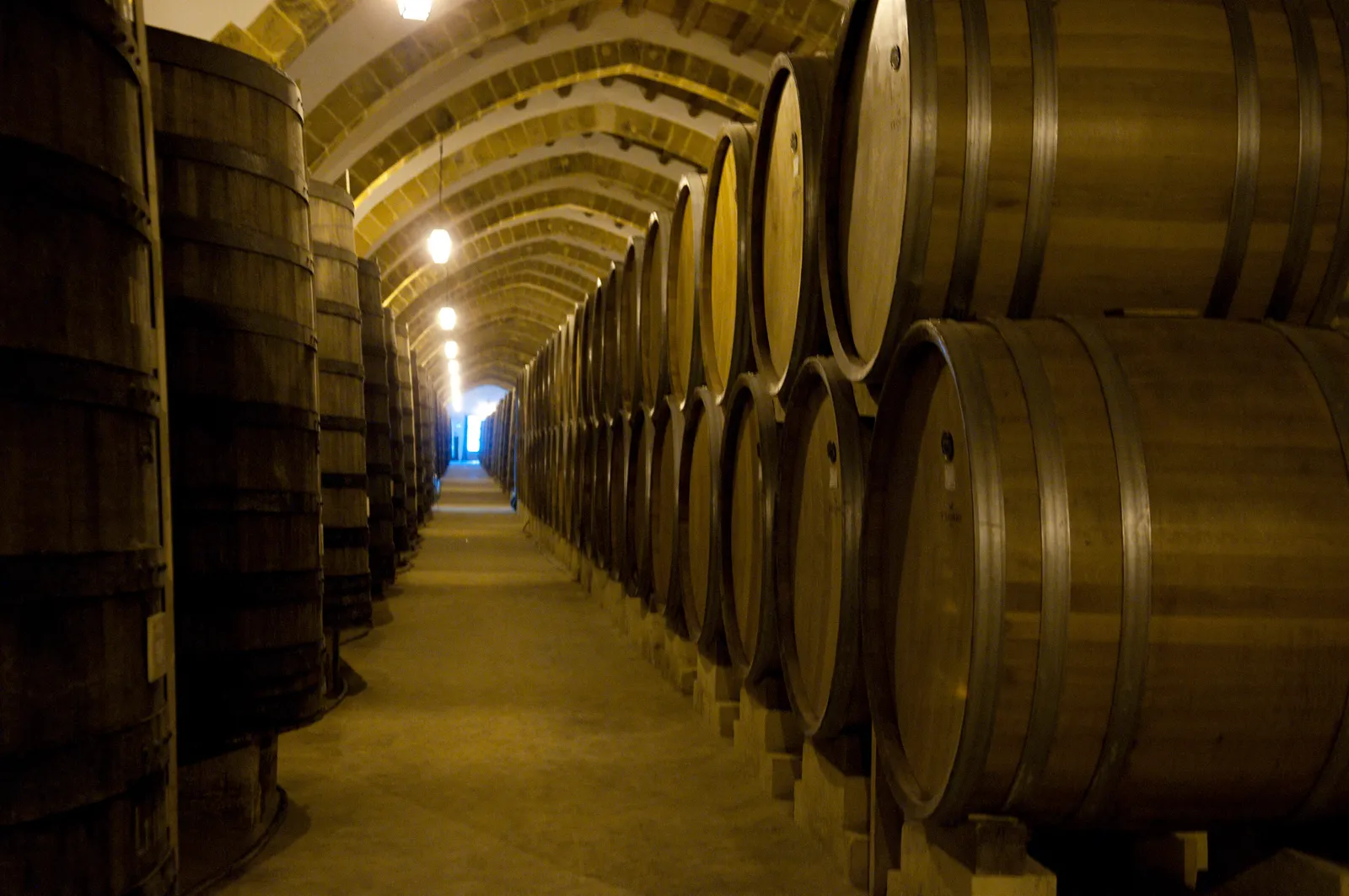
Sicilian wineries are used to visitors, but almost all of them work by appointment. Turning up at the gate rarely works. Book on the winery's own website or by email a few days ahead, more in summer, and say which language you want the tour in.
What a visit costs
Prices vary with the number of wines and whether food is included. As examples from current booking pages: Cantine Florio in Marsala lists cellar tours with tasting from around €25 up to about €60 for longer experiences; Donnafugata's Marsala cellars list tastings with street food from around €40; and on Etna, Passopisciaro lists a vineyard tour with four wines at €45, rising to €120 for a full tasting. Expect roughly €25 to €60 for a standard visit and more for food pairings or rare wines. Children are often charged a small fee for the tour only.
Where to go
- Etna. The north slope, between Linguaglossa, Passopisciaro and Solicchiata in the commune of Castiglione di Sicilia, and Randazzo, has the densest cluster of estates. Milo on the eastern side is the place for Etna Bianco Superiore. It combines easily with a stay in Taormina or Catania; my eastern Sicily guide covers the area.
- Marsala. The historic baglio cellars of Florio, Pellegrino and Donnafugata are in or near the town, so you can see two in a day, and the salt pans and the island of Mozia are just up the coast. See my Marsala wine guide and the Marsala town page.
- Menfi and the south west. Vineyards run down almost to the sea. Pair a tasting with Selinunte or a beach day.
- Vittoria and the south east. The home of Cerasuolo di Vittoria and Frappato, an easy add-on to Ragusa, Modica and Noto.
- Pantelleria and the Aeolian Islands. For sweet wines and the most dramatic vineyards; see my island hopping guide.
Wine events worth planning around
Cantine Aperte, run nationally by the Movimento Turismo del Vino, opens hundreds of member wineries, usually on the last weekend of May. Calici di Stelle brings tastings under the stars in early August, around 10 August, the night of San Lorenzo, and some cellars also open for San Martino in November. The harvest, roughly late August to October depending on altitude, is a lovely time to visit, though small wineries are busy then. My Sicily month by month planner helps with timing.
Driving and drinking
Most wineries are in the countryside, so you will usually need a car, and Italy's limits are strict: 0.5 grams of alcohol per litre of blood for most drivers, and zero for drivers under 21 and in their first three years with a licence. Use the spittoon, take a driver, or book a tour that includes transport. My guide to driving in Sicily covers the rest.
How much does Sicilian wine cost?
Wine in Sicily is cheap by British standards at the bottom of the range and fair in the middle. Prices change, so treat these as typical ranges seen in Italian shops and online in 2025 and 2026, not fixed figures.
| Wine | Typical price | Notes |
|---|---|---|
| Sicilia DOC Grillo or Nero d'Avola, supermarket | Often under €8 | Promotions sometimes go far lower |
| Producer Sicilia DOC from a wine shop or winery | About €10 to €20 | Organic and estate wines sit here |
| Etna Rosso | About €12 to €30 | Riserva and top single-contrada wines can pass €60 |
| Marsala Vergine | About €18 to €45 | Very old Riserva bottles can pass €100 |
In restaurants, a carafe of house wine (vino della casa) is normal and usually inexpensive, especially away from the tourist centres. Buying direct from a winery after a tasting is rarely cheaper than a good enoteca, but you can often find wines that are not exported.
How much wine can you bring home from Sicily?
This depends entirely on where you are flying to, and the rules for the UK changed after Brexit. Always check the official page before you travel, because allowances can change.
- Great Britain: 18 litres of still or sparkling wine (24 standard bottles) duty free, plus 9 litres of fortified wine such as Marsala or other drinks up to 22 percent, which you can split with the 4 litre spirits allowance. Go over in any category and you pay duty on everything in that category, not just the excess.
- United States: one litre of alcohol per adult duty free. You can bring more, but it is subject to duty and federal excise tax, and state rules also apply.
- Australia: 2.25 litres of alcohol per adult duty free, which is three standard bottles; above that, duty is due on all of it.
- Within the EU: wine bought for your own use travels freely; EU guidance treats up to 90 litres as a level below which it is normally accepted as personal.
Liquids over 100 millilitres generally cannot go through airport security in hand luggage, so wine goes in the hold: wrap each bottle and pack it in the middle of a soft case, or buy a padded wine sleeve. Many wineries can pack bottles for travel or ship them; ask before you buy, as rules on shipping alcohol differ by country.
Can you buy wine direct from the producer in Sicily?
Yes, and it is one of the everyday pleasures of living here. Besides the estates with tasting rooms, many farming towns have a cantina sociale, a growers' co-operative, with a shop at the door. Some producers and co-operatives also sell wine sfuso, loose from the tank, which locals take home in their own demijohns and bottles. It is everyday drinking wine rather than anything to cellar, but it is how a lot of Sicilians buy their table wine.
Around harvest time, tractors loaded with grapes and the smell of fermenting must are part of life in the countryside of the west, from Marsala to Salemi and Castelvetrano.
Frequently asked questions
What is the most famous Sicilian wine?
Marsala, the fortified wine of the province of Trapani, is the most famous historically, made famous by British merchants from 1773. Today the best-known table wines are Nero d'Avola, Sicily's signature red grape, and the wines of Mount Etna, especially Etna Rosso from Nerello Mascalese. Cerasuolo di Vittoria is the island's only DOCG.
What does Nero d'Avola taste like?
Nero d'Avola usually makes a deep-coloured red with dark cherry, plum and herbal notes and soft to medium tannins. Simple versions are fruity and easy; oak-aged wines from the south east, around Noto and Vittoria, are fuller and more structured. It is officially called Calabrese and is grown almost only in Sicily.
Is Sicilian wine any good?
Yes. Sicily once sent much of its wine away in bulk, but the island now produces many very good wines from native grapes. Etna is one of Italy's most talked-about regions, Cerasuolo di Vittoria holds DOCG status, and Grillo, Carricante and Frappato make excellent wines at fair prices. As anywhere, quality varies by producer, so a DOC or DOCG label is a sensible starting point.
What is the difference between Etna Rosso and Nero d'Avola?
They are different grapes from different parts of Sicily. Etna Rosso is at least 80 percent Nerello Mascalese, grown on the volcano at altitude, and tends to be pale, fresh and perfumed. Nero d'Avola is grown across the island, especially in the south and west, and usually makes darker, fuller and fruitier wines. Etna Rosso is often compared with Pinot Noir; Nero d'Avola is closer to Syrah in weight.
What is the only DOCG in Sicily?
Cerasuolo di Vittoria is Sicily's only DOCG. It was made a DOC in 1973 and a DOCG in 2005. The wine comes from the south east around Vittoria and is a blend of 50 to 70 percent Nero d'Avola and 30 to 50 percent Frappato. The Classico version comes from the historic core of the zone and must be aged for longer.
Do you need to book wine tastings in Sicily?
Yes, almost always. Most Sicilian wineries take visitors by appointment only, through their website or by email, and few can help someone who simply turns up. Book a few days ahead, or a week or more in summer and at harvest, and ask for a tour in English if you need it. Prices are typically around 25 to 60 euros per person.
How much wine can I bring back to the UK from Sicily?
Arriving in Great Britain you can bring 18 litres of still or sparkling wine duty free, plus 9 litres of fortified wine such as Marsala or other drinks up to 22 percent alcohol, which can be split with the 4 litre spirits allowance. If you go over in a category you pay duty on all of it. Wine must travel in checked luggage.
When is the best time for wine tasting in Sicily?
Spring and autumn are the most comfortable. Cantine Aperte, when many wineries open to the public, is usually on the last weekend of May, and the harvest runs from about late August to October depending on altitude, later on Etna. Calici di Stelle brings evening tastings in early August, but inland heat can be fierce then.
What Sicilian wine goes with seafood?
Crisp native whites are the natural match: Grillo and Catarratto from the west, or Carricante from Etna, which has a salty, mineral edge. For tuna and swordfish, a lightly chilled Frappato also works well. Fuller whites such as Inzolia suit pasta con le sarde and couscous trapanese, with their fennel, saffron and raisins.
Can I visit vineyards on Mount Etna without a car?
It is difficult on public transport, because most estates are spread out along country roads on the north slope. The practical options are a guided wine tour from Taormina or Catania that includes transport, or a taxi or driver for the day. If you drive yourself, remember Italy's drink-drive limit is 0.5 grams per litre, and zero for new drivers.
Sources and small print
- Italian Wine Central: Sicilia, denominations and vineyard area
- Italian Wine Central production rules: Sicilia DOC, Etna DOC, Cerasuolo di Vittoria DOCG, Alcamo DOC, Menfi DOC, Pantelleria DOC, Malvasia delle Lipari DOC
- Italian Wine Central grape profiles: Nero d'Avola, Frappato, Grillo, Catarratto, Perricone
- Consorzio di tutela Cerasuolo di Vittoria DOCG e Vittoria DOC
- Consorzio di Tutela Vini DOC Sicilia and WineNews: Nero d'Avola and Grillo only in Sicilia DOC (Council of State, 2020)
- Ministry of Agriculture (MASAF): Marsala DOC production rules, decree of 1 July 2025
- UNESCO: the vite ad alberello of Pantelleria
- Movimento Turismo del Vino: Cantine Aperte and Calici di Stelle
- Winery booking pages: Cantine Florio, Donnafugata Marsala, Passopisciaro (Etna)
- ACI: alcohol and driving limits in Italy
- GOV.UK: bringing goods into Great Britain, US CBP: customs duty information, Australian Border Force: duty free, Your Europe: alcohol between EU countries
Prices are typical ranges from Italian retailers and winery booking pages in 2025 and 2026 and change often; check before you go.
Credits
Photo: Neil Weightman, CC BY 2.0, via Wikimedia Commons.
Photo: OppidumNissenae, CC BY-SA 4.0, via Wikimedia Commons.
Photo: Etnawinegirl, CC BY-SA 4.0, via Wikimedia Commons.
Photo: Michal Osmenda, CC BY-SA 2.0, via Wikimedia Commons.
 The weekly YouTube series