
Where are the Trapani salt pans?
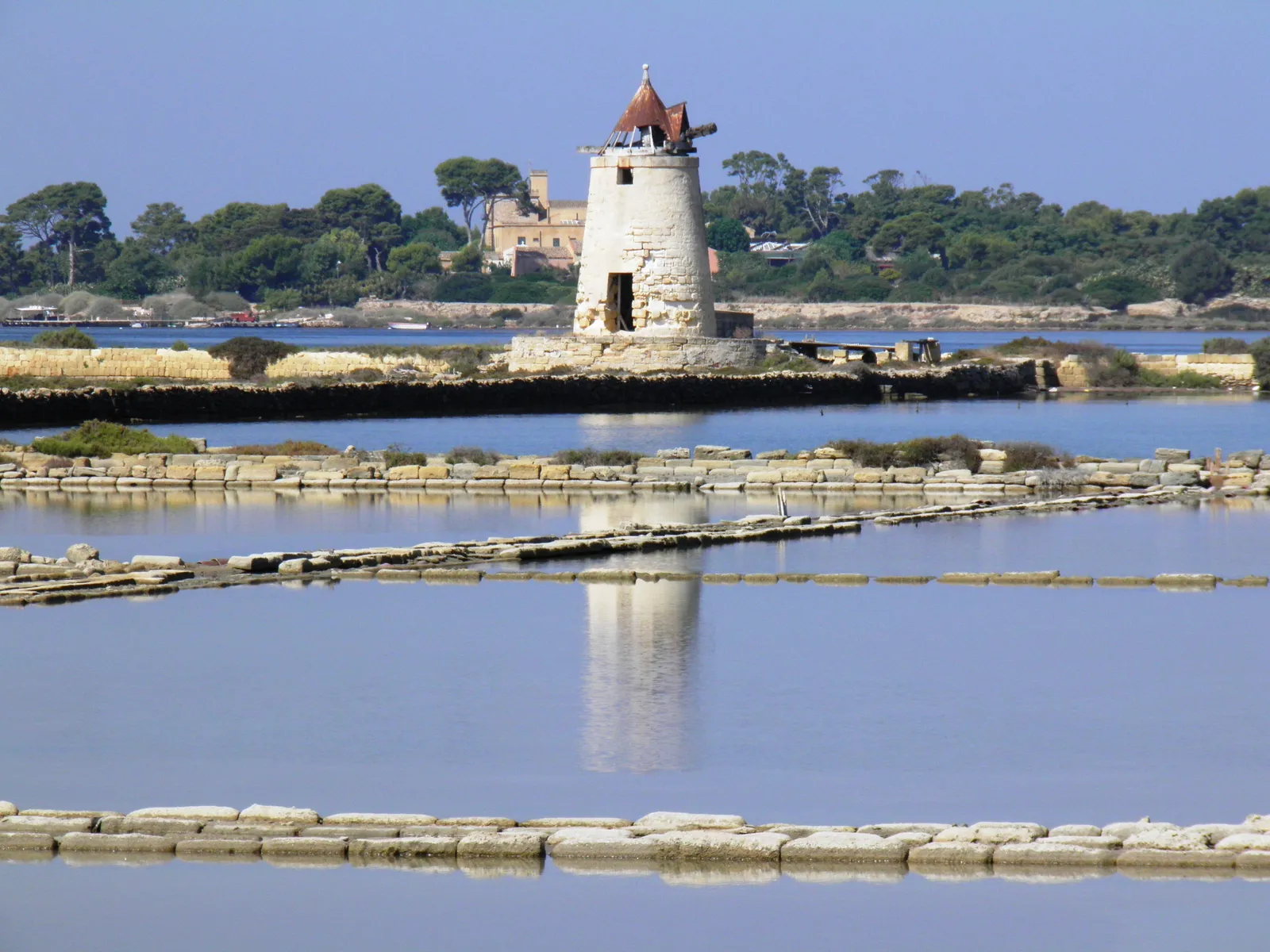
The salt pans (saline) line the low, flat coast south of Trapani, through the territory of Paceco and down to the lagoon of the Stagnone north of Marsala. The coast road that links them, the SP21, is known as the Via del Sale, the salt road. From Trapani it runs south past the pans of Nubia, past Trapani airport at Birgi, and on along the Stagnone to Marsala.
There are two main areas to visit, and most people do both in an afternoon:
- The northern pans, at Nubia, inside the Saline di Trapani e Paceco nature reserve. This is where you will find the WWF visitor centre, the Salt Museum and most of the flamingos.
- The southern pans, on the Stagnone, around the Saline Ettore e Infersa at Marsala. This is where the boats leave for Mozia, and where most people watch the sunset.
Out here a car is simply how life works, and I drive everywhere in the west. The salt pans are no exception: buses do not serve the coast road in any useful way, and the best stretches are between the main stops. My guide to driving in Sicily covers the practical side. If you are staying in Trapani without a car, a guided tour or a taxi is the realistic option.
How is sea salt made in Trapani?
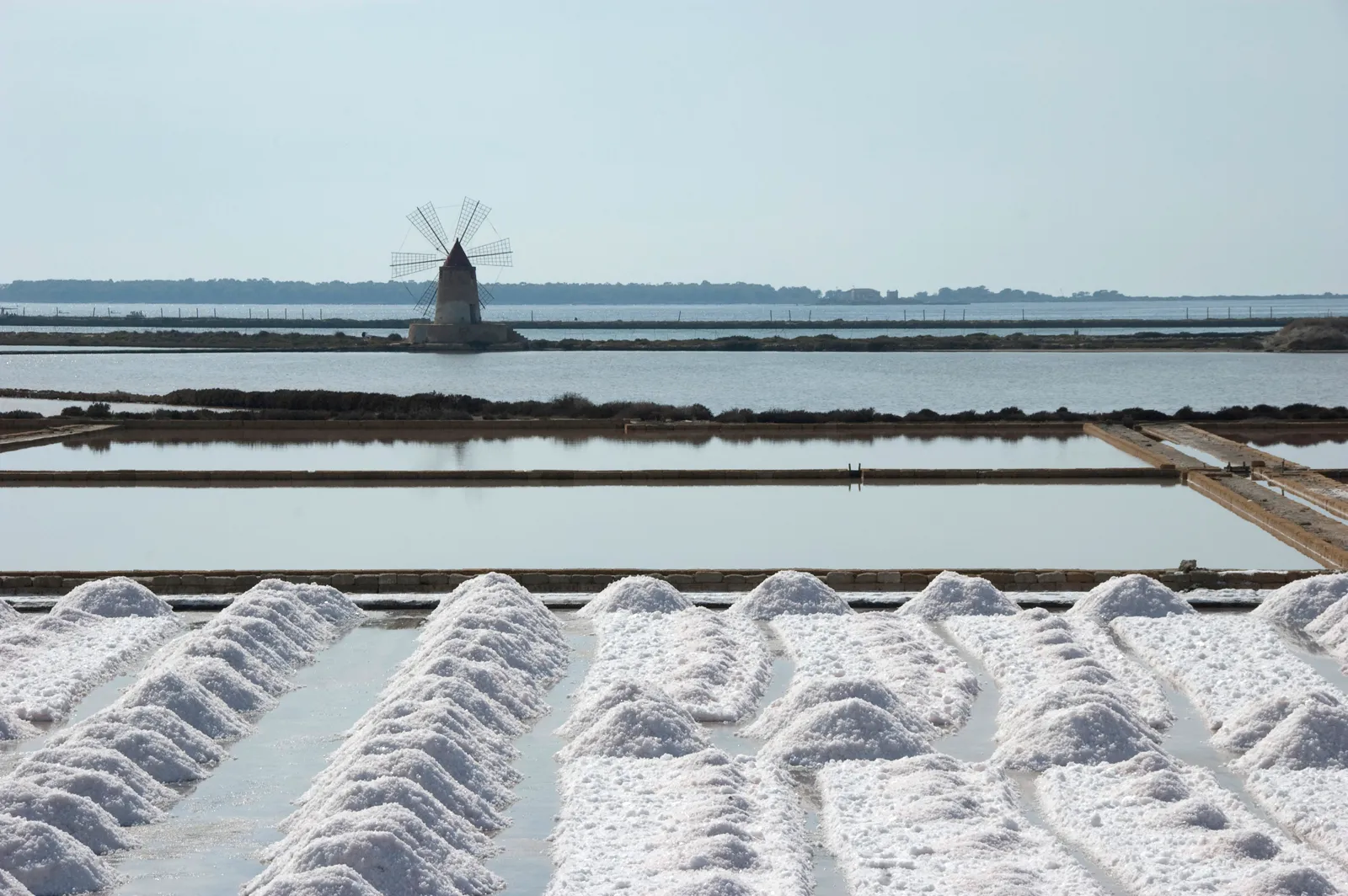
The method is old and very simple: let the sun and wind do the work. Seawater is let into a chain of shallow, connected pans, and as it moves from one to the next it evaporates and grows saltier, until the salt crystallises in the last pans. The specification for Sale Marino di Trapani describes four groups of pans:
- Fridde (the "cold" pans): the first, deepest pans, in direct contact with the sea.
- Vasche di coltivo: intermediate pans where the water warms and thickens.
- Caure (the "hot" pans): the last intermediate stage, where the brine is close to saturation.
- Salanti or cristallizzanti: the crystallising pans, where the salt forms a crust on the bottom and is raked up.
As the brine concentrates, tiny organisms that thrive in very salty water, including the brine shrimp Artemia salina, turn some pans pink or red. That is also what gives the flamingos their colour.
The windmills
The windmills are the symbol of the coast. There were two kinds: mills that lifted seawater from one level of pans to the next with a large wooden Archimedes screw, and mills that ground the salt crystals. A few have been restored, including the mill at the Saline Ettore e Infersa, which is in working order, and the Mulino Maria Stella, now the WWF visitor centre.
The harvest
The harvest is in summer. The Slow Food Foundation gives the season as July to September, with the main work in July and August and usually around three harvests, depending on the weather. In the artisan pans the salt is still raked and gathered by hand by the salinaio; larger works use machines. After the harvest the salt is piled into long white mounds beside the pans and, traditionally, covered with terracotta tiles to protect it from the rain over winter.
Visiting the Saline di Trapani e Paceco nature reserve
The northern pans form the Riserva Naturale Orientata Saline di Trapani e Paceco, set up by the Region in May 1995 and managed by WWF Italy. It covers about 1,000 hectares in the territories of Trapani and Paceco: around 700 hectares of core reserve, which is the salt pans themselves, and around 300 of buffer zone. In 2011 it was declared a wetland of international importance under the Ramsar Convention.
WWF guided walks
WWF runs free guided visits inside the reserve. They must be booked online through the reserve's website at least a week in advance, and a booking counts only once WWF confirms it in writing. Walks last about two hours, are in Italian, and cover both the birds and the salt making; you drive your own car from the visitor centre to the pan being visited, and groups and schools go on Wednesday and Saturday mornings. There is no charge, but you can leave a donation. The visitor centre is the restored Mulino Maria Stella, on the SP21 at the corner of Via Carlo Messina, and it opens for the guided visits.
You do not need a guide to enjoy the pans. The roads and lanes around the edge give good views, and you can watch the birds from the perimeter. Please stay on public roads and do not walk on the banks of working pans.
The Salt Museum at Nubia
The Museo del Sale at Nubia, in the territory of Paceco, sits inside the reserve in an eighteenth-century farmstead (baglio). It is privately run by the Culcasi family, salt makers, and shows the old tools of the salt workers, reconstructions of each stage of the work, black and white photographs and a well-preserved windmill used for grinding. Visits are guided and are arranged directly with the museum; they also run sunset visits with tastings. Ask about times and prices when you book, as they change with the season.
Flamingos and birdlife: when to see them
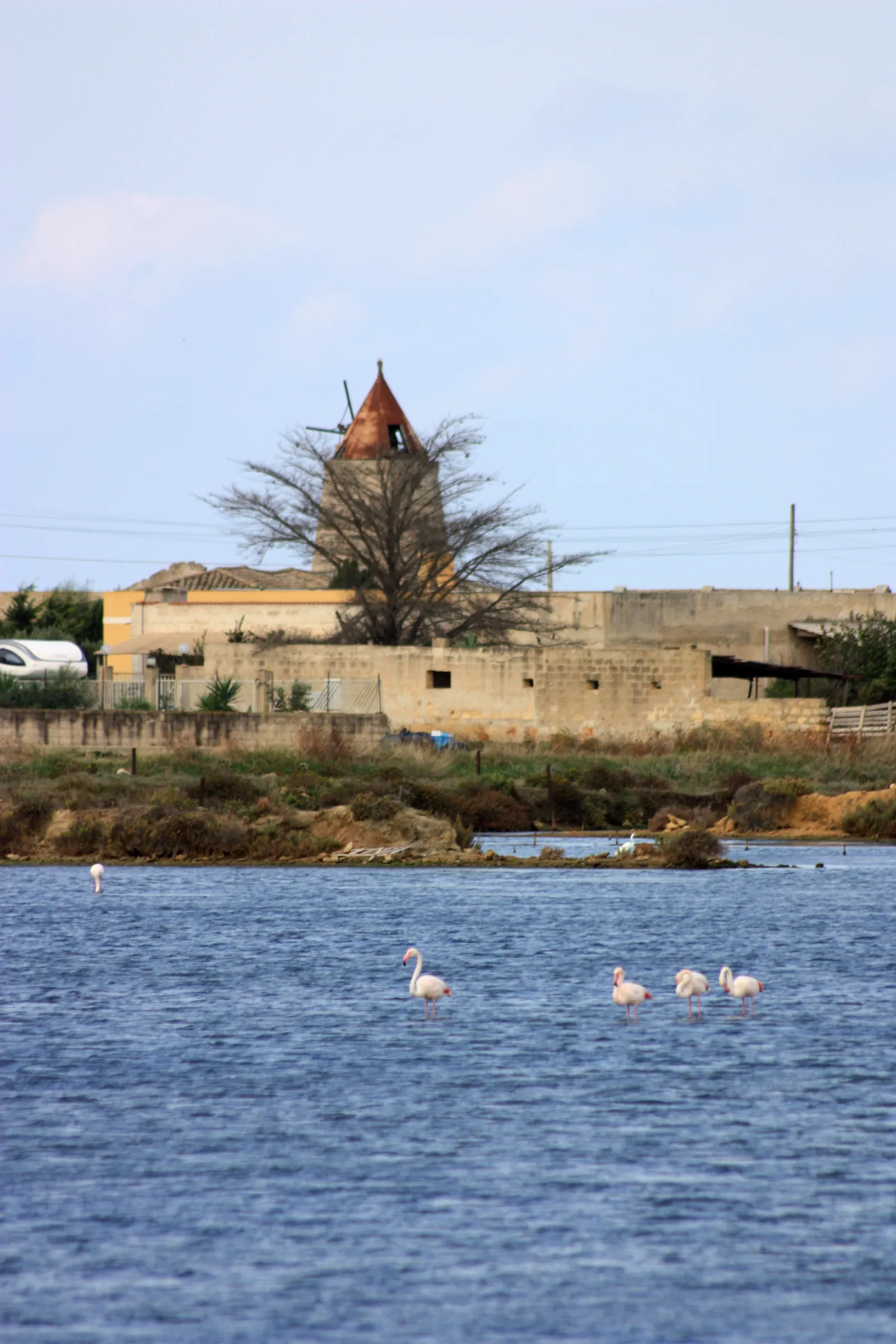
The salt pans sit on one of the main migration routes between Africa and Europe, and WWF now counts around 240 bird species in the reserve. Flamingos are the ones everybody wants to see. For decades they have used the pans to rest and feed, mostly in the cooler months, and in recent years they have been present in large numbers for much of the year.
2026 brought a first. In July 2026 WWF Italy reported that greater flamingos had nested successfully in the reserve for the first time, with more than 600 birds present and the first three chicks born: the first breeding site for the species in western Sicily. WWF also mentions the Kentish plover, the spoonbill and the purple swamphen among the birds to look for.
WWF suggests February to April and September to December as the best months for watching migrating birds. Bring binoculars, go early in the morning or late in the afternoon, and keep your distance: birds on the banks are easily disturbed, especially when nesting.
The Stagnone lagoon at Marsala is a separate reserve and good for birds too. The Marsala tourist office notes that the autumn migrants, such as curlews, start arriving as early as July, followed by ducks in the cold months.
The Marsala salt pans: Ettore e Infersa and the Stagnone
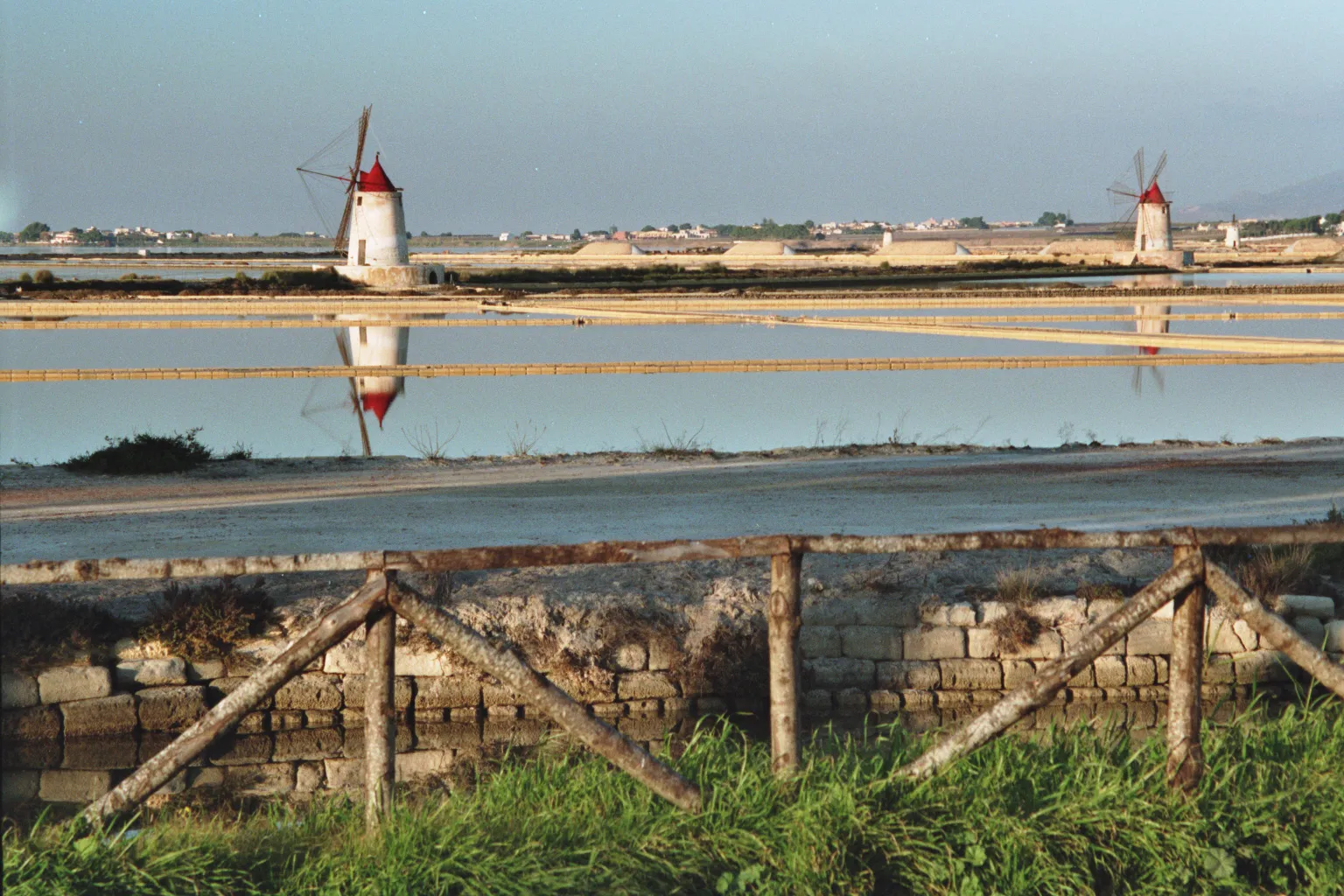
The southern pans border the Stagnone, a shallow lagoon protected since 1984 as the Riserva Naturale Orientata Isole dello Stagnone di Marsala. It is the largest lagoon in Sicily, with water mostly 1 to 2 metres deep and often less than 50 cm, and four islands: Mozia, Isola Grande (also called Isola Lunga), Santa Maria and Schola. On a calm day the water is like glass, which is why the sunsets here are so photographed. The shallow, windy lagoon is also popular for kitesurfing, so expect kites on the water in summer.
Saline Ettore e Infersa
The best-known working salt pans on this stretch are the Saline Ettore e Infersa, in Contrada Ettore Infersa north of Marsala. Their windmill, now a symbol of Marsala, has been restored structurally and mechanically and works. The company runs visits under the heading of "salt tourism": the mill itself, a walk through the pans, salt tastings, and in summer the chance to try the harvest. Each experience is priced and booked separately on the Saline di Marsala website, which is the place to check current prices. There is a shop selling their salt, La Bottega del Sale, and a bar and restaurant on the water.
There are other salt pans along the lagoon, including on Isola Grande, and several boat operators. You can see a great deal for free simply by stopping in the lay-bys on the coast road.
This is also Marsala wine country. The Whitakers who bought Mozia were heirs to one of the English Marsala wine houses, and the historic cellars are a short drive south in town. My Marsala wine guide covers the wine and the cellar visits.
When is the best time to visit the salt pans?
| If you want | Go | Notes |
|---|---|---|
| The salt harvest | July to September | Main harvests in July and August; mounds of fresh salt beside the pans |
| Migrating birds | February to April, September to December | WWF's suggested months for birdwatching |
| Flamingos | Most of the year, best in the cooler months | Numbers vary; ask WWF about recent sightings |
| Sunset | Any clear evening | Arrive 30 to 40 minutes before sunset |
| Quiet | October to May, weekdays | Summer evenings are busy on the Stagnone |
Sunset
The salt pans face west, towards the Egadi Islands, so the sun sets over the sea behind the windmills, and on still evenings the pans reflect the whole sky. The Stagnone around Ettore e Infersa is the most popular spot; the Nubia pans are quieter. Arrive 30 to 40 minutes before sunset to park and find your place, as parking near the windmills fills up on summer evenings. In midsummer the sun sets around 8:30pm; in winter, before 5pm. My Sicily month by month tool helps with what each month is like, and a light jumper is worth having even in summer, because the breeze off the sea picks up at dusk.
Summer heat
There is almost no shade on the pans. In July and August, walk in the early morning or late afternoon, bring water and a hat, and leave the middle of the day for a long lunch in Trapani or Marsala.
What is Sale Marino di Trapani IGP?
Sale Marino di Trapani is protected in two ways, and it helps to know the difference when you buy it.
The IGP
Sale Marino di Trapani has been an EU protected geographical indication (IGP) since December 2012. The IGP covers sea salt made by evaporating seawater in salt pans in the territories of Trapani, Paceco and Marsala, using the system of pans described above. The specification allows the salt to be harvested by hand, up to three times in a season, or with machines, once a year or over several years. Look for the IGP name and the EU logo on the pack.
The Slow Food presidium
The Slow Food presidium for Sale Marino di Trapani is narrower: it supports the few artisan makers who still harvest by hand, in the salt pans of Trapani and Paceco and of the Stagnone. Their salt is not refined or washed white; the only processing is crushing. It is greyish and noticeably damp, and Slow Food contrasts it with industrial salt, which can be refined and have other mineral salts added. They also mention the sale scuma, the delicate crust that forms on the surface of the pans, known in France as fleur de sel.
In the kitchen, coarse Trapani salt is the salt for baking fish in a salt crust, which you will see on menus around Trapani, and for salting the pasta water. Fine salt goes on the table. Sicilian cheesemakers and anchovy salters use it too; my guide to Sicilian cheese covers the cheeses.
Where to buy Trapani sea salt
- At the salt pans. The shops at the working salt pans, such as the one at the Saline Ettore e Infersa and at the Nubia museum, sell their own salt, coarse and fine, often with flavoured versions for gifts.
- In Trapani and Marsala. Delicatessens and grocers in both towns sell IGP salt, and you will find it in supermarkets across the province.
- What to look for. "Sale Marino di Trapani IGP" and the EU logo for the protected salt; the words integrale (unrefined) and raccolto a mano (hand harvested) if that matters to you; and the Slow Food presidium mark for the artisan salt.
Salt is a light, cheap and practical souvenir, and unlike cheese or salami it is not an animal product, so the current ban on bringing dairy and most meat from the EU into Great Britain does not apply to it. Pack it in your hold luggage if you are buying a lot.
How to visit Mozia from the salt pans
Mozia (Motya) is the small island in the middle of the Stagnone, and it is one of the most remarkable places in the west. It was a Phoenician city, and today it is owned and run by the Fondazione Whitaker, named after the English family of Marsala wine merchants who bought the island and began excavating it. The museum in the Whitakers' old house holds the finds, above all the Motya Youth, a marble statue of a young man from around 450 to 440 BC, found on the island in 1979.
Getting there
Boats leave from several landing stages along the coast of the Stagnone, near the Saline Ettore e Infersa, roughly every 30 minutes, and the crossing takes about 8 to 12 minutes. The boats are run by private operators, not by the foundation; the Fondazione Whitaker lists Arini e Pugliese, Laguna dello Stagnone, Saline Genna and Mamma Caura. The boat fare is paid separately from the island ticket.
Tickets and times
- The ticket for the island and museum costs €12, or €6 reduced (under 18s), and is free for children up to 5.
- From April to October the island is open from 9:30am to 6:30pm, with the museum closed from 1:30pm to 2:30pm; from November to March, from 9am to 3pm.
- On a few holidays (25 and 26 December, 1 and 6 January) the last boat back leaves at 1pm.
These were the foundation's published times and prices in 2026; check its website for closures before you go. Allow at least two to three hours for the island: the walk round the coast to the ancient sites is the best part.
A half-day route along the Via del Sale
This is the order I would suggest for a first visit, ending at sunset. It works in either direction, but going north to south puts you on the Stagnone for the evening.
- Early afternoon, Nubia. Drive south from Trapani on the SP21 to the pans of Nubia. If you have booked, join the WWF walk or the Salt Museum visit; if not, stop at the edges of the pans for the windmills and the flamingos.
- Mid-afternoon, Mozia. Continue south past Trapani airport to the Stagnone and take a boat to Mozia. In winter the island closes at 3pm, so in the cooler months do Mozia first, in the morning, and the pans after.
- Late afternoon, Ettore e Infersa. Visit the windmill or take the salt pan walk, and buy your salt.
- Sunset, the Stagnone. Find a spot by the pans or on the terrace of a bar on the water, and watch the sun go down behind Isola Grande and the Egadi Islands.
- Dinner, Marsala or Trapani. Marsala is about 10 to 15 minutes south; Trapani is roughly half an hour north.
If you have a full day, add Erice on its mountain above Trapani in the morning, or the beach at San Teodoro, at the northern tip of the lagoon. My Trapani guide covers the town itself, Erice and the Egadi Islands, and my island hopping guide explains the boats to Favignana.
Frequently asked questions
Where are the salt pans in Trapani?
The salt pans line the coast between Trapani and Marsala, along the SP21 coast road known as the Via del Sale. The northern pans, around Nubia in the territory of Paceco, form the WWF-run Saline di Trapani e Paceco nature reserve. The southern pans, including the Saline Ettore e Infersa, border the Stagnone lagoon north of Marsala, where the boats leave for Mozia.
Are the Trapani salt pans free to visit?
You can see the salt pans, windmills and flamingos for free from the coast road and the lanes around the pans. WWF also runs free guided walks inside the reserve, booked online at least a week ahead. The private Salt Museum at Nubia and the windmill and walks at the Saline Ettore e Infersa in Marsala charge for entry, and the boat and ticket for Mozia are paid separately.
When is the salt harvested in Trapani?
The salt is harvested in summer, from July to September, with the main work in July and August. Artisan makers usually harvest about three times a season, depending on the weather, raking and gathering the salt by hand in the crystallising pans. After the harvest the salt is stacked in long white mounds beside the pans, which you can see along the coast road into the autumn.
When can you see flamingos at the Trapani salt pans?
Flamingos use the salt pans to rest and feed for much of the year, and are usually most numerous in the cooler months. WWF suggests February to April and September to December as the best months for migrating birds. In 2026 flamingos nested in the reserve for the first time, with more than 600 birds present. Early morning and late afternoon are the best times to watch.
What is the best time for sunset at the Marsala salt pans?
Any clear evening works, because the pans face west over the Stagnone lagoon towards the Egadi Islands. Arrive 30 to 40 minutes before sunset to park and choose a spot, as parking near the windmills fills up on summer evenings. In midsummer the sun sets around 8:30pm and in winter before 5pm. Bring a light layer, as the sea breeze picks up at dusk.
What is the Via del Sale in Sicily?
The Via del Sale, or salt road, is the name commonly given to the SP21 coast road between Trapani and Marsala, which runs past the salt pans, windmills and the Stagnone lagoon. It passes the Saline di Trapani e Paceco reserve at Nubia, Trapani airport at Birgi and the Saline Ettore e Infersa. It is flat and best explored by car, with stops along the way.
What is special about Trapani sea salt?
Sale Marino di Trapani is made only by the sun and wind evaporating seawater in shallow pans, and since 2012 it has had EU protected status (IGP) for salt from Trapani, Paceco and Marsala. The Slow Food presidium salt is harvested by hand and only crushed, not refined, so it is greyish and slightly damp, unlike refined industrial salt.
How do you get to Mozia from Marsala?
Drive to the Stagnone lagoon north of Marsala, near the Saline Ettore e Infersa, and take one of the private boats from the landing stages there. They leave roughly every 30 minutes and take about 8 to 12 minutes. The island and museum ticket, €12 in 2026, is paid separately. The island opens 9:30am to 6:30pm from April to October and 9am to 3pm in winter.
Can you visit the Trapani salt pans without a car?
It is difficult. Public buses do not usefully serve the SP21 coast road, and the pans, windmills, Salt Museum and Mozia boats are spread over 30 km or more. Without a car, the practical options are an organised tour from Trapani or Marsala, a taxi, or a bicycle for the flat coast road if the weather is cool. A car gives you the freedom to stay for sunset.
Is there a salt museum in Trapani?
Yes. The Museo del Sale at Nubia, in the territory of Paceco just south of Trapani, is a private museum run by the Culcasi salt-making family in an eighteenth-century farmstead inside the nature reserve. It shows old tools, the stages of salt making and a restored grinding windmill, with guided and sunset visits arranged directly with the museum. The Saline Ettore e Infersa in Marsala also offer visits to their working windmill.
Sources and small print
- WWF: Riserva Naturale Orientata Saline di Trapani e Paceco, the reserve and guided visits
- WWF Italia: first flamingo nesting in the Trapani salt pans (July 2026)
- Commission Implementing Regulation (EU) No 1175/2012 registering Sale Marino di Trapani (PGI)
- MASAF: Sale Marino di Trapani IGP specification and the Qualigeo summary
- Slow Food Foundation: Sale marino di Trapani presidium
- Museo del Sale, Nubia (Saline Culcasi)
- Saline di Marsala: Ettore e Infersa and the Stagnone lagoon
- Comune di Marsala tourism: Isole dello Stagnone nature reserve
- Fondazione Whitaker: visiting Mozia
- GOV.UK: bringing meat, dairy and animal products into Great Britain
Prices, opening times and boat timetables change with the seasons; the figures here were those published in 2026. Check with each site before you go.
Credits
Photo: Renato Raimondo, CC BY-SA 3.0, via Wikimedia Commons.
Photo: Algor7, CC BY-SA 3.0, via Wikimedia Commons.
Photo: Giuseppe Di Giorgio, CC BY-SA 3.0, via Wikimedia Commons.
Photo: Bjs, CC BY-SA 4.0, via Wikimedia Commons.
 The weekly YouTube series