
What is Marsala wine?
Marsala is a vino liquoroso, a fortified wine: a dry white or red base wine to which wine alcohol or grape brandy is added, then aged in wood. It takes its name from the town of Marsala on Sicily's western tip, and it is protected by law. Only wine made under the Marsala DOC rules, from grapes grown in the province of Trapani, can be sold as Marsala.
The essentials from the official production rules:
- The grapes must come from the province of Trapani, excluding the communes of Pantelleria, Favignana and Alcamo.
- Golden and amber Marsala are made from Grillo, Catarratto, Inzolia (Ansonica) and Damaschino. Red Marsala uses Perricone, Nero d'Avola and Nerello Mascalese, with up to 30 percent white grapes allowed.
- All the work, from crushing the grapes to bottling, must happen inside the production zone.
- The finished wine is strong: at least 17.5 percent alcohol for Marsala Fine and 18 percent for the other categories.
- The ageing must be in wooden casks, preferably oak or cherry.
Marsala became a DOC in 1969, and its rules were rewritten under a 1984 law dedicated to the wine. The current version of the rules was approved by Italy's Ministry of Agriculture on 1 July 2025 and applies from the 2025 to 2026 wine year. Everything on this page about categories, ageing and sugar is taken from that text.
Where does Marsala wine come from? A short history
Wine was being made around Marsala long before the British arrived. Local farmers aged their wine in perpetuum: each year they drew some wine from the barrel and topped it up with the new vintage, so the barrel always held a blend of many years, slowly oxidising in the air at the top.
The story most people tell starts in 1773, when John Woodhouse, a merchant from Liverpool, tasted the local wine and saw that it resembled the Madeira and port the British were already drinking. To help it survive the voyage, he added grape spirit. The trade took off during the Napoleonic wars, when Nelson ordered Marsala from the Woodhouse firm for the Royal Navy; he is often quoted as saying it was good enough for any gentleman's table.
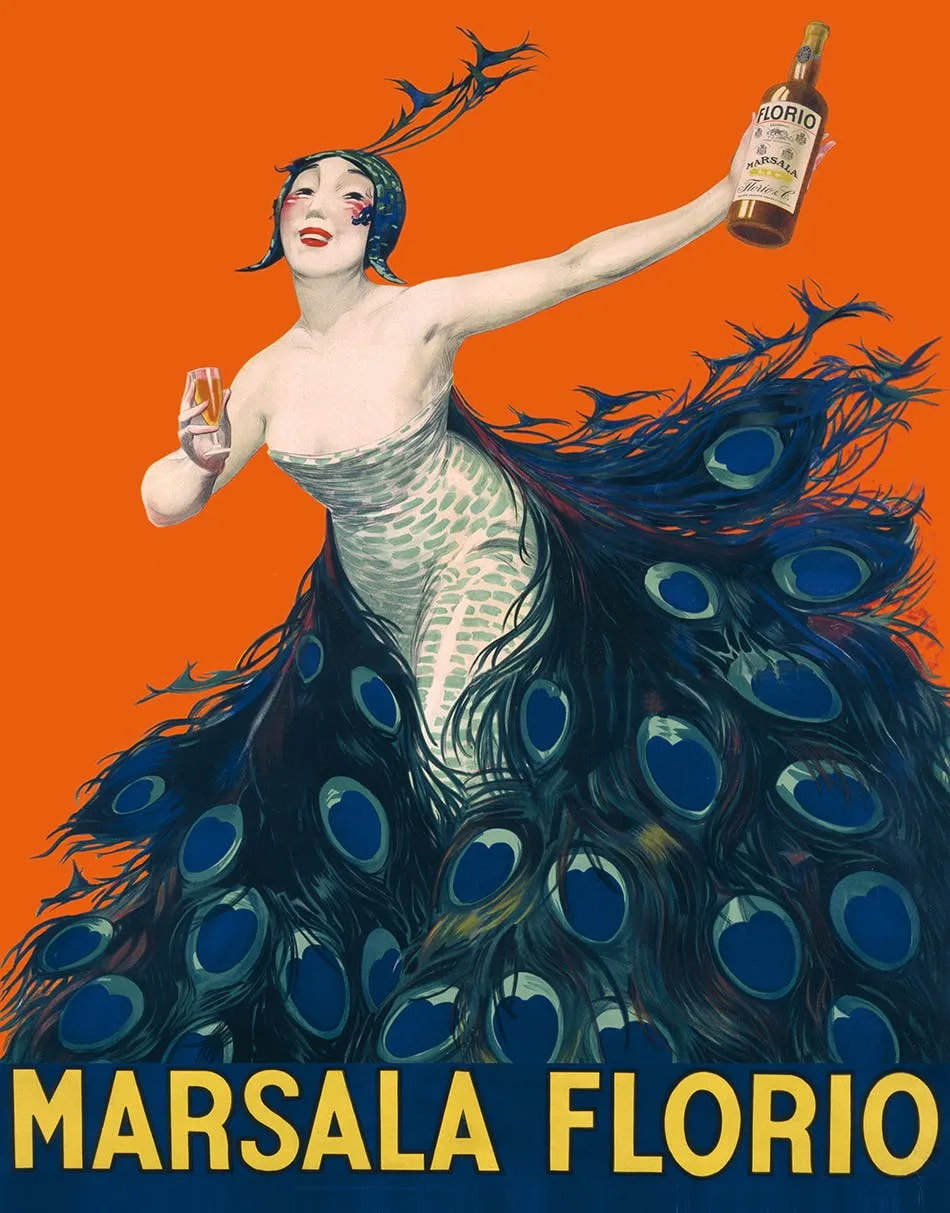
In 1806 a Yorkshireman, Benjamin Ingham, arrived and built a rival business; his heirs, the Whitaker family, later played a large part in the story of the area. In 1833 Vincenzo Florio, a Calabrian-born entrepreneur based in Palermo, bought land between the Woodhouse and Ingham bagli and founded what is now Cantine Florio, the first big Italian-owned Marsala house. By 1853 the three firms between them were shipping thousands of casks a year.
Garibaldi and his Thousand landed at Marsala in 1860 on the way to uniting Italy, and one traditional sweet style of Marsala Superiore is still labelled G.D., Garibaldi Dolce. In the twentieth century the wine lost its way: cheaper production, heavy sweetening and flavoured versions turned it into a cooking ingredient in many people's minds. The DOC of 1969 and the stricter law of 1984 were attempts to restore its reputation, and today a number of producers make serious, long-aged Marsala again.
For the wider story of the island's many rulers, see my piece on Sicily's past and power.
How is Marsala wine made?
Making Marsala starts like any white wine. The grapes, which must reach at least 13 percent potential alcohol, are pressed and fermented into a dry base wine. The difference comes next, in a step the producers call the concia, when the wine is fortified and, for some styles, sweetened and coloured. The rules allow three ingredients for this:
- Wine alcohol or grape brandy, to raise the strength to 17.5 or 18 percent and more.
- Sifone (also called mistella): grape must from Marsala grapes with alcohol added to stop fermentation, so that it keeps the natural grape sugar. It is used to sweeten.
- Mosto cotto: grape must cooked down over a fire for hours until dark and caramel-like. It gives colour and a burnt-sugar note.
Marsala Vergine may use none of the last two: it is only base wine, alcohol and time, which is why it is always dry. After the concia, the wine is aged in wooden casks, and the ageing clock starts from the day the concia is complete. Only Marsala Fine may spend its first four months in other containers, such as steel.
The rules allow Vergine to be labelled Soleras, a nod to the old perpetual way of ageing, but they do not require a solera system. Practice varies from house to house: some producers keep perpetual or solera-style casks, topping up older wine with younger, while others age separate lots and blend them before bottling. Either way, as the wine ages some of it evaporates through the wood, which concentrates what remains.
What are the types of Marsala? Colour, age and sweetness
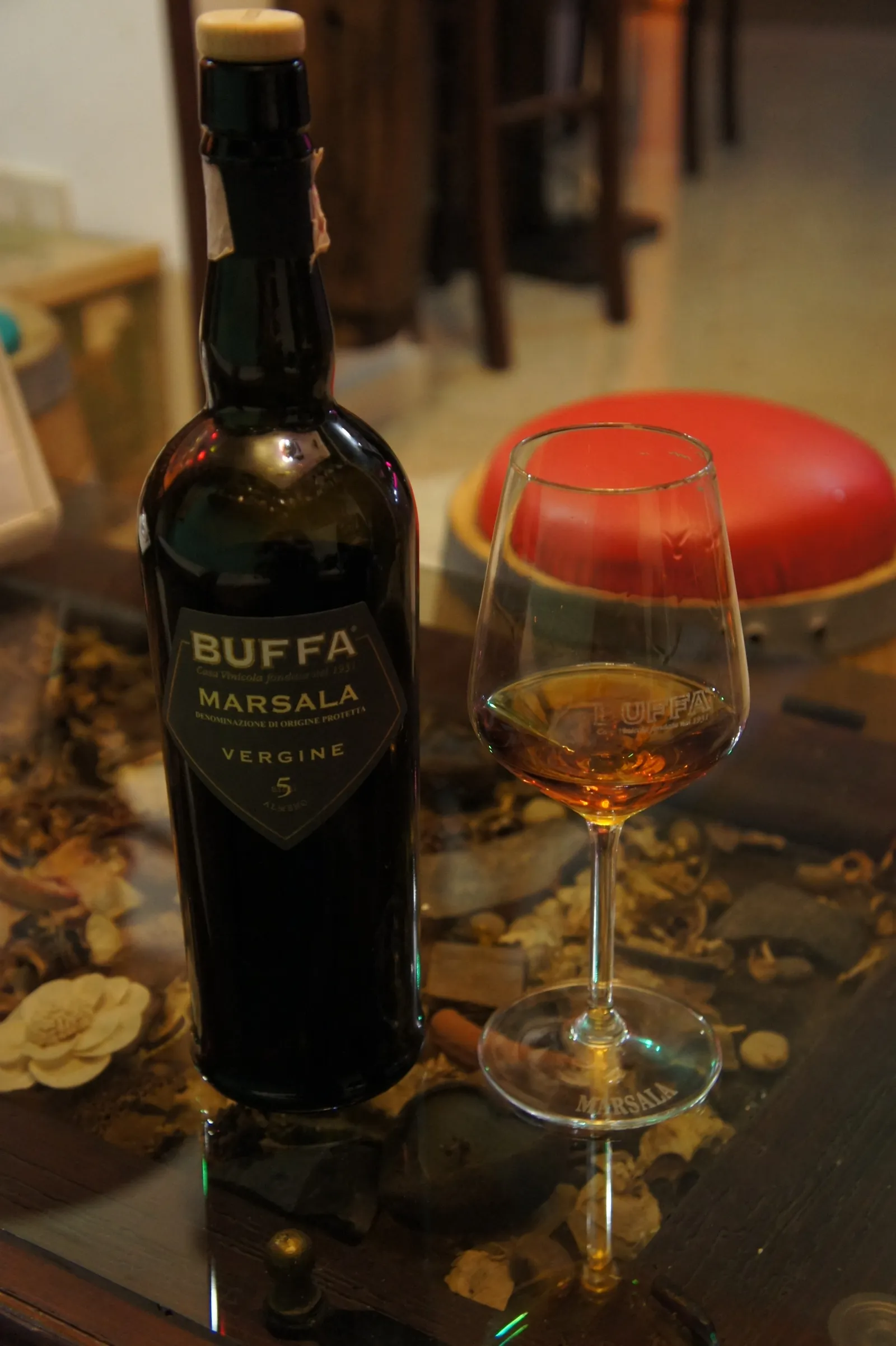
Every bottle of Marsala must say its age category, and may also state its colour and sweetness. Read those three things and you know what is inside.
Age categories
| Category | Minimum ageing | Minimum alcohol | What to know |
|---|---|---|---|
| Fine | 1 year | 17.5% | The everyday and cooking Marsala; may be labelled I.P. (Italia Particolare) |
| Superiore | 2 years | 18% | Can be dry, semi-dry or sweet; may be labelled S.O.M., G.D. or L.P. |
| Superiore Riserva | 4 years | 18% | A longer-aged Superiore |
| Vergine, or Soleras | 5 years | 18% | No cooked must or sifone; always dry |
| Vergine Stravecchio, or Vergine Riserva | 10 years | 18% | The oldest and most complex category |
The old letter codes are still allowed on labels: I.P. for Italia Particolare on Fine; and on Superiore, S.O.M. for Superiore Old Marsala, L.P. for London Particular and G.D. for Garibaldi Dolce. A Marsala that meets at least the Superiore rules may also be called Vecchio, and a year on the label refers to the year of the last concia.
Colours
- Oro (gold): golden, from white grapes. Cooked must is not allowed in Fine or Superiore oro.
- Ambra (amber): amber-coloured, from white grapes. In Fine and Superiore, the amber colour comes from cooked must, at least 1 percent by law.
- Rubino (ruby): ruby red from red grapes, turning amber with age. Cooked must is not allowed in Fine or Superiore rubino.
Sweetness
- Secco (dry): less than 40 grams of sugar per litre.
- Semisecco (semi-dry): between 40 and 100 grams per litre.
- Dolce (sweet): more than 100 grams per litre.
Vergine and Vergine Stravecchio are always dry, because the rules forbid the sweetening ingredients. Fine and Superiore can be any of the three.
What is not Marsala
Flavoured products such as Marsala with egg, almond or coffee are not Marsala DOC. Under Italian law they are sold as aromatised wines; the egg cream style is known as Cremovo, and must be made with at least 80 percent Marsala.
Dry vs sweet Marsala: which should you use?
The simplest rule: dry for savoury, sweet for dessert. Recipes written outside Italy often just say Marsala, so it helps to know what the cook probably meant.
- Dry (secco) Marsala is the one for chicken or veal Marsala, mushroom sauces, gravies and braised meats. It adds a nutty, raisin-like depth without making the dish sweet.
- Sweet (dolce) Marsala suits zabaglione, tiramisu, poached fruit, sponge soaks and drizzling over ice cream. Many classic Italian dessert recipes assume it.
- Semi-dry (semisecco) sits in between and works in both, which is handy if you only want one bottle.
If a recipe for a savoury sauce turns out cloying, the usual reason is a sweet Marsala used where a dry one was intended. Check the label for secco, semisecco or dolce before you buy.
How to cook with Marsala wine
For cooking, an ordinary Marsala Fine or Superiore does the job. You do not need a Vergine; its subtlety is lost in a hot pan, and it costs several times as much.
Chicken or veal Marsala
The best-known dish abroad, and a cousin of Italian scaloppine al Marsala. Thin escalopes are floured and browned in butter and oil, then the pan is deglazed with dry Marsala, reduced, and finished with stock and butter, often with mushrooms. Let the Marsala bubble for a minute or two before adding the stock, so the raw alcohol cooks off and the flavour concentrates.
Zabaglione
The classic Marsala dessert. Egg yolks, sugar and sweet Marsala are whisked together over barely simmering water until thick, pale and warm, then served at once, alone or with biscuits and berries. A common proportion is roughly one egg yolk, one tablespoon of sugar and one or two tablespoons of Marsala per person, but recipes vary.
Tiramisu
Many recipes, though not all, add a splash of sweet Marsala to the coffee for dipping the biscuits, or to the mascarpone cream. It is optional; leave it out for children.
Other uses
- Deglazing a pan after roasting pork or chicken, for a quick sauce.
- Mushroom risotto, added with the first ladle of stock.
- Soaking dried fruit for cakes, or poaching pears and figs.
Check the ingredients if you buy a bottle sold as cooking wine outside Italy: some products of that kind contain added salt, which will throw out your seasoning. A genuine Marsala DOC will say so on the label. For more on how Sicilians eat, see my Sicily food guide.
How to drink Marsala wine
Good Marsala is a wine to sip, not just to cook with. A few suggestions:
- Vergine and Vergine Stravecchio are dry, nutty and saline, with notes of dried fruit, almond and wood. Serve lightly cool as an aperitif, with salted almonds, olives, aged pecorino or bottarga, or at room temperature after dinner.
- Superiore Riserva, semi-dry or sweet, goes with almond pastries, cannoli, blue cheese and dark chocolate.
- Marsala Fine is mainly a cooking wine, the youngest and simplest category.
Pour small glasses: at 18 percent or more, Marsala is close to twice the strength of table wine. A white wine glass or a small tulip glass shows the aroma better than a tiny sherry glass.
What can I substitute for Marsala wine?
Nothing tastes exactly the same, but these come closest. Use the same quantity unless noted.
| Instead of | Use | Notes |
|---|---|---|
| Dry Marsala (savoury) | Dry Madeira | The closest match in flavour |
| Dry Marsala (savoury) | Dry or medium sherry, such as Amontillado | Slightly sharper; good in sauces |
| Dry Marsala (savoury) | Dry white wine with a splash of brandy | Lighter; add a pinch of sugar if the dish needs roundness |
| Sweet Marsala (dessert) | Sweet sherry, sweet Madeira or Vin Santo | Good in zabaglione and tiramisu |
| Any Marsala, alcohol-free | Grape juice with a little balsamic or sherry vinegar | For savoury dishes, add stock and reduce the sweetness |
If you have no Marsala and a recipe needs only a tablespoon or two, it is usually fine to leave it out and add a little more stock or a squeeze of lemon. In zabaglione, though, Marsala is the main flavour, so it is worth buying a bottle.
How to store Marsala, and does it go off?
Because Marsala is fortified and already aged with some air, it keeps much better than table wine, but it does not last for ever.
- Unopened: store upright in a cool, dark cupboard away from the cooker. It will keep for years without harm.
- Opened: push the cork or cap back in firmly and keep it somewhere cool and dark, or in the fridge. For drinking, it is typically at its best within a few weeks; for cooking, a well-sealed bottle kept cool is usually fine for some months.
- Signs it has gone: a flat, vinegary or musty smell, or a sharp sour taste. A little sediment in an old Vergine is normal.
Dry Vergine, with no added sugar, tends to keep its character longer after opening than a sweet Fine. If you buy a good bottle mainly to drink, a half bottle is a sensible size.
How to visit the Marsala wine cellars
The best place to understand Marsala is Marsala itself. The great 19th century bagli, walled wine estates built in local tufa stone, line the seafront and the edges of town, and several still welcome visitors. All of these work by booking, usually on the producer's website. These are factual examples, not recommendations.
Cantine Florio
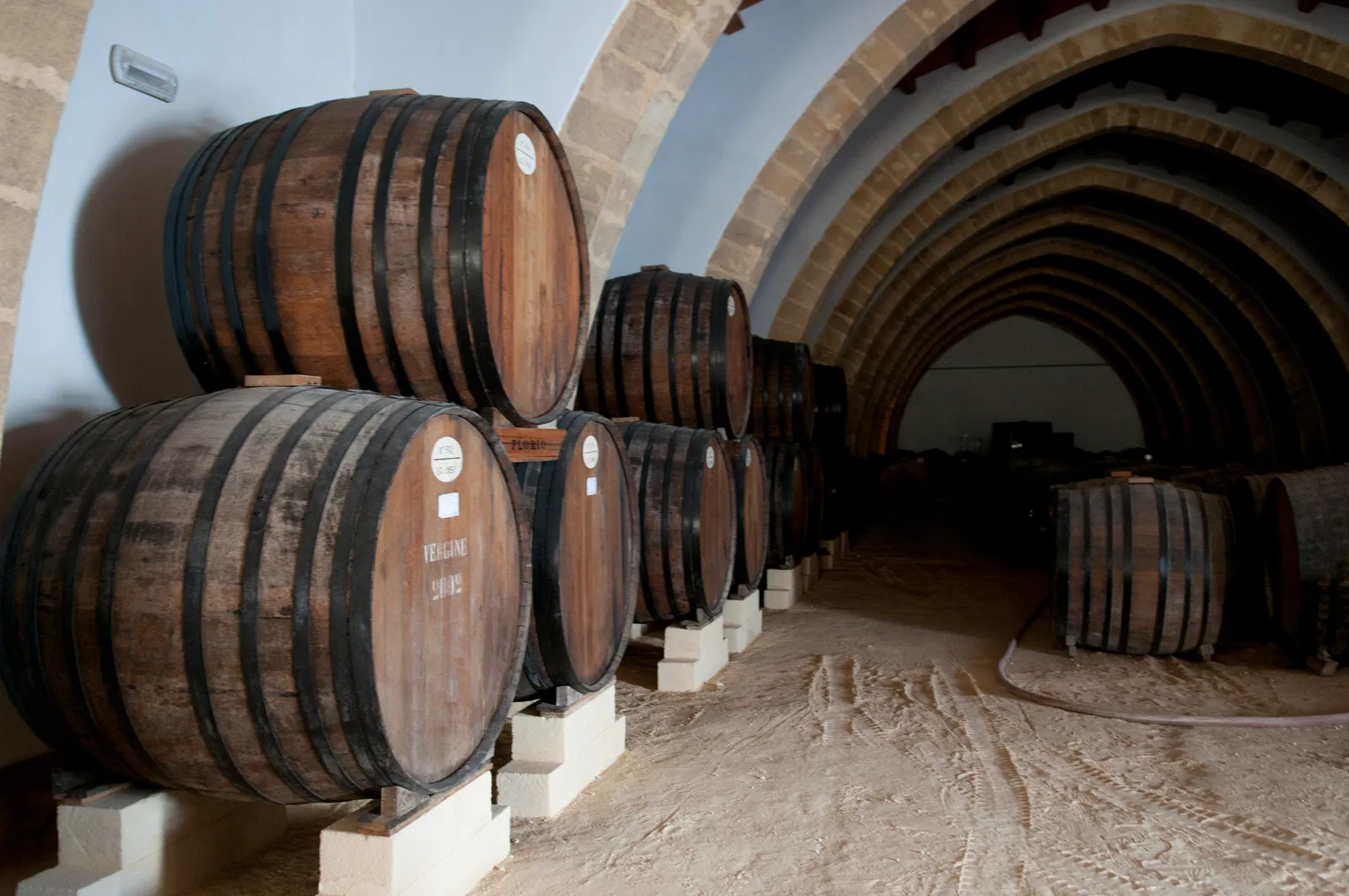
Founded by Vincenzo Florio in 1833, on the seafront. The cellars hold more than 3,000 oak casks in long tufa naves with pointed arches, and take tens of thousands of visitors a year. Tours with tasting are listed from around €25, with longer experiences up to about €60; children pay a small fee for the tour only.
Cantine Pellegrino
Another historic Marsala house with cellars in town, open to visitors through the year for tours and tastings that typically include Marsala and Passito di Pantelleria.
Donnafugata
Better known for table wines, Donnafugata's historic family cellars are in Marsala and are open all year, with tastings listed from around €40 to €55.
Other producers in the area, including Marco De Bartoli, known for traditional unfortified and solera-aged wines, are worth reading about if you get the bug. Cantine Aperte, the national open cellars weekend at the end of May, and the San Martino open day in November are good times to visit.
A car makes life much easier in this part of Sicily; see my guide to driving in Sicily, and remember the drink-drive limit if you are the one at the wheel. For the rest of the island's wines, see my Sicilian wine guide.
What else is there to see near Marsala? The Stagnone, the salt pans and Mozia
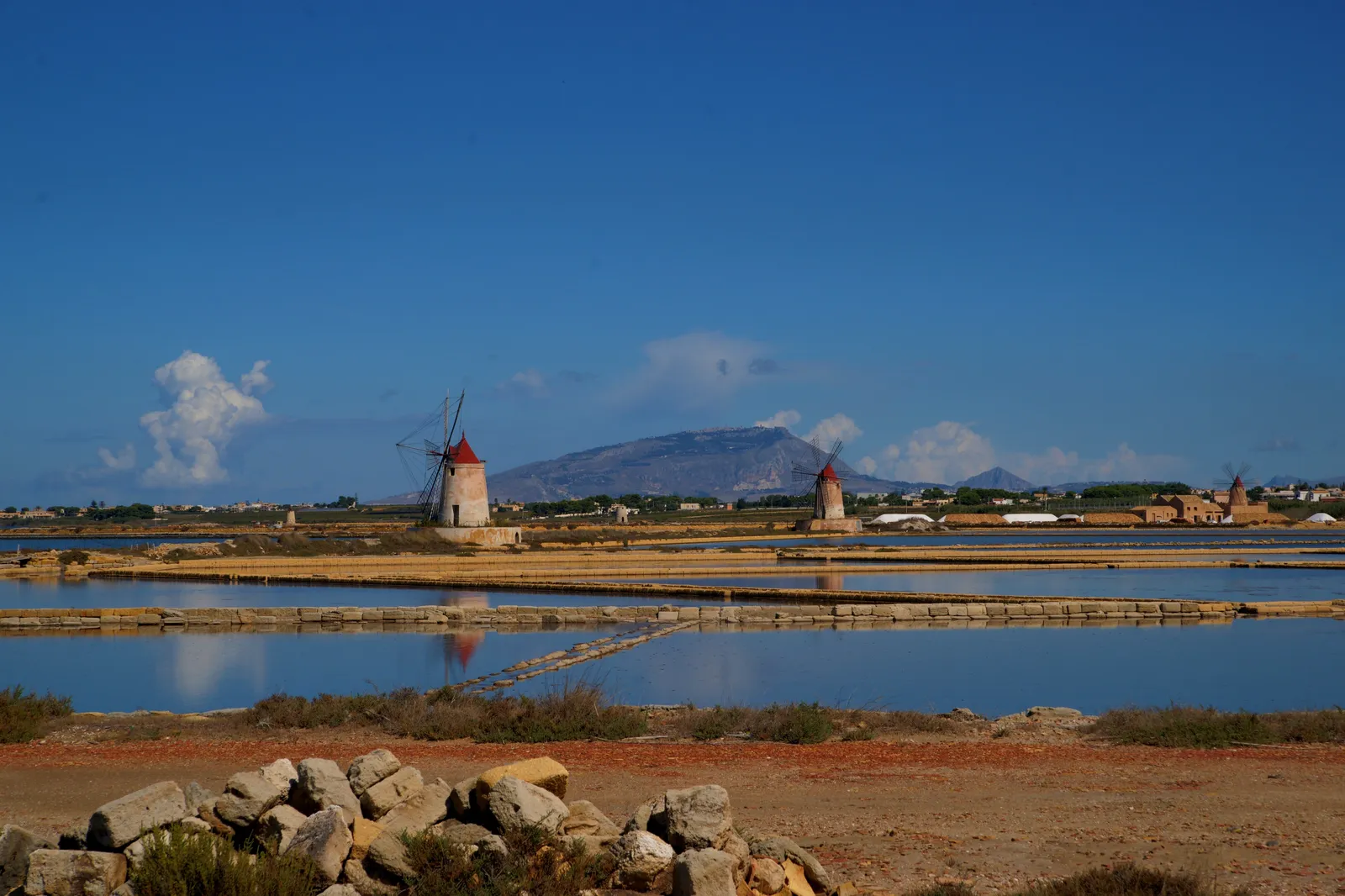
Just north of the town, the coast road runs past one of the most beautiful landscapes in western Sicily: the Stagnone lagoon, the largest in Sicily and a nature reserve since 1984, with its salt pans, windmills and four islands. Flamingos feed in the shallows, and sunset over the pans is the classic photograph of this coast.
The Marsala story runs straight into the lagoon. The island of Mozia (Motya), a Phoenician city founded at the end of the 8th century BC and destroyed by Dionysius I of Syracuse in 397 BC, was bought and first excavated in the early 1900s by Giuseppe Whitaker, from the family that inherited the Ingham Marsala business, and it still belongs to the Whitaker Foundation. Boats cross from landing stages beside the Saline Ettore e Infersa, whose restored windmill still works.
I cover all of this, including how the salt is made, the best time for flamingos and sunset, and Mozia's tickets and opening times, in my guide to the Trapani and Marsala salt pans. A cellar visit in the morning and the salt pans and Mozia in the afternoon make an easy day.
Combine all this with Trapani, Erice and the Egadi Islands, which I cover in things to do in Trapani, or head south to San Teodoro beach and on to Mazara del Vallo. If you fall for the area, my guide to buying property in Marsala is a good next step.
Frequently asked questions
What is Marsala wine?
Marsala is a fortified wine from the province of Trapani in western Sicily, protected as a DOC since 1969. A dry base wine, mainly from Grillo, Catarratto and Inzolia, is strengthened with wine alcohol or brandy to at least 17.5 or 18 percent and aged in wood for one to ten years or more. It comes dry, semi-dry or sweet, in gold, amber or ruby.
What is the difference between dry and sweet Marsala?
Sugar. Under the DOC rules, dry (secco) Marsala has less than 40 grams of sugar per litre, semi-dry (semisecco) has 40 to 100 grams, and sweet (dolce) has more than 100. Use dry Marsala for savoury dishes such as chicken or veal Marsala and mushroom sauces, and sweet Marsala for desserts such as zabaglione and tiramisu.
Which Marsala is best for cooking?
An ordinary Marsala Fine or Superiore is ideal for cooking, chosen for sweetness: secco (dry) for savoury dishes such as chicken Marsala, dolce (sweet) for zabaglione and other desserts. There is no need to cook with an expensive Marsala Vergine, whose subtleties are lost in the pan. Check that the label says Marsala DOC and has no added salt.
What does Marsala wine taste like?
It depends on the type. Dry Vergine Marsala tastes of dried fruit, toasted almonds, walnut and wood, with a salty, savoury edge, rather like an aged dry sherry or Madeira. Sweet amber Marsala is richer, with raisin, caramel and burnt-sugar notes from the cooked must. Ruby Marsala, from red grapes, adds red-fruit notes.
What can I use instead of Marsala wine?
Dry Madeira is the closest substitute in savoury dishes, followed by a dry or medium sherry such as Amontillado. A dry white wine with a splash of brandy works at a pinch. For desserts, use sweet sherry, sweet Madeira or Vin Santo. For an alcohol-free version, grape juice with a little balsamic or sherry vinegar is the usual stand-in.
Does Marsala wine go bad after opening?
It lasts much longer than ordinary wine because it is fortified, but it does slowly fade. Close the bottle firmly and keep it cool and dark, or in the fridge. For drinking it is typically best within a few weeks of opening; for cooking a well-sealed bottle is usually fine for some months. Throw it away if it smells vinegary or musty.
Is Marsala the same as sherry?
No, though they are related in style. Both are fortified wines aged in wood, and both have a tradition of topping up older wine with younger, but sherry comes from Jerez in southern Spain and is made mainly from Palomino, while Marsala comes from the province of Trapani in Sicily and is made from Grillo, Catarratto, Inzolia and, for ruby Marsala, red grapes. Dry Marsala Vergine is closest in style to an aged dry sherry.
What does Vergine mean on Marsala?
Vergine is the category of Marsala made only from base wine, alcohol and time: no cooked must and no sweetening sifone are allowed, so it is always dry. It must be aged for at least five years in wood and reach at least 18 percent alcohol. Vergine Stravecchio, also called Vergine Riserva, must be aged for at least ten years.
Who invented Marsala wine?
Wine was made around Marsala long before, but the fortified style is credited to John Woodhouse, a Liverpool merchant who arrived in 1773 and added spirit to the local wine so that it would survive the voyage to Britain. Benjamin Ingham followed in 1806, and in 1833 Vincenzo Florio founded the first major Italian-owned Marsala house.
Can you visit Marsala wineries?
Yes. Several historic cellars in Marsala, including Cantine Florio, Cantine Pellegrino and Donnafugata, offer guided tours and tastings, usually by booking on their websites. Tours with tasting typically cost from around 25 to 60 euros per person. The salt pans of the Stagnone and the island of Mozia are a short drive north, so a day in Marsala can include all three.
Sources and small print
- Ministry of Agriculture (MASAF): decree of 1 July 2025 approving the amended Marsala DOC production rules (disciplinare)
- MASAF national vine and wine catalogue: Marsala DOC
- Cantine Florio: how Marsala is produced and aged and visits
- Cantine Pellegrino and Donnafugata: the Marsala cellars
- Henry Jeffreys, History Today: The Bittersweet Taste of British Sicily
- Wikipedia (Italian): Marsala (vino), for the 1853 production figures, the label codes and Cremovo
- Comune di Marsala tourism: Isole dello Stagnone nature reserve
- Fondazione Whitaker: visiting Mozia
- Movimento Turismo del Vino: Cantine Aperte
Visit prices are those listed on producers' booking pages in 2026 and change often; check before you go.
Credits
Photo: Michal Osmenda, CC BY-SA 2.0, via Wikimedia Commons.
Photo: Jean d'Ylen, public domain, via Wikimedia Commons.
Photo: Chris, CC BY-SA 2.0, via Wikimedia Commons.
Photo: Mboesch, CC BY-SA 3.0, via Wikimedia Commons.
 The weekly YouTube series