
Operation Husky: why the Allies invaded Sicily
By the spring of 1943 the Allies had cleared North Africa, and Sicily, slightly larger than Vermont at about 10,000 square miles, sat across the narrow sea as the obvious next step. Taking it would open the Mediterranean to Allied shipping and put pressure on Italy, the weaker of the two Axis partners. The plan was led by General Dwight D. Eisenhower, with General Harold Alexander's 15th Army Group in command of two armies: the US Seventh Army under Lieutenant General George S. Patton and the British Eighth Army under General Bernard Montgomery.
Before the landings came one of the best-known deceptions of the war, Operation Mincemeat. On 30 April 1943 British intelligence released the body of a dead man, Glyndwr Michael, off Huelva in Spain, dressed as a Royal Marines officer, "Major William Martin", and carrying fake letters that pointed to landings in Greece and Sardinia. Hitler moved troops in response. The story became the 1956 film The Man Who Never Was and, more recently, the 2021 film Operation Mincemeat with Colin Firth.
Waiting on the island were between 200,000 and 300,000 Italian troops and about 30,000 Germans, including the Hermann Goering and 15th Panzer Grenadier divisions, under the Italian general Alfredo Guzzoni.
Where the Allies landed in Sicily
On the night of 9 to 10 July an armada of more than 3,200 vessels approached the coast in a 40 mph gale, which the troops called the "Mussolini wind". The first troops went ashore at 2:45am on 10 July. The landing beaches, from west to east:
| Where | Who | Today |
|---|---|---|
| Licata | US 3rd Infantry Division (Truscott) | A port town on the south coast, east of Agrigento |
| Gela | US 1st Infantry Division (Terry Allen) and Darby’s Rangers; Patton came ashore here | A town on the south coast |
| Scoglitti | US 45th Infantry Division (Middleton) | A small seaside town east of Gela |
| Pachino peninsula to south of Syracuse | British Eighth Army, with the 1st Canadian Division, on about 40 miles of coast | The south-east corner of Sicily, around Pachino and the Gulf of Noto |
Airborne troops went in first, and the gale scattered them. Of 144 British gliders sent towards Syracuse, only 12 landed on target and 69 came down in the sea. The 3,400 American paratroopers of the 82nd Airborne under James Gavin were spread across the south-east, and Gavin himself landed about 25 miles from his drop zone.
The National WWII Museum puts the landing force at over 150,000 troops in the first three days, with more than 4,000 aircraft. The US Army's own history calls it the largest amphibious operation of the Second World War by the size of the landing zone and the number of divisions put ashore on the first day.
The invasion of Sicily: Gela, Palermo and the race to Messina
The hardest moment for the Americans came on 11 July, when German and Italian forces counter-attacked towards the beaches at Gela, at Piano Lupo and on Biazzo Ridge. By the end of the day the Seventh Army had suffered over 2,300 casualties, its worst day of the campaign. The same night, Allied guns on the ships and beaches fired on the transport planes bringing in more paratroopers: 23 of 144 aircraft were shot down and 37 damaged.
While the British fought their way up the east coast towards Catania, Patton's army swept west. Agrigento fell on 15 July, and after a 72-hour dash across the island Palermo fell too; by 24 July the whole west of Sicily was in American hands, with 53,000 Italian prisoners. On 25 July Mussolini was removed from power in Rome.
The last phase was a slog through the mountains around Etna, where the Germans held a defensive line, the Etna Line. The US 1st Division fought for Troina from 31 July to 6 August, where Private James W. Reese earned the Medal of Honor. Along the north coast the Americans tried to get behind the German lines with landings from the sea at Sant'Agata on 7 and 8 August and at Brolo on 11 August. As Patton put it: "This is a horse race in which the prestige of the US Army is at stake."
It was also fought in heat that reached 100°F (38°C), and malaria and fevers took more than 10,000 soldiers out of action. On 17 August men of the US 3rd Division's 7th Infantry entered Messina, only hours after the last Axis troops had left. Over the campaign the Germans and Italians got more than 100,000 men and 10,000 vehicles across the strait to the mainland, which is why I think of Husky as a victory with an escape attached.
Patton and the slapping incidents
The campaign also produced the best-known scandal of Patton's career. Britannica records that on 3 August 1943, at the 15th Evacuation Hospital outside Nicosia, Patton slapped Private Charles Kuhl with his glove and called him a coward; Kuhl was later found to have dysentery and malaria. On 10 August, at the 93rd Evacuation Hospital near San Stefano, he slapped Private Paul Bennett, who had been diagnosed with combat fatigue.
Eisenhower reprimanded him by letter and ordered him to apologise. When the story broke in the United States in late November 1943 there were calls for Patton to be sacked. He kept his job, but the incidents likely cost him a command of ground forces in the Normandy invasion.
How many soldiers died in the invasion of Sicily?
The US Army Center of Military History gives these totals for the campaign:
| Killed | Wounded and captured | Total | |
|---|---|---|---|
| United States | 2,237 | 6,544 | 8,781 |
| British | 2,721 | 10,122 | 12,843 |
| German and Italian | About 29,000 killed or wounded | Over 140,000 captured | Over 169,000 |
The National WWII Museum puts American, British and Canadian casualties together at about 24,850.
Operation Husky sites you can visit in Sicily today
Sicily does not have a large battlefield trail like Normandy, and most of the landing beaches are ordinary beaches again. These are the places I would go, all of them open to visitors:
The landing museum in Catania
The Museo Storico dello Sbarco in Sicilia 1943 is in Le Ciminiere, the cultural centre on Viale Africa in Catania. It covers three floors and about 3,000 square metres (32,000 sq ft), with rooms rebuilt as a Sicilian village square, an air-raid shelter, a bunker and the tent in which Italy's armistice was signed on 3 September 1943. It is fully accessible. It is the one place on the island that tells the whole story, so if you only see one site, make it this one. See the Catania town page for the city itself.
The Commonwealth war cemeteries
- Syracuse War Cemetery, about 3 km (2 miles) west of Syracuse on the road to Floridia: 1,059 Commonwealth burials, 134 of them unidentified, including many of the airborne soldiers lost in the glider landings.
- Catania War Cemetery, about 7 km (4 miles) south-west of Catania near the A19 motorway: 2,135 burials, 112 unidentified, many of them men killed in the fighting south of Catania, which was taken on 5 August.
- Agira Canadian War Cemetery, in the hills of the interior: 490 Canadian burials. Agira itself was taken by the 1st Canadian Division on 28 July. See Agira.
The Commonwealth War Graves Commission keeps the records and directions for all three.
Where the American dead are buried
There is no American war cemetery in Sicily. The Americans who died in the campaign and were not brought home lie at the Sicily-Rome American Cemetery at Nettuno, south of Rome, run by the American Battle Monuments Commission: almost 7,900 headstones on 77 acres, with almost 3,100 names of the missing on the walls of the chapel and a map room that shows the operations in Sicily and Italy. If a relative served in Sicily, the ABMC is where to start.
The landing towns
Gela and Licata are on the south coast, east of Agrigento and the Valley of the Temples, and Troina is in the mountains west of Etna. You will not find much about 1943 on their seafronts and squares, but knowing what happened there changes how you look at them. The exception is Mollarella beach west of Licata, where a memorial stone recalls the landing on what the Allies called Green Beach; the 45th Division's beaches are around Scoglitti.
Why Sicily mattered for the rest of the war
Husky was the first time a complete US field army, over 200,000 men, fought as a unit, and the first time the Allies set foot on Axis soil in Europe. It also knocked Italy out of the war: Mussolini fell on 25 July and the armistice was signed on 3 September. The Americans buried at Nettuno include men who fell later at Salerno and Anzio, which tells you where the road from Sicily led.
My overview of Sicily's history puts it in the longer story of the island, which has been invaded rather more often than most places in Europe.
The occupation also left a darker legacy. Britannica notes that after the war the American occupation authorities released many mafiosi from prison, and that these men went on to revive the organisation; my guide to the Mafia in Sicily explains what that means for the island today.
Frequently asked questions
When was the Allied invasion of Sicily?
The landings began in the early hours of 10 July 1943, after the fleet sailed on the night of 9 to 10 July, and the campaign ended on 17 August 1943, when American troops entered Messina. It lasted 38 days.
What was Operation Husky?
Operation Husky was the code name for the Allied invasion of Sicily in July 1943, led by General Eisenhower, with the US Seventh Army under Patton and the British Eighth Army under Montgomery. It was the first Allied attack on the Axis homeland and led to the fall of Mussolini on 25 July.
Where did the Americans land in Sicily?
In the Gulf of Gela on the south coast: the 3rd Infantry Division at Licata, the 1st Infantry Division and the Rangers at Gela, and the 45th Infantry Division at Scoglitti, with paratroopers of the 82nd Airborne dropped inland. The British and Canadians landed on the south-east coast between the Pachino peninsula and Syracuse.
How many Americans died in the invasion of Sicily?
According to the US Army Center of Military History, 2,237 Americans were killed and 6,544 wounded or captured. The British lost 12,843 men killed, wounded or captured, including 2,721 dead.
Who won the battle of Sicily?
The Allies. They took the whole island in 38 days and captured over 140,000 Axis troops. But more than 100,000 German and Italian soldiers and 10,000 vehicles escaped across the Strait of Messina to fight again on the mainland.
Are there American war graves in Sicily?
No. The Americans killed in Sicily who were not brought home are buried at the Sicily-Rome American Cemetery at Nettuno, south of Rome, with almost 7,900 headstones. Sicily has three Commonwealth war cemeteries, at Syracuse, Catania and Agira.
Is there a museum about the 1943 landings in Sicily?
Yes, the Museo Storico dello Sbarco in Sicilia 1943 in Catania, in the Le Ciminiere cultural centre. It covers three floors, with rebuilt scenes of a village square, an air-raid shelter, a bunker and the tent where the Italian armistice was signed, and it is fully accessible.
Did the Mafia help the Allies invade Sicily?
The popular story says so, but the record is narrower. According to Britannica, Lucky Luciano, then in prison in New York, helped US Naval Intelligence with security on the New York waterfront during the war, and in 1946 his sentence was commuted and he was deported to Italy. Britannica does not credit him or the Sicilian Mafia with a role in the landings. It does record that after the war the American occupation authorities released many mafiosi from prison, and that they revived the organisation.
What was Operation Mincemeat?
A British deception before the invasion of Sicily. On 30 April 1943 a dead man dressed as a Royal Marines officer, “Major William Martin”, was released off Spain carrying fake letters that pointed to landings in Greece and Sardinia. It worked well enough that Hitler moved troops, and it has been told in two films, The Man Who Never Was (1956) and Operation Mincemeat (2021).
Sources and small print
- US Army Center of Military History, Andrew J. Birtle, Sicily, 9 July to 17 August 1943 (CMH Pub 72-16)
- The National WWII Museum, Operation Husky: the Allied invasion of Sicily
- Britannica: George Patton, controversies (the slapping incidents), Lucky Luciano and Mafia
- Britannica, Operation Mincemeat, and the Allied invasion of Sicily
- Imperial War Museums, The war on paper: Operation Mincemeat
- Commonwealth War Graves Commission: Syracuse War Cemetery, Catania War Cemetery and Agira Canadian War Cemetery
- American Battle Monuments Commission, Sicily-Rome American Cemetery
- Comune di Catania, tourism, Museo Storico dello Sbarco in Sicilia 1943
Figures differ between histories, depending on who is counted and when; I have used the US Army's own figures where there is a choice.
Credits
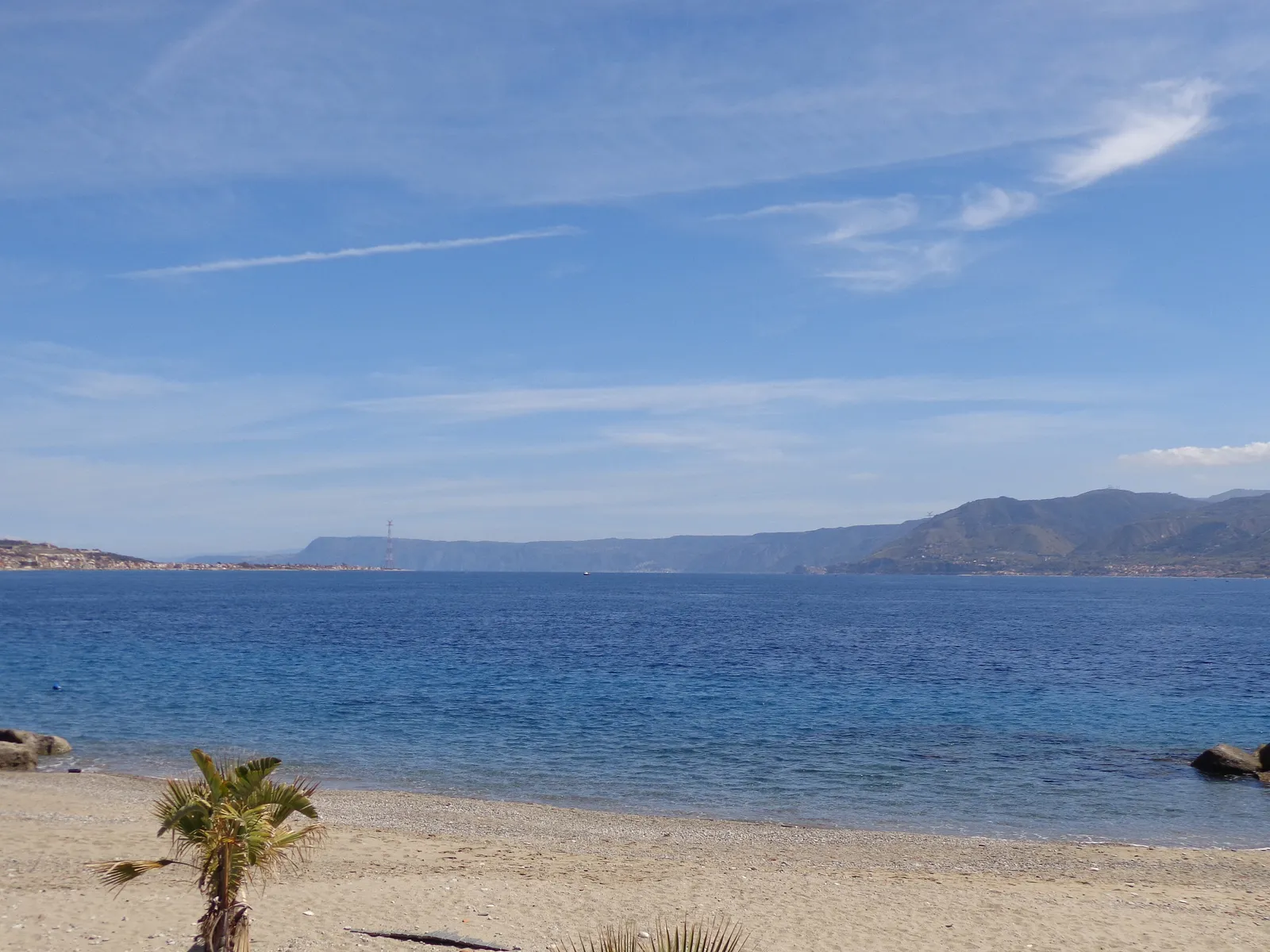
Photo: Effems, CC0, via Wikimedia Commons.
 The weekly YouTube series