If you are planning to visit Sicily, thinking about buying property here, or researching what life is actually like for people who live in this part of the world, the question of the Mafia will come up. It always does. And it deserves a serious, honest answer rather than a sensationalised one. As someone who lives in western Sicily, in the province of Trapani, I am writing this Mafia Sicily history reality guide from a place of genuine familiarity rather than detached commentary. I am not going to pretend that Cosa Nostra does not exist, and I am also going to tell you what daily life here actually looks like, because the two things are very different.
The conversation around the Mafia in Sicily tends to distort in one of two directions. People either catastrophise it into something out of a Hollywood film, or they dismiss the topic entirely as if it were ancient history. Neither is accurate. What follows is as close to an honest picture as I can give: the real history, the real present, and what it actually means if you are visiting or planning to put down roots here.
I have had this conversation dozens of times with friends, viewers and people who have reached out through the website. The questions are usually some variation of the same thing: is it safe? Are people afraid to talk about it? Do you have to worry about it? The answers are nuanced but, for ordinary people living ordinary lives in Sicily, they are also reassuring.
Western Sicily specifically, where I am based in Mazara del Vallo, sits in a part of the island with a long and complicated history involving Cosa Nostra. I mention this not to alarm anyone, but because it makes the subject directly relevant to what I write about here. Understanding what that history actually consists of, and how it relates to the Sicily that exists today, matters whether you are a tourist spending two weeks here or someone like me who has made this island a central part of their life.
Contents
- The Historical Origins of Cosa Nostra in Sicily
- The Structure: Families and the Commission
- The Peak Years: Violence, Political Infiltration and a State at War
- The 1992 Turning Point: Falcone, Borsellino and the Case That Changed Everything
- The Modern Mafia Reality: What Cosa Nostra Looks Like Today
- Western Sicily and the Mafia: The Historical Heartland
- What Tourists and New Residents Actually Need to Know About the Mafia in Sicily
- The Anti-Mafia Culture: Addiopizzo and Civil Society Fighting Back
The Historical Origins of Cosa Nostra in Sicily
The Mafia did not spring into existence fully formed from some inherent flaw in Sicilian character. Understanding its origins means understanding the Sicily that existed in the nineteenth century, because Cosa Nostra was a response to specific historical and social conditions, not an inevitable product of the culture.
Sicily in the 1800s was among the poorest, most neglected regions in Europe. Under the Bourbon Kingdom of the Two Sicilies, the island had experienced centuries of feudal landholding, extractive governance and minimal state presence outside the major cities. When Italian unification came in 1861, it brought with it promises of modernisation and stable administration that were slow to materialise in Sicily. The new Italian state was distant, often corrupt and largely incapable of enforcing contracts, settling disputes or protecting property in rural areas.
Into that vacuum stepped the gabellotti: intermediaries who leased large estates from absentee aristocratic landlords and then subleased them to peasant farmers. The gabellotti combined economic power with the ability to provide what the state could not. They enforced informal agreements, mediated disputes and offered a kind of protection, in exchange for loyalty and a share of whatever the land produced. They were not, at this stage, a criminal organisation in the modern sense. They were a parallel structure of order operating in the absence of legitimate authority.
The word "mafia" itself appears in official Sicilian documents as early as 1865, though its exact etymology remains debated. What is not debated is that by the latter half of the nineteenth century, there was a recognised network of influence operating across western Sicily, particularly in the provinces of Palermo, Trapani and Agrigento, that combined economic interest, social authority and the willingness to use violence when necessary to enforce compliance.
This combination of economic power, social legitimacy and controlled violence is what distinguished the emerging Mafia from ordinary criminality. It was not, in its origins, a gang of thugs. It was something more complicated and in some ways more deeply embedded: a system of alternative governance that persisted precisely because it served real functions in a context of institutional failure.
By the turn of the twentieth century, the system had developed into something recognisable as a criminal organisation in the modern sense: a network of related groups across western Sicily, each controlling territory, extracting wealth from the local economy and using violence to maintain their position. The relationship between the Mafia and Sicilian society was never one of simple predation. It was intertwined with local politics, business, agriculture and daily life in ways that made it resistant to external pressure.
The fascist period under Mussolini brought the most serious early attempt to suppress Cosa Nostra. Prefect Cesare Mori, appointed by Mussolini in 1925, conducted mass arrests and suppression campaigns across western Sicily that significantly disrupted the organisation's operations. His methods were hardly admirable by modern standards, but they demonstrated something important: the Mafia was not invincible, and concentrated state effort could produce results.
The post-war period saw Cosa Nostra reconstitute itself and begin what would become its most powerful and destructive phase. The US Allied occupation of Sicily in 1943 is sometimes cited as having inadvertently assisted in restoring Mafia influence, as American forces worked with local notables who in some cases had Mafia connections in the early administration of the island. The historical picture is complicated and contested by historians, but the outcome is not: by the 1950s, Cosa Nostra was reorganising, professionalising and positioning itself for the decades that followed.
The Structure: Families and the Commission
Cosa Nostra is not a monolithic organisation with a single boss giving orders to an army of subordinates. Its structure is more like a federation of semi-autonomous criminal families, each controlling a specific territory, with a coordinating body above them.
At the base level is the family (famiglia), which controls a specific geographical area. In Palermo, the city was divided into mandamenti, each consisting of several smaller borgata (neighbourhood) units. Each family has a boss (capo), an underboss (sottocapo) and a counsellor (consigliere). Below them are the ordinary members, known as soldati or uomini d'onore (men of honour), who carry out the day-to-day activities of the family.
The Commission, known in Sicilian dialect as the cupola, was established in the 1950s to coordinate between the major families and prevent the kind of destructive infighting that had previously weakened the organisation. It consisted of the leaders of the main mandamenti in Palermo, with representation from the major provincial families. Its role was to authorise major decisions, including the killing of significant targets, and to adjudicate disputes between families.
The Commission was not always a stabilising force. Its history is also a history of faction, betrayal and violent power struggles. The Corleonesi faction, led first by Luciano Liggio and then by Salvatore Riina, used the Commission as a platform from which to launch their takeover of the organisation, eliminating rivals through a systematic campaign of violence in the early 1980s that became known as the Second Mafia War.
The rules and rituals of membership in Cosa Nostra, revealed in detail by pentiti (members who cooperated with the state), were elaborate. Initiation involved ceremonies with religious imagery. Members were bound by oaths of silence (omertà) and absolute loyalty. Betrayal of the organisation was punishable by death, and in some cases that punishment extended to family members. These were not merely theatrical conventions. They were functional mechanisms for maintaining internal discipline in a criminal organisation that depended entirely on secrecy.
Understanding this structure matters because it explains how Cosa Nostra operated so effectively for so long. It was not chaotic. It had internal rules, hierarchies and decision-making processes. It also explains how the state, once it obtained the testimony of senior pentiti who understood the structure from the inside, was able to map and target the organisation far more effectively than had previously been possible.
The families in western Sicily, particularly those in the Trapani and Palermo provinces, were among the most powerful and most deeply embedded in the local economy. Their influence over agriculture, construction, fishing and public contracts gave them a financial base that went well beyond street-level criminality. This economic dimension of Cosa Nostra is important to understand, because it is the dimension that has proved most resilient even as the organisation's capacity for public violence has declined sharply.
The Peak Years: Violence, Political Infiltration and a State at War
The period from roughly the late 1970s through to the early 1990s represents the most violent and audacious phase in Cosa Nostra's modern history. The Corleonesi's takeover of the organisation under Salvatore Riina brought a new, far more aggressive approach to the use of violence that alarmed even established Mafia figures who had operated under older, more conservative conventions.
The Second Mafia War of 1981 to 1983 saw hundreds of men killed in Palermo and the surrounding provinces as the Corleonesi eliminated their internal rivals. This was not the careful, targeted violence of the previous era. It was wholesale slaughter of opposing families and their associates, carried out at a pace and with a brutality that shocked Sicily. The streets of Palermo saw bodies appearing on a near-daily basis at the height of the conflict.
What followed was even more alarming to the Italian state. Cosa Nostra, emboldened by its internal consolidation and apparently confident in its political protection, began targeting state representatives in a way it had rarely done before. The murder of General Carlo Alberto Dalla Chiesa in September 1982, along with his wife and a bodyguard, was a statement of extraordinary arrogance. Dalla Chiesa had been the prefect who masterminded the defeat of the Red Brigades terrorist organisation in the 1970s. Riina had him killed in the street in broad daylight in the centre of Palermo.
Political infiltration ran deep during this period. The relationship between Cosa Nostra and segments of Italian political life, particularly the Christian Democrat establishment that dominated Italian politics for most of the post-war period, is a subject of ongoing historical and judicial examination. The trials that followed the 1990s crackdown produced evidence of arrangements between Mafia figures and politicians at local, regional and national level. These were not simply cases of politicians taking bribes. The relationship was sometimes more systematic: votes delivered in exchange for political protection, public contracts directed toward approved companies, and state investigations steered away from sensitive targets.
Throughout this period, two magistrates in Palermo were assembling the most comprehensive prosecution of Cosa Nostra that had ever been attempted. Giovanni Falcone and Paolo Borsellino, working as part of the Pool Antimafia, developed an analytical approach to understanding and prosecuting the Mafia as an organisation rather than pursuing individual criminals in isolation. This was a conceptual revolution in Italian law enforcement. Falcone in particular understood that to seriously damage Cosa Nostra you had to understand its financial structures, its internal hierarchy and its decision-making processes. He worked relentlessly with pentiti, particularly Tommaso Buscetta, whose cooperation transformed investigators' knowledge of the organisation's inner workings.
The result was the Maxi Trial (Maxi Processo), which began in Palermo in 1986 inside a specially constructed bunker courtroom and concluded in 1987 with the conviction of 338 defendants, including 19 life sentences. It was the largest criminal trial in Italian history and represented a fundamental challenge to Cosa Nostra's sense of invulnerability. The organisation appealed, and for several years there were real fears that the convictions would be overturned on procedural grounds. When the Italian Supreme Court upheld them in January 1992, the response from Riina was murderous.
The 1992 Turning Point: Falcone, Borsellino and the Case That Changed Everything
23 May 1992 is a date that anyone who lives in Sicily knows. Giovanni Falcone was returning from Rome to Palermo with his wife Francesca Morvillo and three members of his escort when Cosa Nostra detonated approximately half a tonne of explosives buried beneath the A29 motorway near Capaci. Falcone, his wife and all three escort officers were killed. The crater left in the motorway surface was several metres deep.
Fifty-seven days later, on 19 July 1992, Paolo Borsellino and five members of his escort were killed by a car bomb in Via D'Amelio in Palermo, where his mother lived. Borsellino had continued Falcone's work after his colleague's death and had been pressing urgently for access to Falcone's files and investigations. He died before he could complete what he had started.
These two atrocities changed everything. The killing of Falcone had already provoked massive public outrage and a genuinely unprecedented sense of national grief. The Sicilian public, whose tolerance of the Mafia had often been characterised in terms of passive complicity or resigned acceptance, showed something different in the weeks after Capaci: anger, grief and a rejection of the Mafia's presence that was expressed on balconies, in protest marches and in a public discourse that had never previously been quite this open or this defiant.
The Italian state's response was the most serious it had ever mounted. Law 41-bis, the hard prison regime that severely restricts the ability of imprisoned Mafia bosses to communicate with the outside world, was introduced and extended. The pentiti programme was expanded, with significant legal protections and practical support for those who chose to cooperate with investigators. Arrests followed at a pace that Cosa Nostra had not previously experienced. In January 1993, Salvatore Riina himself was captured in Palermo, where he had been living under a false identity. He had been a fugitive for 23 years.
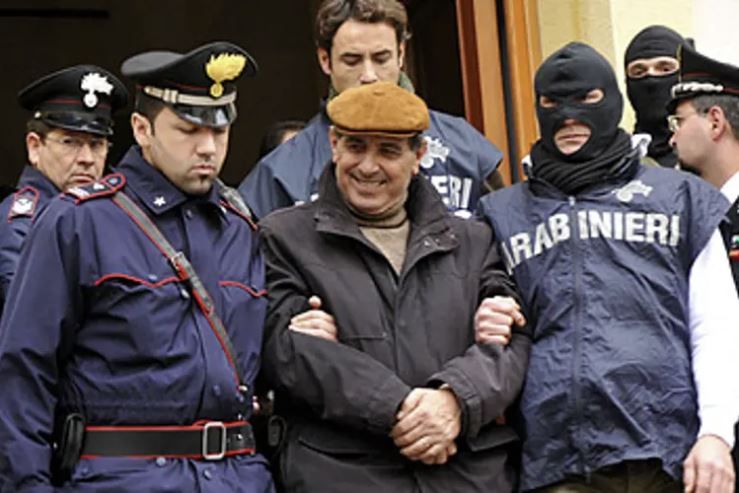
The capture of Riina did not end Cosa Nostra. The organisation continued to function under a series of leaders. Bernardo Provenzano, who had been Riina's joint commander during the Corleonesi takeover, went on the run and managed the organisation in a very different style: quieter, less confrontational, focused on financial activity rather than spectacular violence. He was captured in 2006 in a farmhouse outside Corleone after 43 years as a fugitive.
The significance of 1992 cannot be overstated. It was the moment when the Italian public and the Italian state, both of which had shown varying degrees of ambivalence or complicity in the preceding decades, collectively decided that enough was enough. The anti-Mafia movement that emerged in that period was not manufactured from above. It came from real grief, real anger and a recognition that organised crime was destroying not just individual lives but the future of an entire region and its people.
The Fondazione Falcone, which carries forward the work and legacy of Giovanni Falcone, is one enduring expression of what 1992 set in motion. Their work on civic education and the preservation of Falcone's legal legacy can be explored at fondazionefalcone.it.
The Modern Mafia Reality: What Cosa Nostra Looks Like Today
Cosa Nostra still exists. That is a fact, and it is worth being direct about. The organisation was not destroyed by the crackdown of the 1990s. It adapted, went quieter and continued to operate, primarily through financial crime, drug trafficking and the infiltration of legitimate businesses and public procurement. What has changed profoundly is its capacity for spectacular violence and its degree of political protection.
The Direzione Investigativa Antimafia (DIA), the Italian interior ministry's dedicated anti-Mafia directorate, publishes regular assessments of the state of organised crime in Italy. Their reports consistently indicate that Cosa Nostra has been significantly weakened compared to its peak, but retains the capacity to generate revenue through financial crimes and continues to exercise influence over certain sectors of the Sicilian economy, particularly construction and public contracting. You can read their current assessments at the DIA's official website.
The most visible demonstration of how much the organisation has changed came in January 2023, when Matteo Messina Denaro, the last significant figure on Italy's most-wanted list and the operational head of Cosa Nostra since Provenzano's arrest, was captured in Palermo. He had been a fugitive for thirty years. He was found receiving treatment for cancer at a private clinic in Palermo, living under a false identity. He died in custody in September 2023. His arrest was significant not just as a law enforcement achievement but as a symbol of how diminished Cosa Nostra has become: the most powerful boss the organisation could produce was an elderly man with terminal cancer who had spent three decades in hiding.
The era of spectacular public violence, the assassinations of judges, policemen and politicians in public spaces, has not recurred since the early 1990s. This is partly because the organisation has learned that such attacks bring overwhelming state response. It is also partly because the organisation's priorities have shifted. Modern Cosa Nostra generates money through the infiltration of the legitimate economy, through drug trafficking networks that extend far beyond Sicily, and through the extraction of pizzo (protection money) from local businesses, rather than through the confrontational tactics that characterised the Riina era.
This does not make it harmless or negligible. The financial damage it does to the Sicilian economy is real and significant, distorting public procurement, suppressing legitimate competition and directing investment away from areas under its influence. But the picture has changed fundamentally from the one that shaped Sicily's international reputation in the 1980s, and that change matters for how you understand the island today.
For comparison of how this history shapes the property landscape differently across Italian regions, our Sicily vs Tuscany property and living comparison addresses the longer-term question of value and opportunity across different parts of Italy.
Western Sicily and the Mafia: The Historical Heartland
I live in Mazara del Vallo, in the province of Trapani. This is historically one of the areas most associated with Cosa Nostra, and I think it is better to say that directly than to avoid it. The province of Trapani was home to some of the most significant Mafia families in the post-war period, and, as I noted above, Matteo Messina Denaro himself came from Castelvetrano, a town in Trapani province roughly thirty kilometres from where I am based.
I mention this not as something alarming but as context. The historical presence of organised crime in this part of Sicily is part of the landscape's story in the same way that the agricultural systems, the Arab architectural heritage and the fishing industry are part of it. Understanding that history is part of understanding the place, which is why I think it is worth discussing honestly rather than skipping over.
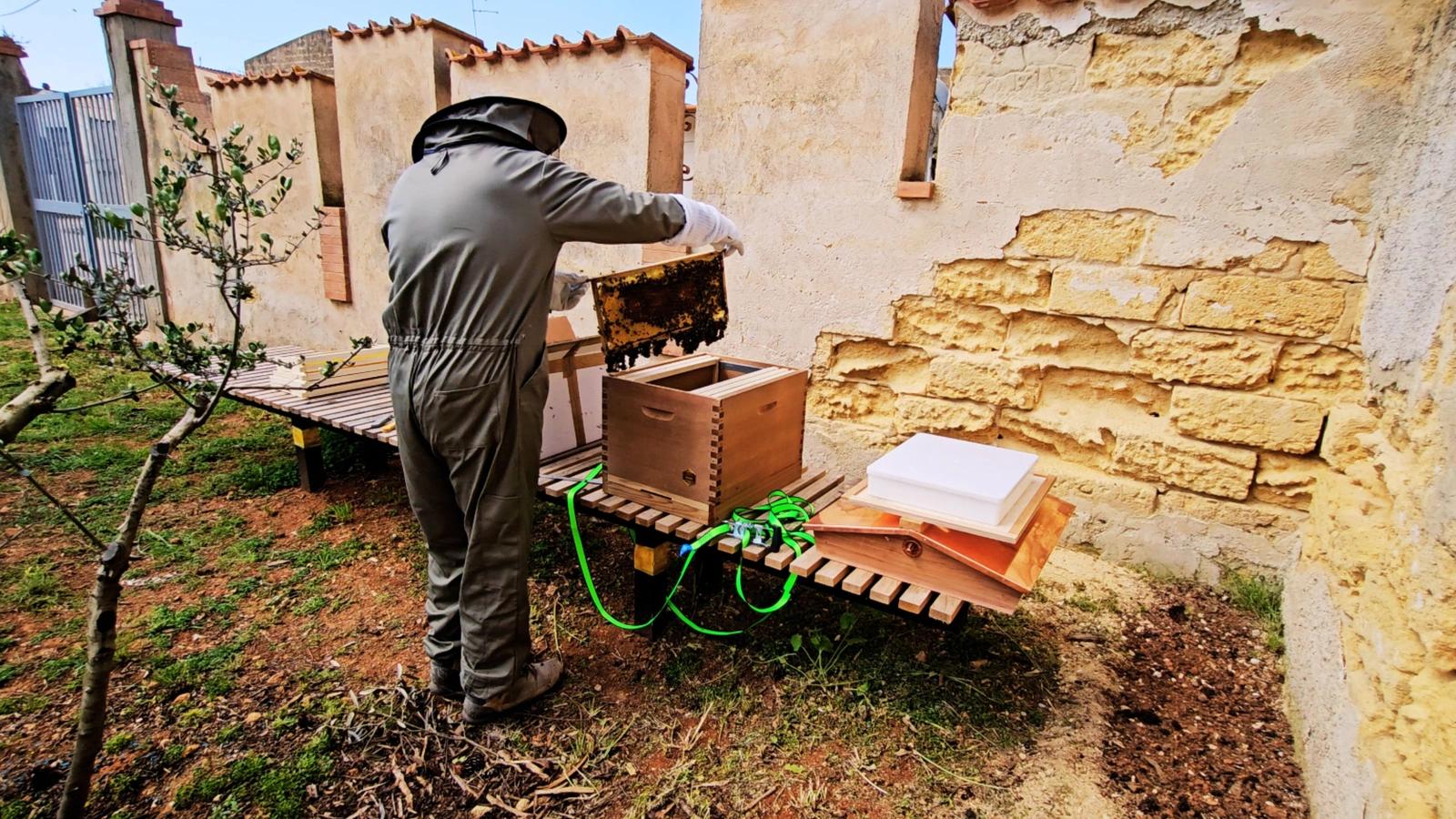
What I can tell you from personal experience is that daily life in western Sicily bears no relationship to the Hollywood version of living in a Mafia heartland. Mazara del Vallo, which you can read more about on our Mazara del Vallo page, is an ordinary Sicilian town: a busy market, a fishing port, good restaurants and people going about their lives. There is nothing in the texture of daily life here that signals organised crime to a newcomer or visitor.
The Trapani province's Mafia families were significantly involved in drug trafficking, in particular the heroin trade that passed through Sicily as part of the so-called French Connection supply routes from the Middle East in the 1970s and 1980s. They were also involved in public procurement, construction and the control of local political life in ways that shaped the province's development over decades. These are historical facts documented in court records and academic histories, not local mythology.
The capture of Messina Denaro in 2023 was greeted across the province with a mixture of reactions. Some local people expressed genuine relief. Some were more ambivalent. Some were simply uninterested in a story that felt distant from their daily lives. That ambivalence, where it exists, is worth trying to understand rather than judge. In communities that lived with the Mafia's presence for generations, where it was embedded in the local economy and the social fabric, the feelings are complicated and the history is not abstract. But the dominant public mood in western Sicily, as across the island, has shifted decisively toward rejection, and that shift is real.
Property in this part of Sicily remains substantially undervalued relative to other Italian regions, partly because the area has been historically underinvested and overlooked. If you are thinking about buying here, our complete guide to buying property in Sicily covers the practical landscape in detail, and the historical context in this post is worth understanding as background to why the area developed the way it did, and why the opportunity for foreign buyers remains genuine.
What Tourists and New Residents Actually Need to Know About the Mafia in Sicily
Let me be direct here: as a tourist in Sicily, the probability of any meaningful encounter with organised crime is essentially zero. You will visit markets, eat extraordinary food, see temples and mosaics, walk along coastlines and sit in piazzas, and none of that will intersect with Cosa Nostra in any way you would notice or feel. This Mafia Sicily history reality guide for tourists is, in practical terms, a reassuring one: the history is significant; the organisation still exists at some level; it has essentially nothing to do with your visit.
The fear that tourists sometimes arrive with, shaped by decades of films and television dramas, does not match anything resembling the reality on the ground. Sicily is one of the safer regions in Italy by crime statistics for violent crime affecting visitors. The kinds of crime that tourists actually encounter, opportunistic theft, occasional scams, the common hazards of any tourist destination, are not Mafia phenomena and occur at lower rates in most Sicilian towns than in many comparable European city centres.
For people considering living in Sicily, the picture is similarly reassuring, though the context is slightly different. Ordinary residents of Sicily, and certainly foreign residents building a life here, have no meaningful contact with organised crime. The pizzo, the protection money extracted from local businesses, is something that affects Sicilian business owners in certain sectors, and which many have now publicly refused to pay. But as a foreign resident buying a house, renovating it and living in the community, this is not something you will encounter or need to navigate.
What you will encounter is a Sicilian public that is, on the whole, deeply hostile to the Mafia and proud of the resistance movements that have developed against it. This does not mean it is a topic that is easy to discuss casually with strangers. Sicilians are sometimes reticent about it with outsiders, partly because they are tired of being defined by it, and partly because the wounds are still relatively recent for families who lost members to Mafia violence or to the state's response. The reticence is not because people secretly support it. It is because the conversation is painful and the association with the outside world's stereotype of Sicily is exhausting.
For anyone wanting to understand the property market and the real costs involved in buying here, our post on the true cost of buying property in Sicily is worth reading alongside this one. The practical and the historical are connected: property prices in western Sicily remain genuinely low partly because the area has been historically underinvested and undervalued. That is changing, but the opportunity exists precisely because so much of it has been overlooked.
The Sicily travel guide on this website covers the practical aspects of visiting the island in full detail. The points worth making here are simply that travelling in Sicily, including in western Sicily, is safe, straightforward and deeply rewarding. Understanding the history I have described in this post is worthwhile. Letting it put you off coming is not.
The Anti-Mafia Culture: Addiopizzo and Civil Society Fighting Back
One of the things that impresses me most about Sicily, and that I think the outside world consistently misses, is the strength and vitality of the anti-Mafia civil society that has developed particularly over the last thirty years. The 1992 murders of Falcone and Borsellino were not just a turning point in state strategy. They provoked a genuine cultural and social movement that is still active and in many ways still growing.
Libera, the network of civil society associations founded by Don Luigi Ciotti in 1995, is perhaps the most significant response to the Mafia from outside the state apparatus. Libera's central work involves the reuse of land and property confiscated from Mafia families for social purposes. Under Italian law, property seized from convicted Mafia figures can be transferred to social cooperatives and civic organisations rather than sold back into the market. Libera coordinates hundreds of such projects across Sicily and southern Italy, producing wine, olive oil and other agricultural products under the Libera Terra label from land that was once part of Mafia wealth. You can find out more about their work at libera.it. The symbolism is powerful: the earth that once generated Mafia income now generates produce sold in supermarkets and restaurants across Italy, with the proceeds going back into social programmes.
Addiopizzo, which translates roughly as "goodbye pizzo", is an anti-extortion movement that began in Palermo in 2004. Its origins are remarkable: a group of young people planning to open a small bar stuck stickers across Palermo overnight reading "Un intero popolo che paga il pizzo e un popolo senza dignita" ("An entire people that pays the pizzo is a people without dignity"). The response from the public was overwhelming enough to turn the act into a movement. Addiopizzo now maintains a list of businesses that have publicly committed to refusing to pay protection money, and consumers are actively encouraged to use those businesses. The list has grown to hundreds of establishments across Palermo and the island. More information is at addiopizzo.org.
These movements matter because they represent something more than legal prosecution. They represent a change in the relationship between ordinary Sicilian society and organised crime. For most of the twentieth century, the Mafia drew on a degree of community tolerance that was partly rooted in fear, partly in economic dependency and partly in a deep scepticism about whether the state could or would offer a better alternative. That tolerance has been eroding steadily since 1992, and organisations like Libera and Addiopizzo are part of what is replacing it.
The same period has produced a significant body of journalism, writing, film and documentary work dealing with the Mafia in Sicily honestly and without glamorising it. The popular detective series Inspector Montalbano, filmed largely in south-eastern Sicily, brought a version of Sicilian culture to global audiences that was grounded in real places and real social textures. The schools programme run by the Fondazione Falcone reaches hundreds of thousands of young Sicilians each year, shaping how the next generation understands its own history.
The anti-Mafia culture is present in the ordinary texture of Sicilian civic life in ways that an attentive visitor or resident will notice: in the naming of streets and schools after Falcone and Borsellino; in the public memorials on 23 May each year; in the way that the capture of Messina Denaro in 2023 was treated as a genuine civic achievement rather than a footnote. Sicily has not finished reckoning with this history. But it is reckoning with it actively, honestly and with real moral seriousness.
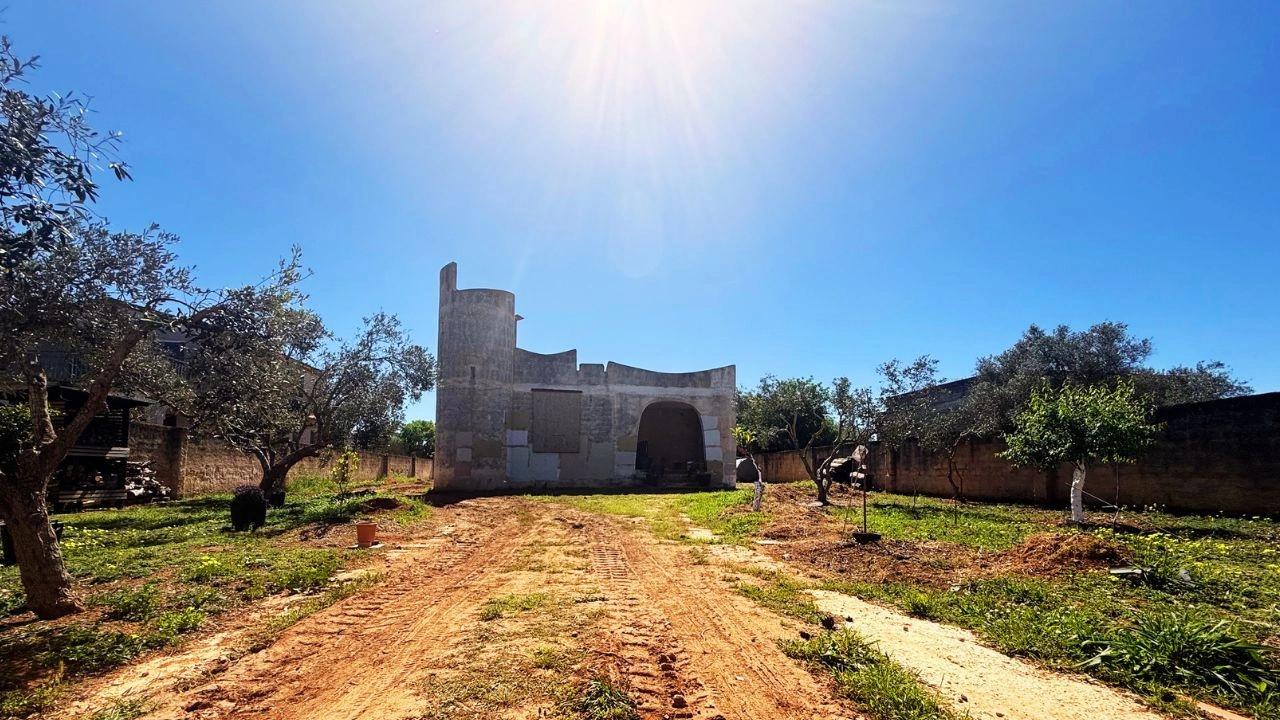
If you want to see what life in western Sicily looks like on an ordinary day, the Watch the Journey section of this site and our YouTube channel document the renovation and the life we are building here. The picture it gives of this place is, I hope, more complete and honest than the stereotypes allow for.
If you are thinking about making a similar move and want to understand the practical landscape, including the things I wish someone had told me before I started, our post on what I wish I'd known before buying in Sicily covers a lot of ground that is not in the official guides. And if you want to protect yourself from the pitfalls that catch foreign buyers out, our post on red flags to watch for when buying property in Sicily is worth reading carefully before you commit to anything.
The Mafia is part of Sicily's story. It is not the whole of it, and for most people living or visiting here, it is not a present concern. Understanding the history honestly is worth doing. Letting it put you off coming is not.
If you have questions about what life in western Sicily is actually like, or if you are at the stage of seriously considering a property purchase here, take a look at our property services or reach out directly through our contact page. The Operation Sicily blog covers everything from buying and renovation to food, culture and the practical realities of life on this island, and the Sicily travel guide is the best starting point if you are planning your first visit.
Frequently Asked Questions
Is Sicily safe for tourists?
Yes. Sicily is one of the safer regions in Italy by crime statistics for violent crime affecting visitors. The Mafia's activities today are concentrated in financial crime and business infiltration, not in any form of activity that affects tourists. Ordinary visitor risks such as opportunistic theft exist at lower rates than in many comparable European destinations. Millions of people visit Sicily every year without incident, and the island's hospitality toward visitors is one of its most genuine characteristics.
Does the Mafia still exist in Sicily?
Yes, Cosa Nostra still exists as an organisation, though it is significantly weaker than it was at its peak in the 1980s. Its activities today are primarily in drug trafficking, financial crime and the infiltration of legitimate businesses and public procurement. The era of spectacular public violence against judges, politicians and law enforcement ended in the early 1990s and has not returned. The January 2023 capture of Matteo Messina Denaro, the last major boss at large, was a demonstration of how much the organisation has been diminished.
What is Cosa Nostra?
Cosa Nostra is the Sicilian Mafia, a criminal organisation that originated in western Sicily in the nineteenth century. The name means "our thing" in Sicilian dialect. It is structured around a network of families or clans, each controlling a specific geographical area, with a coordinating body called the Commission or cupola. It is distinct from other Italian organised crime groups such as the Camorra in Naples or the 'Ndrangheta in Calabria, each of which has its own structure, territory and history.
What happened in 1992?
1992 was the pivotal year in the modern history of the Sicilian Mafia. In May, anti-Mafia magistrate Giovanni Falcone was killed alongside his wife and three escort officers in a motorway bombing near Palermo. In July, his colleague Paolo Borsellino was killed in a car bombing in Palermo. The murders provoked a massive public and state response that fundamentally changed the trajectory of the anti-Mafia effort. Arrests of senior Cosa Nostra figures followed rapidly, including the capture of boss Salvatore Riina in January 1993 after 23 years as a fugitive.
Who was Giovanni Falcone?
Giovanni Falcone (1939 to 1992) was a Palermo magistrate who developed the analytical approach to prosecuting Cosa Nostra as an organisation rather than targeting individual criminals in isolation. Working with Paolo Borsellino and a team of prosecutors and investigators, he built the case that led to the Maxi Trial of 1986 to 1987, in which 338 Mafia members were convicted. He was killed by Cosa Nostra in the Capaci bombing of May 1992. He is commemorated widely across Sicily and Italy, and his legal legacy continues to shape how Italian prosecutors approach organised crime.
Who was Matteo Messina Denaro?
Matteo Messina Denaro (1962 to 2023) was for many years Italy's most wanted man and is believed to have been the operational head of Cosa Nostra following the arrest of Bernardo Provenzano in 2006. Born in Castelvetrano in the province of Trapani, he was convicted in absentia of multiple murders and went on the run in 1993. He was captured in January 2023 in Palermo, where he was receiving treatment for cancer under a false identity. He died in custody in September 2023.
What is the pizzo?
The pizzo is the protection money that Cosa Nostra traditionally extracted from businesses operating in areas under its control. Business owners were expected to make regular payments in exchange for being left alone, and in some cases for the informal resolution of commercial disputes. Refusing to pay historically carried serious risks. The anti-pizzo movement that developed from the 2000s onwards, exemplified by Addiopizzo in Palermo, represents a significant shift in how Sicilian businesses are responding to this form of extortion.
What is Addiopizzo?
Addiopizzo is an anti-extortion civil society movement founded in Palermo in 2004. It began when a group of young people planning to open a small business stuck thousands of stickers across the city overnight, publicly rejecting the pizzo. It grew into a movement that maintains a public list of businesses committed to refusing protection money, with consumers encouraged to support those establishments specifically. The movement has grown significantly over twenty years and represents one of the most visible expressions of organised civil society resistance to Cosa Nostra.
What is omertà?
Omertà is the code of silence that binds Cosa Nostra members and, by extension, the communities in which the organisation has operated. It means refusing to cooperate with law enforcement or acknowledge the existence of criminal activity, even as a witness rather than a participant. The code was enforced through the threat of violence against those who broke it and, in some cases, their families. The emergence of pentiti, Mafia members who cooperated with prosecutors from the 1980s onwards, represented a decisive break in omertà and provided investigators with the inside knowledge needed to prosecute the organisation systematically.
Is western Sicily more dangerous than eastern Sicily?
No, in practical terms. The historical concentration of Cosa Nostra activity in western Sicily does not translate into any greater danger for residents or visitors today. Crime statistics do not show western Sicily to be significantly more dangerous than other parts of Italy for ordinary people going about their lives. The Mafia's activities are not visible to or directed at tourists or ordinary foreign residents in any part of the island.
Will I encounter the Mafia if I move to Sicily?
As a foreign resident building an ordinary life in Sicily, no. The world of organised crime in Sicily operates at a considerable remove from the daily lives of ordinary residents, particularly foreign ones. You will not be approached, pressured or directly affected by Cosa Nostra in any way that is part of normal life here. The pizzo is an issue for certain sectors of Sicilian business, but it is not something that typically affects foreign residents who are not running businesses in the targeted sectors.
What is Libera?
Libera is a network of civil society associations founded in Italy in 1995 by Don Luigi Ciotti. Its central work involves the reuse of land and property confiscated from Mafia families for social purposes. Under Italian law, confiscated Mafia assets can be transferred to social cooperatives and civic organisations. Libera coordinates hundreds of such projects, producing agricultural goods under the Libera Terra brand from former Mafia land. It is one of the most significant and practically active expressions of civil society resistance to organised crime in Italy.
How did the Mafia start in Sicily?
Cosa Nostra emerged in western Sicily during the second half of the nineteenth century in response to weak state authority, feudal land systems and the absence of effective institutions for contract enforcement and dispute resolution. The gabellotti, estate middlemen who occupied the space between absentee landlords and peasant farmers, evolved over time into a criminal network that combined economic power, social authority and the use of violence. The organisation developed its characteristic structure of territorial families and a coordinating commission over the course of the twentieth century.
What was the Maxi Trial?
The Maxi Trial (Maxi Processo) was the largest criminal prosecution in Italian history, held in a specially constructed bunker courtroom in Palermo from 1986 to 1987. It was the culmination of years of work by magistrates Giovanni Falcone and Paolo Borsellino and their team, using testimony from pentiti to prosecute Cosa Nostra as an organisation rather than a collection of individuals. The trial resulted in the conviction of 338 defendants, with 19 life sentences. The Italian Supreme Court upheld the convictions in January 1992, a decision that provoked Cosa Nostra's devastating response later that year.
Has the Mafia declined in Sicily?
Yes, significantly. Cosa Nostra is substantially weaker today than it was in its peak period of the 1970s and 1980s. The combination of effective prosecution, the pentiti programme, the hard prison regime for convicted Mafia bosses and the growth of civil society anti-Mafia movements have collectively reduced the organisation's capacity and reach. The January 2023 capture of Matteo Messina Denaro, the last significant Cosa Nostra boss at large, was both a practical and a symbolic demonstration of how much has changed. The organisation still exists and still causes economic harm, but it is a shadow of what it once was.
Follow Operation Sicily on YouTube, Instagram and Facebook for regular updates from the renovation and life in western Sicily.
Your next step
 The weekly YouTube series