
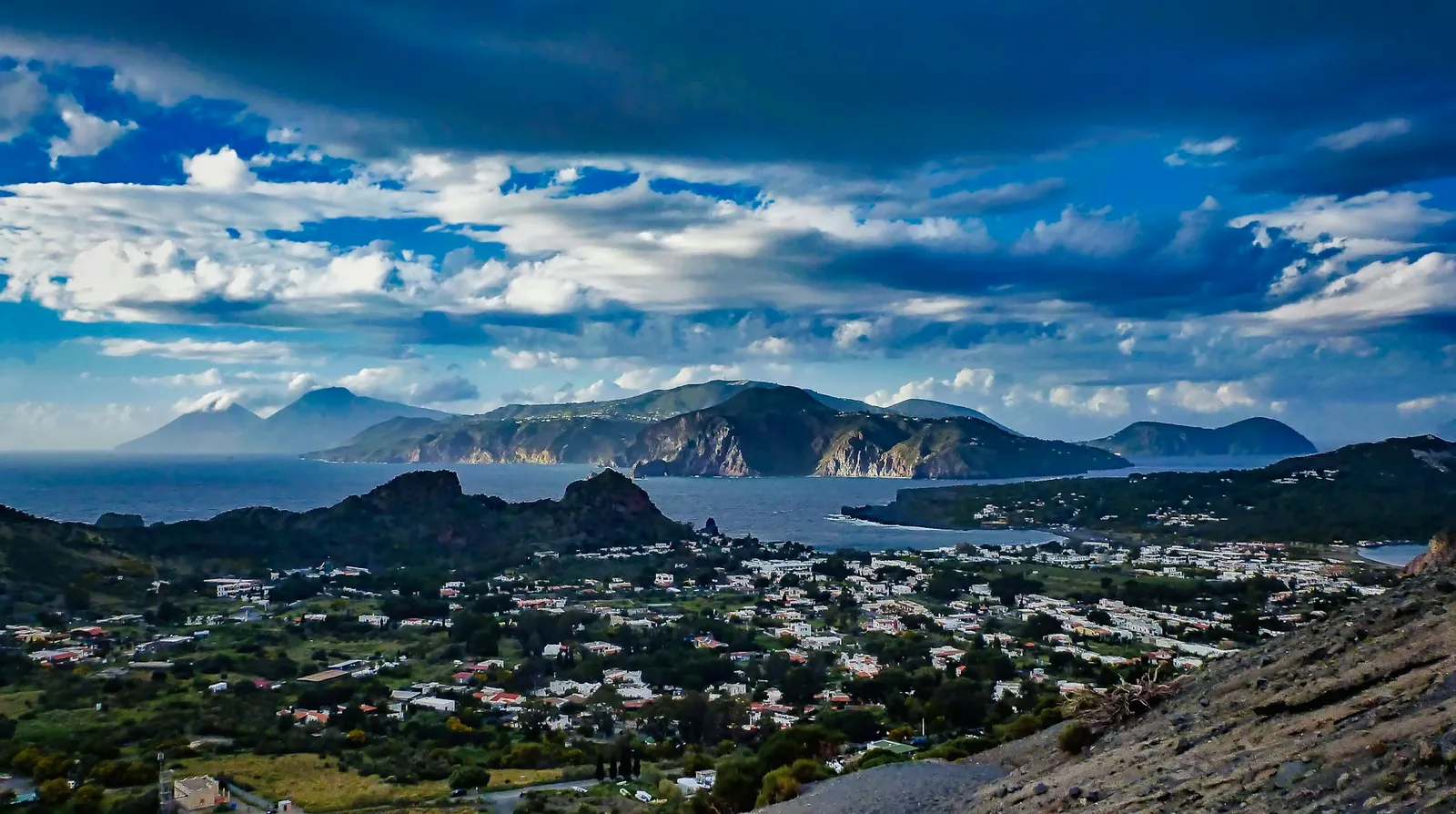
Where are the Aeolian Islands?
The islands lie in the Tyrrhenian Sea north of the northeastern corner of Sicily, strung out in a rough Y shape from Alicudi in the west to Stromboli in the northeast. The main port on the Sicilian side is Milazzo, west of Messina. They belong to Sicily and to the Metropolitan City of Messina. Six of the seven islands, Lipari, Vulcano, Stromboli, Panarea, Filicudi and Alicudi, form a single municipality, Lipari; Salina is split into three small municipalities of its own, Santa Marina Salina, Malfa and Leni.
They are also called the Lipari Islands, after the largest, and in Italian the Isole Eolie, after Aeolus, the Greek god of the winds, who was said to keep them in a cave here. If you are looking at a map of Sicily, they are the cluster of dots above the north coast between Cefalù and Messina.
Why are they a World Heritage Site?
UNESCO listed the islands in 2000 for their volcanoes. In its words they provide an outstanding record of volcanic island building and destruction, and they gave volcanology two of its types of eruption: Strombolian, named after Stromboli, and Vulcanian, named after Vulcano. Geologists have studied them since at least the eighteenth century, and they still do.
The seven Aeolian Islands at a glance
| Island | Best for | Feel |
|---|---|---|
| Lipari | A first base, choice of hotels, boat trips, the museum | The busy hub, a real town |
| Salina | Walking, food and wine, a slower stay | Green, quiet, grown-up |
| Vulcano | The crater walk, mud baths, black sand | Sulphur and beaches, close to Sicily |
| Stromboli | Seeing an active volcano | Dramatic, simple, unforgettable |
| Panarea | Coves by boat, summer evenings | Small, white, glamorous in August |
| Filicudi | Hiking, boat trips, switching off | Wild and quiet |
| Alicudi | Real remoteness | Steps, mules and very little else |
Lipari: the largest island and the best base
Lipari is where most people start, and for good reason. VisitSicily describes it as the largest island of the archipelago, with a circumference of about 40 km (25 miles), and its main town has the most hotels, restaurants, shops and boat connections, which matters most for island hopping. Lipari is linked to Milazzo, Messina and Naples all year, and to Palermo and Reggio Calabria in summer.
The town sits around two natural harbours, Marina Lunga and Marina Corta, below a rocky headland crowned by the castle. Inside the castle walls is the archaeological park and the Museo Archeologico Regionale Eoliano Luigi Bernabò Brea, one of the best archaeological museums in Sicily, with thousands of years of finds from the islands, including theatre masks and amphorae from shipwrecks.
Out of town, the island is made for a scooter or a bike: the villages of Canneto, Acquacalda, Quattropani, Piano Conte and Porticello; the pale old pumice and obsidian quarries in the north; and the viewpoints from Monte Chirica, the highest point at about 600 m (1,970 ft). The last eruption on Lipari was at Monte Pilato in the north east of the island, where it left the Rocche Rosse obsidian flow; the Global Volcanism Program dates it to 1230 CE, about 800 years ago. For swimming, try the beach at Canneto, Spiaggia Bianca or Acquacalda.
My Lipari town page has more on the municipality itself.
Salina: the green island
Salina is the one I would choose for a slower trip. It is the second largest island, with just over 2,300 people in three villages, Santa Marina, Malfa and Leni, and it is greener than the others, with olive trees, caper bushes, figs and citrus, and two volcanoes that VisitSicily says have been dormant for 13,000 years. Its twin peaks make it the easiest island to pick out from the sea.
Come here to eat and walk. Salina's capers are famous, and it is the heart of Malvasia delle Lipari, the sweet golden wine of the islands; my Sicilian wine guide explains it. For a classic lunch, try pane cunzato, bread piled with tomato, capers, ricotta and more, by the little lake at Lingua. For walks, climb the Fossa delle Felci or Monte dei Porri, or wander to the hamlet of Valdichiesa.
Pollara, on the far side, sits in a half-submerged crater above the sea. It was used in Il Postino, the 1994 film, though most of that film was shot near Naples; my guide to films shot in Sicily has the details. The rocky beach below is one of the most beautiful spots in the islands: see Pollara, and for easier swimming Lingua or Rinella.
Vulcano: the crater and the mud baths
Vulcano is the closest island to Sicily and the one you smell before you land: sulphur drifts over the port. Most visitors come for two things. The first is the walk up the Gran Cratere, roughly an hour each way from the port, for a view into the crater and across the whole chain. The second is the warm mud pools and the bubbling sea at Porto di Levante. There are good black sand beaches too, such as Sabbie Nere and Gelso.
Access to the crater and the mud baths can be restricted when the volcanic gases rise, so check the local rules before you go. For the volcano itself, see my guide to the volcanoes of Sicily; for the current state of the volcano, look at INGV, Italy's national institute of geophysics and volcanology, not at a travel site.
Stromboli: the island with an active volcano
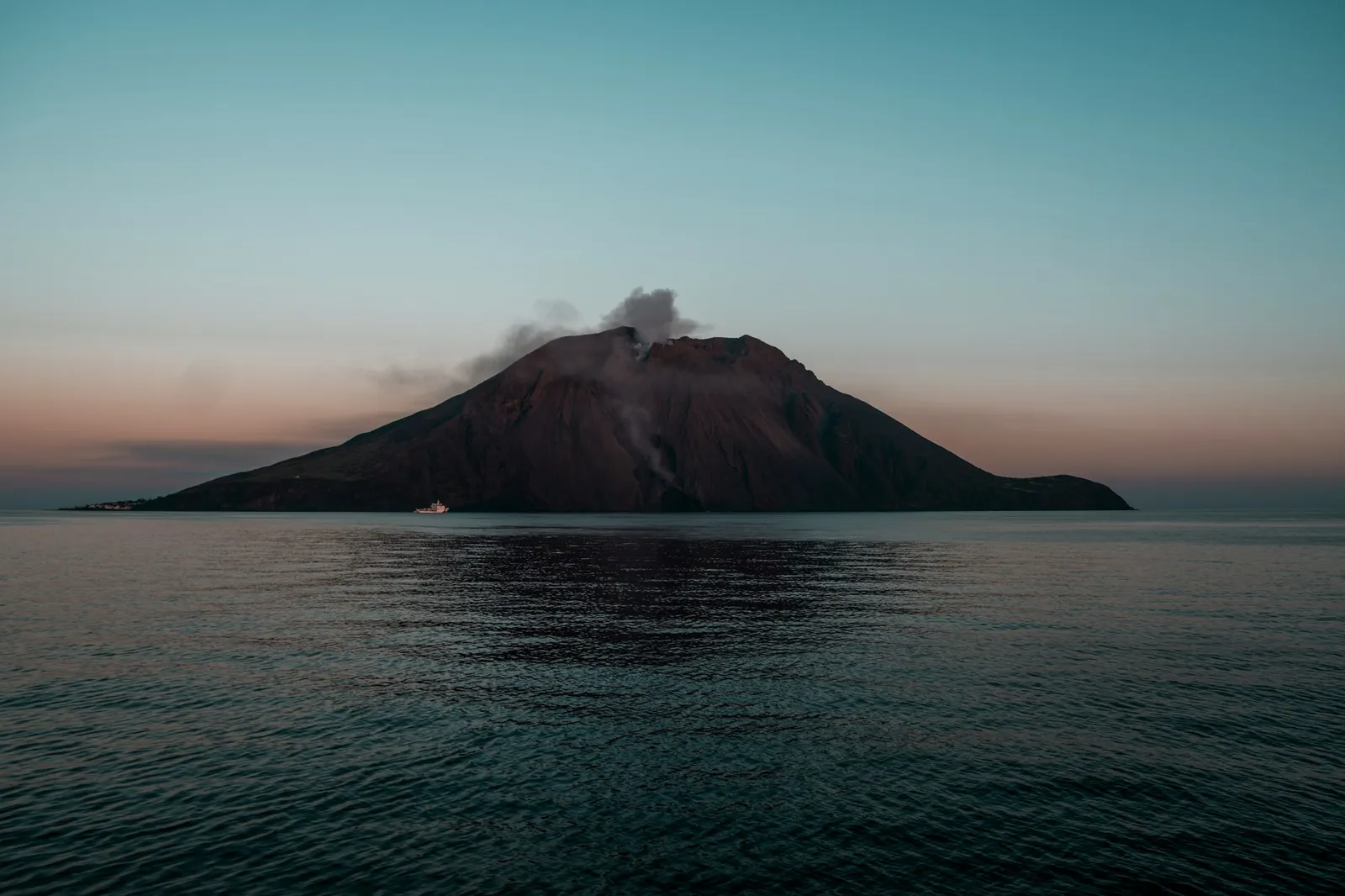
Stromboli is a single volcanic cone rising more than 900 m (about 3,000 ft) out of the sea, with black beaches, white houses and one of the most active volcanoes in Europe. It gave its name to Strombolian eruptions, the short bursts of glowing rock that people come to watch at night. The Sciara del Fuoco is the great black slope down one side of the island.
Whether you can climb it, and how high, depends on the state of the volcano and the rules in force at the time, and those change. My guide to the volcanoes of Sicily covers how visits work, and INGV publishes the official monitoring. Stromboli deserves at least one night: the village is calm and lovely after the day boats leave. For the beach, try Ficogrande.
Panarea: the smallest island
VisitSicily calls Panarea the smallest of the Aeolian Islands and, geologically, the oldest. With the islets around it, Basiluzzo, Dattilo, Bottaro, Lisca Bianca and Lisca Nera, it forms an archipelago within the archipelago, between Lipari and Stromboli. The villages of San Pietro, Drautto and Ditella are all white houses and bougainvillea, and in July and August Panarea is the most fashionable island in the chain, with a lively summer nightlife.
Out of season, or in the morning, it is a different place. Walk to Cala Junco, a natural pool between rocky walls, and to the Bronze Age village at Capo Milazzese right above it, with the outlines of its huts still on the headland. Much of the coast is high and rugged, so the best coves are reached by boat. Lisca Bianca was a setting for Antonioni's film L'Avventura (1960).
Filicudi: wild and quiet
Filicudi is for people who want to switch off. There are three villages, Filicudi Porto, Valdichiesa and Pecorini a Mare, linked by one scenic road, and the rest is walking paths, terraces and sea. The best walk climbs to the prehistoric village on the Montagnola di Capo Graziano, a Bronze Age settlement the islanders moved up to, VisitSicily says, to escape raiders from the sea.
Take the boat round the island if you do one thing: it passes the sea cave of the Grotta del Bue Marino and the tall sea stack of La Canna. For a swim, there is the beach at Capo Graziano or the little harbour at Pecorini a Mare.
Alicudi: the most remote island
Alicudi, the westernmost island, is the least inhabited and one of the smallest. It has no proper harbour, only small landing points, and very little in the way of roads: the village climbs the slope in steps and mule tracks, and mules are still part of island life. VisitSicily mentions a single bar. The walk up to Filo dell'Arpa, past old terraces, is hard and beautiful.
It is not for everyone. If you need restaurants, nightlife or a beach with sun loungers, stay elsewhere. If you want silence and stars, a night or two here is something you will not forget. The beach here is Bazzina.
Which Aeolian Island should you choose?
- First visit, a few days: stay on Lipari and take day boats to Vulcano, Salina and Panarea, plus an evening boat to see Stromboli.
- A slower, food-and-walking trip: stay on Salina, with a day on Lipari for the museum.
- To see the volcano: spend at least one night on Stromboli.
- Couples and honeymooners: Salina for peace, Panarea for glamour. My Sicily honeymoon guide has more ideas.
- With children: Lipari or Vulcano, for the beaches, the easy crater walk and the range of places to stay. When I travel with my boys, flexibility and a good base matter more than ticking off islands.
- To get away from it all: Filicudi, or Alicudi if you really mean it.
Allow at least four or five nights for the islands. Two nights is enough for Lipari and a day trip or two, but it is a shame to come all this way and only see the hub.
Aeolian Islands boat tours and getting around
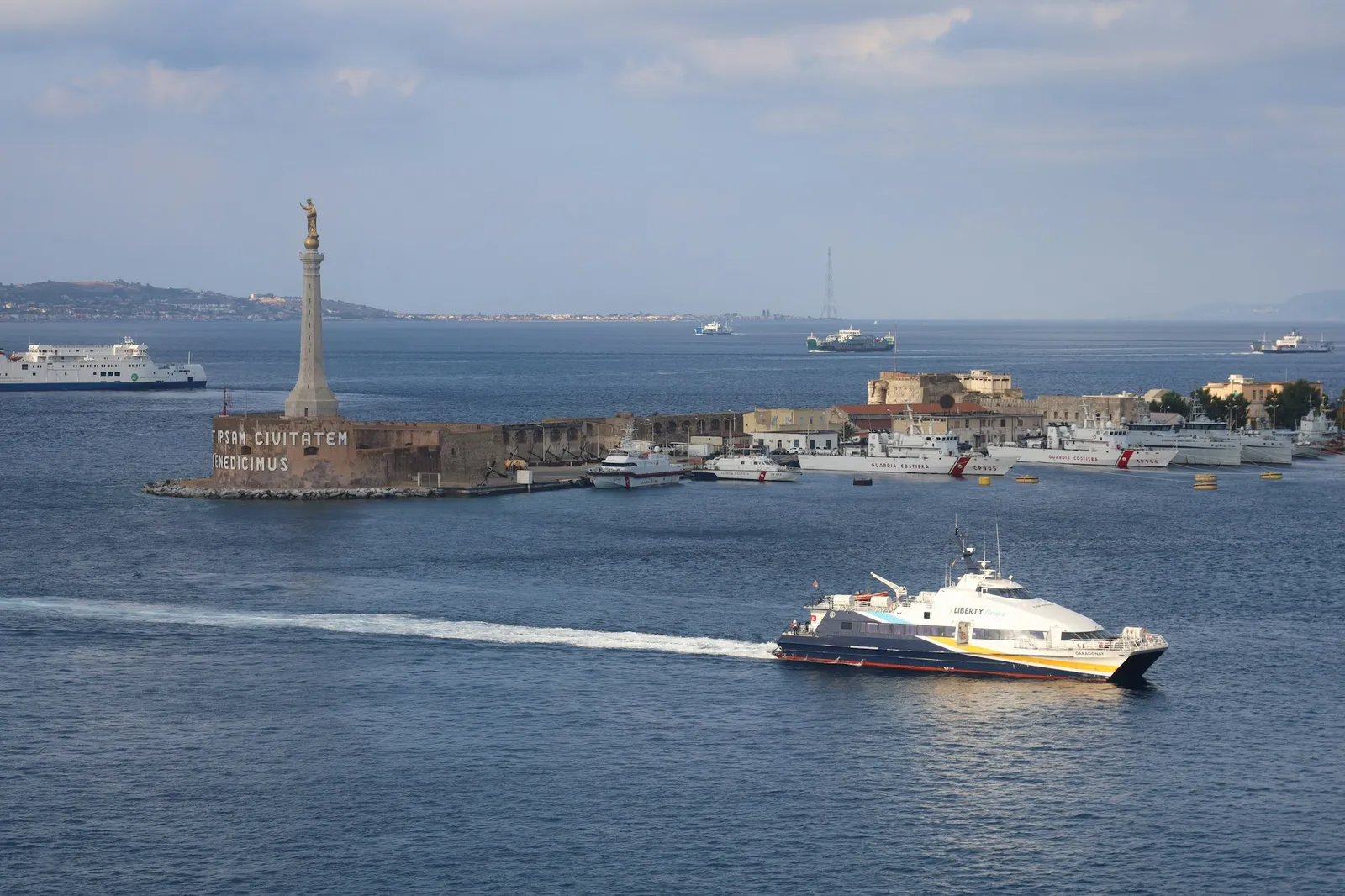
The islands are linked by hydrofoils (Liberty Lines) and slower ferries (Siremar), with Milazzo as the main port on the Sicilian side. In summer there are many sailings a day between the main islands; in winter far fewer, and rough seas can cancel boats, so leave slack in your plans. My island hopping guide covers the routes, operators, crossing times and how to book, and my guide to getting to Sicily from Rome and Naples covers the crossing to Sicily, including the sea routes from Naples.
Flying in? Catania is the nearest airport to Milazzo: about 145 km (90 miles), roughly 1 hour 45 minutes by car on the motorway. Without a car, Giuntabus runs a coach from Catania airport to Milazzo port, about 2 hours and about €13 one way with luggage, a few times a day all year and more often from April to October. From Palermo, the summer hydrofoils go straight to the islands. My Catania airport guide and my guide to Sicily airports and flights from the US cover the flights.
Boat tours are the other way to see the islands, especially the ones you are not sleeping on. From Lipari and from Milazzo, day boats in season circle Panarea and Stromboli, with a stop in each, and some stay out after dark to watch Stromboli from the sea. On Filicudi and Panarea, a small boat round the island is the best way to reach the caves and coves. You do not need a car on the islands; on Lipari and Salina a scooter or a local bus gets you around, and on the smaller islands you walk.
When is the best time to visit the Aeolian Islands?
June and September are the sweet spot: the sea is warm, the boats run often and the islands are not yet, or no longer, packed. July is busy and August is very busy, with high prices, full hydrofoils and Panarea at its most crowded; book well ahead if you must go then. May and October are lovely for walking, with a cooler sea. From November to March many places close for the winter, connections thin out and the sea can be rough, but Lipari and Salina still have life, and the walking is wonderful on a clear day.
My Sicily month by month tool shows the weather and crowds for each month, and my guide to Sicily in September covers my favourite month for the islands.
Frequently asked questions
Where is Lipari?
Lipari is the largest of the Aeolian Islands, in the Tyrrhenian Sea off the north coast of Sicily, north of the port of Milazzo. It belongs to Sicily and the Metropolitan City of Messina. The municipality of Lipari also covers Vulcano, Stromboli, Panarea, Filicudi and Alicudi; only Salina has its own municipalities.
Which is the best Aeolian Island to stay on?
For a first visit, Lipari: it has the most hotels and restaurants and the most boat connections, so day trips to the other islands are easy. For a slower, greener stay with good food and walking, choose Salina. Stay on Stromboli for at least one night if seeing the volcano is the point.
How do you get to the Aeolian Islands?
Most people take a hydrofoil (Liberty Lines) or ferry (Siremar) from Milazzo, on the northeast coast of Sicily. Lipari is also connected to Messina and Naples all year and to Palermo in summer. The nearest airport to Milazzo is Catania. See the island-hopping guide for routes and times.
How do I get to the Aeolian Islands from Catania airport?
Get to Milazzo, then take the hydrofoil or ferry. By car it is about 145 km (90 miles), roughly 1 hour 45 minutes on the motorway. Without a car, Giuntabus runs a coach from Catania airport to Milazzo port that takes about 2 hours and costs about €13 one way, a few times a day all year and more often from April to October.
How many days do you need in the Aeolian Islands?
At least four or five nights. That gives you time to base yourself on Lipari or Salina, take day boats to Vulcano, Panarea and Stromboli, and allow for a cancelled sailing in rough weather. A week lets you add a night on Stromboli or a quieter island such as Filicudi.
Is Salina or Lipari better?
Lipari is better for a first base: more choice of hotels and restaurants, a real town, the archaeological museum and the most connections. Salina is better for peace, walking and food and wine, with its capers and Malvasia. Many people stay on Lipari and visit Salina for a day, or split their nights between the two.
Are the Aeolian Islands worth visiting?
Yes. They are a UNESCO World Heritage Site for their volcanoes, and each island is different: a lively hub on Lipari, green vineyards on Salina, the crater on Vulcano, the active volcano on Stromboli and almost total peace on Filicudi and Alicudi. The sea is clear and the food is excellent.
When is the best time to visit the Aeolian Islands?
June and September, when the sea is warm, boats run often and the crowds are smaller. July and especially August are crowded and expensive. May and October are good for walking. In winter many hotels close and sailings are fewer.
Can you do an Aeolian Islands boat tour as a day trip?
Yes. In season, day boats from Lipari and from Milazzo visit Panarea and Stromboli or Vulcano and Lipari, and some stay out for the evening to see Stromboli from the sea. It is a long day, but a good taste of the islands if you cannot stay.
Sources and small print
- UNESCO World Heritage Centre: Isole Eolie (Aeolian Islands)
- VisitSicily (Regione Siciliana): Lipari, Salina, Panarea, Filicudi, Alicudi and hiking in the Aeolian Islands
- Ministero della Cultura: Museo Archeologico Regionale Eoliano Luigi Bernabò Brea
- Smithsonian Institution, Global Volcanism Program: Lipari
- Giuntabus: Catania airport to Milazzo coach
- INGV, Osservatorio Etneo: monitoring of Stromboli and Vulcano
- Liberty Lines and Siremar: timetables and tickets
Boat timetables, access to the craters and opening times change with the season and the state of the volcanoes. Check the operators, the local authorities and INGV before you go.
Credits
Photo: Lyle Wilkinson, Unsplash Licence, via Unsplash.
Photo: Salvatore Tonnara, Unsplash Licence, via Unsplash.
Photo: Kiran Naidu, Unsplash Licence, via Unsplash.
 The weekly YouTube series