
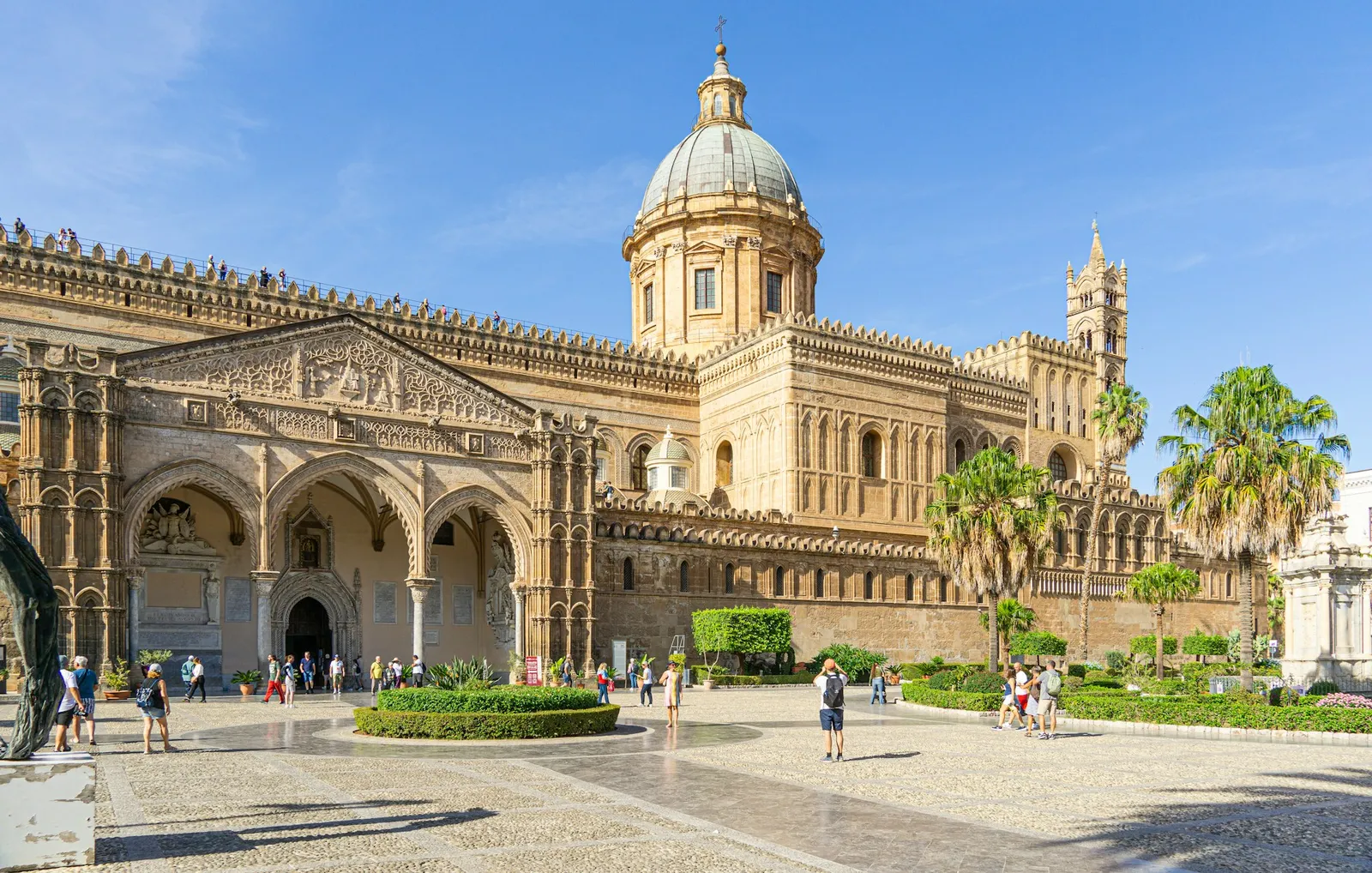
The best things to do in Palermo, at a glance
I live at the other end of western Sicily, near Mazara del Vallo, and Palermo is where I take friends who want a proper city. It is loud and layered, and the sights are close together. This is the short list I give them, with what each costs and how long to allow. The prices are from the sites themselves and the city's tourism office, and they change, so check before you go.
| Sight | Why go | Allow | Ticket, about |
|---|---|---|---|
| Palatine Chapel and Norman Palace | The gold mosaics and carved ceiling of the Norman kings | 1.5 hours | €14.50 ($16); €10 ($11) Tue and Wed |
| Palermo Cathedral | The church, the royal tombs and a walk on the roof | 30 minutes, 1 hour with the roof | Church free; roof and treasury extra |
| Capuchin Catacombs | Some 2,000 mummified bodies in the friars’ corridors | 45 minutes | €5 ($5.50) |
| Teatro Massimo | Italy’s largest opera house, by guided tour | 40 minutes | €14 ($15) |
| Quattro Canti, Piazza Pretoria, the Martorana | The Baroque crossroads, the fountain and a Norman church | 1 hour | Squares free; Martorana €4 |
| Ballarò and the Capo | Working street markets and street food | 1 hour each | Free |
| Monreale Cathedral | Gold mosaics over almost every wall | Half a day | Free; cloister €8 ($9) |
The history behind all of this, from the Arab emirate to the Norman kings, is in my guide to Palermo and the north, with Cefalù and Monreale. If you have only a few hours off a cruise ship, my self-guided walk from the cruise port strings the central sights together in a loop with walking times.
The Palatine Chapel and the Norman Palace
If you see one thing in Palermo, make it this. The Palatine Chapel sits inside the Royal Palace, Palazzo dei Normanni, which is still the seat of the Sicilian regional parliament. The ticket also covers the Royal Apartments and the Royal Gardens, run by the Fondazione Federico II.
- Open daily, 8:30am to 4:30pm (last admission) Monday to Saturday, and 8:30am to 12:30pm (last admission) on Sundays and public holidays. Closed on 25 December and 1 January.
- The chapel itself is closed to visitors every Sunday from 9:30 to 11am, for Mass.
- Thursday to Monday: about €14.50 ($16) for the chapel, the Royal Apartments and the gardens. Tuesday and Wednesday: about €10 ($11) for the chapel and the gardens only.
- Children up to 13 go free with an adult. The reduced tickets for over-65s and 18 to 25s are for EU citizens.
- There is no luggage storage, and the palace can close all or in part without notice for parliamentary or religious reasons. Restoration work in the chapel is also changing the times, so check the Fondazione's notices on the morning you go.
Tickets can be bought online up to 20 minutes before the last admission of the day, which saves the queue in summer. Cover shoulders and knees, as you would for any church here.
Palermo Cathedral and the roof walk
The Cathedral is on Corso Vittorio Emanuele, about 6 minutes' walk from the Norman Palace, so the two make a natural morning. The church is free and, according to the city's tourism office, open Monday to Saturday from 7am to 7pm. On Sundays and holidays it opens to visitors only from noon to 1pm and 4 to 5:30pm, around the Masses.
The monumental area, with the treasury, the crypt, the royal tombs and the walk on the roof, has its own ticket, sold on the Cathedral's ticket site, with prices from about €1 to €18 depending on what you choose. Its hours are longer in summer (April to October, from 9:30am to 6pm Monday to Saturday and 10am to 6pm on Sunday) and shorter in winter, when it closes at 2pm on weekdays. The roof is the part I would not miss: you walk among the domes with the whole city and Monte Pellegrino around you.
The Capuchin Catacombs of Palermo
The Catacombe dei Cappuccini are under the Capuchin friars' church on Piazza Cappuccini, west of the old town. The friars' own site describes long connected galleries cut into the tufa, about 300 square metres in all, holding about 2,000 skeletons and mummified bodies, dressed and arranged along the walls. It is the most unsettling sight in Sicily and the one my friends talk about longest afterwards.
- Open every day. The friars give 9am to 5pm, with last entry at 4:30pm; the city's tourism office lists 9am to 5:30pm, so aim for the earlier time.
- The ticket is about €5 ($5.50), according to the tourism office and the Ministry of Culture.
- It is about 2.3 km (1.4 miles), roughly 30 minutes on foot, from the Quattro Canti, or about 25 minutes from the Norman Palace. Pair the two.
These are real people, many of them children, and it is a place of burial. Read the rules at the door, keep your voice down, and think about whether younger children are ready for it. The story of Rosalia Lombardo, the best known of them, is on my Palermo and the north page.
Teatro Massimo tours and opera nights
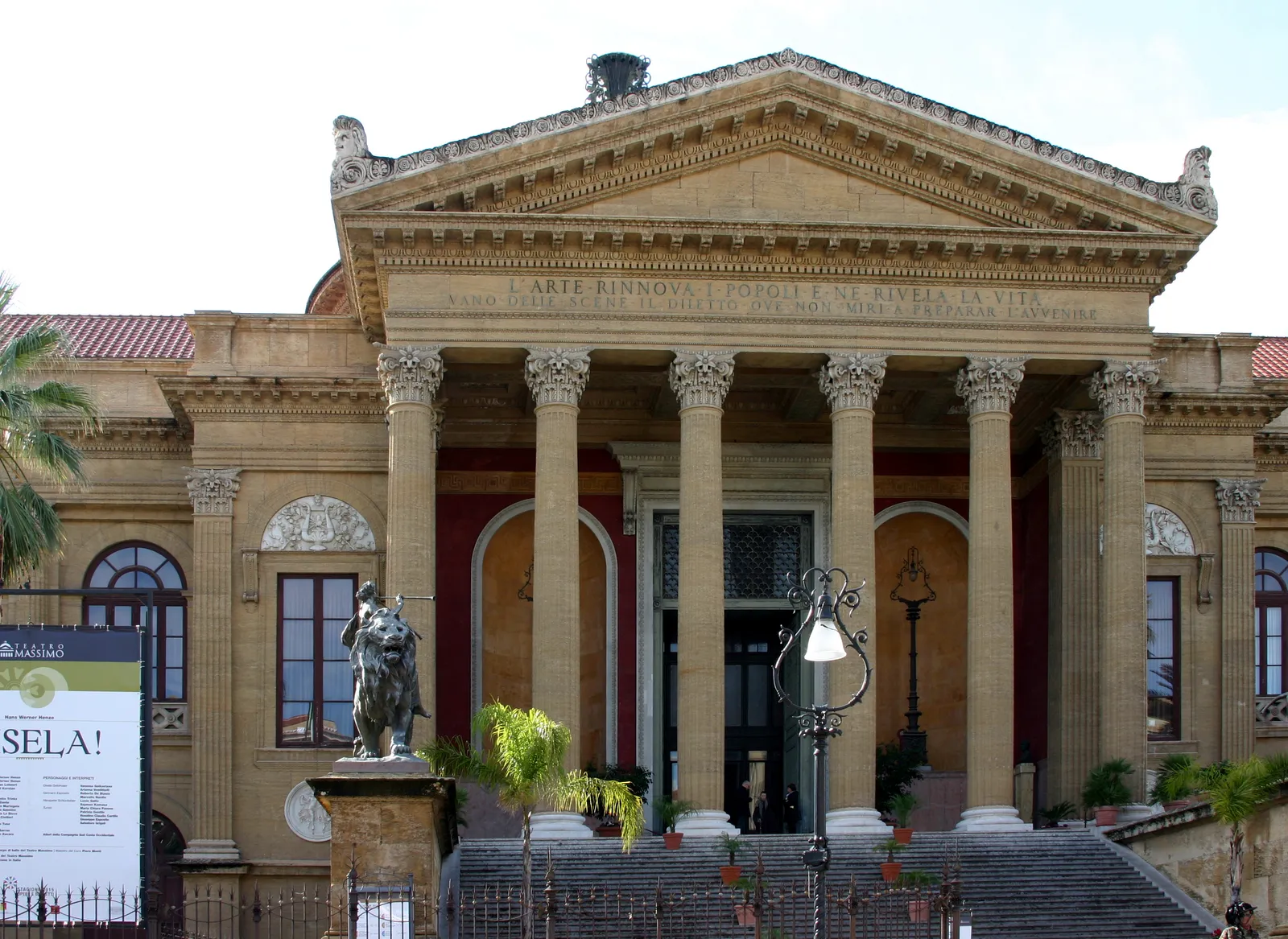
The Teatro Massimo on Piazza Verdi opened in 1897, and its steps are where The Godfather Part III ends; my guide to the Godfather filming locations in Sicily has the details. The building itself is the reason to go in.
- Guided tours run every day from 9:30am to 7pm, with the last tour at 6:20pm (5:20pm from November to March, according to the tourism office).
- A tour lasts about 40 minutes and runs in English as well as Italian, French, Spanish and German.
- Since 1 July 2026 the full ticket is about €14 ($15), €7 for under-26s, and children under 6 go free. A family ticket for two adults and two under-26s is €36.
- The standard tour covers the auditorium and the main halls. The stage is a separate Backstage Tour, about €5 on top, booked ahead and only when there is no rehearsal.
Better still, buy a ticket for a performance. Seeing an opera or a ballet here costs more than the tour, but it is how the building was meant to be used.
A puppet show: the Opera dei Pupi
Palermo's other great night out is the Opera dei Pupi, Sicily's puppet theatre of armoured knights and tales of chivalry. It grew up in the early 19th century, Palermo and Catania each have their own school of puppets, and UNESCO first proclaimed it a masterpiece of the world's intangible heritage in 2001. The Museo internazionale delle marionette Antonio Pasqualino in the old town holds live shows for visitors as well as its collection; its calendar has the dates and times.
Quattro Canti, the Fountain of Shame and the Norman churches
The Quattro Canti, where Via Maqueda crosses Corso Vittorio Emanuele, is the centre of the old town and costs nothing. Round the corner is Piazza Pretoria and its fountain, and up the steps beside it are two Norman churches, both part of the UNESCO World Heritage site that covers nine Arab-Norman buildings in Palermo, Monreale and Cefalù:
- The Martorana (Santa Maria dell'Ammiraglio), with its gold Byzantine mosaics: about €4, open 10am to 6:30pm Monday to Saturday (6pm in winter) and from 1pm on Sunday.
- San Cataldo, with its three red domes: about €2.50, open every day.
Two more from the same UNESCO list, a little further out: San Giovanni degli Eremiti, a church and cloister with red domes near the Norman Palace (about €8, open daily), and the Zisa, a Norman pleasure palace about 25 minutes' walk west of the Quattro Canti (about €8, closed on Mondays). Both are free on the first Sunday of the month.
Palermo markets and street food
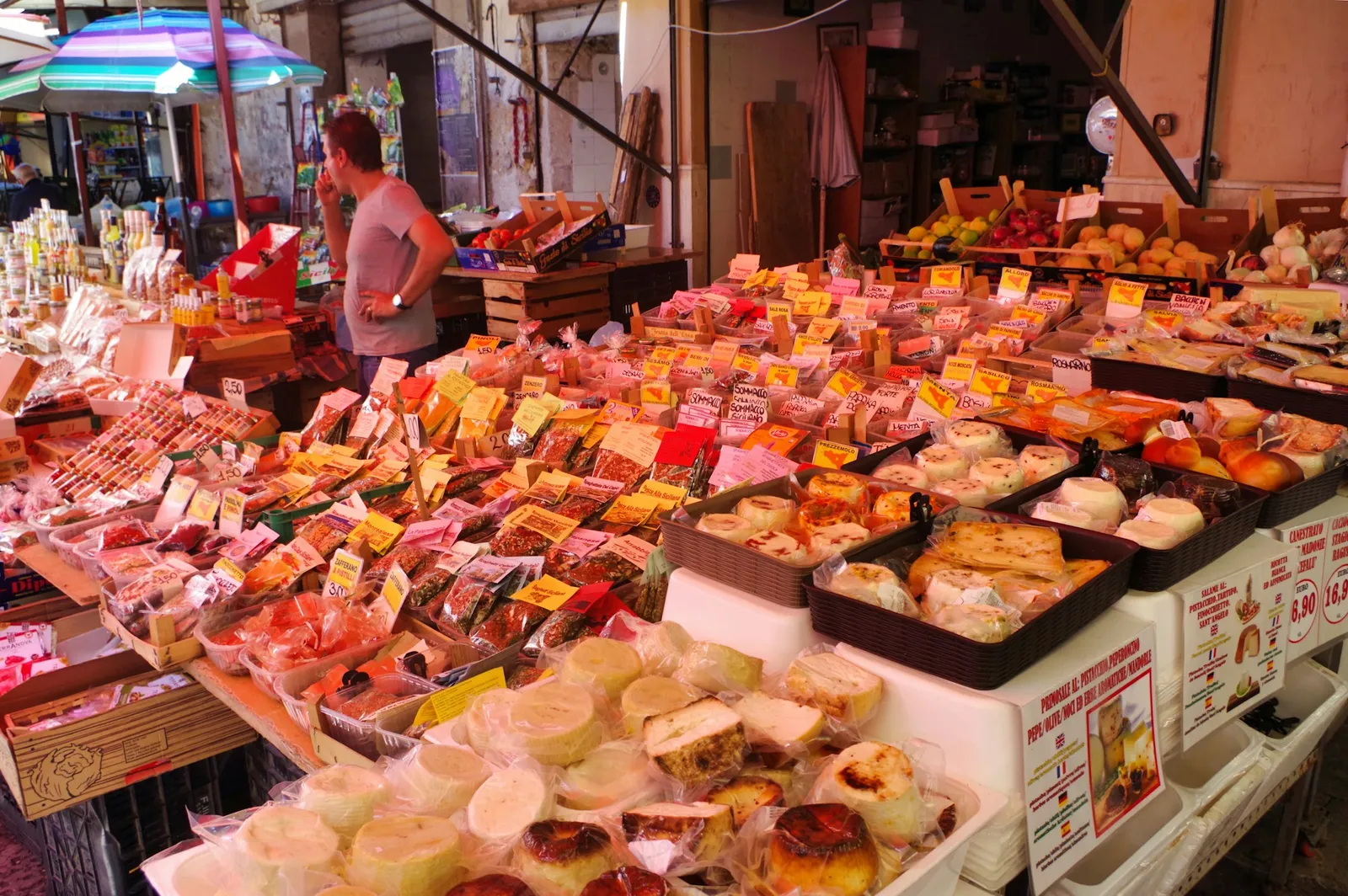
Palermo's three historic markets are still working food markets: Ballarò, between the Norman Palace and the station, the Capo, behind the Cathedral, and the Vucciria, near Piazza San Domenico, which is livelier in the evening than in the morning. Go in the morning for the stalls at their busiest, and eat as you walk.
What to eat: an arancina (round here, and feminine; my arancini guide explains the argument with Catania), panelle (chickpea fritters in a bun), sfincione (Palermo's thick tomato and onion pizza, the ancestor of the American Sicilian slice) and, if you are brave, pani câ meusa, a bun of spleen and lung. My Palermo street food guide covers the classics and where to find them, my Sicily food guide covers the rest, and Sicilian desserts the cannoli.
Markets are where pickpockets work, so keep your bag closed and in front of you and carry small change. My honest take on whether Sicily is safe covers the rest.
Day trips from Palermo: Monreale, Mondello and Cefalù
Monreale is the one day trip I would not skip. The cathedral is about 10 km (6 miles), roughly 15 minutes' drive, up the hill from Palermo, and city bus 389 runs there from Piazza Indipendenza, beside the Norman Palace (AST coaches go too).
- Monreale Cathedral is free. The tourism office gives Monday to Saturday from 9am to 12:45pm and 2 to 4:45pm, and Sundays and holidays from 2 to 5pm, with Masses in the morning.
- The cloister next door, with its carved paired columns, is a separate ticket, about €8 ($9), and free on the first Sunday of the month.
- The 389 has been cut short or suspended at times, so check AMAT's site the day before.
Mondello is Palermo's own beach, a curve of pale sand under Monte Pellegrino, reached on city bus 806; see my Mondello beach page. Bus 812 climbs Monte Pellegrino to the sanctuary of Santa Rosalia, the city's patron saint, open daily from 8am to 6pm (7pm in summer); her feast, the Festino, takes over the city every July, and my guide to Santa Rosalia and the Festino has the dates. And Cefalù, an hour east along the coast, has its own guide: things to do in Cefalù.
How many days in Palermo?
Two full days, three with Monreale and Mondello. This is how I would split them:
- One day: the Norman Palace and Palatine Chapel at opening time, the Cathedral and its roof, lunch in the Capo market, then the Quattro Canti, Piazza Pretoria and the Martorana, and a Teatro Massimo tour at the end of the afternoon. This is a full day on foot.
- Two days: add the Capuchin Catacombs in the morning (with San Giovanni degli Eremiti on the way back), Ballarò for lunch, and an evening at the opera or in the Vucciria.
- Three days: add Monreale in the morning and Mondello in the afternoon, or Cefalù for the whole day.
Watch the days of the week. The Zisa is closed on Mondays, the Royal Apartments are not part of the visit on Tuesdays and Wednesdays, and on Sunday mornings the Cathedral, the Martorana and the Palatine Chapel are busy with Mass. If you are basing yourself in Palermo without a car, my Sicily without a car guide has a four day plan with the buses.
Where to stay in Palermo: the best areas
I am not recommending hotels by name, but the area matters more than the hotel here. Four sensible bases:
- The old town around Via Maqueda and the Quattro Canti. Its four historic quarters, the Kalsa, the Albergheria, the Capo and the Loggia, put you within walking distance of nearly everything. The trade-off is noise at night and narrow streets that are hard to reach with luggage by car.
- Around the Teatro Massimo, the Politeama and Via Libertà. The newer, 19th-century city: wider streets, shops and restaurants, a short walk to the old town and the stop for the airport bus.
- Near Palermo Centrale station. Practical if you arrive by train from the airport or are taking day trips by rail to Cefalù; the Quattro Canti is about 1 km, 12 to 15 minutes, up Via Maqueda.
- Mondello. A beach base for summer, with the city a bus ride away. Out of season, I would stay in town.
Booking a vacation rental rather than a hotel? Check where the entrance is and how many stairs there are. Many old-town apartments are up several floors in buildings without an elevator.
Getting around Palermo
On foot, mostly. For anything further, AMAT runs the city buses. A single ticket is about €1.40 ($1.50) for 90 minutes, or €1.80 bought from the driver, who sells them only when it is safe and needs coins. A day ticket is about €3.50, and there are two, three and seven day tickets at about €6, €8 and €16.50. Validate on board as soon as you get on. The tourism office also lists a free shuttle bus around the historic centre, Monday to Saturday.
Taxis are white, with the comune's licence number on the door; the tourism office lists Autoradio Taxi (091 8481) and Radio Taxi Trinacria (091 6878). Take one from a rank or by phone, never from someone who offers you a ride in the street.
Do not drive in the centre. Palermo's historic centre is a limited traffic zone (ZTL) with cameras, traffic is the most chaotic in Sicily, and parking is scarce. If you are renting a car for the rest of the trip, pick it up at the airport on the way out of Palermo rather than on the way in. My Palermo airport guide covers the train and bus into the city.
Frequently asked questions
What is Palermo, Sicily known for?
Palermo is the capital of Sicily, a city of about 629,000 people known for its Arab-Norman buildings, which are on the UNESCO World Heritage list, its street markets and street food, the Capuchin Catacombs and the Teatro Massimo, Italy’s largest opera house.
How many days do you need in Palermo?
Two full days covers the main sights: the Palatine Chapel, the Cathedral, the Quattro Canti and the markets on one day, the Capuchin Catacombs, Ballarò and the Teatro Massimo on the other. Allow a third day for Monreale and Mondello, or for Cefalù.
What are the must-see attractions in Palermo?
The Palatine Chapel in the Norman Palace, the Cathedral and its roof, the Capuchin Catacombs, the Teatro Massimo, the Quattro Canti and Piazza Pretoria, the Martorana and the Ballarò and Capo markets. Monreale Cathedral, 10 km away, is the must-see just outside the city.
How much does it cost to visit the Palatine Chapel?
About €14.50 from Thursday to Monday, which includes the Royal Apartments and the gardens, and about €10 on Tuesdays and Wednesdays, when the Royal Apartments are not part of the visit. Children up to 13 go free with an adult. The palace is open daily from 8:30am, with last admission at 4:30pm, or 12:30pm on Sundays.
Are the Capuchin Catacombs worth visiting?
Yes, if you are comfortable seeing real human remains. About 2,000 bodies, many dressed and standing, line the corridors under the Capuchin church. The ticket is about €5 and a visit takes about 45 minutes. Think carefully before taking younger children.
Can you go inside Palermo Cathedral for free?
Yes, the church is free. The treasury, the crypt, the royal tombs and the walk on the roof are in the monumental area, which has its own ticket. On Sundays the church is open to visitors only around the Masses.
Can you tour the Teatro Massimo?
Yes, every day from 9:30am, with the last tour at 6:20pm (earlier in winter). Tours last about 40 minutes, run in English, and cost about €14. The stage is a separate backstage tour that must be booked.
Where is the best area to stay in Palermo?
The old town around Via Maqueda and the Quattro Canti for walking to everything, or the area around the Teatro Massimo and Via Libertà for wider streets and a quieter night. Near Palermo Centrale station suits travellers using trains, and Mondello suits a summer beach stay.
Is Palermo walkable?
Yes. The main sights in the old town are 5 to 30 minutes apart on foot, and the Capuchin Catacombs and the Zisa are about 25 to 30 minutes’ walk from the Quattro Canti. City buses cover Monreale and Mondello. Driving in the centre is not worth it.
How do you get from Palermo to Monreale?
By AMAT city bus 389 from Piazza Indipendenza, beside the Norman Palace, by AST coach, by taxi, or by car: it is about 10 km, roughly 15 minutes’ drive. Check AMAT’s site before you go, because the 389 has been cut short or suspended at times.
Sources and small print
- Comune di Palermo tourism office, opening hours and ticket prices of the main sights (updated 9 September 2026), and the city map with bus lines, taxis and the free historic centre shuttle
- Fondazione Federico II, the Royal Palace and the Palatine Chapel: hours, tickets and notices
- Catacombe Frati Cappuccini, the friars' official site, and the Ministry of Culture listing
- Teatro Massimo, guided tours and prices
- UNESCO, Arab-Norman Palermo and the Cathedral Churches of Cefalù and Monreale
- UNESCO Intangible Cultural Heritage, the Opera dei Pupi, and the Museo internazionale delle marionette Antonio Pasqualino
- AMAT Palermo, city bus tickets, and the Comune di Palermo ZTL service
Walking and driving times are measured on the road and footpath network and rounded. Hours and prices change, so check the official sites before you go.
Credits
Photo: Vincenzo Inzone, Unsplash Licence, via Unsplash.
Photo: José Luiz, CC BY-SA 3.0, via Wikimedia Commons.
Photo: Piermario Eva, Unsplash Licence, via Unsplash.
 The weekly YouTube series