
What is Palermo street food?
Palermo has one of the richest street food traditions in Italy. A 2022 study of the city's street food in the International Journal of Gastronomy and Food Science puts its appeal simply: it is very cheap, it is eaten straight away, and you can see exactly how it is cooked. Walk through the historic centre and you find stalls, carts and fry shops selling savoury and sweet specialties ready to eat.
The study names six typical dishes. Two of them already have their own guides on this site, so here they get one line each:
- Arancine: saffron rice balls, round in Palermo, filled with ragù or ham and mozzarella. The full story, and the arancina or arancino argument, is in my arancini guide.
- Sfincione: Palermo's soft, thick pizza with tomato, onion, anchovies and caciocavallo, sold from bakeries and from three-wheeled vans. See my Sicilian pizza and sfincione guide.
The other four, panelle, crocchè, pane con la milza and stigghiola, are below.
Panelle: Palermo’s chickpea fritters
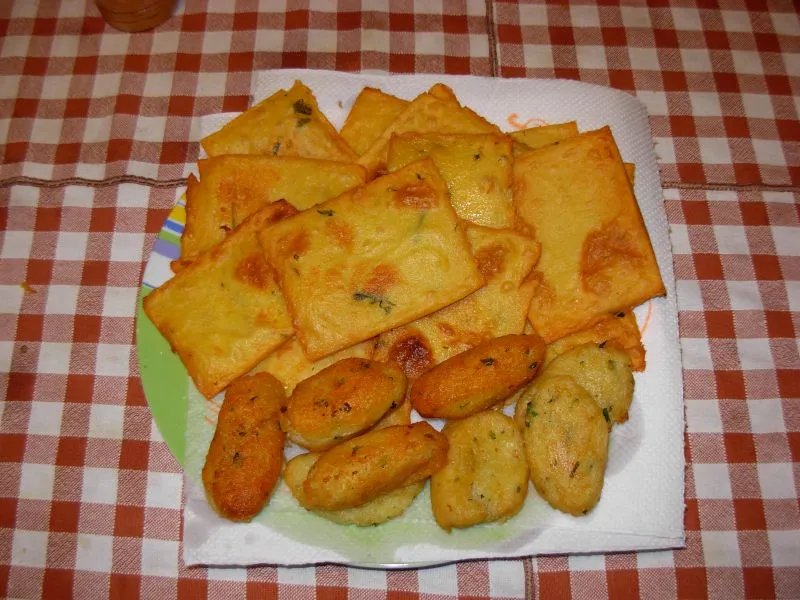
Panelle are thin fritters made from chickpea flour, water, salt and parsley. The flour is whisked into salted water and stirred over medium heat until it becomes a thick cream, spread out (traditionally in small special moulds), left to set, cut into squares or rectangles and fried. They are crisp outside and soft inside, with a mild, nutty taste.
You can eat them on their own with salt, pepper and a squeeze of lemon, but the classic is pane e panelle: hot panelle stuffed into a soft sesame-seed roll (a mafalda or a round vastedda), well salted and peppered, sometimes with grated cheese and a few crocchè in with them. It is on the Ministry's list of traditional products, and you find it on the streets of Palermo and Trapani.
Chickpeas have been cooked as a flour and water batter around the Mediterranean since Roman times. The Palermo street food study links panelle to the Arab tradition; Italian Wikipedia suggests the first panelle may have been baked on stone and that frying them probably began later, under the French Angevins. Nobody has a firm date. There is also a sweet version made with sugar and butter or lard, often filled with custard, for the feast of Santa Lucia on 13 December, the same day Palermo eats arancine instead of bread and pasta.
Crocchè (cazzilli): potato croquettes
Crocchè are potato croquettes, the name coming from the French croquette. In Palermo they are long and narrow, flavoured with parsley, and the city's own name for them is cazzilli. Italian Wikipedia says the Palermo version is made with mashed starchy potatoes, salt, pepper and mint, and is fried without breadcrumbs, unlike the breaded crocchè of Naples.
They are almost always sold with panelle, from the same fryer, and they often end up in the same roll. If you see pane, panelle e crocchè on a board, that is the full version.
Pane con la milza (pani ca meusa): the spleen sandwich
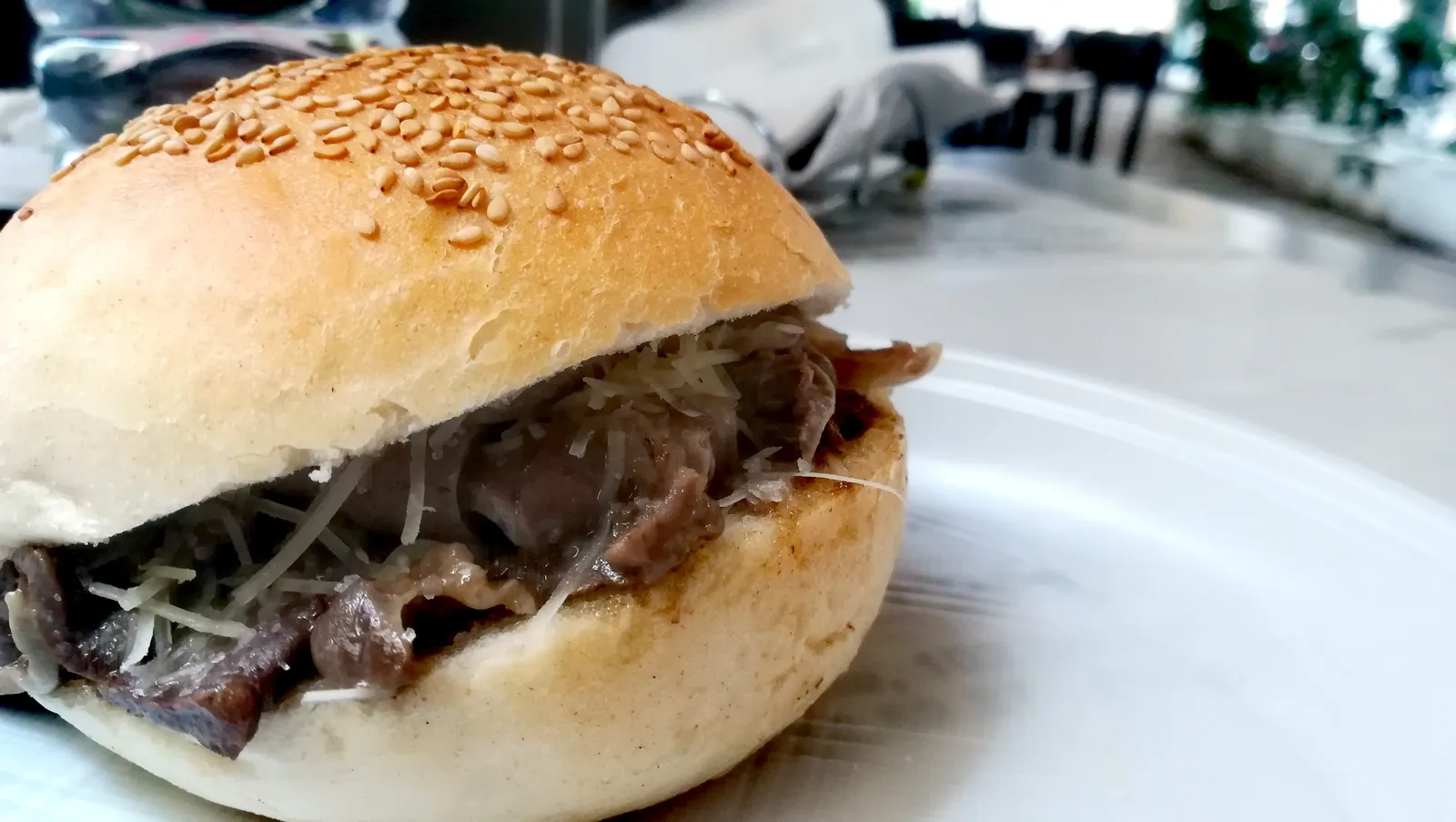
Pane con la milza, pani ca meusa in Palermo dialect, is the street food that divides visitors most: a soft sesame roll filled with thin slices of veal spleen and lung, and sometimes windpipe, fried in lard. It is made in two stages. The meat is soaked in salted water, boiled, cooled and sliced in advance; then, at the moment you order, the slices are fried again in a tilted pan of hot lard, lifted out with a two-pronged fork, drained and pushed into the roll.
You choose how you want it:
- Schietta (single): just the meat, with salt, pepper and a squeeze of lemon at most.
- Maritata (married): with grated caciocavallo or ricotta on top.
The man who makes it is the meusaru, and in the past most of them sold from carts at the markets. The story usually told about its origin is that in the Middle Ages Palermo's Jewish butchers, who could not be paid in money for their religious work, kept the offal instead and sold it in bread with cheese; after the Jews were expelled under Ferdinand of Aragon, others carried the trade on. Treat that as a tradition rather than proven history. What is certain is that Palermo has eaten offal from the street for a very long time.
The Antica Focacceria San Francesco, in the old centre, dates its business back to 1834 and is one of the best-known places for it. If you are not sure about offal, share one first; it is rich, savoury and very different from anything at home.
Stigghiola: from the street grill
Stigghiola is grilled intestine, and you usually smell it before you see it: the smoke from the charcoal is part of the show. It is on the Ministry's list of traditional products and is a typical dish of Sicilian and Palermo cooking. There are two kinds. Veal stigghiola, the one usually found at street stalls, is folded onto a skewer in an S shape. Lamb stigghiola is wrapped around spring onions and parsley, tied and roasted over hot coals. Once cooked, it is cut into small pieces and served with salt and a squeeze of lemon.
The name comes from the Latin extilia, intestine. It began as food for people who could not afford better cuts, and it is especially common around Easter, when lambs and kids are slaughtered for the holiday. Similar dishes exist in Greece, where kokoretsi is roasted at Easter.
What to order: a quick guide
| Ask for | What it is | Good to know |
|---|---|---|
| Pane e panelle | Chickpea fritters in a sesame roll | Add crocchè; ask for lemon |
| Crocchè (cazzilli) | Long potato croquettes with parsley and mint | Usually sold with panelle |
| Pani ca meusa | Veal spleen and lung fried in lard, in a roll | Schietta (plain) or maritata (with cheese) |
| Stigghiola | Grilled lamb or veal intestine | Cut up and served with salt and lemon |
| Arancina | Fried saffron rice ball | See the arancini guide |
| Sfincione | Thick, soft Palermo pizza | See the Sicilian pizza guide |
| Quarume | Boiled veal tripe, in its broth or drained | Served hot with salt, pepper and oil |
One more to look for: quarume (caldume in Italian), several kinds of veal tripe boiled in a big pot with onion, celery, carrot and parsley, and served hot, in its broth or drained, with salt, pepper and oil. Italian Wikipedia lists it among the typical street dishes of Palermo, and the street food study traces stalls selling hot quarume and stigghiola back to the Greek cities of ancient Sicily.
Where to eat street food in Palermo
The street food study names the city's great markets as the best places to experience it: Ballarò and the Capo, both in the historic centre, and the Vucciria. Fry shops (friggitorie) and stalls around them sell panelle and crocchè through the day, and the spleen sellers have traditionally worked at the markets too.
- Go where it is busy. A queue of locals means a fryer that is turning food out hot.
- Eat it straight away. Panelle and crocchè are at their best a minute out of the oil.
My guide to Palermo, Cefalù and Monreale covers the city, the Palermo town page has the practical details, and if you only have a day ashore, my Palermo from a cruise ship walk passes Ballarò. Staying longer? See my guide to things to do in Palermo. For the rest of the island's food, start with my Sicily food guide.
Frequently asked questions
What is Palermo street food?
Cheap, freshly cooked food sold from stalls, carts and fry shops and eaten on the spot. The classics are arancine, pane e panelle (chickpea fritters in a roll), crocchè (potato croquettes), pani ca meusa (a spleen and lung sandwich), sfincione (thick Palermo pizza) and stigghiola (grilled intestine skewers).
What are panelle made of?
Chickpea flour, water, salt and parsley. The mixture is cooked into a thick cream, left to set, cut into thin pieces and fried. In Palermo they are usually eaten in a soft sesame roll as pane e panelle, often with crocchè.
What is pane con la milza?
Palermo’s spleen sandwich, pani ca meusa in dialect: slices of veal spleen and lung, boiled, then fried in lard and served in a soft sesame roll. You can have it schietta (plain, with lemon) or maritata (with grated caciocavallo or ricotta).
What is the difference between crocchè and cazzilli?
In Palermo they are the same thing: cazzilli is the local name for crocchè, long potato croquettes. The Palermo version is flavoured with parsley and mint and fried without breadcrumbs.
What is stigghiola?
Grilled intestine of lamb or veal. Veal stigghiola is folded onto skewers; lamb stigghiola is wrapped around spring onions and parsley. Both are cooked over charcoal, cut up and served with salt and lemon. It is especially common around Easter.
Where is the best street food in Palermo?
Around the historic markets: Ballarò, the Capo and the Vucciria, and the fry shops and stalls near them. Go where locals are queuing, so the food comes straight out of the fryer.
Is sfincione street food?
Yes. Sfincione, Palermo’s soft, thick pizza, is sold by the slice in bakeries and from vans that drive through the neighbourhoods. It has its own guide on this site, alongside the Sicilian pizza Americans know.
Sources and small print
- Sgroi, Modica and Fusté-Forné: Street food in Palermo: Traditions and market perspectives (International Journal of Gastronomy and Food Science, vol. 27, 2022)
- Panella, Crocchè, Pani câ mèusa and Stigghiola (Italian Wikipedia, for the methods, the names and the traditions), and Caldume (Italian Wikipedia, for quarume)
- Regione Siciliana: Prodotti agroalimentari tradizionali and the Ministry of Agriculture's national PAT list (official lists of traditional products: panelle, crocchè, sfincione, arancini and stigghiola)
- Sicilian traditional food products (PAT) (Italian Wikipedia summary of the Ministry's list)
Credits
Photo: Popo le Chien, CC0, via Wikimedia Commons.
Photo: Camillo from Palermo, Sicilia, CC BY 2.0, via Wikimedia Commons.
 The weekly YouTube series