
What makes a recipe Sicilian?
Most Italian-American food has a southern Italian base. English Wikipedia's history of Italian-American cuisine describes the classic "red sauce" cooking of the US as chiefly Neapolitan and Sicilian in origin, with a stress on rich ingredients. So if your grandmother came from Sicily, some of what you think of as Italian food is really Sicilian, and some of it was born in America.
The recipes on this page are the home dishes behind the searches I see from American readers. Reading the Italian recipes for them side by side, the Sicilian fingerprints are easy to spot:
- Breadcrumbs everywhere. Toasted breadcrumbs fill braciole, coat chicken and stuff artichokes. The Sicilian word ammuddicati simply means "with breadcrumbs".
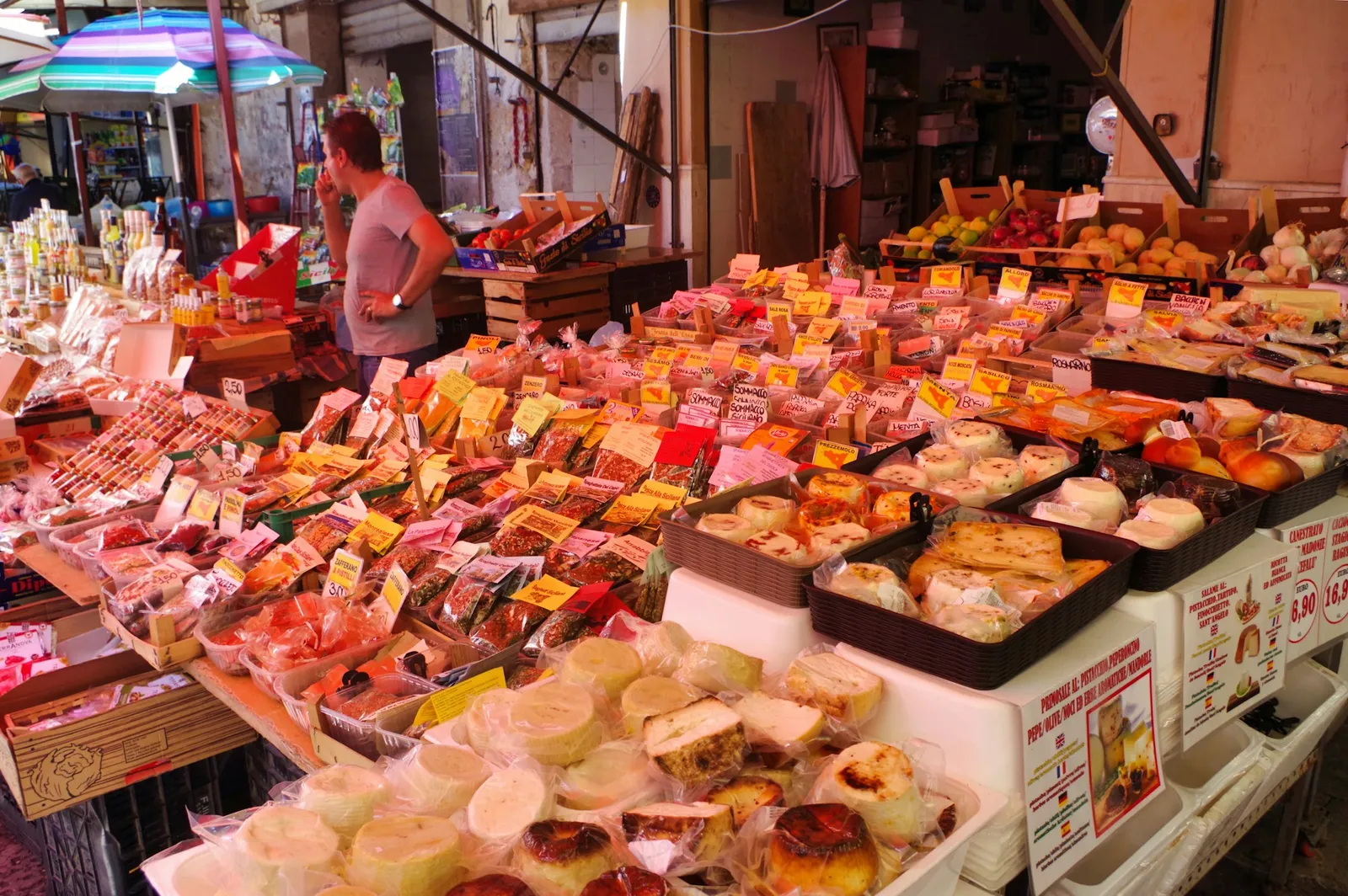
- Sheep's and cow's milk cheeses. Pecorino and caciocavallo, more than parmesan. My guide to Sicilian cheese explains them.
- Sweet with savoury. Currants and pine nuts inside rolled meat.
- Lemons. Squeezed over grilled meat, whisked into salmoriglio, even used as leaves to wrap meatballs. My page on Sicilian lemons and blood oranges covers the fruit.
A note on honesty: these are outlines in my own words, summarised from named Italian recipe sources listed at the foot of the page, not family secrets of mine. Every Sicilian town, and every Sicilian family in America, will tell you their version is the right one.
The quick version, from the American name to the Sicilian dish:
| If your recipe says | The Sicilian dish and how it is made |
|---|---|
| Sicilian braciole | Involtini alla siciliana and farsumagru |
| Sicilian meatballs | Polpette in lemon leaves |
| Sicilian chicken, Sicilian steak | Cotoletta alla palermitana |
| Sicilian sausage | About sausizza, Sicilian fresh pork sausage |
| Sicilian sauce | Strattu and salmoriglio |
| Sicilian potato salad | Insalata pantesca |
| Sicilian stuffed artichokes | Carciofi ammuddicati |
Sicilian braciole: involtini, braciole and farsumagru
Ask an Italian-American family for braciole and you will usually get thin slices of beef rolled around a filling, tied, browned and simmered for hours in Sunday sauce. In Sicily, rolled meat comes in two main forms, and the names move around the island.
Involtini alla siciliana (Palermo style)
GialloZafferano, Italy's best-known recipe site, gives these as a Palermo dish and notes that around Messina the same rolls are called braciole. They are small, grilled or pan-cooked rather than stewed, and have no tomato at all:
- Pound thin slices of veal to about 2 mm (a scant 1/8 inch).
- Make a filling of toasted breadcrumbs, grated caciocavallo, pine nuts, currants, softened onion and parsley.
- Roll a spoonful of filling inside each slice and thread the rolls onto skewers, three at a time, with a bay leaf and a piece of red onion between them.
- Brush with oil, roll in more breadcrumbs and cook in a hot pan for about 10 minutes, turning, until golden.
Farsumagru (falsomagro)
This is the big Sunday roll, and the closest Sicilian relative of American braciole. The name means "false lean", because a plain-looking slice of beef hides a very rich filling. GialloZafferano's version spreads a large slice of beef with a mix of ground beef, pecorino and breadcrumbs, then lays on lard, mortadella, caciocavallo and whole hard-boiled eggs. It is rolled, tied, browned, and simmered for about an hour in a soffritto with red wine, tomato passata and tomato paste. Sliced, every round shows the egg in the middle. The filling changes from town to town across Sicily.
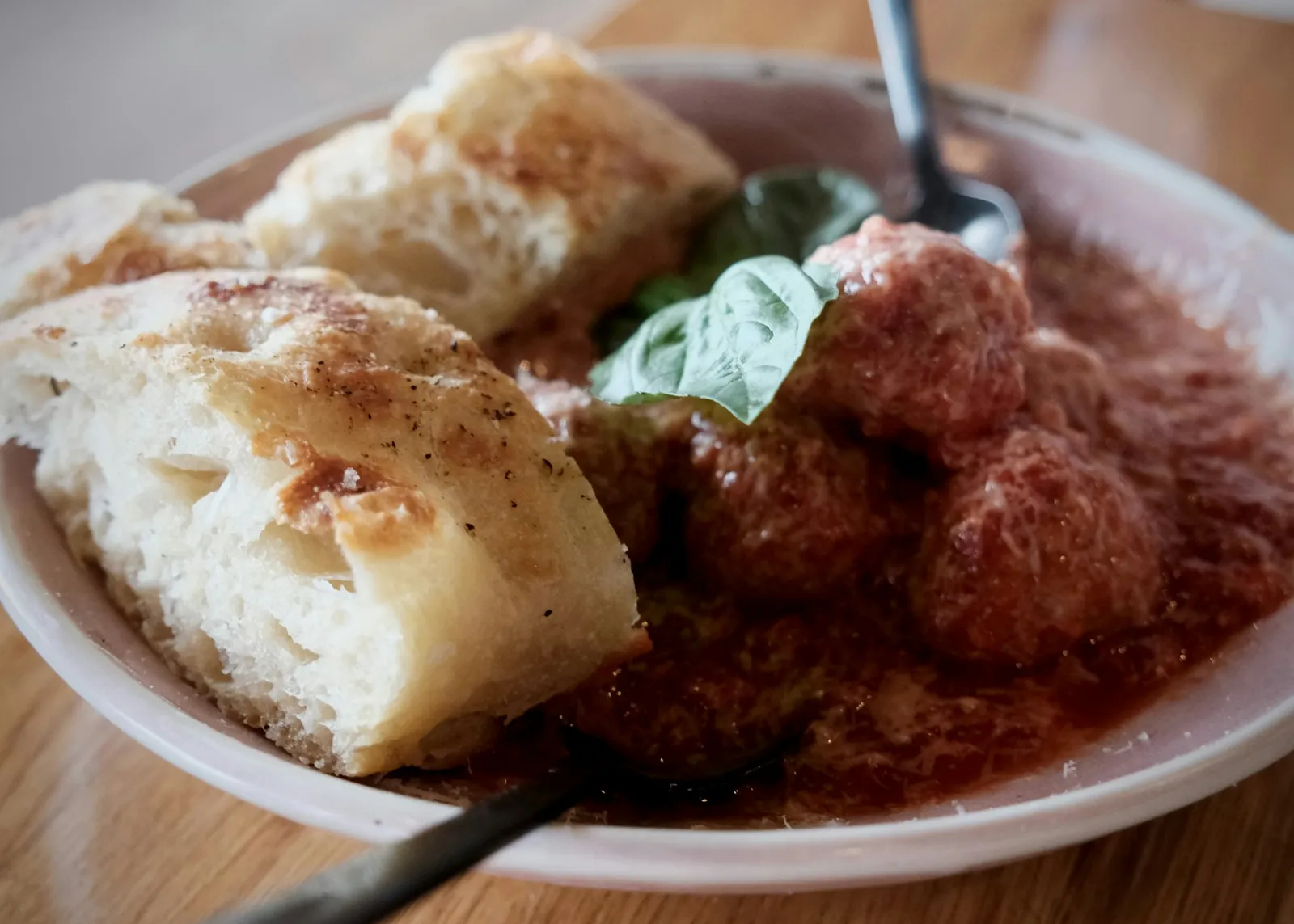
Sicilian meatballs
The first thing to know: in Italy, meatballs are not served on top of spaghetti. English Wikipedia's history of Italian-American cuisine says spaghetti and meatballs is unknown in Italy, where polpette are a dish of their own, eaten as a second course after the pasta. Spaghetti and meatballs is an American creation, and a very good one, but if you want to cook Sicilian meatballs, serve them on their own.
The most Sicilian meatballs I know of are polpette in foglie di limone, meatballs grilled in lemon leaves. Laura Soraci's Sicilian recipe blog Profumo di Sicilia gives them like this:
- Mix ground beef with bread soaked in water and squeezed out, grated parmesan and pecorino, chopped parsley, grated lemon zest, salt and pepper, and an egg if the mix needs binding.
- Shape small flat meatballs and wrap or sandwich each one with fresh, washed lemon leaves (bay leaves if you have no lemon tree).
- Cook them over charcoal, in a grill pan or in the oven. The leaves are not eaten; they scent the meat as it cooks.
If your family recipe has raisins and pine nuts in the meatballs, that fits the same sweet and savoury habit you find in Sicilian braciole.
Sicilian chicken and Sicilian steak: alla palermitana
When an American recipe says "Sicilian chicken" or "Sicilian steak", the Sicilian dish behind it is usually the cotoletta alla palermitana, Palermo's breaded cutlet. It is lighter than the Milanese version: no egg, no butter and usually no deep frying. GialloZafferano's method:
- Flatten slices of chicken breast (or beef, or turkey).
- Mix breadcrumbs with grated pecorino, chopped parsley and, if you like, a little mint.
- Brush the meat with oil, press it into the crumbs on both sides.
- Grill or griddle for 10 to 15 minutes, turning, or bake at 190°C (about 375°F) for about 15 minutes.
- Serve with lemon wedges.
Made with thin beef, the same recipe is what many Sicilian-American families call Sicilian steak. I have not found a Sicilian source for a named "Sicilian fried chicken", so I have left that out rather than guess.
If the dish you are after is chicken Marsala, that one is not alla palermitana at all: my Marsala wine guide explains how it is made.
Sicilian chicken soup
Most American searches for Sicilian chicken soup are really looking for the one served at Carrabba's Italian Grill, which its menu lists as "Mama Mandola's Sicilian Chicken Soup", a spicy chicken soup with mezzi tubetti pasta. It is a restaurant family recipe, and I have not found a dish of that name in the Italian sources I use, so I would not call it a classic of the island. For the copycat, the restaurant's own menu is the place to start.
Sicilian sausage
Fresh pork sausage, sausizza in Sicilian, is on the Italian Ministry of Agriculture's official list of traditional Sicilian food products, fresh, dried and smoked, alongside several local types such as the salsiccia pasqualora.
The best documented example is the salsiccia al ceppo di Linguaglossa, made in Linguaglossa, Castiglione di Sicilia and Piedimonte Etneo on the slopes of Etna and protected as a Slow Food presidium. According to the Sicilian food magazine Cronache di Gusto, five cuts of pork are chopped by hand with a blade called a partituri on an oak block (the ceppo), seasoned only with salt, black pepper and wild fennel seed gathered on Etna, and stuffed into natural casing. If your family's sausage always had fennel in it, this is the Sicilian tradition it belongs to. My guide to Etna, Taormina, Catania and Siracusa covers the area.
Sicilian sauce: strattu, salmoriglio and Sunday gravy
"Sicilian sauce" means different things to different families. Three are worth knowing.
Strattu: sun-dried tomato paste
The base of many Sicilian tomato sauces is strattu (or astrattu), a very thick tomato paste concentrated in the sun. It is on the Ministry's list of traditional Sicilian products and is made in the provinces of Agrigento, Messina, Palermo, Ragusa and Trapani. Tomatoes are cooked and sieved, then spread on wooden boards or glazed trays and left in the sun under a cloth, stirred until most of the water has gone. A spoonful dissolved in a sauce gives the deep, almost sweet tomato flavour that a lot of Sicilian-American sauces were chasing with canned paste.
Salmoriglio: lemon, oil and oregano
Salmoriglio (salmurigghiu in Sicilian) is the island's sauce for grilled fish and meat, also used in Calabria. GialloZafferano describes it as an emulsion of oil and lemon juice with oregano, parsley and garlic: whisk them together and spoon it over swordfish, steak or chicken straight off the grill.
Sunday sauce, or gravy
The slow Sunday meat sauce that Italian-Americans in Boston, New Jersey and Philadelphia call "gravy" comes, says English Wikipedia, from the Neapolitan ragù. For pesto alla trapanese, pasta con le sarde and the other great Sicilian pasta sauces, see my guide to Sicilian pasta dishes.
Sicilian potato salad and Sicilian salads
Insalata pantesca: Sicilian potato salad
The potato salad with a real Sicilian pedigree comes from the island of Pantelleria, between Sicily and Tunisia, and it has no mayonnaise. GialloZafferano's version:
- Boil and peel the potatoes and cut them into chunks.
- Add halved cherry tomatoes, rinsed Pantelleria capers, green olives and thinly sliced red onion.
- Dress with oil, a little white wine vinegar, salt, dried oregano and torn basil, and serve at room temperature.
Sicilian orange salad
The other Sicilian salad Americans search for is the winter orange salad: oranges peeled to the flesh and sliced, with red onion, black olives and basil, dressed with oil, salt and pepper. A close cousin adds shaved fennel. Both are on my page about Sicilian lemons and blood oranges, with the varieties to use and when they are in season.
Sicilian stuffed artichokes (carciofi ammuddicati)
Stuffed artichokes are one of the dishes Sicilian-American families make most faithfully, and the Sicilian original is carciofi ammuddicati, artichokes "with breadcrumbs". GialloZafferano's outline:
- Trim the artichokes, cut off the tough tips and stalks, and open the leaves out with your fingers. Keep them in water with lemon juice so they do not darken.
- Mix breadcrumbs with grated pecorino and caciocavallo, chopped garlic and parsley, salt and pepper.
- Push the filling down between the leaves and into the centre, and drizzle with oil.
- Stand them upright in a snug pan with a little water in the bottom, cover, and cook gently for about 30 minutes.
You eat them leaf by leaf, scraping the filling off with your teeth, which is why they are a dish for the family table rather than a first date.
The other Sicilian classics, each with its own page
Some of the best-known Sicilian dishes have full guides of their own on this site:
- Pasta: pasta alla norma, pasta con le sarde, pesto alla trapanese and more in Sicilian pasta dishes.
- Caponata: the sweet and sour eggplant dish, in caponata.
- Arancini: the fried rice balls, the "little oranges", in arancini.
- Desserts: cannoli, cassata, granita and the rest in Sicilian desserts.
- Pizza: sfincione and Sicilian-style pan pizza in Sicilian pizza.
- Street food: panelle, pane ca meusa and the markets in Palermo street food.
For the feast days that bring many of these dishes to the table, see St Joseph's Day in Sicily, the Feast of the Seven Fishes and Christmas in Sicily. If cooking these is part of tracing where your family came from, my guides to Sicilian ancestry and Sicilian vs Italian pick up that thread, and my Sicily food guide covers eating out on the island.
Frequently asked questions
What are some traditional Sicilian recipes?
Home classics include involtini and farsumagru (rolled stuffed meat, the Sicilian relatives of braciole), meatballs grilled in lemon leaves, cotoletta alla palermitana (breaded chicken or beef with no egg), fennel sausage, salmoriglio sauce, the Pantelleria potato salad, orange salad and stuffed artichokes. Pasta alla norma, pasta con le sarde, caponata, arancini and cannoli are the best-known dishes beyond the home kitchen.
What is Sicilian chicken?
In Sicily, the dish behind most "Sicilian chicken" recipes is cotoletta alla palermitana: flattened chicken breast brushed with oil, coated in breadcrumbs mixed with pecorino, parsley and sometimes mint, then grilled or baked rather than fried, and served with lemon. There is no egg or butter.
What is the difference between Sicilian braciole and Italian braciole?
Italian-American braciole are usually beef slices rolled around a filling and stewed in tomato sauce. In Palermo, involtini alla siciliana are small veal rolls filled with breadcrumbs, caciocavallo, pine nuts and currants, skewered with bay and onion and grilled, with no tomato; around Messina the same rolls are called braciole. The big stewed roll, farsumagru, hides ground meat, cheese, mortadella and whole hard-boiled eggs inside.
What makes Sicilian meatballs different?
They are served on their own as a main course, never on spaghetti, which is an American combination. A classic Sicilian version is wrapped in lemon leaves and grilled, with lemon zest, pecorino and parsley in the mix.
What is Sicilian sauce?
It depends who you ask. Sicilian tomato sauces are often built on strattu, a thick tomato paste dried in the sun. Salmoriglio is a lemon, oil, oregano, garlic and parsley sauce for grilled fish and meat. The slow Sunday "gravy" of Italian-American families comes from the Neapolitan ragù, adopted by Sicilian families in the US.
What is Sicilian potato salad?
The Sicilian potato salad with real roots is the insalata pantesca from Pantelleria: boiled potatoes with cherry tomatoes, capers, green olives and red onion, dressed with oil, a little vinegar and oregano. It has no mayonnaise.
What is in Sicilian sausage?
Pork, salt and pepper, and often fennel seed. The traditional salsiccia al ceppo of Linguaglossa on Etna, a Slow Food presidium, is hand-chopped from five cuts of pork and seasoned with salt, black pepper and wild fennel seed gathered on the volcano.
Is Carrabba's Sicilian chicken soup a Sicilian recipe?
It is a Carrabba's restaurant recipe, listed on its menu as Mama Mandola's Sicilian Chicken Soup, a spicy chicken soup with mezzi tubetti pasta. I have not found a dish by that name in Italian recipe sources, so it is best thought of as a Sicilian-American family recipe rather than a classic of the island.
How do Sicilians make stuffed artichokes?
As carciofi ammuddicati: the leaves are opened out and packed with breadcrumbs, pecorino, caciocavallo, garlic and parsley, drizzled with oil, then stood in a covered pan with a little water and cooked gently for about 30 minutes.
Sources and small print
- Italian-American cuisine (English Wikipedia: red sauce origins, spaghetti and meatballs, Sunday gravy)
- GialloZafferano: Involtini alla siciliana
- GialloZafferano: Falsomagro
- Profumo di Sicilia: Le polpette nelle foglie di limone (Laura Soraci)
- GialloZafferano: Cotoletta alla palermitana
- Carrabba's Italian Grill catering menu (Mama Mandola's Sicilian Chicken Soup)
- Sicilian traditional food products (PAT) (Italian Wikipedia summary of the Ministry's list)
- Cronache di Gusto: La salsiccia al ceppo di Linguaglossa è presidio Slow Food
- Elioconcentrato (strattu) (Italian Wikipedia)
- GialloZafferano: Pesce spada in salmoriglio
- GialloZafferano: Insalata pantesca
- GialloZafferano: Insalata di arance
- GialloZafferano: Carciofi ammuddicati
Credits
Photo: Kris Tian, Unsplash Licence, via Unsplash.
Photo: Piermario Eva, Unsplash Licence, via Unsplash.
 The weekly YouTube series