
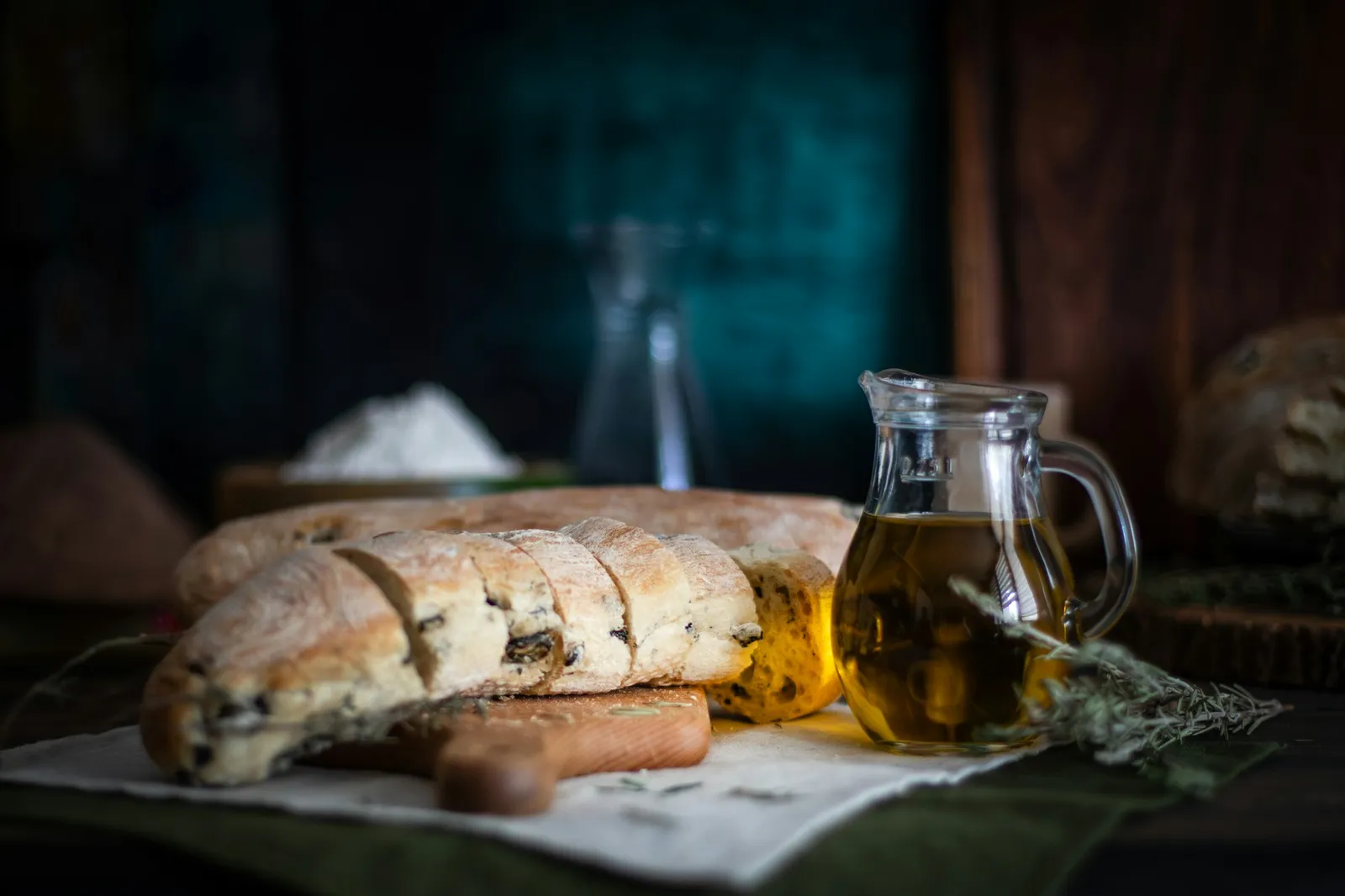
What do you need to taste olive oil at home?
Very little. Professional panels follow a method laid down by the International Olive Council (IOC), but the essentials work fine at a kitchen table:
- A small glass for each oil. The official tasting glass is squat, tulip shaped, holds about 130 ml and is made of dark glass, usually cobalt blue, so the taster cannot see the colour. A small wine glass or even a shot glass will do at home.
- About a tablespoon of oil per glass. The IOC method uses 14 to 16 ml.
- Something to cover each glass, such as a saucer or a coaster, to trap the aroma while the oil warms.
- Slices of green apple and water (still or sparkling) to clean your palate between oils. Panels also use plain bread or natural yoghurt.
- A quiet, odour-free room. No perfume, no scented candles, no cooking smells, and ideally not straight after coffee, a cigarette or toothpaste.
Panels taste at 28°C, give or take 2°C, because that is warm enough to release the aroma. At home you get close by cupping the glass in your palm for a minute or two. Cold oil from a cool larder smells of very little, which is the commonest reason people say all olive oils taste the same.
Why blue glass? Because colour fools people. A deep green oil looks fresh and a golden one looks mellow, but colour depends on the variety and how ripe the olives were, and says nothing reliable about quality. I explain why in how to tell if olive oil is real, which also covers the label checks and the home tests that do not work.
How to taste olive oil step by step
This is the panel method, simplified for home. Take each oil in turn.
- Warm it. Pour the oil, cover the glass and hold it in your hand for a minute or two. Tilt it and turn it so the oil coats the inside of the glass.
- Sniff. Uncover and take slow, deep breaths over the glass. The IOC method limits each smelling to 30 seconds; if nothing comes, rest and try again. Ask yourself: does it smell of olives, and of something fresh such as cut grass, green leaves, tomato, artichoke, almond or apple? Or does something smell wrong?
- Sip. Take a small sip, about 3 ml, roughly half a teaspoon. Let it spread over your whole tongue, the sides of your mouth and towards the back of the palate.
- Slurp. With your teeth almost closed, draw in air sharply through your mouth several times, making a sucking noise. Italian tasters call this strippaggio. It spreads the oil around and forces the aroma up the back of your nose.
- Breathe out through your nose. This is retronasal smell, and it is where much of the fruitiness shows itself: notes you missed in the glass often appear now.
- Swallow some. Bitterness registers on the tongue, mainly at the back; pungency, the peppery catch, is a sensation in the throat and only arrives once the oil goes down. Notice which comes first and how long each lasts.
- Judge the finish. How long do the pleasant sensations last? Is there a greasy, flat or stale aftertaste?
- Reset. Eat a slice of apple, sip water and wait a few minutes before the next oil.
The first few times, the slurp feels absurd and you may cough. Both are normal. It is the only way to taste all three positive qualities properly.
What are the positive attributes of olive oil?
The IOC recognises three positive attributes. An oil needs some fruitiness and no defects at all to be graded extra virgin; bitterness and pungency are welcome but not compulsory.
- Fruity: the smells of sound, fresh olives, which depend on the variety. Tasters split it into green fruity, reminiscent of unripe fruit (grass, leaves, artichoke, green tomato, green almond), and ripe fruity, reminiscent of riper fruit (ripe tomato, apple, banana, almond, softer and rounder).
- Bitter: a primary taste typical of oil from green olives or olives turning colour, felt mainly at the back of the tongue.
- Pungent: a biting, peppery sensation, strongest in the throat, typical of oil made early in the season from olives that are still unripe.
Panels score each on a scale from 0 to 10, and the label terms follow from the panel's median score:
| Label term | What it means (IOC) |
|---|---|
| Delicate | The attribute scores below 3 |
| Medium | The attribute scores between 3 and 6 |
| Robust (intense) | The attribute scores above 6 |
| Well balanced | Bitterness and pungency are no more than 2 points above the fruitiness |
| Mild | Bitterness and pungency both score 2 or less |
In the EU, words such as "fruity", "bitter" or "robust" may only appear on a virgin oil's label when a panel test backs them up. What the grades themselves mean is in extra virgin vs olive oil.
Olive oil defects: what do they smell and taste like?
A defect is any smell or taste that should not be there. One clear defect is enough to stop an oil being extra virgin. The five you are most likely to meet:
- Fusty or muddy sediment: a fermented, sweaty, cheesy or farmyard smell. It comes from olives left piled up before milling, where they ferment without air, or from oil left sitting on its own sediment in tanks. It is the classic fault of olives that waited too long for the mill.
- Musty, humid or earthy: mouldy, damp cellar or mushroom smells, from olives stored in damp conditions for several days, or picked up with mud and not washed.
- Winey or vinegary: sharp, sour, like wine or vinegar, from olives that have fermented with air.
- Rancid: wax crayons, putty, old walnuts, stale cooking oil. The oil has oxidised, usually from age, light or heat. This is the defect you are most likely to find in an old bottle, and how long olive oil lasts explains how to avoid it.
- Frostbitten olives (wet wood): a damp, woody, sometimes sweetish taste from olives damaged by frost on the tree.
The IOC lists several more you will meet less often:
- Heated or burnt, from overheating the paste during milling.
- Hay or wood, from olives that have dried out.
- Rough, a thick, pasty mouthfeel in some old oils.
- Greasy, reminiscent of diesel or mineral oil.
- Vegetable water, from long contact with the fermented water separated at the mill.
- Brine, from olives that were preserved in brine before pressing.
- Metallic, from long contact with metal surfaces.
- Esparto, from olives pressed on new esparto grass mats, now rare.
- Grubby, from olives heavily attacked by olive fly larvae.
- Cucumber, from oil sealed in a container, particularly a tin, for too long.
Most defects trace back to what happened between the tree and the mill, which is why speed matters so much at harvest. The process itself is in how olive oil is made.
Olive oil tasting vocabulary: a cheat sheet
You do not need a long list of words, but a few precise ones help you say what you taste. This table combines the official IOC terms with the everyday descriptors tasters use for them.
| Term | What it smells or tastes like | What it means |
|---|---|---|
| Green fruity | Cut grass, green leaves, green tomato, artichoke, green almond | Fresh oil from olives picked early, before or during colour change |
| Ripe fruity | Ripe tomato, apple, banana, sweet almond, softer and rounder | Fresh oil from riper olives; not a fault |
| Tomato leaf | The sharp green smell of rubbing a tomato plant | A typical green note, common in Sicilian varieties |
| Artichoke | Raw artichoke, slightly bitter and vegetal | Green fruitiness; often paired with bitterness |
| Bitter | Like rocket, chicory or dark chocolate, at the back of the tongue | Positive attribute; strongest in young oil from green olives |
| Pungent | Peppery catch in the throat, sometimes a cough | Positive attribute; strongest in the months after milling |
| Astringent | A drying, puckering feel in the mouth | Often goes with bitterness in young oil |
| Fusty | Sweaty socks, fermented, farmyard, olives in brine gone off | Defect: olives fermented in piles before milling |
| Musty | Mould, damp cellar, mushrooms | Defect: olives stored damp or dirty |
| Winey | Wine, vinegar, nail varnish | Defect: olives fermented with air |
| Rancid | Crayons, putty, old nuts, stale crisps | Defect: oxidised oil, usually old or badly stored |
| Wet wood | Damp wood, sometimes sweetish | Defect: olives hit by frost on the tree |
| Flat | Nothing much at all, greasy | Not an official defect, but a sign of old or refined oil |
Why is peppery olive oil not a fault?
Because pungency is one of the three qualities tasters are looking for. The peppery sting in the throat, and the bitterness that often comes with it, come from natural phenolic compounds in the olive. They are highest in oil from early-picked, still green olives and fade steadily as the oil ages. A sharp, peppery oil is usually a young one; an oil with no pepper at all may be made from very ripe fruit, be a mild variety, or simply be old.
Many people who grew up on supermarket oil assume the cough means something is wrong. Tasters even grade it informally by how many coughs an oil produces. New season olive oil explains why the first oil of the harvest is so intense and how quickly it softens.
The variety matters too. Nocellara del Belice, the variety on my land, is known for green tomato, grass and artichoke notes, with bitterness and pepper that range from light to intense depending on when it is picked. I compare Sicily's main varieties in what makes Sicilian olive oil different.
How to compare two olive oils side by side
Tasting two or three oils together teaches you far more than tasting one, because differences jump out that you would never notice alone. A few rules make it fair:
- Taste blind. Pour the oils into identical glasses and mark the bottom with a number, or have someone else pour. Knowing the price or the label changes what you taste.
- Keep the number small. The IOC recommends no more than four samples in a session, to avoid the contrast effect where one oil distorts your view of the next. At home, two to four is plenty.
- Go from mild to intense. If you can guess which is milder, taste it first; a robust, peppery oil will flatten your perception of a delicate one.
- Score the same things for each. Rate fruitiness, bitterness and pungency from 0 to 10, note any defect and write two or three descriptive words. Panels use a profile sheet that does exactly this.
- Rest between oils. Apple, water and a few minutes. Then go back and taste the first one again: your view often changes.
A useful exercise is to compare a fresh extra virgin oil with an older bottle, or with a supermarket "olive oil" blend. The difference between fresh fruitiness and the flat, faintly stale smell of old or refined oil is the single most useful thing you can learn. If you want to compare countries rather than bottles, see Italian vs Spanish vs Greek olive oil.
Common mistakes when tasting olive oil
- Tasting it on bread. Bread is fine for enjoying oil, and panels use plain bread to clean the palate, but salty or toasted bread masks defects and bitterness. Taste from a glass or a spoon first.
- Tasting it cold. Warm the glass in your hand; cold oil hides both its fruit and its faults.
- Judging by colour or cloudiness. Neither tells you about quality. Cloudy, unfiltered oil is normal straight from the mill, as filtered vs unfiltered olive oil explains.
- Calling a ripe fruity oil "flat". A gentle, ripe oil with clear fruit is a style, not a fault. Flat means no fruit at all.
- Mistaking pepper for a fault, and mistaking a fault for "character". A farmyard or vinegar smell is never part of an oil's personality.
- Tasting after strong food or drink. Coffee, chilli, garlic and mint all stay with you for a while.
Where and when can you taste olive oil in Sicily?
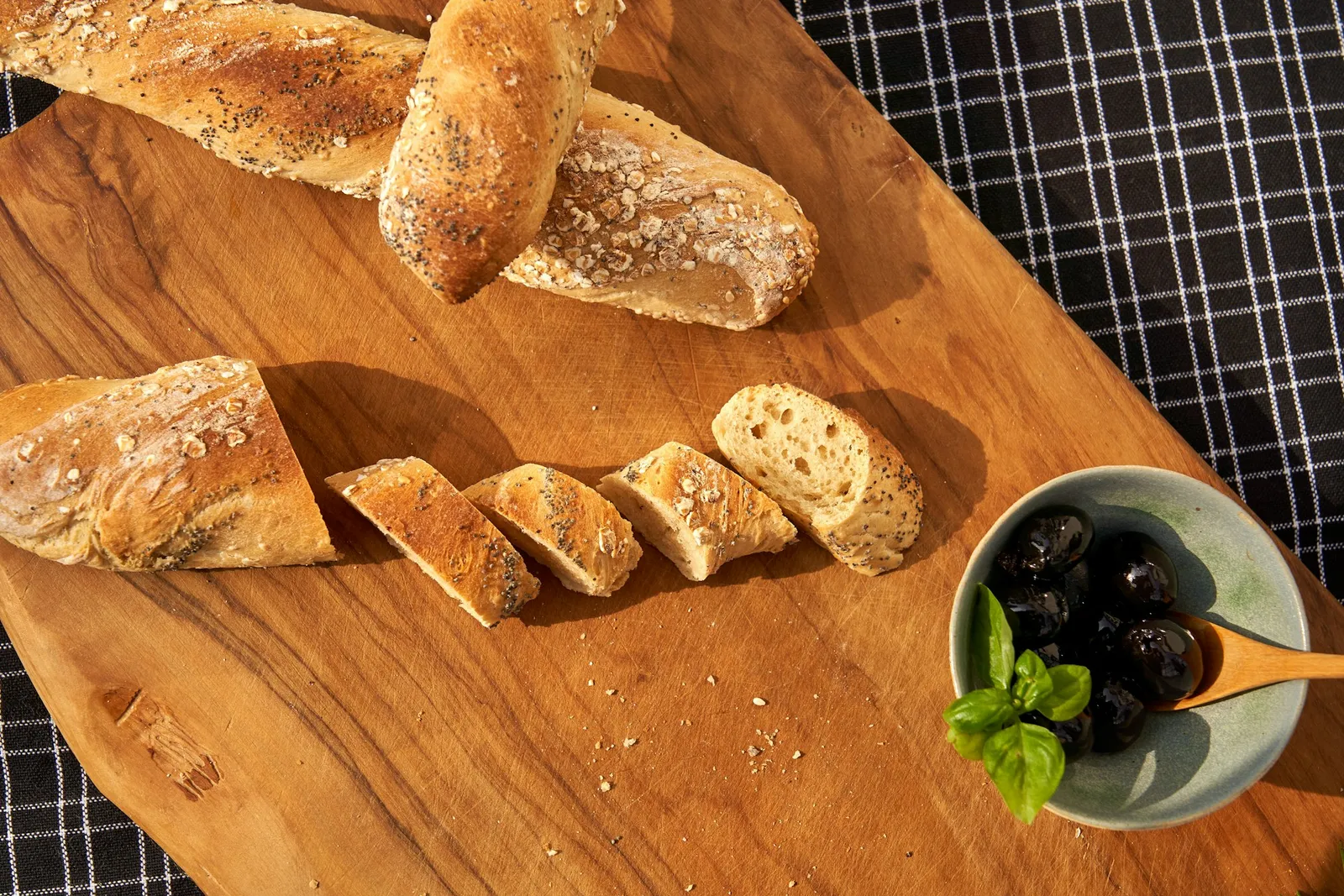
The harvest season, October to December, is the best time. This is when the mills (frantoi) are working, and in olive country many mills sell oil direct and will let you taste the new oil, often poured over toasted bread. In western Sicily the main Nocellara harvest falls in October and November; inland and at altitude it runs later. When to harvest olives explains the timing.
Outside the harvest, many agriturismi and olive estates across the island offer guided tastings through the year, often with a walk through the groves. Book ahead, ask whether the tasting is in a glass or only on bread, and ask which harvest the oil is from: by late summer, last year's oil will have softened considerably.
Official events. On the last Sunday of October, towns belonging to the Associazione Nazionale Città dell'Olio hold the Camminata tra gli Olivi, a national day of walks among the olive groves; the tenth edition was on 25 October 2026, and the programme on the official site lists the towns taking part. Sicily also runs regional olive oil competitions judged by trained panels, among them the Sicilian selection of the national Premio Ercole Olivario, whose 2026 finalists were announced at the Chamber of Commerce in Trapani in February, and the Morgantìnon competition run by the regional agricultural development agency. These are professional judgings rather than public tastings, but their results show which areas and producers panels rate.
Near us, the heart of Nocellara country is the Belice valley around Castelvetrano, Campobello di Mazara and Partanna, which is the area of the Valle del Belice DOP. My villa near Mazara del Vallo lies outside that DOP area, but the trees are the same variety. More on them is in Nocellara del Belice olives. Early on I came away from a local mill with 10 litres of its Nocellara extra virgin, which is a lot of oil to get to know with a glass and an apple. What the oil from our own five trees tastes like will be added here once I can honestly describe it.
Frequently asked questions
Why do you slurp olive oil when tasting it?
Slurping, called strippaggio in Italian, draws air over the oil so it spreads across the whole mouth and its aroma is pushed up the back of the nose. That retronasal smell is where much of the fruitiness is perceived. Without it, the bitterness and pepper can also be missed.
Why are olive oil tasting glasses blue?
So the taster cannot see the colour. Colour depends on the olive variety and ripeness and says nothing reliable about quality, but a green oil looks fresher and can bias the judgement. The official IOC glass is made of dark glass, usually cobalt blue.
What temperature should olive oil be for tasting?
Professional panels taste at 28°C, plus or minus 2°C. At home, cover the glass and warm it in your hand for a minute or two. Cold oil releases very little aroma, so it tastes flatter than it is.
What does fusty olive oil taste like?
Fermented, sweaty, cheesy or like a farmyard, sometimes like olives in brine that have gone off. It is a defect caused by olives piled up and left to ferment before milling, or by oil left on its sediment. An oil with a fusty note is not extra virgin.
What does good extra virgin olive oil taste like?
It smells clearly of fresh olives and of something green or fruity such as grass, tomato, artichoke, almond or apple. In the mouth it shows some bitterness and a peppery catch in the throat, and it has no stale, mouldy, vinegary or fermented notes. The balance depends on the variety and harvest time.
Should you taste olive oil on bread?
To judge it, taste it on its own first, from a small glass or a spoon. Salty or toasted bread hides bitterness and masks defects. Bread is perfect for enjoying a good oil once you know what it tastes like, and plain bread is useful for cleaning the palate between oils.
How many olive oils can you taste at once?
The IOC method recommends no more than four samples per session, because each oil affects how you perceive the next. At home, compare two to four oils, taste blind if you can, start with the mildest and rest for a few minutes between them.
What do you clean your palate with between olive oils?
Slices of green apple and a sip of water, still or sparkling, are the classic choice. Panels also use plain bread, bread sticks or natural yoghurt. Wait a few minutes before the next oil.
When can you taste new olive oil in Sicily?
From the start of the harvest, usually October in western Sicily, until the mills close in December. That is when the new, green and peppery oil is available at the mills. Estates and agriturismi offer tastings through the year, but by summer the oil has mellowed.
Sources and small print
- International Olive Council: method for the organoleptic assessment of virgin olive oil (COI/T.20/Doc. No 15/Rev. 11, 2024)
- International Olive Council: glass for oil tasting (COI/T.20/Doc. No 5)
- International Olive Council: standards, methods and guides for sensory analysis
- UC Davis Olive Center: olive oil quality and sensory research
- Associazione Nazionale Città dell'Olio: Camminata tra gli Olivi
- Premio Ercole Olivario: the 2026 Sicilian finalists (in Italian)
- Ente di Sviluppo Agricolo (Sicily): the Morgantìnon competition (in Italian)
Tasting is a skill that improves with practice; these are general guidelines, not a substitute for a trained panel.
Credits
Photo: Mila, Unsplash Licence, via Unsplash.
Photo: Wolfgang Hasselmann, Unsplash Licence, via Unsplash.
 The weekly YouTube series