
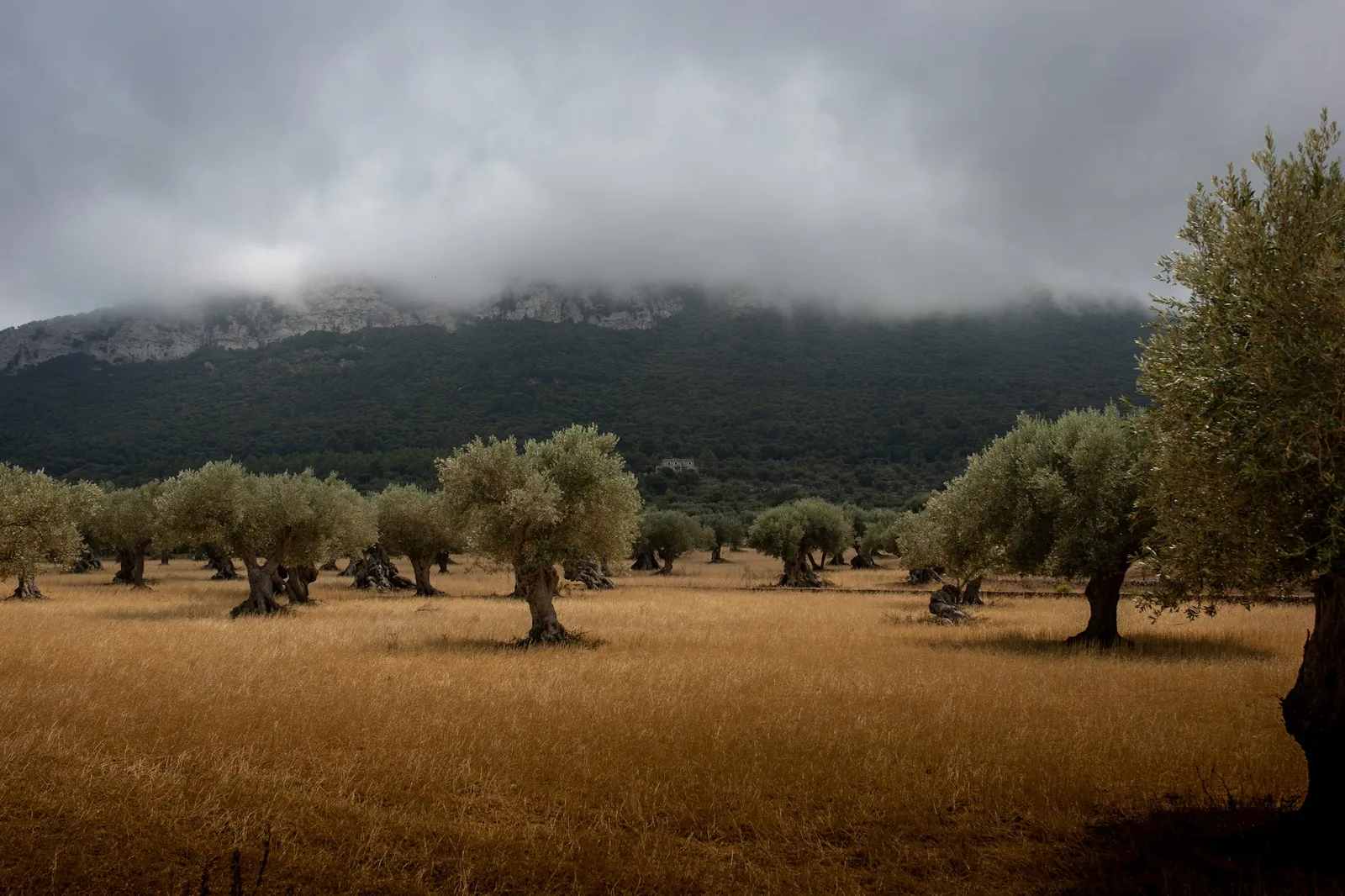
What does DOP mean on olive oil?
DOP stands for Denominazione di Origine Protetta, the Italian form of the EU's Protected Designation of Origin (PDO). IGP, Indicazione Geografica Protetta, is the Italian form of Protected Geographical Indication (PGI). Both are EU-wide legal protections for a product name, now governed by Regulation (EU) 2024/1143, which came into force on 13 May 2024 and replaced the older rules.
The difference between the two is how much of the work has to happen in the named place:
- DOP (PDO): every stage, from growing the olives to milling and, for the Sicilian oils, bottling, must take place in the defined area. It is the stronger link to a place.
- IGP (PGI): for most foods at least one stage must take place in the area. The Sicilia olive oil IGP goes further than the minimum and requires Sicilian olives, milled and packed in Sicily.
Each name has a disciplinare, a product specification, that fixes the area, the olive varieties and their minimum share, the harvest window, how fast the olives must be milled, chemical limits and a minimum score from a trained tasting panel. Producers who want to use the name register with an independent control body, keep records of every batch of olives and oil, and accept inspections. Only oil that passes can carry the name. That is the whole system: a protected name, written rules, and someone checking.
The rules for extra virgin oil itself, the grade every DOP oil must meet first, are covered in extra virgin vs olive oil.
How many DOP olive oils does Sicily have?
Six, plus the island-wide IGP. The table below summarises them from the official specifications and the Regione Siciliana's own guide to the island's oils. Character notes are the specification's own descriptions, not tasting notes of mine.
| Name | Registered | Area | Main varieties | Character in the rules |
|---|---|---|---|---|
| Monti Iblei DOP | 1997 | Hyblaean hills in the provinces of Siracusa, Ragusa and Catania | Mainly Tonda Iblea, with Moresca and Nocellara Etnea in some sub-zones | Medium fruity and fragrant, with a light pepperiness |
| Valli Trapanesi DOP | 1997 | 17 comuni in the province of Trapani, including Trapani, Marsala, Mazara del Vallo and Alcamo | Cerasuola and Nocellara del Belice, at least 80% together | Clean olive aroma with herbaceous notes; fruity, with light bitterness and pepper |
| Val di Mazara DOP | 2001 | The whole province of Palermo and 16 comuni in western Agrigento | Biancolilla, Nocellara del Belice and Cerasuola, at least 90% together | Fruity, sometimes almond; velvety, with a sweet finish |
| Monte Etna DOP | 2003 | Slopes of Etna in the provinces of Catania, Enna and Messina | Mainly Nocellara Etnea | Light fruitiness, light bitterness and pepper |
| Valle del Belice DOP | 2004 | Castelvetrano, Campobello di Mazara, Partanna, Poggioreale, Salaparuta and Santa Ninfa (Trapani) | Nocellara del Belice, at least 70% | Medium to intense fruit; grass, artichoke and tomato; bitter and peppery |
| Valdemone DOP | 2005 | The province of Messina, except Floresta, Moio Alcantara and Malvagna | Santagatese, Ogliarola Messinese and Minuta, at least 70% together | Sweet, medium fruity; herbs and wild flowers; almond, tomato and cardoon at the finish |
| Sicilia IGP | 2016 | The whole of Sicily | Listed Sicilian varieties, at least 90% | Green tomato, artichoke and fresh grass, with some bitterness and pepper |
Registration years are those of the EU regulations that first entered each name in the register: Regulation (EC) 2325/97 for Monti Iblei and Valli Trapanesi, 138/2001 for Val di Mazara, 1491/2003 for Monte Etna, 1486/2004 for Valle del Belice, 205/2005 for Valdemone and (EU) 2016/1662 for Sicilia. Several specifications have been amended since, so the current text on the register is the one that counts.
Is Val di Mazara olive oil from Mazara del Vallo?
No, and this catches out a lot of people, including visitors to Mazara del Vallo, the town nearest my villa. The name Val di Mazara comes from the medieval division of Sicily into three valli: Val di Mazara in the west, Val di Noto in the south east and Val Demone in the north east. The DOP borrows the old name for a region, not the town.
The Val di Mazara specification, as published by the Italian Ministry of Agriculture, covers every comune in the province of Palermo plus sixteen comuni in western Agrigento, among them Sciacca, Menfi, Ribera, Sambuca di Sicilia and Santa Margherita di Belice. It includes no comune in the province of Trapani at all.
Mazara del Vallo itself sits inside a different DOP: it is one of the seventeen comuni listed in the Valli Trapanesi specification. It is outside the Valle del Belice DOP, whose six comuni lie a little to the east around Castelvetrano. So in western Sicily, three DOP areas sit within half an hour's drive of each other, and the one named after Mazara is the one that does not include it.
The three DOPs of western Sicily
Valle del Belice DOP is the one most people outside Sicily have heard of, because it is built on Nocellara del Belice, the olive sold abroad as the Castelvetrano olive. The oil must be at least 70% Nocellara, with Biancolilla, Cerasuola, Giarraffa and other local varieties making up the rest. Olives are picked straight from the tree between October and the end of December, by hand, with tools or by machine, but the fruit must not touch the ground or travel in sacks, and are milled within two days in one of the six valley comuni, with the paste kept no warmer than 30°C. The finished oil may have no more than 0.5% acidity (ordinary extra virgin is allowed 0.8%), must contain at least 100 mg/kg of polyphenols and needs a panel score of at least 7.
Valli Trapanesi DOP covers most of the rest of the province: the coast and hills from San Vito lo Capo and Custonaci in the north, through Trapani, Erice, Paceco and Marsala, down to Petrosino and Mazara del Vallo, and inland to Salemi, Vita, Calatafimi, Gibellina and Poggioreale. At least 80% of the olives must be Cerasuola and Nocellara del Belice, picked when they are turning colour and by 30 December. The rules cap the oil yield at 22% of the olives' weight, require milling within two days and limit acidity to 0.5%. Bottles must be glass or tin, no bigger than 5 litres, and must show the harvest year. Poggioreale is in both Valli Trapanesi and Valle del Belice: the two areas overlap there, and each oil follows the specification of the name on its label.
Val di Mazara DOP is the largest of the three, stretching from the hills around Palermo to Sciacca and Menfi on the south coast. Its oil is mainly Biancolilla, Nocellara del Belice and Cerasuola, from groves up to 700 metres. The specification asks for olives stored in rigid, ventilated crates at no more than 15°C before milling, again within two days. It describes a softer oil than the other two, golden with green tints, fruity and sometimes almondy, with a sweet finish. Biancolilla, which is milder than Nocellara, has a lot to do with that.
For a fuller picture of how those three varieties compare in the glass, see what makes Sicilian olive oil different.
The three DOPs of eastern Sicily
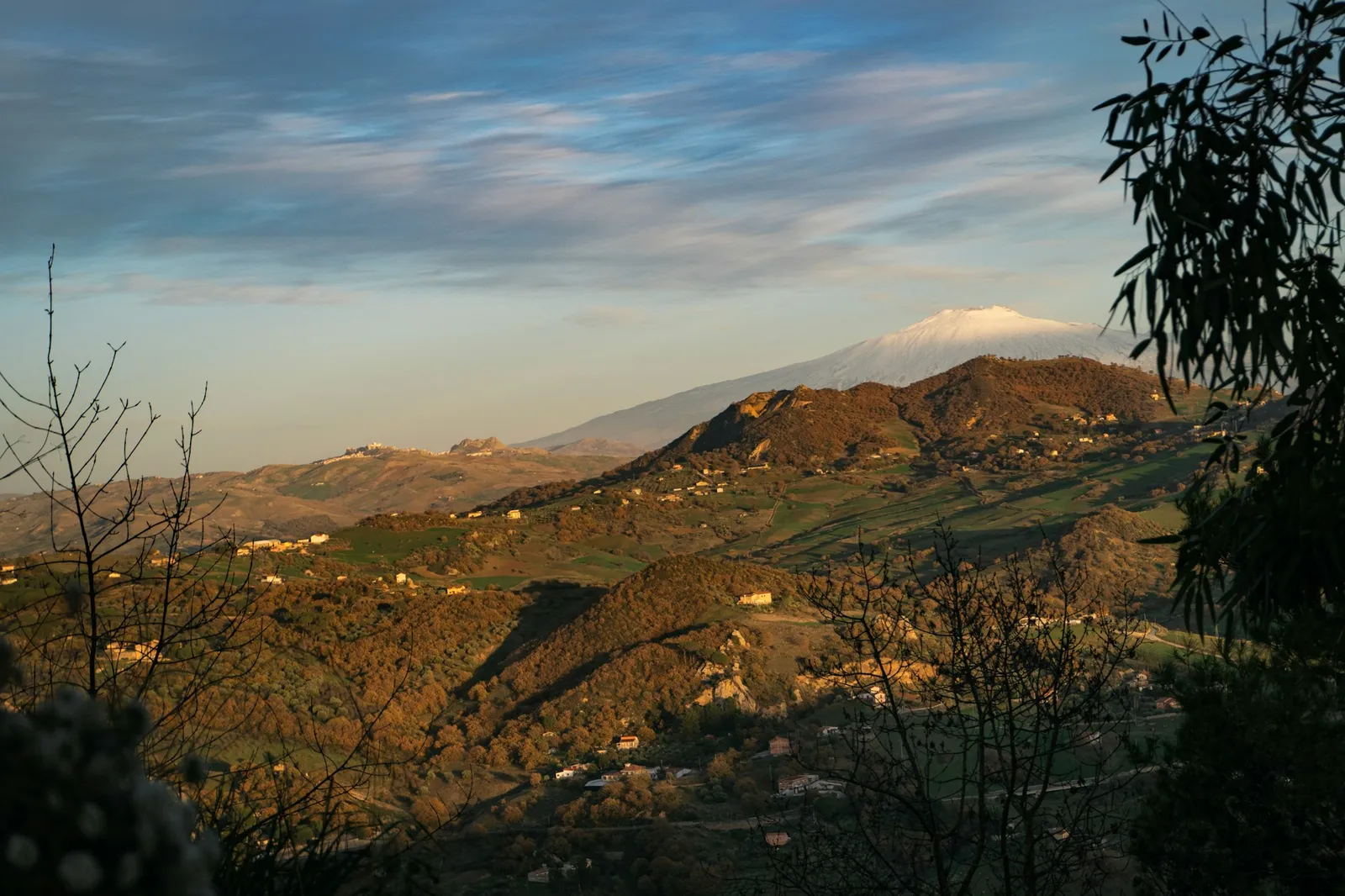
Monti Iblei DOP, in the limestone uplands behind Ragusa, Modica and Siracusa, is built mainly on Tonda Iblea, a big round olive that also makes good table olives. It is unusual in having eight additional geographical mentions, sub-zones that can appear on the label: Monte Lauro, Val d'Anapo, Val Tellaro, Frigintini, Gulfi, Valle dell'Irminio, Calatino and Trigona-Pancali. Depending on the sub-zone, Moresca or Nocellara Etnea may lead instead. Tonda Iblea oils are often described as green and grassy with notes of green tomato.
Monte Etna DOP comes from groves on the lower slopes of the volcano, in comuni such as Adrano, Bronte, Paternò, Biancavilla and Randazzo. Its main variety is Nocellara Etnea, a different olive from Nocellara del Belice despite the shared name, with smaller amounts of Moresca, Tonda Iblea, Ogliarola Messinese, Biancolilla and Brandofino. The specification calls for a lightly fruity oil with light bitterness and pepper. Etna is better known abroad for wine, which I cover in the Sicilian wine guide.
Valdemone DOP covers almost the whole province of Messina, from the Tyrrhenian coast up into the Nebrodi and Peloritani mountains. At least 70% of the olives must be Santagatese, Ogliarola Messinese or Minuta. The oil is described as sweet and medium fruity, with herbs, leaves and wild flowers on the nose and almond, fresh fruit, tomato and cardoon at the finish.
What is Sicilia IGP olive oil?
The Sicilia IGP (Olio extravergine di oliva Sicilia IGP) was registered by Commission Implementing Regulation (EU) 2016/1662 of 12 September 2016. Where each DOP covers one district, the IGP covers the entire region, which makes it the protected name you are most likely to see on Sicilian oil in shops outside the island.
The specification published by the Italian Ministry of Agriculture sets out:
- Varieties: at least 90% from a list of 28 Sicilian varieties, including Biancolilla, Cerasuola, Nocellara del Belice, Nocellara Etnea, Tonda Iblea, Moresca, Ogliarola Messinese and Santagatese. Up to 10% may be other varieties.
- Harvest and milling: olives picked between 1 September and 30 January, milled within 48 hours.
- Limits: acidity no more than 0.5%, peroxides no more than 12, total polyphenols at least 100 mg/kg, and panel scores within set ranges for fruit, bitterness and pepper.
- Labelling: packed in Sicily, in containers of no more than 5 litres, with the harvest season (for example 2025/26) and the EU PGI symbol on the label.
In practice, Sicilia IGP sits between ordinary Italian extra virgin and a DOP: the olives are guaranteed Sicilian and the limits are tighter than the legal minimum, but the oil can come from anywhere on the island and from any mix of the listed varieties.
Can any olive oil say "Sicily" on the label?
Not as its place of origin. The EU marketing rules for olive oil, in Article 8 of Delegated Regulation (EU) 2022/2104, say the origin shown on extra virgin and virgin oil can only be a country, the EU, a non-EU country, a set blend wording, or a registered DOP or IGP. The regulation's own recitals explain that regional origins are reserved for protected names so that shoppers are not confused.
So the origin line on a bottle of Sicilian oil without a protected name will normally read Italy, or something like "100% Italian olive oil". The word Sicily can still appear elsewhere, in a producer's address or a description, but a regional origin claim backed by rules and inspection belongs to the DOPs and the IGP. That is the practical value of the Sicilia IGP: it lets oil from the island say so officially.
How the country origin lines work, including blends of EU oils, is covered in what the origin line on an olive oil label means, and how Sicilian oil compares with oil from elsewhere in Italian vs Spanish vs Greek olive oil.
How do you check a DOP or IGP olive oil label?
A genuine DOP or IGP bottle has a few things you can check in the shop:
- The EU symbol. DOP (PDO) oils carry the round red and yellow EU symbol; IGP (PGI) oils carry the blue and yellow one. For EU products using a registered name, the symbol is compulsory.
- The full registered name, such as "Valli Trapanesi DOP", in clear type. The specifications ban adding words like fine, scelto, selezionato, superiore or genuino to the name.
- The harvest year. The Valli Trapanesi, Val di Mazara and Sicilia specifications all make the harvest season compulsory on the label, which is useful in itself: see new season olive oil for why it matters.
- A control mark. Many DOP bottles carry a numbered neck tag or seal from the control body or the producers' consortium (consorzio di tutela).
Then check the name itself in eAmbrosia, the EU register of geographical indications. Search for the name, filter by Italy and olive oils, and you will see its status, its registration and the current specification. If a label uses a name that is not in the register, or a name with "DOP" added that does not match a registered one, be wary. For the wider set of checks that apply to any bottle, see how to tell if olive oil is real.
Is DOP olive oil better?
DOP guarantees origin, variety and a set of minimum standards that are stricter than the law requires for extra virgin, checked by someone independent. It does not guarantee that a particular bottle is the best oil you will taste, and it does not guarantee freshness once the oil has left the mill: a DOP oil kept for two years on a bright shelf will still be stale.
It is also true that plenty of excellent Sicilian oil is sold without any protected name. Certification costs money and paperwork every year: registering with the control body, keeping the olives and oil for the DOP separate, recording every movement and paying for analysis and panel tests. Many small growers and mills decide it is not worth it, especially if they sell locally. Equally, a grove inside a DOP area does not produce DOP oil by being there. The name belongs only to oil from registered producers that has been through the checks.
My own five Nocellara trees show how the seasons shape any oil, protected or not. After twenty years without care I cut them back hard in February 2026, from four or five metres to about two and a half. They had buds by early April, flowered and set fruit, and I spent the summer dealing with pests on the new growth. I write about that in harvesting olive oil in Sicily and the pruning itself in how to prune an olive tree.
Where can you taste DOP olive oil in Sicily?
The best time is from late October to December, when the mills (frantoi) are working and the new oil is on sale. In the west, the towns of the Valle del Belice DOP, around Castelvetrano and Partanna, are an easy trip from Mazara del Vallo or Marsala, and the temples of Selinunte are on the way. In the east, the groves around Ragusa and Chiaramonte Gulfi for Monti Iblei and the western slopes of Etna for Monte Etna make good excuses for a day out.
When you taste, ask which DOP or IGP the oil is certified under, which harvest it is from and which varieties it contains. A producer working under a DOP will know all three without thinking. To get the most from a tasting, my guide to how to taste olive oil explains what to look for, and the Sicily food guide covers what to eat it with. Sicily's protected cheeses work the same way, as you will see in the guide to Sicilian cheese.
Frequently asked questions
How many DOP olive oils are there in Sicily?
Six: Monti Iblei, Valli Trapanesi, Val di Mazara, Monte Etna, Valle del Belice and Valdemone. Sicily also has one IGP for olive oil, Sicilia IGP, registered in 2016, which covers oil from Sicilian varieties grown anywhere on the island.
What is the difference between DOP and IGP olive oil?
A DOP (PDO) oil must be grown, milled and packed inside one defined area to a written specification. An IGP (PGI) has a looser link to place in general, but the Sicilia IGP still requires Sicilian olives milled and packed in Sicily. Both are checked by an independent control body.
Is PDO the same as DOP?
Yes. PDO, Protected Designation of Origin, is the English name for the EU scheme; DOP, Denominazione di Origine Protetta, is the Italian. In the same way, PGI in English is IGP in Italian. The EU symbols are the same in every language.
Is Mazara del Vallo in the Val di Mazara DOP?
No. Val di Mazara DOP takes its name from the medieval division of western Sicily and covers the province of Palermo and sixteen comuni in western Agrigento. The comune of Mazara del Vallo is one of the seventeen listed in the Valli Trapanesi DOP instead.
Which Sicilian DOP olive oil is made from Nocellara del Belice?
Valle del Belice DOP must be at least 70% Nocellara del Belice. The variety also appears in Valli Trapanesi DOP, where Nocellara and Cerasuola together must reach 80%, and in Val di Mazara DOP alongside Biancolilla and Cerasuola.
What does IGP Sicilia mean on a bottle of olive oil?
It means the oil is registered under the Sicilia protected geographical indication: at least 90% from listed Sicilian varieties, harvested in Sicily between September and January, milled within 48 hours, packed on the island and within limits stricter than ordinary extra virgin, such as acidity of no more than 0.5%.
How can I check that a DOP olive oil is genuine?
Look for the EU PDO symbol, the full registered name without added words such as superiore, the harvest year and any control body seal. Then search the name in eAmbrosia, the EU register, to confirm it is registered and to read the current specification.
Is DOP olive oil always better than oil without it?
Not always. DOP guarantees origin, varieties and minimum standards stricter than the law for extra virgin, checked independently. It does not guarantee freshness after bottling, and many excellent oils are sold without a protected name because certification costs time and money.
Sources and small print
- European Commission: eAmbrosia, the EU register of geographical indications
- European Commission: geographical indications and quality schemes explained (PDO, PGI and the EU symbols)
- EUR-Lex: Commission Implementing Regulation (EU) 2016/1662 registering Sicilia (PGI)
- Italian Ministry of Agriculture (MASAF): Valli Trapanesi DOP product specification
- Italian Ministry of Agriculture (MASAF): Val di Mazara DOP product specification
- Regione Siciliana, Visit Sicily: olive oil in Sicily and the six DOPs
Specifications are amended from time to time; the current text in the EU register always takes precedence over any summary, including this one.
Credits
Photo: Vincent Eisfeld, Unsplash Licence, via Unsplash.
Photo: Sander Sammy, Unsplash Licence, via Unsplash.
 The weekly YouTube series