
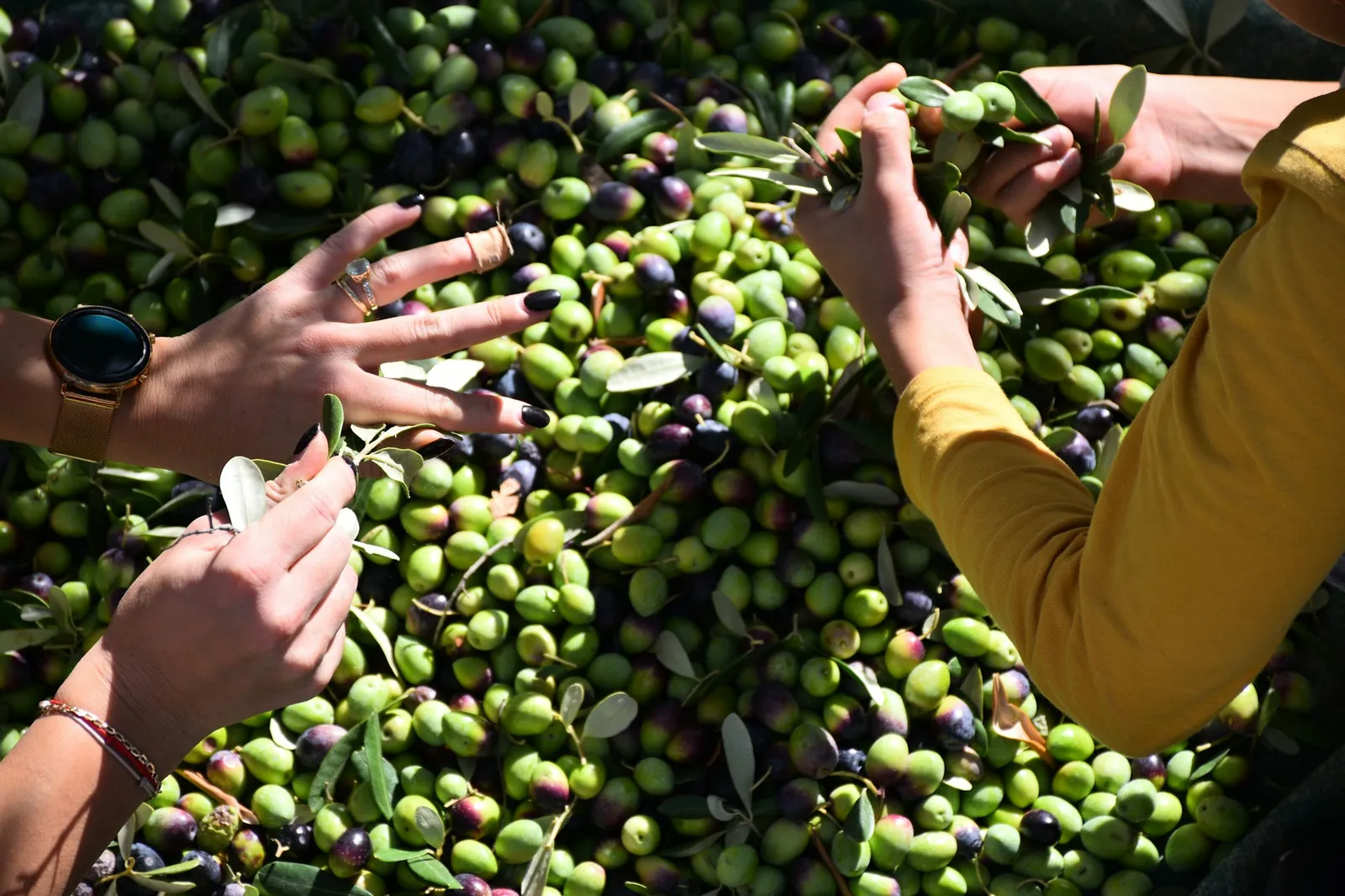
What is in a typical supermarket bottle?
A large olive oil brand has a hard job: the oil on the shelf in March has to taste the same as the oil on the shelf in October, at a price that does not jump about, in huge volumes. Olives do not work like that. Every harvest, region and variety tastes different, and some years the crop fails.
So most mass-market oil is blended. Oil is bought from many mills, often in several countries, stored in big tanks, then tasted and mixed by professional blenders to hit a house style, filtered so it looks the same in every bottle, and packed when the shops need it. That is a skill in itself, and a well-made blend is perfectly good oil. But it means the bottle cannot tell you a farm, a variety or usually even a harvest year, because it holds many.
The label still has to tell you the origin. Under the EU marketing standard, which the UK kept in very similar form after Brexit, extra virgin and virgin olive oil must state where it comes from, and a blend has to say so in one of a few set phrases.
What do the origin lines on the label mean?
| What the label says | What it means |
|---|---|
| Blend of olive oils of European Union origin | Oil from more than one EU country, mixed |
| Blend of olive oils not of European Union origin | Oil from more than one country outside the EU, mixed |
| Blend of EU and non-EU olive oils | Oil from inside and outside the EU, mixed |
| Italy, Spain, Greece (one country) | All the olives were grown and milled in that country |
| A DOP or IGP name, such as Valle del Belice DOP or Sicilia IGP | A protected area, checked against written rules. A region on its own cannot be the official origin |
Watch for the difference between where oil was packed and where it was grown. A bottle can be filled in Italy and carry an Italian-sounding name and flag while the origin line, in smaller type, says it is a blend of EU oils. That is legal, as long as the origin line is there. If you want Italian oil, look for an origin line that says Italy or "100% Italian", or a DOP or IGP such as Sicilia IGP.
What does single-estate olive oil mean?
Single-estate (or estate-grown) olive oil is made from olives grown on one farm, usually by the people who own it, and pressed soon after picking, either in their own mill or at a local one. It is not a legal term in the way extra virgin is, so it is worth checking what a producer means by it, but in general it gives you:
- A place: one grove, one microclimate, one soil.
- A variety or a known mix: often named, such as Nocellara del Belice, Biancolilla or Cerasuola here in western Sicily.
- A harvest: usually the year and sometimes the date of milling on the label.
- A person: someone who can tell you when the olives were picked, how and where they were pressed, and how the oil has been stored.
The trade-off is consistency. A single-estate oil changes from year to year with the weather, and when the crop is small, there is simply less of it. That is part of the point.
Supermarket vs single-estate olive oil, side by side
| Typical supermarket blend | Typical single-estate oil | |
|---|---|---|
| Where from | Many mills, often several countries | One farm or grove |
| Variety | Usually not stated | Often named |
| Harvest date | Rarely shown | Often shown |
| Age when you buy it | Can be well over a year | Usually months |
| Taste | Designed to be the same every time, often mild | Changes with each harvest, often more bitter and peppery |
| Filtered | Almost always | Sometimes unfiltered |
| Traceability | To the packer | To the grove and the mill |
| Price | Lower, set by volume and contracts | Higher, set by the cost of a small harvest |
These are tendencies, not rules. There are excellent supermarket oils, particularly own-label single-origin and DOP oils with a harvest date, and there are poor small-farm oils made from olives left too long before milling. The label checks in how to tell if olive oil is real work on both.
Why freshness matters more than anything else
If I had to pick one difference that matters, it is age. Olive oil is a fruit juice, and from the moment it leaves the mill it slowly loses its aroma, bitterness and pepperiness and starts to oxidise. Light, heat and air speed that up. An extra virgin oil that tasted of fresh grass and artichoke in December can taste of very little, or of stale nuts, two summers later.
Large blends are more exposed to this simply because of how they move: oil may be stored in tanks before blending, then bottled, shipped, warehoused and displayed under bright lights. Best before dates are set by the packer, typically 18 months to two years after bottling, not after harvest. A small producer selling last season's oil direct can often get it to you within months of milling.
How long olive oil lasts covers the dates and the storage, and new season olive oil explains what very fresh oil tastes like.
Why is good olive oil so expensive?
"Why is olive oil so expensive" is one of the most searched olive oil questions, and there are two answers: why all olive oil got dearer recently, and why small-grove oil always costs more.
All olive oil: Spain produces a large share of the world's olive oil, so its harvest moves world prices. After severe drought hit the Spanish crops of 2022 and 2023, shop prices across Europe rose sharply, in many places to around double what people were used to, and they eased only as harvests recovered. Weather, not greed, drove most of that.
Small-grove oil: the costs are simply higher per litre:
- Old, widely spaced trees on small plots are pruned and picked largely by hand, which can take days of work per tree.
- Picking early, while the olives are greener, gives more flavour but much less oil per kilo of fruit.
- A small batch pays the mill, bottles, labels and transport without the discounts of scale.
- Some years the crop is small or fails, and the costs come anyway.
As a rough illustration, not our own figures: a mature olive tree might give 15 to 30 kilos of olives in a good year, and a mill typically returns somewhere around 12 to 20% of that weight as oil, so one tree often gives only a few litres. Picking those olives by hand is a long morning on a ladder.
Which should you buy?
It depends what you are using it for.
- For everyday cooking, frying and roasting, a decent, reasonably fresh supermarket extra virgin oil does the job well. Heat flattens the finer flavours anyway.
- For eating raw, on bread, salads, beans, grilled vegetables and fish, a fresh single-origin or single-estate oil is where you will taste the difference, and a little goes a long way.
- Whichever you buy, buy the most recent harvest you can, keep it in the dark and use it within a few months of opening.
What our own olive trees taught me about the price of oil
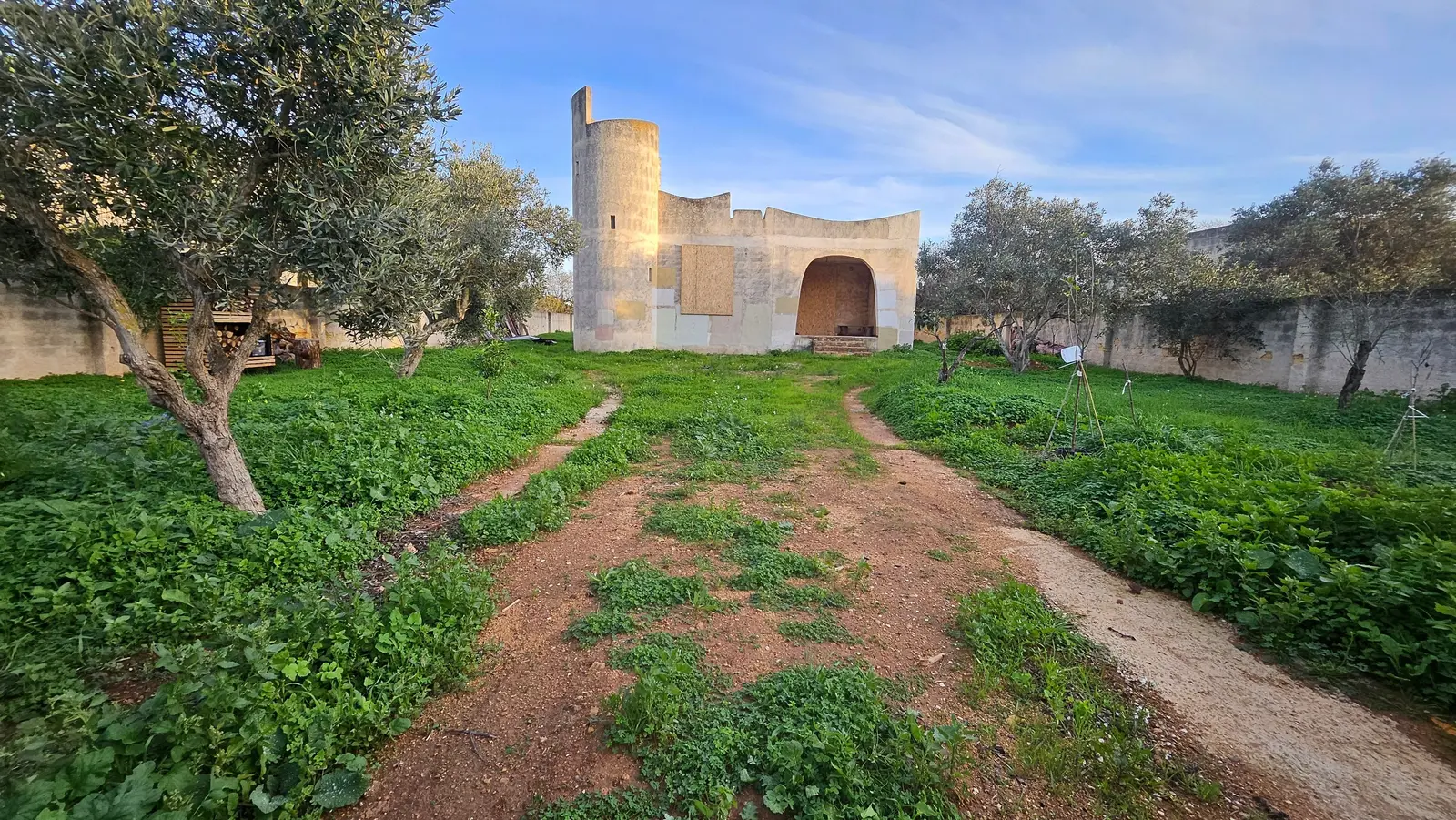
At the villa near Mazara del Vallo we have five mature Nocellara del Belice olive trees, planted by my elderly neighbour when he was a boy and neglected for more than twenty years before I arrived. I pruned them hard in February 2026 to bring them back, and I tell that story in harvesting olive oil in Sicily.
Looking after even five trees by hand makes the gap between a supermarket bottle and a single-estate oil easy to understand. Every tree has to be pruned, watered through a dry summer and picked from a ladder, and the oil only comes back from the mill weeks after the work began. When you pay more for a small producer's oil, that work, and the risk of a poor year, is what you are paying for.
Frequently asked questions
Is supermarket extra virgin olive oil real?
Usually, yes: it is olive oil of roughly the grade on the label when it was bottled. The common problems are age and blending rather than fakes. Oil that has sat for a long time, especially in clear bottles under bright lights, can lose the qualities that made it extra virgin.
What does single-estate olive oil mean?
Olive oil made only from olives grown on one farm or estate, usually pressed soon after picking. It is not a legally defined term like extra virgin, so check what the producer means, but it normally comes with a named place, often a named variety and a harvest year.
Is single-estate olive oil better than supermarket olive oil?
Not automatically. It is more traceable and usually fresher, and it tastes of one place and harvest, which is what many people pay for. A well-made, fresh supermarket oil can be better than a poorly made or old single-estate oil, so the label checks and your own taste still matter.
Why is olive oil so expensive?
Prices across Europe rose sharply after drought hit the Spanish harvests of 2022 and 2023, as Spain produces a large share of the world supply, and eased as harvests recovered. Small-grove oil costs more anyway because hand pruning and picking, early harvesting and small batches cost more per litre.
Why does supermarket olive oil taste different from fresh oil?
Mostly age and blending. Large blends are made to taste the same all year, often mild, and they may be many months old when opened. Fresh oil from a recent harvest is usually greener, more bitter and more peppery, and those notes fade as oil ages.
Does "packed in Italy" mean the oil is Italian?
No. It means the oil was bottled in Italy. The origin of the olives is in the separate origin line, which may say a blend of EU oils or of EU and non-EU oils. Look for Italy or 100% Italian in the origin line, or a DOP or IGP name, for oil from Italian olives.
Is olive oil from a small producer worth the money?
If you eat it raw and buy it fresh, most people find the difference worth it: you get a known place, variety and harvest, and more flavour. For frying and roasting, a decent everyday extra virgin oil is enough.
Sources and small print
- Food Safety Authority of Ireland: olive oil labelling, designations of origin (Commission Delegated Regulation (EU) 2022/2104)
- European Commission: olive oil market and marketing standards
- GOV.UK: olive oil labelling, packaging and inspections
- International Olive Council: world production and trade figures
The comparison describes general patterns in how olive oil is made and sold. It names no brands or shops, and individual products on either side can differ. Yield figures are general estimates, not figures from our own trees.
Credits
Photo: Tom Tvr, Unsplash Licence, via Unsplash.
Photo: Operation Sicily®, all rights reserved, via operationsicily.com.
 The weekly YouTube series