
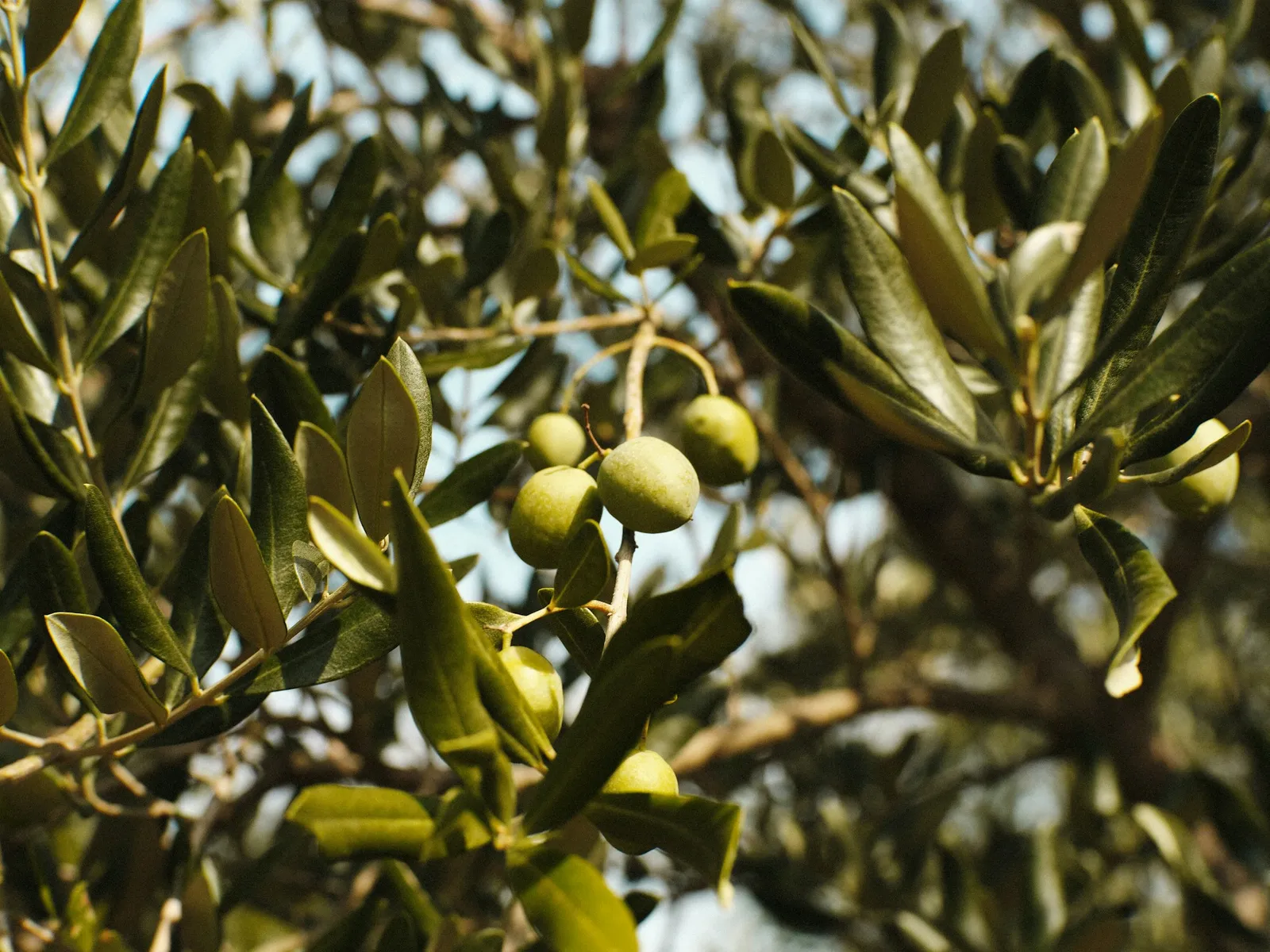
How many kilos of olives does one tree produce?
There is no single figure, because olive trees range from a two-year-old sapling in a pot to a trunk several centuries old. For a mature tree in a traditional Mediterranean grove, a crop of about 15 to 50 kg of olives is a fair working range, with the lower end for smaller or dry-farmed trees and off years, and the upper end for large, well-watered trees in a good year.
Italian figures bear that out. An economic study by the Accademia Nazionale dell'Olivo e dell'Olio used an average of 25 kg of olives per tree for groves in Umbria and 41 kg per tree for traditional Coratina groves in Puglia, and noted that the Puglia trees swing strongly between years, with peaks of 90 kg per tree in heavy years. Those are averages over many trees and many seasons. Any single tree in any single year can sit well outside them.
Variety matters too. The International Olive Council describes the productivity of Nocellara del Belice, the variety I grow, as medium to low but constant, so it tends to give a steady rather than a spectacular crop. For more on the variety itself, see my guide to Nocellara del Belice olives.
What is the oil yield of olives?
Oil yield, or resa as every Italian mill calls it, is the weight of oil the mill extracts as a percentage of the weight of olives that went in. If 100 kg of olives give 16 kg of oil, the yield is 16%. Typical yields run from about 10 to 25%. Most olives milled for good extra virgin oil in Italy come out somewhere between 14 and 20%.
The International Olive Council lists the oil yield of Nocellara del Belice as medium, at about 18 to 19%. The Accademia study used 15 to 18% for Umbrian groves and 17 to 18% for Coratina in Puglia, and only 12 to 15% where olives were picked early. At the other end, work from the University of California shows very green, heavily irrigated fruit of some varieties giving well under 10%.
It helps to know that the olive holds more oil than any mill can get out. The IOC separates the total oil content of the fruit, which a laboratory can measure, from the processing yield, which is what the mill actually recovers after losses in the pomace and waste water. Laboratory figures typically come out 2.5 to 5.5 percentage points higher than the real yield, so do not be surprised if your mill returns less than a test suggested.
How many olives does it take to make a litre of olive oil?
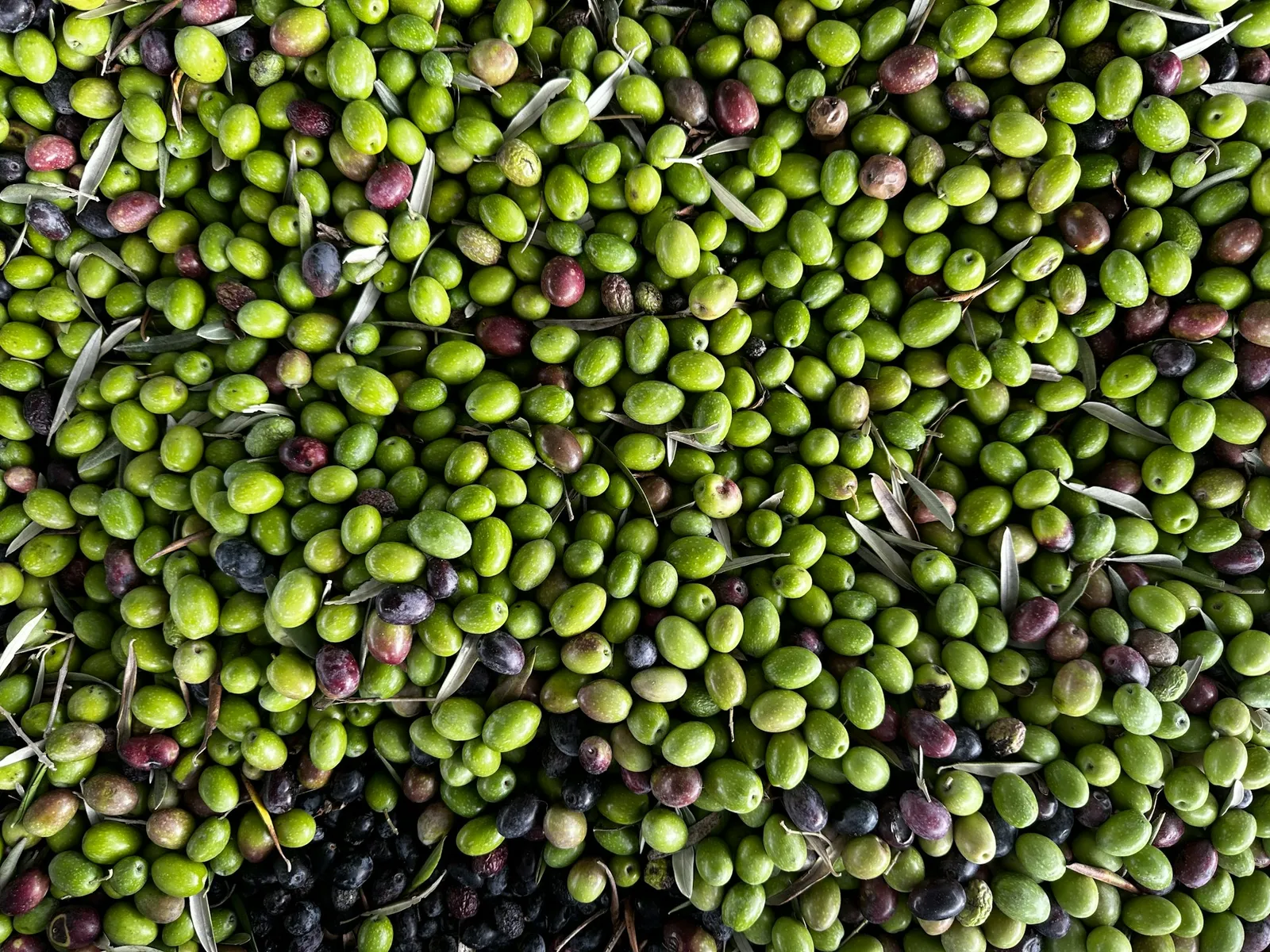
Olive oil is lighter than water. The Codex Alimentarius standard for olive oils puts its relative density at 0.910 to 0.916, so one litre weighs about 0.92 kg. To turn a yield percentage into kilos of olives per litre, divide 0.92 by the yield.
| Oil yield | Olives for 1 litre | Olives for a 500 ml bottle | Oil from 100 kg of olives |
|---|---|---|---|
| 10% | About 9.2 kg | About 4.6 kg | About 11 litres |
| 12% | About 7.6 kg | About 3.8 kg | About 13 litres |
| 15% | About 6.1 kg | About 3.1 kg | About 16 litres |
| 18% | About 5.1 kg | About 2.5 kg | About 20 litres |
| 20% | About 4.6 kg | About 2.3 kg | About 22 litres |
| 22% | About 4.2 kg | About 2.1 kg | About 24 litres |
So the honest answer to "how many kilos of olives for a litre of oil" is about 5 to 8 kg in most years, rising towards 9 or 10 kg for very early picked or watery fruit.
In olives rather than kilos: fruit size varies hugely. Olive variety descriptions classify fruit weight as low (under 2 g), medium (2 to 4 g), high (4 to 6 g) or very high (over 6 g), and the IOC puts Nocellara in the high class. At about 5 g an olive and 5 kg of fruit per litre, a litre of Nocellara oil takes roughly 1,000 olives, and a 500 ml bottle about 500. A small-fruited oil variety at under 2 g an olive can need 3,000 or more olives for the same litre.
How many litres of oil from one olive tree? A worked example
Put the two numbers together and you get litres per tree. The table below is arithmetic, not a forecast: it shows what common combinations of crop and yield give.
| Tree and year | Olives | Yield | Oil (kg) | Oil (litres) |
|---|---|---|---|---|
| Young or recovering tree | 10 kg | 14% | 1.4 kg | About 1.5 litres |
| Small mature tree, off year | 15 kg | 15% | 2.3 kg | About 2.5 litres |
| Average mature tree | 25 kg | 16% | 4.0 kg | About 4.4 litres |
| Large mature tree, good year | 40 kg | 18% | 7.2 kg | About 7.9 litres |
| Big old tree, heavy on year | 60 kg | 18% | 10.8 kg | About 11.8 litres |
Turned the other way round, if a household wants 20 litres of oil a year at a 16% yield, it needs about 115 kg of olives, which means four or five average mature trees, or two big ones in a good year.
What about our trees? This is the first harvest after I cut all five back hard in February 2026, from four or five metres to about two and a half, so it is not a normal year and would not tell you much about what a Nocellara tree gives. The story of the harvest itself is in harvesting olive oil in Sicily.
Why do olive yields vary so much from year to year?
The biggest single reason is alternate bearing. Olives fruit on the previous year's shoots. A heavy crop uses up the tree's energy, so it grows fewer new shoots, and the following year there is less wood to flower on. A light year then lets the tree put on more growth, and the year after is heavy again. The University of California describes olives as strongly alternate bearing, and the Accademia study recorded dry-farmed trees in Puglia swinging up to 90 kg in an on year. Some varieties alternate less than others: the IOC calls Nocellara's crop constant.
Weather around flowering is the other big variable. Rain, cold, drought stress or hot, dry wind during flowering in late spring can cut fruit set badly, whatever the tree's size. Olives are mainly wind pollinated, and self-sterile varieties such as Nocellara need other varieties nearby; I go into that in do olive trees need bees.
What affects how much oil an olive tree produces?
- Variety. Some varieties simply hold more oil than others. Nocellara sits in the middle, at about 18 to 19% according to the IOC.
- Age. Young trees take several years to come into full crop. University of California figures for well-spaced orchards show only modest crops in the fifth or sixth year and full, sustainable crops from about the tenth year. Nocellara is described as medium to late coming into production. Very old trees keep cropping for generations if they are pruned and fed.
- Water. A dry summer means smaller fruit and fewer of them; Nocellara is listed as susceptible to drought. Too much water late in the season has the opposite problem: fruit full of water gives a lower yield by weight and a paste that is harder for the mill to separate. The University of California advises growers to plan irrigation before harvest for that reason. Our own trees are on drip irrigation fed from the villa's water tank, which I describe in living off grid in Sicily.
- Ripeness. As olives ripen and darken, the share of oil by weight rises and the oil becomes easier to extract, so late-picked fruit gives more litres. Early-picked green fruit gives less oil but a greener, more peppery one. That trade-off is the heart of when to harvest olives.
- Pruning. A tree pruned lightly every year crops more evenly. A hard renovation prune usually costs a year or two of crop while the tree rebuilds its fruiting wood, although ours, unusually, flowered and set fruit in the first summer; see how to prune an olive tree.
- Pests and disease. Olive fruit fly can ruin both quantity and quality in a bad year, and Nocellara is very susceptible to it. Olive tree problems covers the usual culprits.
- Feeding and care. Trees short of nitrogen, smothered by weeds or shaded by their neighbours grow little new wood and so carry little fruit the next year. The basics are in olive tree care.
Does the mill change how much oil you get?
Yes, a little. The IOC points out that processing yield depends on the mill's equipment, how it is run and the skill of the operator, as well as on the olives. A finer crush and a longer, warmer malaxation, the slow mixing of the paste, release more oil, but the warmer and longer you go, the more aroma you lose.
Watery pastes are the classic problem: oil stays trapped in an emulsion and the yield drops. Some mills add a little micronised talc to break it up, which the IOC describes as an accepted processing aid. How each stage works, from the leaf blower to the decanter, is in how olive oil is made.
Small lots raise one practical point. When a mill runs a batch of a few dozen kilos, some oil can be lost in filling and emptying the machines, so very small lots may come back slightly short. Mills often set a minimum quantity for milling a lot on its own, so ask when you book.
How to estimate your own tree's oil before harvest
A rough estimate is easy, and it helps when you book a slot at the mill and decide how many containers to bring.
- Pick and weigh the olives from one typical branch, then count roughly how many similar branches the tree has. Multiply. Expect to be out by 20 to 30% either way.
- Check the fruit: firm, sound olives that are just turning colour give a medium yield; shrivelled or fly-damaged fruit gives less and poorer oil.
- Multiply the kilos by a cautious yield, say 14 to 16% for a first estimate, and divide by 0.92 for litres.
- After milling, note the real weight of olives and oil. Two or three years of your own figures are worth more than any table.
Five trees will never make a commercial quantity, and that has never been the point for us. What a small crop does is make every kilo count, which is why picking at the right moment and getting the olives to the mill quickly matter so much. Why that freshness shows in the glass is in supermarket vs single-estate olive oil.
Frequently asked questions
How much oil does one olive tree produce?
Usually about 2 to 8 litres a year from a mature tree, depending on how many olives it carries and the oil yield at the mill. A big old tree in a heavy year can give 10 litres or more, and a young or recently pruned tree much less.
How many kilos of olives make a litre of olive oil?
About 5 to 8 kg in most years. At an 18% yield it takes about 5.1 kg of olives to make a litre, at 15% about 6.1 kg, and at 12% about 7.6 kg. Very green or watery fruit can need 9 to 10 kg.
How many olives are in a bottle of olive oil?
It depends on the size of the olives. For a large-fruited variety such as Nocellara, at about 5 g an olive, a 500 ml bottle takes roughly 500 olives. For small-fruited oil varieties it can be 1,500 or more.
What is a good oil yield for olives?
Around 15 to 20% is good for most varieties. The International Olive Council gives Nocellara del Belice about 18 to 19%. Early-picked fruit often gives 12 to 15%, and that is normal, not a sign of a bad mill.
How many kilos of olives does a mature olive tree produce?
Typically about 15 to 50 kg a year in traditional groves, with averages of 25 kg per tree in Umbria and 41 kg in Puglia in one Italian study. Large trees can carry 90 kg in a heavy year, and any tree can carry far less in an off year.
Why did my olive tree produce fewer olives this year?
Most often because of alternate bearing: after a heavy crop, olive trees grow less new wood and fruit less the next year. Bad weather at flowering, drought, a hard prune or olive fruit fly can also cut the crop.
Do riper olives give more oil?
Yes, by weight. As olives ripen the share of oil rises and it becomes easier to extract, so late-picked olives give more litres. Early-picked green olives give less oil, but a greener, more bitter and peppery one.
How many olive trees do you need for a year of oil?
At about 4 litres per average mature tree, a household using 20 litres a year needs four or five trees, or fewer large ones in a good year. Plan for off years too, because olive crops swing from year to year.
Sources and small print
- International Olive Council, World Catalogue of Olive Varieties: Nocellara del Belice (oil yield, productivity)
- International Olive Council: Guide for the determination of the characteristics of oil-olives
- University of California Agriculture and Natural Resources: Understanding olive oil yield
- Accademia Nazionale dell'Olivo e dell'Olio: micro-economic analysis of olive growing (per-tree yields in Umbria and Puglia)
- FAO and WHO Codex Alimentarius: Standard for olive oils and olive pomace oils (density)
All figures are typical ranges and worked examples, not measurements from our own trees; every tree, year and mill differs.
Credits
Photo: JKalina, Unsplash Licence, via Unsplash.
Photo: John Cameron, Unsplash Licence, via Unsplash.
 The weekly YouTube series