
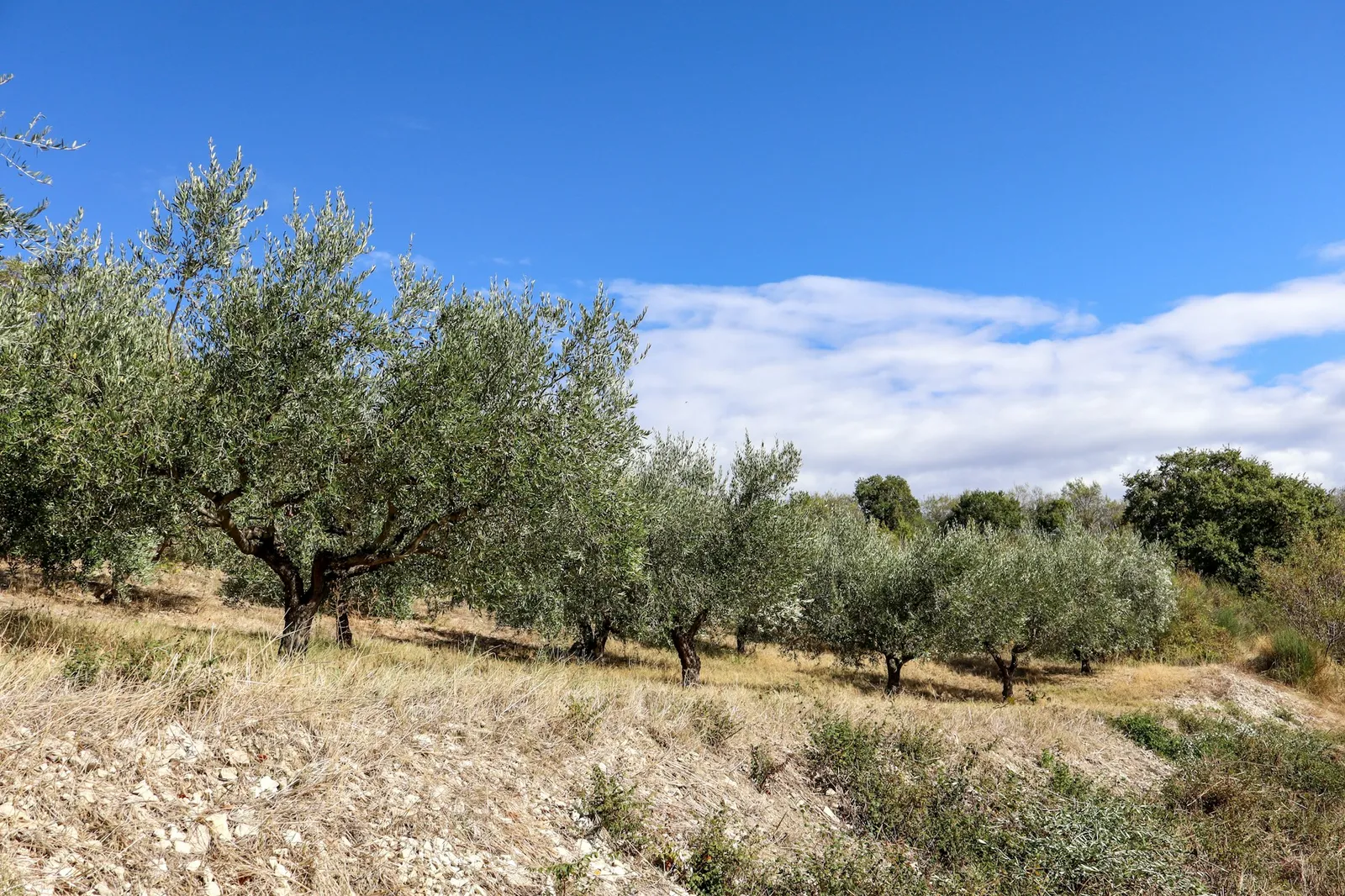
How do you look after an olive tree?
Olives evolved on dry, stony Mediterranean hillsides with hot summers, mild wet winters and poor soil. Everything about caring for one comes from copying those conditions as closely as you can. In practice that means five things:
- Sun: the sunniest, most sheltered spot you have.
- Drainage: roots that never sit in water, in the ground or in a pot.
- Water: deep and occasional, not little and often.
- Food: very little. Olives grow slowly and are used to poor soil.
- Winter: protection from the combination of hard frost and wet roots.
The rest is light pruning, which I cover in detail in how to prune an olive tree, and keeping an eye out for pests and diseases, which have their own guide: olive tree problems, from yellow leaves to pests.
| When | Olive in a pot (UK) | Olive in the ground (Mediterranean) |
|---|---|---|
| Late winter (Feb to Mar) | Keep compost barely moist; keep wrapping ready for hard frosts | Main pruning; trees get winter rain |
| Spring (Apr to May) | Top-dress or repot; start regular watering; move outside once frosts are over | New growth and flowering; check new shoots for pests |
| Summer (Jun to Aug) | Water whenever the top few cm are dry, which can be daily in a heatwave; light pinching to shape | Deep watering for young or stressed trees; mulch; no pruning in the heat |
| Autumn (Sep to Nov) | Cut back watering; stop pruning after August | Fruit ripens and is harvested, usually October to December |
| Winter (Dec to Jan) | Pot feet on; wrap pot and fleece the canopy when severe frost is forecast | Rest; rain does the watering |
How much sun does an olive tree need?
As much as possible. Olives are full-sun trees and do best with direct sun for most of the day. In the UK a south- or west-facing spot against a warm wall is ideal: the wall stores heat, shelters the tree from cold winds and keeps winter rain off the roots. The RHS describes olives as best suited to sunny, sheltered borders on well-drained soil, or to containers.
In shade an olive survives but sulks. Growth becomes thin and stretched, the canopy thins out and it will not flower. If yours has been in a shady corner and is shedding leaves, moving it into the sun is often the single best thing you can do for it.
What soil does an olive tree need?
Free-draining soil matters far more than rich soil. Olives grow happily in poor, stony and chalky ground; what they cannot stand is heavy soil that stays wet in winter, because the roots run short of air and start to rot.
- Sandy, stony or chalky soil: usually fine as it is.
- Heavy clay: improve a wide area with well-rotted organic matter and grit, or plant on a slight mound so water runs away from the trunk. On very wet clay, a pot is the safer choice, as the RHS also suggests for colder areas.
- Planting time: spring is best in the UK, so roots can establish through the warm months. Stake larger trees for a couple of years.
Around my villa near Mazara del Vallo the soil is dry and stony, which is exactly why olives, almonds and figs have been grown on this land for so long.
How often should you water an olive tree?
Less often than most people think, but thoroughly when you do. The rule is the same in a pot or in the ground: water deeply, then let the top of the soil dry out before you water again.
In the ground in the UK: water a newly planted tree in dry spells for its first year or two while the roots establish. After that, the RHS says olives are drought tolerant and only need extra water in very long, hot, dry spells.
In a pot: water regularly from about April to late September, when the tree is growing. Push a finger into the compost; if the top few centimetres are dry, water until it runs out of the drainage holes, then let it drain. In a hot spell that can mean every day or two. Over winter, keep the compost only just moist.
In a hot climate: established olives can live on rainfall alone, but young trees, trees in pots and trees carrying a crop or recovering from hard pruning all need help through a long dry summer. Water early in the morning or late in the evening so less is lost to evaporation, and mulch the soil.
Signs of too little water are dull, curled leaves, brown leaf edges on the sunny side and older inner leaves dropping. Signs of too much are yellowing leaves, soggy compost and a tree that wilts even though it is wet. The olive tree problems guide has a table to tell the two apart.
How do you look after an olive tree in a pot?
An olive in a pot is the most common way to grow one in Britain, and it works well if you get the container and compost right.
- Pot size: at least 30 to 35 cm wide and deep for a young tree, and bigger as it grows. Plenty of drainage holes are essential. Heavy terracotta or stone pots are less likely to blow over and do not overheat as fast as thin plastic.
- Compost: the RHS recommends a peat-free, soil-based compost such as John Innes No. 3 with about 20 per cent horticultural grit by volume mixed in. Multi-purpose compost alone holds too much water and breaks down.
- Pot feet: always raise the pot on feet or bricks so water can drain away, especially in winter.
- No saucers of water: a pot standing in water is the quickest way to rot an olive's roots.
When to repot an olive tree: every two to three years, in spring, move it into a pot a size or two larger, teasing out circling roots and planting at the same depth. When it is in the biggest pot you can manage, replace the top 5 cm of compost each spring instead, as the RHS suggests. Signs a tree needs a bigger pot are roots coming out of the drainage holes, compost that dries out within hours, and weak growth despite good care.
Pots have a real downside in hot weather too. In Sicily I moved several young fruit trees out of pots and into the ground in late May, because pots heat up, dry out and depend on someone being there to water them. I wrote about that in growing my own food in Sicily.
Should you feed an olive tree?
Not much. According to the RHS growing guide for olives, trees in the ground do not need feeding unless they show signs of nutrient deficiency; a mulch of garden compost or well-rotted organic matter releases enough nutrients as it breaks down.
Trees in pots slowly use up what is in the compost, which is why the annual top-dressing or repotting matters. Many growers also give potted olives a balanced liquid feed every few weeks from spring to late summer. Stop feeding by late summer so you do not push soft growth that frost will damage.
Over-feeding causes more trouble than under-feeding. Lots of nitrogen produces soft, sappy shoots that aphids, scale and other pests love, and fewer flowers. I saw the same pattern on our citrus: a feed brought a flush of fresh growth that quickly became a magnet for insects.
Can olive trees survive frost? Olive tree care in winter
Established olives are tougher than their Mediterranean image suggests. The RHS says many are hardy through most of the UK, tolerating roughly -5 to -10°C. That figure comes with three big caveats:
- Wet cold is the real killer. A tree in sodden soil or compost is far more likely to die in a cold spell than the same tree in dry, free-draining ground.
- Pots freeze. Roots in a pot have no ground around them, so a hard frost can freeze the whole root ball. That is why potted olives need more protection than trees in the ground.
- Young and newly planted trees are more tender than old trees with thick trunks.
What to do for olive tree care in winter in the UK:
- Raise pots on feet and move them against a sunny house wall, out of cold winds, or into an unheated greenhouse, porch or garage with a window.
- Keep the compost barely moist, and shelter pots from heavy winter rain if you can.
- When severe frost (below about -5°C) is forecast, wrap the pot in hessian or bubble wrap and drape two layers of horticultural fleece over the canopy. Heavy fleece adds about 2°C of protection. Take it off again in milder weather so the tree gets light and air.
- Do not prune after August, so new growth has time to harden before winter.
- If frost does damage shoots, wait until late spring to see what regrows, then cut back to live growth.
In western Sicily frost is rare at low altitude, and winter is the season the trees get their water. The care there is almost the opposite: making sure the trees come through summer.
Can you grow an olive tree indoors?
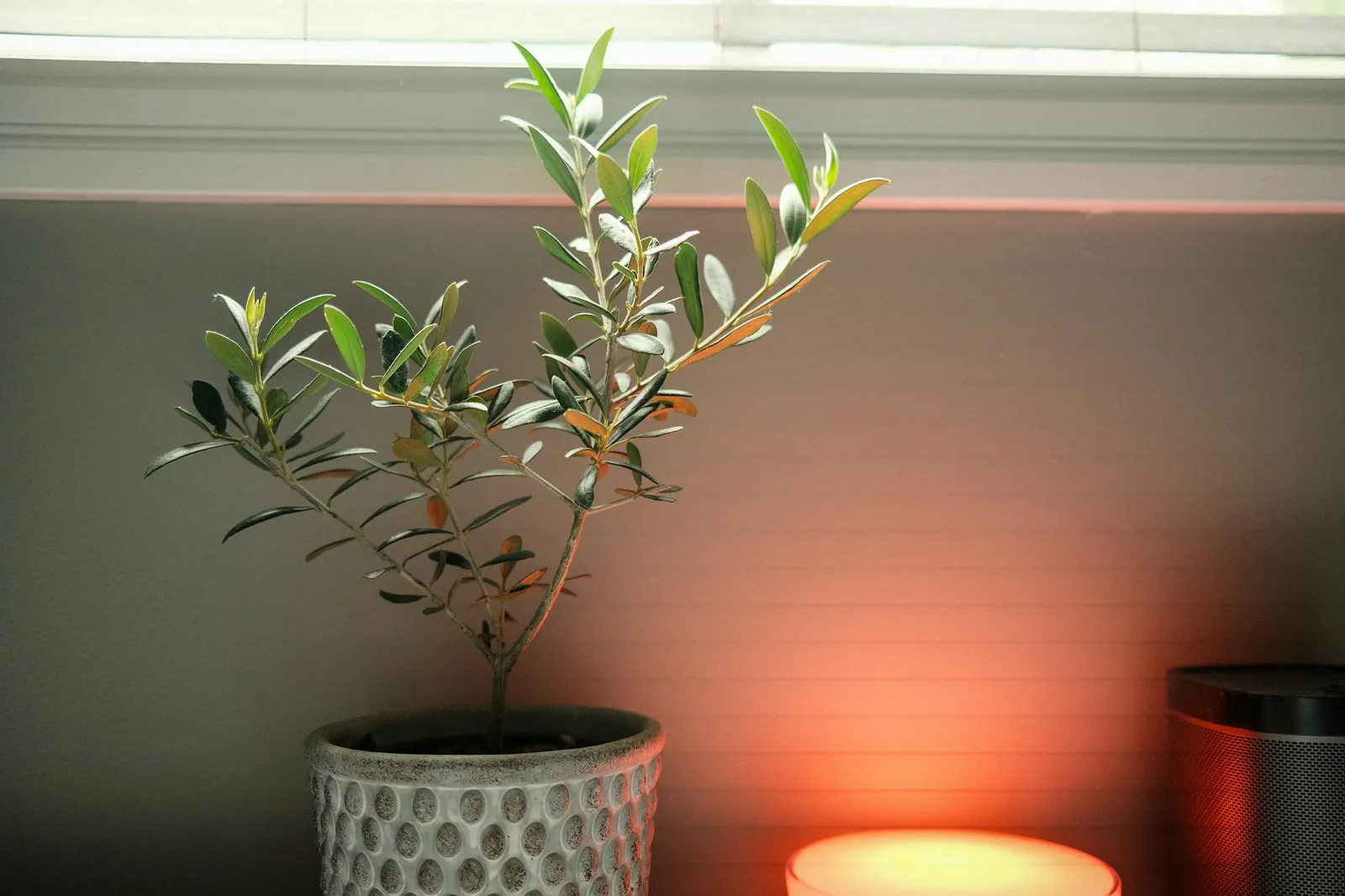
Not well, and not for long. Olives need far more light than a living room provides, even beside a bright window, and they need a cool winter rest. Indoors they usually grow weak and stretched, drop leaves and become a target for scale insects and spider mites in the dry, warm air.
If you have to bring an olive in for winter:
- Choose the coolest, brightest place you have: an unheated conservatory, porch or greenhouse is far better than a heated room.
- Water sparingly; an olive resting in cool conditions uses very little.
- Move it back outside once the danger of frost has passed, getting it used to full sun over a week or so.
Some leaf drop after a move indoors or out is normal; the tree is adjusting to a different light level. Treat a small indoor olive as a temporary arrangement, not a houseplant.
Olive tree care in the UK vs in Sicily
The tree is the same; the problems are opposite. In the UK the risks are wet, cold roots, a lack of summer heat and not enough sun. In Sicily they are heat, drought and pests that thrive in a warm climate.
My five Nocellara del Belice trees show how tough olives are. Nobody watered, fed or pruned them for more than twenty years while the villa stood empty, and they lived on rain alone. The Mazara del Vallo area gets roughly 500 to 600 mm of rain a year, almost all in winter, and summers can reach 40°C. They survived, but survival is not the same as cropping well: they grew tall and dense and carried little fruit within reach.
Since the hard renovation prune in February 2026, care here has focused on helping the regrowth through its first summer. The garden is watered from a storage tank through pipes, drippers and a timer that runs in the early hours, and thick mulch helps keep moisture in the soil. The details of that system, and what has worked and failed in the garden, are in living off grid in Sicily and my growing post. Worth knowing for Sicilian growers: the International Olive Council lists Nocellara del Belice as susceptible to drought, so young or heavily pruned trees deserve water in a dry summer even though old trees can cope.
Fruit is the other difference. In the UK, olives rarely crop well because summers are too short and cool, and some varieties need a second variety nearby for pollination. In Sicily, care decisions are tied to the harvest: when to pick is covered in when to harvest olives, and what a tree can give in how much oil an olive tree produces.
Frequently asked questions
How often should I water an olive tree in a pot?
Whenever the top few centimetres of compost are dry, from about April to late September. Water until it drains from the bottom, then let it dry out again. In hot weather that can be every day or two; in winter keep the compost only barely moist.
Do olive trees need full sun?
Yes. Olives grow best with direct sun for most of the day. In the UK a sheltered, south- or west-facing spot against a warm wall is ideal. In shade they grow thin, drop leaves and do not flower.
How cold can an olive tree survive?
The RHS says many established olives tolerate roughly -5 to -10°C. Young trees, trees in pots and trees in wet soil are much more vulnerable, because cold combined with waterlogged roots is what usually kills them.
Should I bring my olive tree inside for winter?
Only into a cool, bright, unheated space such as a porch, conservatory or greenhouse, and only in very cold areas or hard winters. A heated room is too warm and too dark. Most established olives in the UK are better left outside with pot feet, wrapping and fleece.
What compost is best for an olive tree in a pot?
A peat-free, soil-based compost such as John Innes No. 3, with about 20 per cent horticultural grit mixed in for drainage, as the RHS recommends. Multi-purpose compost on its own holds too much water.
Do olive trees need feeding?
Trees in the ground rarely do; a mulch of compost is enough unless they show a deficiency. Trees in pots benefit from fresh compost each spring and, for many growers, a balanced liquid feed every few weeks from spring to late summer.
When should I repot an olive tree?
In spring, every two to three years, moving it into a pot a size or two bigger. Once it is in the largest pot you can handle, replace the top 5 cm of compost each spring instead.
How fast do olive trees grow?
Slowly. Most garden olives put on a modest amount of growth each year, which is why they need little pruning and suit containers. Growth is faster in a hot climate with water, and after hard pruning.
Sources and small print
- Royal Horticultural Society: how to grow olives, including watering, feeding and overwintering
- Royal Horticultural Society: trees, growing in containers
- Royal Horticultural Society: frost damage
- International Olive Council: World Catalogue of Olive Varieties, Nocellara del Belìce
This is general guidance for gardeners; local climate, soil and the age of the tree all change what it needs.
Credits
Photo: Drawchicken Studio, Unsplash Licence, via Unsplash.
Photo: Cameron Arksey, Unsplash Licence, via Unsplash.
 The weekly YouTube series