
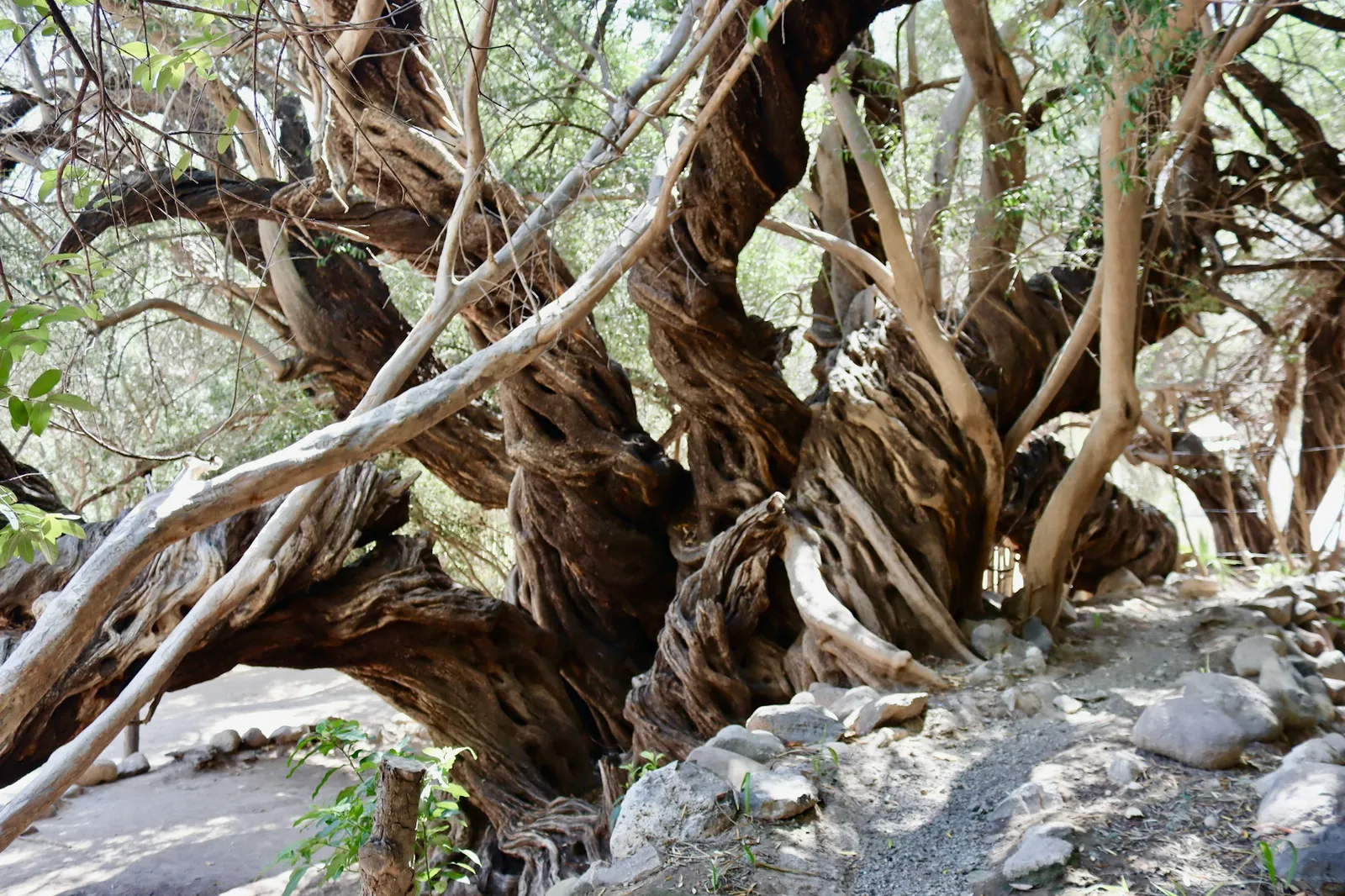
Why prune an olive tree at all?
An unpruned olive tree does not die. It just gets taller, denser and less productive. The fruit forms on the outside of the canopy where the light reaches, the shaded centre fills with dead twigs, and the crop moves higher and higher until you need a long ladder to reach it. Dense, damp canopies also suit fungal diseases such as peacock spot.
Pruning does four jobs:
- Lets light into the whole tree, so more of it flowers and fruits.
- Lets air move through it, which keeps leaves dry and disease down.
- Keeps the fruit at a height you can pick from.
- Balances fruiting wood and new growth, so the tree crops more steadily from year to year instead of alternating big and small harvests.
For an olive grown as an ornamental tree in a garden or pot, pruning is mostly about shape and size, and you can be gentler.
When is the best time to prune an olive tree?
The general rule is late winter to spring, after the worst cold and before the tree puts its energy into flowering and fruit. Pruning in autumn or early winter leaves fresh cuts and soft new growth exposed to frost and wet weather.
| Where | Main prune | Avoid |
|---|---|---|
| Sicily and southern Italy | February to April, after the harvest and the worst of the winter rain | Pruning just before heavy rain, and late summer |
| UK and northern Europe, in the ground or in a pot | Late spring to early summer, once frosts are over (the RHS suggests this window) | Anything later than August, so new growth can harden before winter |
| Anywhere | Small jobs such as removing suckers and water shoots can be done through the growing season | Hard pruning in cold, wet weather |
My big renovation prune was in February 2026. By early April the trees were covered in new buds, and they flowered and set fruit that summer. Through the summer and early autumn I went back to rub out the water shoots the hard prune had triggered, before the harvest.
What tools do you need to prune an olive tree?
- Secateurs for shoots and twigs up to about finger thickness.
- Loppers for branches up to about 4 to 5 cm across.
- A pruning saw for anything thicker. A folding saw and a pole saw cover most trees.
- A stable ladder, ideally a three-legged orchard ladder for uneven ground, or a platform.
- Disinfectant to clean blades between trees, as olive knot is spread through wounds.
Keep everything sharp. Clean cuts heal; torn and crushed bark lets disease in. For anything high or heavy, a second person, gloves and eye protection are not optional.
How to prune an olive tree, step by step
- Stand back and look. Walk round the tree and decide on its shape before you cut. Most growers in Italy aim for an open vase: a short trunk, three or four main branches spreading outwards, and an open centre.
- Remove the dead, damaged and diseased wood. Cut back to healthy wood. Cut out olive knot galls (rough, warty swellings) well below the gall.
- Take off suckers. Shoots from the base of the trunk or from below a graft take energy and never become useful branches.
- Remove water shoots. These are fast, vertical shoots growing straight up from the main branches, often after a hard prune. They rarely fruit well and shade the tree. Rub them out while they are young, or cut them flush.
- Open the centre. Remove branches growing into the middle of the tree, and where two branches cross or rub, keep the better one.
- Lower the height if needed. Cut tall leaders back to a strong side branch growing outwards at a lower level. Never leave a bare stub with no side shoot to take over.
- Thin the outside lightly. Shorten or thin crowded fruiting shoots on the outside so light reaches the whole canopy.
- Step back and check. A well-pruned olive should be open enough that, as Italian growers say, a bird could fly through it.
Make cuts just outside the branch collar, the slightly swollen ring where a branch joins a larger one, angled so rain runs off. Do not paint or seal cuts; the tree seals them better itself.
How much can you cut off an olive tree?
Olives fruit on wood that grew the previous year. Every shoot you remove in spring is fruit you will not get this summer. For a tree in regular production, the usual advice is to take out no more than about a quarter to a third of the canopy in a year, and less in a dry year.
Cut harder and the tree responds with a flush of vigorous upright growth, mostly water shoots, and little fruit for a season or two. That is why the RHS warns against hard pruning for garden olives. But olive trees are remarkably tough, and an old neglected tree can be cut back very hard indeed and recover, as long as you accept the lost crop and manage the regrowth afterwards. That is the trade I was prepared to make; as it turned out, mine still fruited.
How to revive an old, neglected olive tree
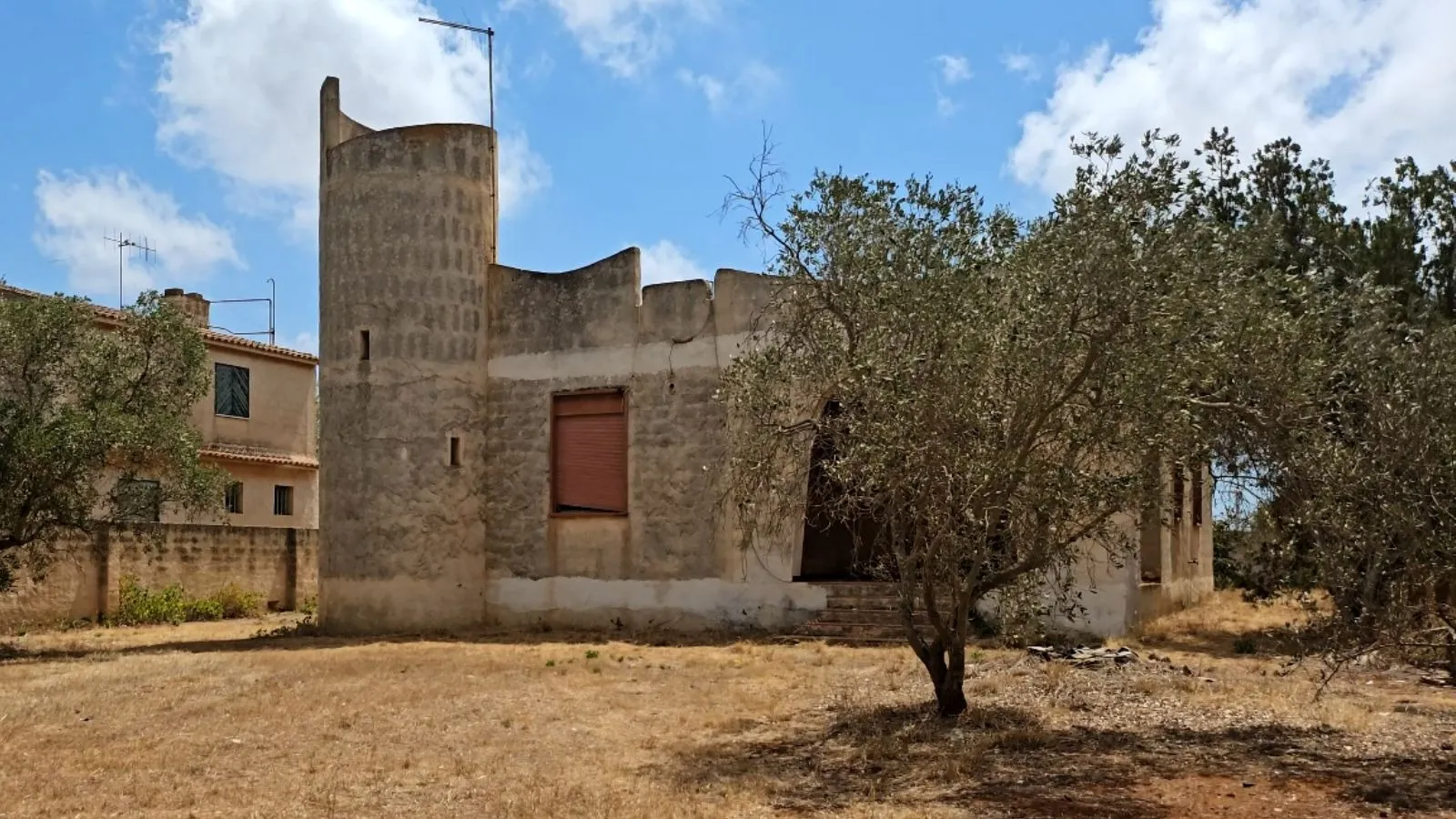
Our trees were planted by my elderly neighbour when he was a small boy, and nobody had pruned them for more than twenty years when I arrived. The tallest were four to five metres high, with dense, shaded centres and very little fruit within reach.
In February 2026 I took the tallest back to about two and a half metres, cutting the main leaders down to strong lower branches, clearing out the dead wood and opening the centres. It looked brutal. By early April they were covered in new buds; by summer they had flowered and set a proper crop for the first time in years. You can see the work in my episodes:
- Episode 61: pruning the olive trees
- Episode 71: pruning for a better harvest
- Episode 83: the Nocellara fruit set update
- Episode 91: removing water shoots before the harvest
What I learned from it:
- Spreading it over two or three years is gentler. If you want fruit every year, take out the worst third each spring instead of doing it all at once.
- Expect a forest of water shoots. A hard cut sends out masses of vertical growth. Keep a few well-placed ones to become new branches and remove the rest during the season.
- Feed and water the regrowth. A tree making all that new growth needs water through the first dry summer. Ours got drip irrigation.
- Watch the new shoots for pests. Soft new growth is easy food for insects, and that first spring caterpillars chewed holes in the leaves and the tips of the new shoots on ours.
How to prune an olive tree in a pot or in the UK
Most olive trees in British gardens are grown for their silver leaves and shape, not for oil, and they need a lighter touch.
- Prune in late spring or early summer, once frosts are over, and not after August.
- Remove dead or frost-damaged shoots, crossing branches and anything spoiling the shape.
- To keep a potted tree compact, pinch out the growing tips in summer; the RHS suggests pinching out container trees at around 1.5 m.
- On standard (lollipop) trees, keep the trunk clear of shoots and trim the head lightly to shape.
- Avoid hard cuts. Garden olives respond with lots of upright shoots and lose their natural shape.
Do not expect a crop in the UK. Olives need a long, hot summer to ripen, and some varieties, including my own Nocellara del Belice, set little fruit without other olive varieties nearby to pollinate them.
Common olive pruning mistakes
- Pruning in autumn or early winter. Cuts heal slowly in cold, wet weather and soft regrowth gets frost damaged.
- Topping the tree flat. Cutting every branch to the same height leaves stubs that sprout a dense mop of water shoots. Always cut back to a side branch.
- Taking off too much in one go when you want fruit this year.
- Leaving all the water shoots after a hard prune, so the tree fills in again within two years.
- Clearing the inside completely. Opening the centre does not mean stripping the main branches bare; the bark can scorch in strong sun.
- Blunt or dirty tools, which tear the bark and spread olive knot from tree to tree.
- Pruning in wet weather, when diseases spread most easily through fresh cuts.
From pruned trees to the harvest
The point of all that work is fruit. Pruned this hard, many trees give little for a season or two while they rebuild; ours surprised me by flowering and setting fruit in the very first summer. The harvest story is in harvesting olive oil in Sicily, and what fresh oil from the mill should taste like is in new season olive oil.
Frequently asked questions
When should you prune an olive tree?
In late winter to spring, once the risk of hard frost has passed and before or as the tree flowers. In Sicily and southern Italy that is usually February to April. In the UK, late spring to early summer, and not after August, so new growth can harden before winter.
How much can I cut off my olive tree?
For a tree you want fruit from, no more than about a quarter to a third of the canopy in a year. Olives fruit on the previous year's growth, so heavy pruning costs you the next crop. Old neglected trees can be cut back very hard and recover, but expect little fruit for a year or two.
Can you cut an olive tree right back?
Yes. Olive trees are very tough and an old tree can be cut back hard, even to the main branches, and regrow. It will send out masses of vertical water shoots that need thinning, and it will crop little for a season or two. Spreading the work over two or three years is gentler.
What are water shoots on an olive tree?
Fast-growing vertical shoots that sprout from the main branches or trunk, especially after hard pruning. They shade the tree and rarely fruit well, so most should be rubbed out while small or cut off flush, keeping only a few that are well placed to become new branches.
Should I prune my olive tree in a pot?
Lightly. In late spring or early summer, remove dead or damaged shoots and anything spoiling the shape, and pinch out growing tips to keep the tree compact. Avoid hard cuts, which cause a flush of upright shoots.
How do you keep an olive tree small?
Prune lightly every year rather than hard every few years. At the normal pruning time, cut the tallest shoots back to a side branch lower down and thin crowded growth, then pinch out the growing tips in summer; the RHS suggests pinching out container trees at about 1.5 m. Growing it in a pot also limits its size. Hard cuts do not keep an olive small for long, because it answers with vigorous upright shoots.
Should olive pruning cuts be sealed?
Generally no. Clean cuts made just outside the branch collar heal well on their own. Sealing compounds can trap moisture and disease. Prune in dry weather and keep tools sharp and clean.
Why is my olive tree not producing fruit?
Common reasons are too little sun or summer heat, a dense unpruned canopy, heavy pruning the previous spring, drought at flowering, a cold climate such as the UK, or a self-sterile variety with no other olive trees nearby to pollinate it.
Sources and small print
- Royal Horticultural Society: how to grow olives, including pruning
- International Olive Council: World Catalogue of Olive Varieties, Nocellara del Belìce
- University of California IPM: olive pests and diseases, including olive knot
The renovation described is my own, filmed for the weekly episodes; every tree and climate is different.
Credits
Photo: Chris Kofoed, Unsplash Licence, via Unsplash.
Photo: Operation Sicily®, all rights reserved, via operationsicily.com.
 The weekly YouTube series