
In this episode
- A sink waste that stuck out of the wall, and why it happened
- The pipe upgraded from 40mm to 50mm and set back into the wall
- Drainage holes drilled into the in-ground electrical boxes, as the electrician advised
- Peach tree gummosis treated with copper sulphate
- A new pear tree planted in the orchard
Why the sink waste needs redoing
This week I upgrade the bathroom sink waste pipe, for a few reasons. The main one, which I did not realise at the time, is that it sticks out of the wall. That would make plastering, and later tiling, really difficult.
Looking back at the videos, there was a lot of pipework in this floor and a lot to work out. When I set the pipe up, it was perfect, right back in the wall. But to get a fall on the drain run in the floor, I think I put a big stone on it before I concreted it, and that pulled the pipe out of line. So it needs sorting. While I am at it, I am going to replace it with a slightly wider pipe. At the moment it is 40mm, and I am changing it to 50mm. The original run went in during episode 53 and episode 54.
Fitting the 50mm pipe
With the channel marked out on the wall and measured, the new run goes in step by step:
- Cut along the channel lines with the angle grinder, wearing a respirator and eye protection.
- Break out the concrete and brick in the wall and floor with the demolition hammer to deepen the channel.
- Dry fit the orange 50mm pipe and elbows, cutting them with a handsaw.
- Check the depth and line against the green laser level, chiselling out any spots where the fittings touch.
- Soften and flare the pipe ends with a heat gun where a socket is needed.
- Solvent weld the joints and set the whole run into the channel, checking it against the laser line.
- Pack mortar around the pipe and float the floor patch smooth.
Now the pipe sits back in the wall where it should, and the wider bore will give better flow. My practical guide to renovating in Sicily explains why it pays to fix problems like this before the plasterers arrive.
Water in the underground electrical boxes
In the front garden, I recently fitted two electrical boxes, one on each side of the drive, in episode 55. The electrician wanted them for the ducting and connections for the garden lights and the electric gates. But they are letting in water.
They did not come with any gaskets, even though there is a dip around the edge where you would presume a rubber gasket would fit, and there is a hole in the top whose purpose I do not know. They did not come with any screws or bolts either. I asked the electrician, and he said that out here they basically just drill holes in the bottom of them. So I vacuum out the standing water and debris with the wet and dry vac, drill drainage holes in the lower corners, foam the pipe inlets and test the lid. Then I do the same to the second box across the drive.
The bird feeder and water station
After the feeder from episode 51 had no visitors, as I admitted in episode 56, I try some different things. I halve an orange and put it on the feeding ledge, refill the water tray, add a water dispenser bottle to the post, fit a small solar panel on the roof from the ladder and fill the tray with sunflower seeds.
Fly traps along the wall
For the flies, I mix up a solution on the log bench, pour it into a clear plastic bottle and hang it on the boundary wall by the fig tree. It is the same idea as the bottle traps Lewis made in episode 53, and a close up shows plenty of flies already caught inside. I spray the base of the wall and the plants along it too, while two kittens sit together on the stone wall under the olive and cactus.
Pruning, gummosis and a new pear tree
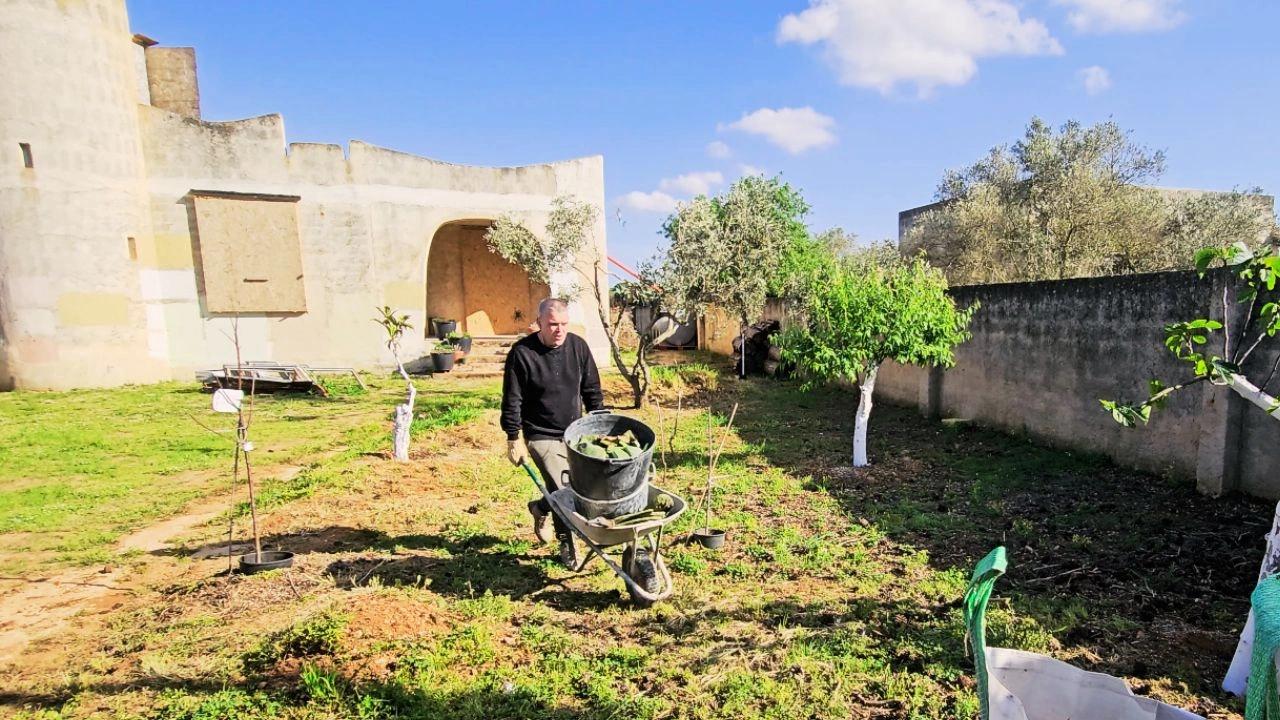
In the orchard, I prune the olive trees and cut unwanted suckers and dead wood from the young fruit trees with secateurs, then fill buckets from the outdoor bath and carry them across the garden to water each tree by hand.
Some of the young trees have gummosis, with gum oozing from lesions along their stems and branches, and the peach is one of them. I mix copper sulphate with water in a measuring jug, funnel it into a sprayer and spray the affected trees. Then I clear and turn a patch of soil, dig a hole and plant a new pear tree, mulch around it with woodchip, tie it to bamboo stakes and spray its leaves.
My article on growing your own food in Sicily follows how the orchard does, and my guide to harvesting olive oil shows where those olive trees are heading. Proper irrigation for the trees arrives in episode 83.
A big tidy before the tank
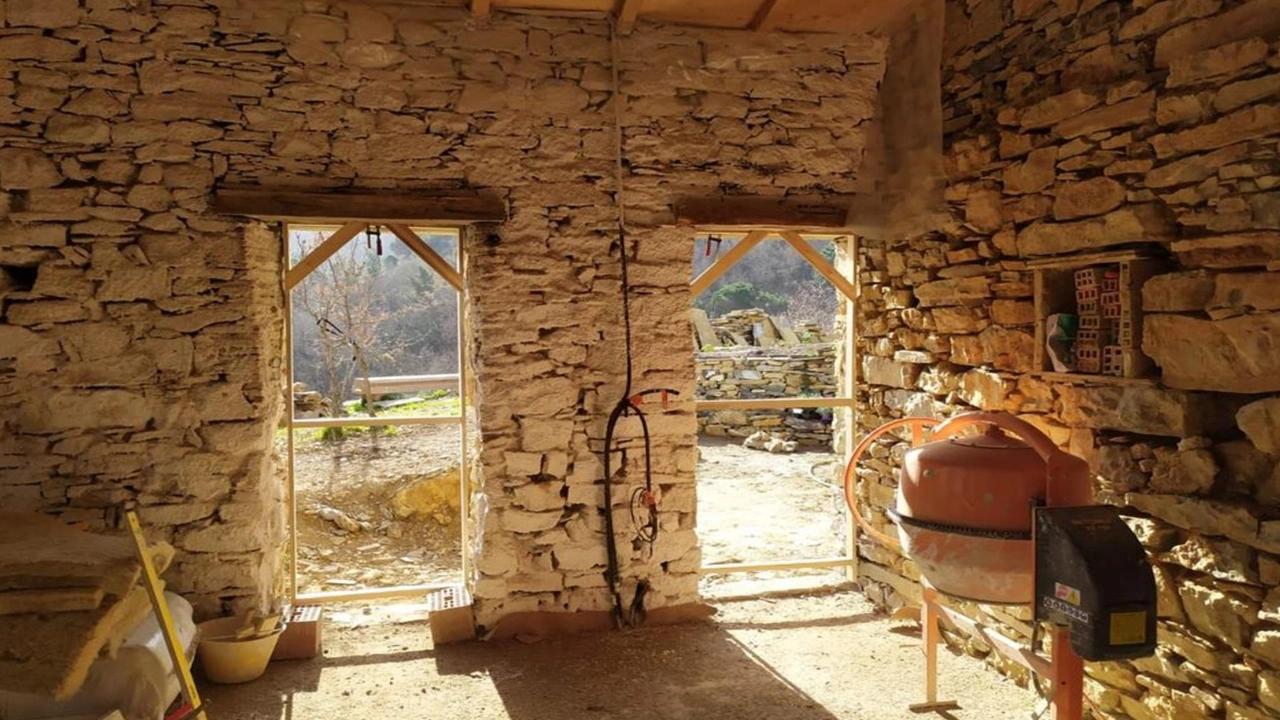
Ahead of the rainwater tank build, the site gets a big tidy. I set the cement mixer up inside and carry the materials in, then pull the tarpaulins off the salvage along the perimeter wall. The old doors, windows and metal grates are sorted and stacked on pallets. At the rear slab, I bag the rubbish, clear stones, broken tiles and debris, and stack the stone blocks worth keeping, along with old washbasins, glazed windows and stone slabs. The tank dig starts in episode 76.
To finish, the kids' bedroom door gets its handles, and I test the latch, hinges and handles before closing it. The doors themselves were restored in episode 51. Would you take on an abandoned villa in the Italian countryside? My article on living off grid in Sicily shows what it really involves.
Frequently asked questions
Should a sink waste be 40mm or 50mm?
My bathroom sink waste was 40mm. When I had to redo it, I upgraded it to a slightly wider 50mm pipe for better flow.
Why do underground electrical boxes fill with water?
Mine came without gaskets or screws, so water got in. My electrician said that here they simply drill drainage holes in the bottom of them.
How do you treat gummosis on a peach tree?
I mixed copper sulphate with water, funnelled it into a sprayer and sprayed the young trees that had gum oozing from lesions on their stems and branches.
Why would a drain pipe move when concreting?
I think the stone I put on my drain run to hold the fall pulled the sink waste out of line before I concreted it, so it ended up sticking out of the wall.
More episodes on the same job: Water and plumbing

 The weekly YouTube series