
In this episode
- The soil pipe trench backfilled with aggregate, thin stone blocks and topsoil
- Stone blocks cut on the Stihl saw to protect the soil pipe where it leaves the wall
- An old door and bath recycled as an overflow for the rainwater barrel
- A trench through the footing for ducting from the well to the future tank
- Twin 45° bends solvent welded and strapped to the bathroom wall
Backfilling the soil pipe trench
This week I finish fixing the bathroom drains and turn some old junk into a rainwater overflow. First, the new soil pipe I laid to the cesspit in episode 53 needs burying properly. I barrow aggregate into the trench along the outside wall and shovel it over the pipe, then lay a line of thin stone blocks along it.
With help, I dig soil from near one of the olive trees and wheel it round to fill the rest of the trench with topsoil. The two square chamber covers on the cesspit will be raised to match the height of the large round lid, and the final ground level will be the same height, so only the top couple of inches of these blocks will show. The cesspit gets a full test in episode 57.
A stone collar for the bathroom outlet
Where the soil pipe comes out through the bathroom wall, it is exposed. I cut stone blocks to size on the Stihl saw, wet them down with the pump sprayer and build them around the pipe in mortar, making a protective casing. These blocks will protect the soil pipe from damage, the elements and rodents. Once the mortar has set, the soil goes back in around the casing.
An old door and bath as a rainwater overflow
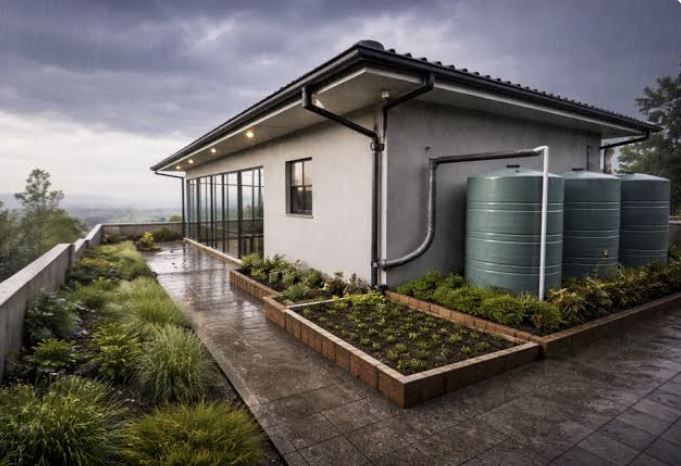
Next to the outdoor water barrel, I level the ground with boards, concrete blocks and a spirit level, then set an old bath up on the raised blocks. Together with an old door, it becomes an overflow buffer for the rainwater barrel, so when the barrel is full, the overflow has somewhere to go.
The full rainwater system is still to come. My guide to rainwater harvesting in Sicily explains how the full setup will work, and the rainwater harvesting calculator shows how much a roof can collect.
Ducting from the well to the tank
Lewis digs a trench through the footing for ducting from the well to the future underground tank, breaking out the hard ground with a pickaxe and the demolition hammer, and the orange pipe is connected up. It carries on from the pipe I took under the terrace wall in episode 51.
When the excavator comes to dig the hole for the underground rainwater collection tank, he will also dig a trench so I can lay the rest of the pipework connecting the well to the new tank. A pump with a float valve will sit inside the well. As the water level rises, the pump will kick in and transfer the water into the storage tank. The dig itself starts in episode 76, and my article on off grid versus mains water explains why the well matters so much here.
Moving the heat struck fruit trees
The potted fruit trees that were hit by the heatwave in episode 45 are still on the veranda. I clean the floor, then we carry them out and line them up on timber rails along the garden wall, and water them with buckets filled from the outdoor tub. I am still holding out hope these trees come back to life in spring.
Finishing the bathroom drains
Inside, the bathroom drains get their final shape:
- Trim the sink waste pipe to length with the handsaw and a small angle grinder.
- Solvent weld twin 45° bends into the run.
- Strap the run to the wall with metal brackets and screws.
- Grind the old protruding water pipe fittings and caps off flush with the wall.
The sink waste gets a further upgrade in episode 61.
Filling the old bath recess with stone
With the bathroom layout changed in episode 52, the recess where the old bath sat is no longer needed. I cut chases into the walls with the angle grinder, chip them out with a hammer and chisel, and test fit stone pieces in the gaps. The stone infills are cut outside on the petrol saw.
Back in the bathroom, I wet the chases with the sprayer so the mortar bonds, trowel in mortar, bed the stone pieces in and fill around them until the wall is smooth.
Kitchen prep for the plasterer
In the room next door, I grind off old fittings and cut back around the lower pipe penetrations, then mortar the gaps closed so the walls are ready for plastering. To finish, one of the cats gets fed from its pink bowl by the patio door. My article on living off grid in Sicily covers how all of these services come together.
Frequently asked questions
How do you protect a soil pipe where it leaves a wall?
I built a casing of stone blocks around my soil pipe in mortar, to protect it from damage, the elements and rodents, then backfilled soil around it.
What can you use as a rainwater barrel overflow?
I recycled an old bath and an old door into an overflow buffer for my rainwater barrel, set level on raised concrete blocks next to it.
How will water get from a well to an underground tank?
In my plan a pump with a float valve sits in the well. As the water level rises, the pump kicks in and transfers the water through a pipe to the storage tank.
Why use two 45 degree bends instead of one elbow?
I solvent welded twin 45° bends into my bathroom sink waste then strapped it to the wall with metal brackets.
More episodes on the same job: Water and plumbing
 The weekly YouTube series