
When is olive harvest season in Italy and Sicily?
Across Italy the olive harvest runs from about October to December, starting in the warm south and on early varieties, and finishing on late varieties and cooler hills. In western Sicily the main oil harvest for Nocellara del Belice falls in October and November. The official rules for Valle del Belìce DOP oil allow olives to be picked from October onwards but not after the end of the year, which is a good summary of the Sicilian season as a whole.
Within that window, the right week depends on the variety, the weather and what the olives are for. A dry summer such as 2026, which we had around the villa, stresses the fruit and can shift the timing. So the calendar only tells you when to start looking; the olives tell you when to pick.
| What you want | Stage of the olive | Typical timing in Sicily |
|---|---|---|
| Green table olives | Full size, still green to straw coloured, firm | Late September to October |
| Early harvest oil | Skins starting to turn, most fruit green with red or purple patches | October |
| Main harvest oil | Most fruit purple to black, flesh still pale | Late October to November |
| Late harvest oil | Black skins, flesh turning purple | Late November to December |
| Black table olives | Fully black, soft, dark through the flesh | November to December |
In the southern hemisphere the seasons are reversed but the stages are the same: the Australian Olive Association says olives there are generally harvested from March to July, depending on the region, the climate and the variety.
How do you know when olives are ready to pick?
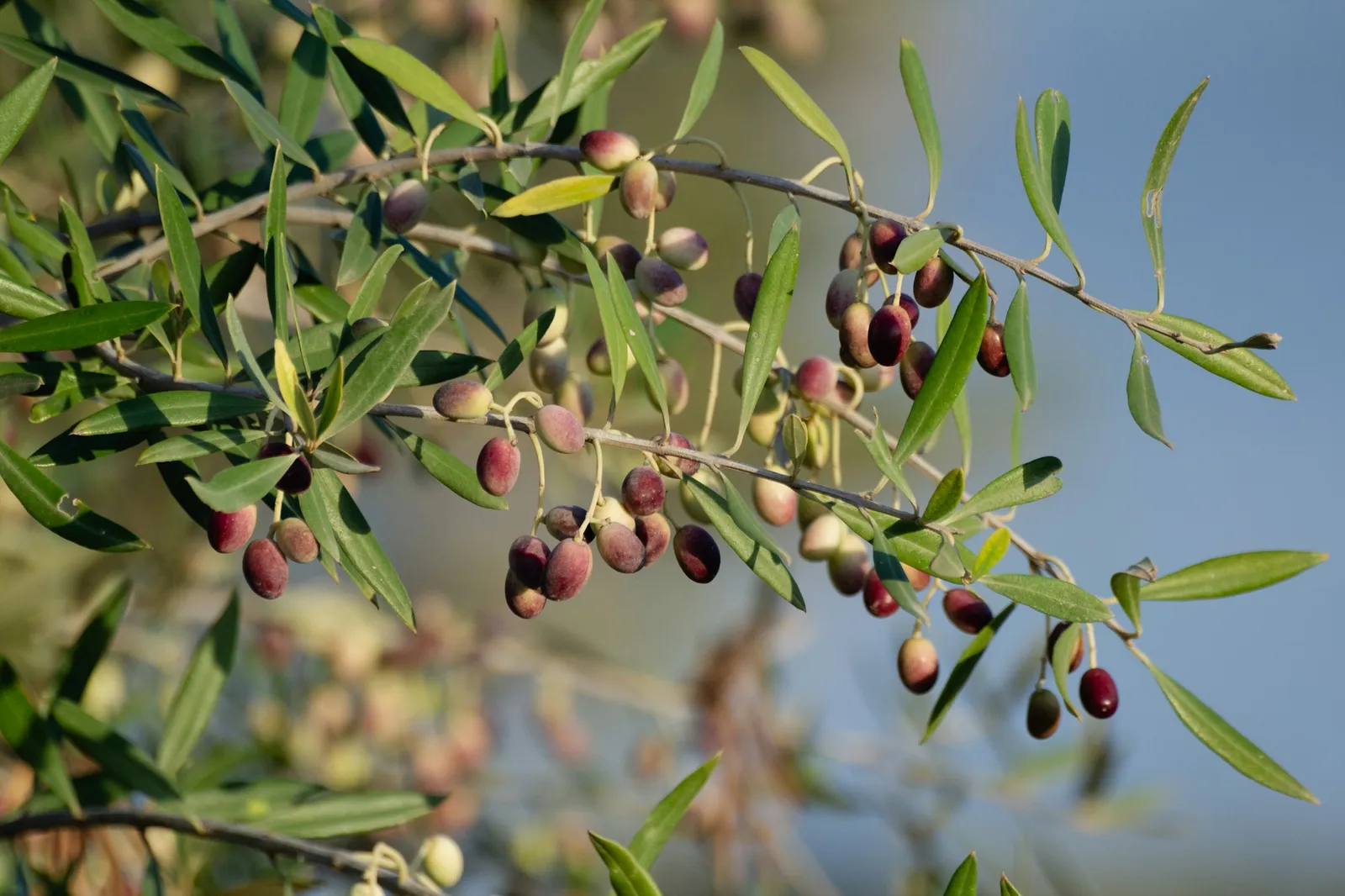
Olives change colour as they ripen. The International Olive Council describes the skin turning from deep green to yellow-green, then violet and finally black, while the flesh changes colour and texture underneath. The point where the green starts to give way to red and purple is called veraison, and it is the signal growers wait for.
Things to check, on fruit from all sides of the tree:
- Skin colour: green turning to yellow-green, then patches of red or purple, then fully purple-black.
- Flesh colour: cut a few olives open. Black skin with white flesh is a different stage from black skin with purple flesh right to the stone.
- Juice: University of California food scientists note that mature green olives give a creamy white juice when squeezed, while fully ripe black olives give a reddish black juice.
- Firmness: olives soften as they ripen, and ripe olives bruise easily.
- How easily they come off: ripe fruit lets go of the branch more readily. Nocellara is known for coming away fairly easily, which helps at harvest.
Fruit on the sunny side of a tree and at the top ripens before fruit in the shade, so a single tree rarely ripens evenly. That is normal, and a mix of colours in the crate is what most small growers end up with.
What is the olive maturity index?
The maturity index turns those colour changes into a number, so growers can compare one week, one grove or one year with another. The method, published by the International Olive Council, sorts a sample of olives into eight colour classes:
- 0: skin deep green
- 1: skin yellow-green
- 2: green with reddish spots on less than half the fruit (the start of colour change)
- 3: more than half the skin reddish or purple (the end of colour change)
- 4: black skin, white flesh
- 5: black skin, less than half the flesh purple
- 6: black skin, flesh purple but not all the way to the stone
- 7: black skin, flesh purple right to the stone
To work it out, pick 100 olives at random from around the tree, cut each one open, sort them into the classes, multiply the number in each class by its class number, add the results and divide by 100. A sample with every olive in class 3 scores 3.0. The IOC advises starting about a month before the harvest would normally begin and repeating every 7 to 10 days, and says that at the best point for premium oil almost all varieties have a maturity index of between 3 and 4.
When should you pick olives for oil: early or late harvest?
Oil builds up in the fruit as it ripens, so every week you wait brings more oil per kilo, up to a point. Flavour moves the other way. That trade-off is the whole early versus late harvest debate.
- Early harvest (green to turning, maturity index around 2 to 3): less oil per kilo, but a greener, more bitter and more peppery oil with strong aromas of cut grass, artichoke and green fruit. This is the style the Valle del Belìce DOP describes, and the style Nocellara is prized for. My guide to new season olive oil explains why that oil catches the throat.
- Main harvest (most fruit turning to purple, around 3 to 4): close to the most oil the fruit will give, with the fruity, bitter and pungent notes still in balance. The IOC treats this as the optimum for distinctive premium oil.
- Late harvest (black fruit, 5 and above): the most oil and the easiest picking, but a softer, rounder, more buttery oil with less bitterness and pepper. Ripe fruit also bruises easily, so it needs careful handling and quick milling.
The IOC also uses the oil content itself: growers who test samples watch for the week the oil stops rising, which marks the fruit at its maximum. For a household with a few trees, colour and a cut olive or two are enough. How much oil to expect from a tree is covered in how much oil an olive tree produces.
When should you pick olives for eating: green or black?
Green and black olives come from the same trees; the difference is when they are picked. Table olives are picked by hand and need sound, unbruised fruit, because every mark shows after curing.
- Green olives are picked when they have reached full size but before they colour, when the skin has turned from deep green to yellow-green or straw. They should be firm and give a creamy white juice when squeezed. In Sicily this is the first job of the season: Nocellara for green table olives is picked from late September into October.
- Turning olives, rose to red-brown and still firm, make good cracked and brined olives.
- Black olives are left on the tree until they are fully dark, about three to four months after the green stage according to the University of California. They are softer, bruise easily and suit brining or dry salt curing.
Whichever you pick, start curing within a few days, and sooner for black fruit. Raw olives are far too bitter to eat; how to fix that is in how to cure olives, and why Nocellara is one of the great table olives is in Nocellara del Belice olives.
How are olives harvested?
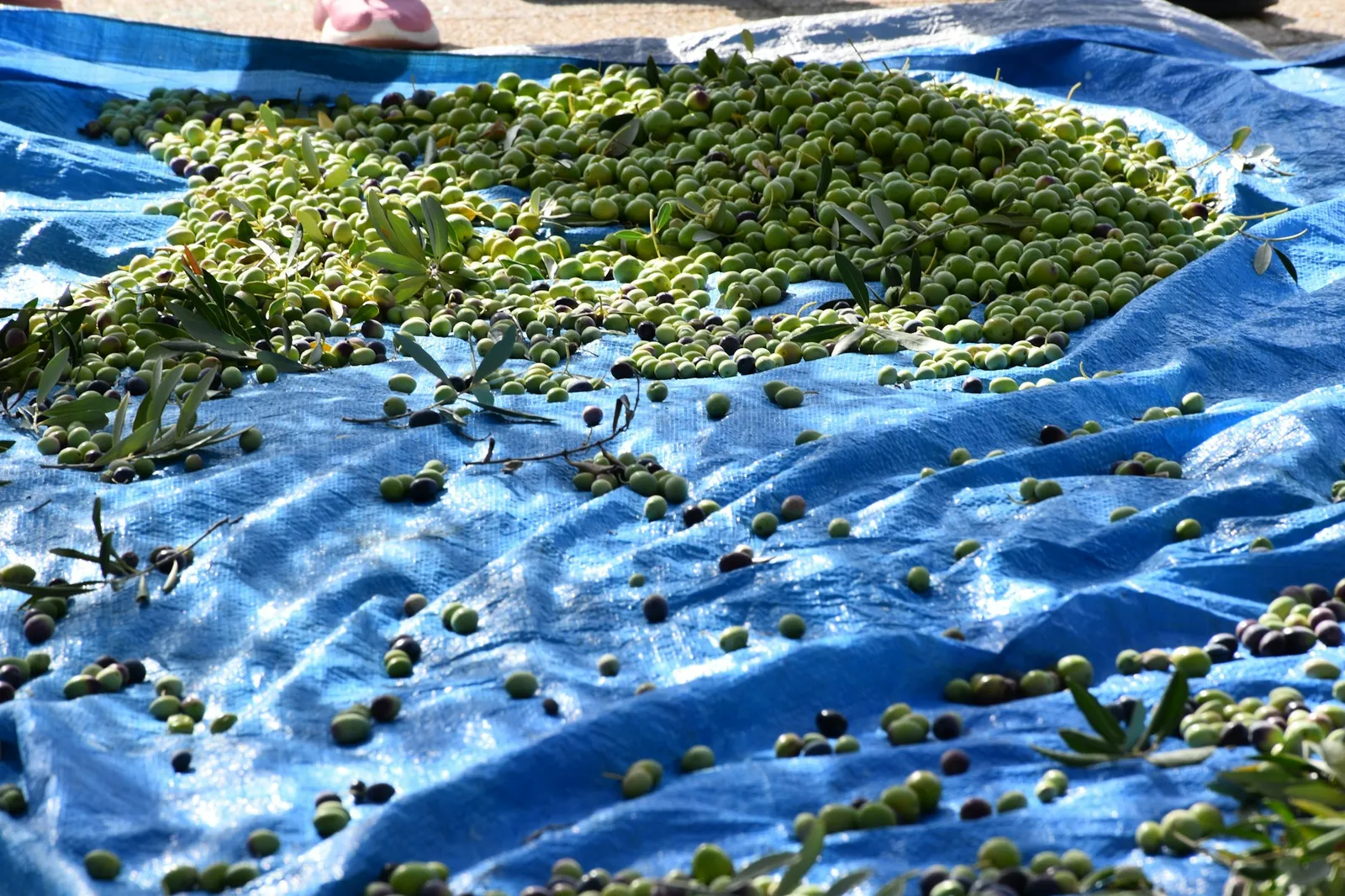
There are four main ways to get olives off a tree, and most Sicilian families use a mix of the first three.
- Hand picking (brucatura in Italian): pulling the olives off with your fingers, or stripping them gently along the twig into a bucket. It is slow but gives the cleanest fruit, and it is required for Nocellara del Belìce DOP table olives.
- Hand rakes and combs: small plastic rakes drawn through the branches so the olives fall onto nets below. Faster than picking, and gentle enough for oil olives.
- Handheld shakers and electric combs: powered combs or hooks on a pole that vibrate the branches. They save hours on tall trees and are common on family groves.
- Trunk shakers and straddle harvesters: machines that grip and shake the whole tree, or drive over hedgerow plantings. They are for large commercial groves.
Whatever the method, nets go down first, spread under the whole canopy, so no fruit hits the bare ground. Olives that lie on the soil start to ferment and spoil the oil, and the Valle del Belìce DOP rules forbid any contact between the fruit and the ground. The same rules ban chemical products that make the fruit drop. Pick out leaves and twigs as you go; the mill removes the rest.
Height decides a lot. A tall, unpruned tree needs ladders, poles and shakers; a tree kept low can be picked from the ground. That was one of the reasons for cutting our trees down from four or five metres to about two and a half, as I explain in how to prune an olive tree.
How quickly do olives need to be milled after picking?
As fast as you can. Once picked, olives start to break down: the fruit warms in the crate, enzymes and microbes go to work, and the oil loses freshness and gains acidity. The aim for good extra virgin oil is to mill within 24 hours of picking, and within hours where possible. The Valle del Belìce DOP sets an outer limit of two days.
- Use shallow, ventilated crates, never sacks or plastic bags. The DOP rules ban bags of any kind, because fruit packed tight in a sack heats up and ferments.
- Keep the olives cool and shaded while you finish picking, and out of the sun in the car.
- Talk to the mill first. In October and November the mills (frantoi) of western Sicily are at their busiest, so it pays to know when they can take your olives before you start picking.
- Leave out damaged fruit: olives that are fly-damaged, frost-damaged, mouldy or picked up off the ground lower the quality of everything they are milled with.
What happens once the crates arrive, from washing to the centrifuge, is in how olive oil is made.
When do you harvest olives in the UK?
Often, never. Olive trees grow happily in sheltered British gardens and pots, but the Royal Horticultural Society notes that they only occasionally produce fruit in the UK, in hot summers and in some parts of the country. The tree needs a long, hot summer to ripen fruit, and most British summers are too short and cool.
If your tree does set olives after a warm summer, they will ripen very late, usually from late autumn into winter, and many will stay green. You can pick them green, at full size, for curing; there are rarely enough to make oil, which needs kilos of fruit and a mill. Pick before hard frost, which damages the fruit. A lone tree of a self-sterile variety such as Nocellara will set little fruit without another olive nearby, and a tree that has not fruited may simply need more sun; olive tree problems covers the usual causes.
How I time the harvest on our own trees
Our five Nocellara del Belice trees stand either side of the drive at the villa, planted by my elderly neighbour when he was a boy and left untended for more than twenty years before I arrived. After the hard renovation prune in February 2026 they flowered, set fruit and carried a crop through a very dry summer, and the water shoots that followed the prune were removed before the harvest.
What I have learned is that general advice and your own trees do not always agree. From late summer I watch the colour change across all five trees, aiming to pick early in the turn from green to purple for the green, peppery oil Nocellara is known for. With the trees now at about two and a half metres, nets and hand picking are realistic, and the olives can reach the mill quickly. The full story is in harvesting olive oil in Sicily.
For the wider picture of the island's varieties and when each is picked, see what makes Sicilian olive oil different, and for the year-round work that leads up to the harvest, olive tree care.
Frequently asked questions
What month are olives harvested in Sicily?
Mainly October and November, with some picking running into December. Green table olives come first, from late September, and black table olives and late oil olives last. The Valle del Belìce DOP allows olives for its oil to be picked from October until the end of the year.
What is veraison in olives?
Veraison is the stage when the olive skin starts to change from green to red, purple and then black. It marks the start of ripening proper, and for many growers the beginning of the window for picking olives for high quality, fresh-tasting oil.
Are green and black olives from the same tree?
Yes. Green olives are picked before they ripen and black olives are left on the tree to ripen fully. Most varieties can give both, although some, such as Nocellara del Belice, are especially prized as table olives.
What maturity index is best for olive oil?
The International Olive Council says almost all varieties reach the optimum for premium oil at a maturity index of about 3 to 4, when most fruit has finished changing colour and the flesh is still pale. Lower values give greener, more peppery oil and less of it; higher values give more, milder oil.
Can you use olives that have fallen on the ground?
Not for good oil or for curing. Fruit lying on the soil gets bruised and dirty and starts to ferment, which gives the oil defects. That is why growers lay nets under the trees before picking, and why the Valle del Belìce DOP rules forbid fruit touching the ground.
How long can olives wait before going to the mill?
Ideally less than 24 hours, and the Valle del Belìce DOP sets a maximum of two days. Keep them cool, in shallow ventilated crates and never in sacks, because packed olives heat up and ferment, which raises acidity and spoils the flavour.
Do olives keep ripening after they are picked?
Not in any useful way. Picked olives do not gain oil and soon begin to deteriorate, so pick at the stage you want and process them within a day or two for oil, or within a few days for curing.
Will an olive tree in the UK produce olives?
Sometimes, after a long hot summer and in a sunny, sheltered spot, but not reliably. The RHS says fruit develops only occasionally in the UK. Any olives tend to ripen very late, in late autumn or winter, and are best picked green for curing before hard frost.
Sources and small print
- International Olive Council: guide for the determination of the characteristics of oil-olives, including the maturity index
- EUR-Lex: Valle del Belice DOP application, method of production (harvest period, handling and milling)
- University of California ANR publication 8267: Olives, safe methods for home pickling (ripeness stages for table olives)
- Royal Horticultural Society: how to grow olives
- Australian Olive Association: know when to pick
- International Olive Council: World Catalogue of Olive Varieties, Nocellara del Belìce
Harvest months vary with the variety, the year and the place; those given are typical for Sicily.
Credits
Photo: Mohamed Fsili, Unsplash Licence, via Unsplash.
Photo: Tom Tvr, Unsplash Licence, via Unsplash.
 The weekly YouTube series