
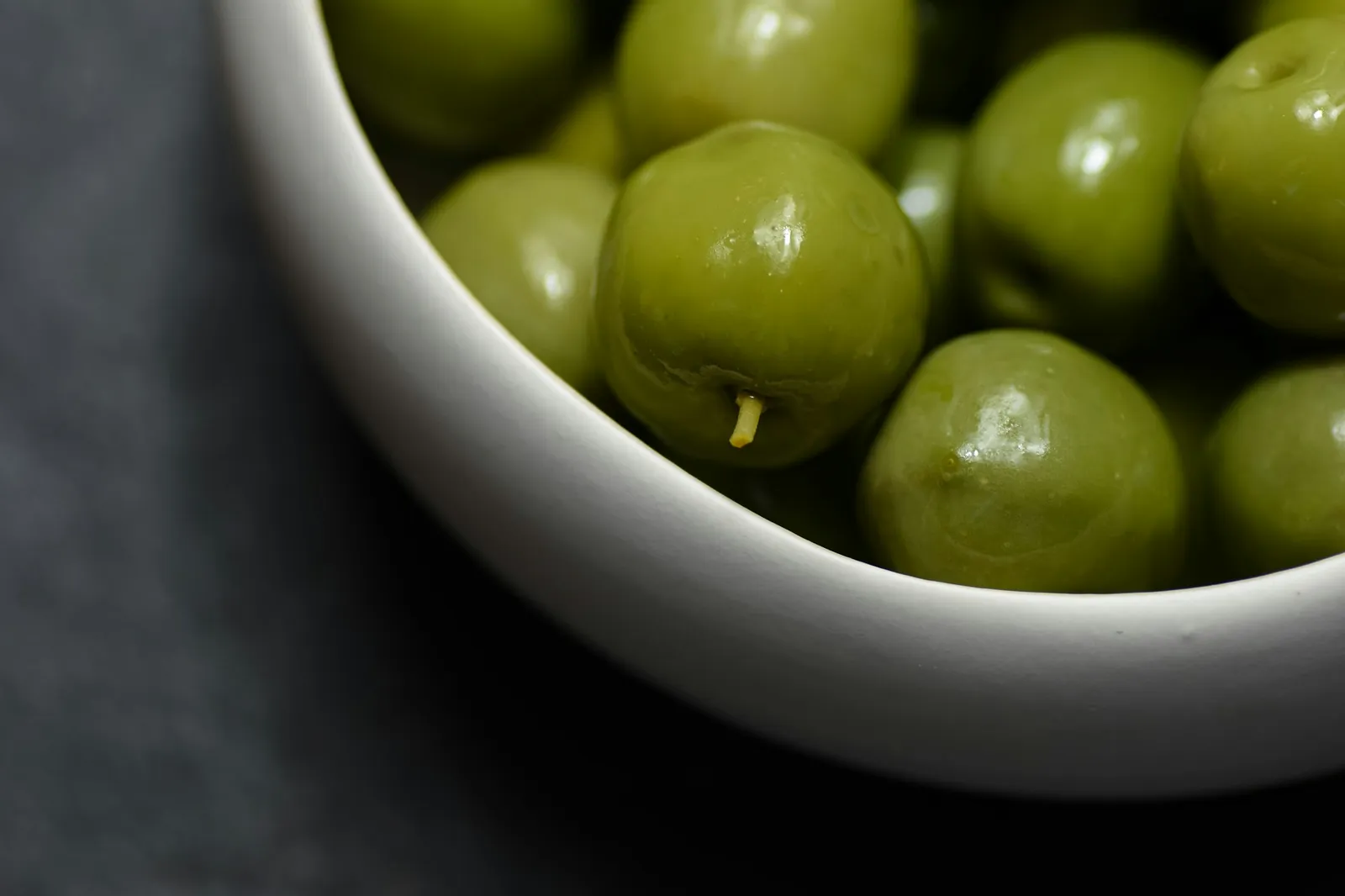
Why can you not eat olives straight from the tree?
Anyone who has bitten into a fresh olive remembers it. Raw olives contain oleuropein, a compound so bitter that the fruit is inedible as picked. Curing is simply the process of drawing it out, or breaking it down, until the olive tastes good.
Oleuropein dissolves in water, which is why every curing method involves soaking, salting or fermenting. Water and salt slowly leach it out of the flesh. In brine, lactic acid bacteria that live naturally on the fruit ferment its sugars into acids, which give brined olives their tang and help release the bitterness. Lye, the method used by many factories, breaks it down chemically in hours rather than months. Each method gives a different olive, and each needs a different amount of time.
The same compounds are part of why fresh olive oil from early-picked fruit tastes bitter and peppery. Oil only carries a little of them, though: the bulk of the bitterness stays in the fruit and the water at the mill, which is how olive oil is made into something you can pour straight onto bread.
Which olives can you cure?
Any olive can be cured, green, turning or black, but the method should suit the fruit:
- Green olives, picked at full size but before they colour, are firm and keep their crunch. They suit water curing, cracking and long brine fermentation.
- Turning olives, rose to red-brown and still firm, suit brine and cracked styles.
- Black, fully ripe olives are softer and richer. They suit brine curing and dry salt curing, which wrinkles them into the shrivelled black olives familiar from Greece and Morocco.
Pick by hand, discard anything bruised, split or holed by olive fly, and sort the fruit by size and colour so each batch cures evenly. Start within a few days of picking, black olives first, because ripe fruit spoils fastest. Large olives soften and shrivel more easily in strong salt, so the University of California guidance uses a gentler brine for them. When each stage arrives on the tree is in when to harvest olives, and how to keep a tree cropping well is in olive tree care.
What are the main ways to cure olives?
The most useful home reference is publication 8267 from the University of California, Olives: Safe Methods for Home Pickling, written by food scientists at UC Davis. It covers water, brine, dry salt and lye, and the times and ratios below come from it, converted to metric.
| Method | Best olives | Time to eat | Result | Keeps |
|---|---|---|---|---|
| Water curing (cracked or slit) | Green or turning; black for slit Kalamata style | About 1 to 6 weeks | Firm, fresh, still a little bitter | Up to a year in the fridge (cracked green) or in a cool dark place (Kalamata style), in salt and vinegar brine |
| Brine curing (fermented) | Green, turning or black | 2 to 6 months | Salty, tangy, complex | About a year in brine, airtight, cool and dark |
| Dry salt curing | Fully ripe black | 5 to 6 weeks | Wrinkled, rich, salty, slightly bitter | Up to 6 months in the fridge |
| Lye curing (commercial) | Green or black | About 1 to 2 weeks | Mild, firm, least bitter | Up to 2 months in brine in the fridge; low acid |
For a first batch, water curing gives the quickest result and brine curing the best flavour. I would leave lye to the factories; the reasons are below.
How do you cure olives in water?
Water curing is the quickest home method and changes the taste of the olive least. Because plain water leaches oleuropein slowly, each olive must be opened up first.
- Crack or slit the olives. For cracked green olives, hit each one with a mallet or rolling pin just hard enough to split the flesh without breaking the stone. For black olives, cut one or two slits lengthways.
- Soak them in cool water in a glass or food-grade plastic container, with a plate or a sealed bag of water on top to keep every olive under.
- Change the water every day. UC ANR gives 6 to 7 days for cracked green olives and 8 to 10 days for slit black Kalamata-style olives, continuing for up to 20 days if you want them less bitter. Taste one every few days.
- Move them to a finish brine of salt and vinegar. For cracked green olives UC ANR uses about 120 g of salt and 125 ml of white wine vinegar per litre of water; for Kalamata style, the same salt with about 250 ml of red wine vinegar per litre.
Cracked green olives are ready about four days after going into the finish brine and must be kept in the fridge, where they keep for up to a year. Kalamata-style olives need about a month in the brine and then keep for about a year in a cool, dark place or the fridge, as long as the container stays airtight. Water-cured olives always keep a little bitterness, which many people think is the point.
How do you cure olives in brine, and how much salt is in the brine?
Brine curing is the traditional Mediterranean way: whole olives sit in salt water for months while they ferment. It needs only salt, water and time, and the salt is what keeps them safe.
Italy's national institute of health, the Istituto Superiore di Sanità, says brined olives need salt equal to at least 10% of the water, and that too little salt is the most common mistake in home brines, because harmful bacteria, including the one that causes botulism, can grow alongside the fermentation when salt is low. In practice that means 100 to 120 g of salt per litre of water. Use plain salt with no added iodine or anti-caking agents, such as pickling salt or pure sea salt like the salt from the Trapani salt pans near us.
- Black olives (Greek style): UC ANR starts them in a medium brine of about 60 g salt per litre for a week, then moves them to a strong brine of about 120 g per litre for at least two months, changing it monthly for two or three months if you want them less bitter. Given the Italian advice, keeping to the stronger brine throughout is the cautious choice.
- Green olives: UC ANR covers green olives with brine of about 120 g of salt per litre, or about 75 g for large olives that shrivel in strong salt, plus about 125 ml of vinegar per litre for acidity, and keeps them at about 21°C. The Italian guidance would keep the salt at 100 g or more. Fermentation is fastest between about 21 and 32°C. Expect gas and froth for the first few days; top up with fresh brine so the olives stay covered. Once the bubbling stops, within about two months, close the lids and leave them for another two to four months. UC ANR calls these Sicilian-style green olives.
Brine-cured olives take two to six months, and green ones take longer than black. Properly fermented, airtight and kept cool and dark, they keep for about a year in their brine. Rinse or soak them briefly before eating if they are too salty.
How do you dry salt cure olives?
Dry salting turns ripe black olives into the soft, wrinkled, intensely savoury olives sold in markets around the Mediterranean. It works only with fully ripe, dark fruit, and smaller olives are better because large ones go too soft.
- Weigh the olives and mix them thoroughly with half their weight in salt: about 500 g of salt for every kilo of olives.
- Put them in a container that drains, such as a slatted wooden box, a basket or a bin with holes, lined with cheesecloth, with a layer of salt on top and a cloth over it. Stand it outdoors under cover or over a tray, because the bitter brine that drips out stains.
- Keep it at roughly 15 to 27°C and mix the olives and salt once a week, adding a little salt on top each time.
- After about five to six weeks, when they taste right, sift off the salt and let the olives dry overnight.
They stay salty and a little bitter. UC ANR mixes the cured olives with about 100 g of salt per kilo before packing them into airtight containers, then uses them within a month in a cool place or keeps them in the fridge for up to six months. Many people then toss them in a little oil and herbs to serve, which is best done just before eating.
What is lye curing, and should you do it at home?
Lye is sodium hydroxide, also called caustic soda. Soaking olives in a weak lye solution breaks down the oleuropein in hours instead of months, which is why it is the standard method for much of the commercial table olive trade: Spanish-style green olives, Californian black olives and, in western Sicily, the famous bright green sistema Castelvetrano olives made from Nocellara del Belice. The International Olive Council's trade standard calls these treated olives, as opposed to natural olives cured in brine alone.
At home, I would not recommend it. Lye is strongly corrosive: UC ANR warns that it causes severe burns and can cause permanent eye injury, that it must be handled with goggles and rubber gloves, and that it must never touch aluminium, tin or galvanised metal, which it corrodes while giving off hydrogen gas. The olives must then be rinsed for days to remove every trace. Lye-cured olives that have not been fermented are also a low-acid food, which carries a botulism risk if they are stored wrongly. If you want to try it anyway, follow the full UC ANR instructions exactly and nothing less. For everyone else, water and brine give excellent olives with none of the danger.
If you love the mild, buttery green Castelvetrano style, it is one of the best things to buy rather than make. The story of the olive and its two DOPs is in Nocellara del Belice olives.
How do you make Sicilian crushed olives (olive schiacciate)?
Olive schiacciate, crushed olives, are the classic Sicilian way with fresh green olives at harvest time. Once seasoned they are often called olive cunzate, from the Sicilian for dressed. They are close to the cracked water-cured olives above.
- Pick firm green olives and crush each one with a flat stone, a mallet or the side of a heavy jar, so the flesh splits but the stone stays whole. Some cooks take the stones out at this point.
- Soak them in cold water, changed every day, until most of the bitterness has gone. This usually takes about a week to ten days; taste as you go.
- Drain and dress them with salt, and with any of garlic, celery, carrot, chilli, oregano or wild fennel, a splash of wine vinegar and olive oil.
Dressed this way, with fresh garlic and vegetables in oil, they are a fresh dish, not a preserve: keep them in the fridge and eat them within a few days. To keep crushed olives for longer, store them undressed in a salt and vinegar brine in the fridge, as in the water-cured method, and dress a bowlful when you want it. In Sicilian food they turn up on antipasto plates beside local cheese; my guide to Sicilian cheese has the ones to go with them.
How do you store home-cured olives safely?
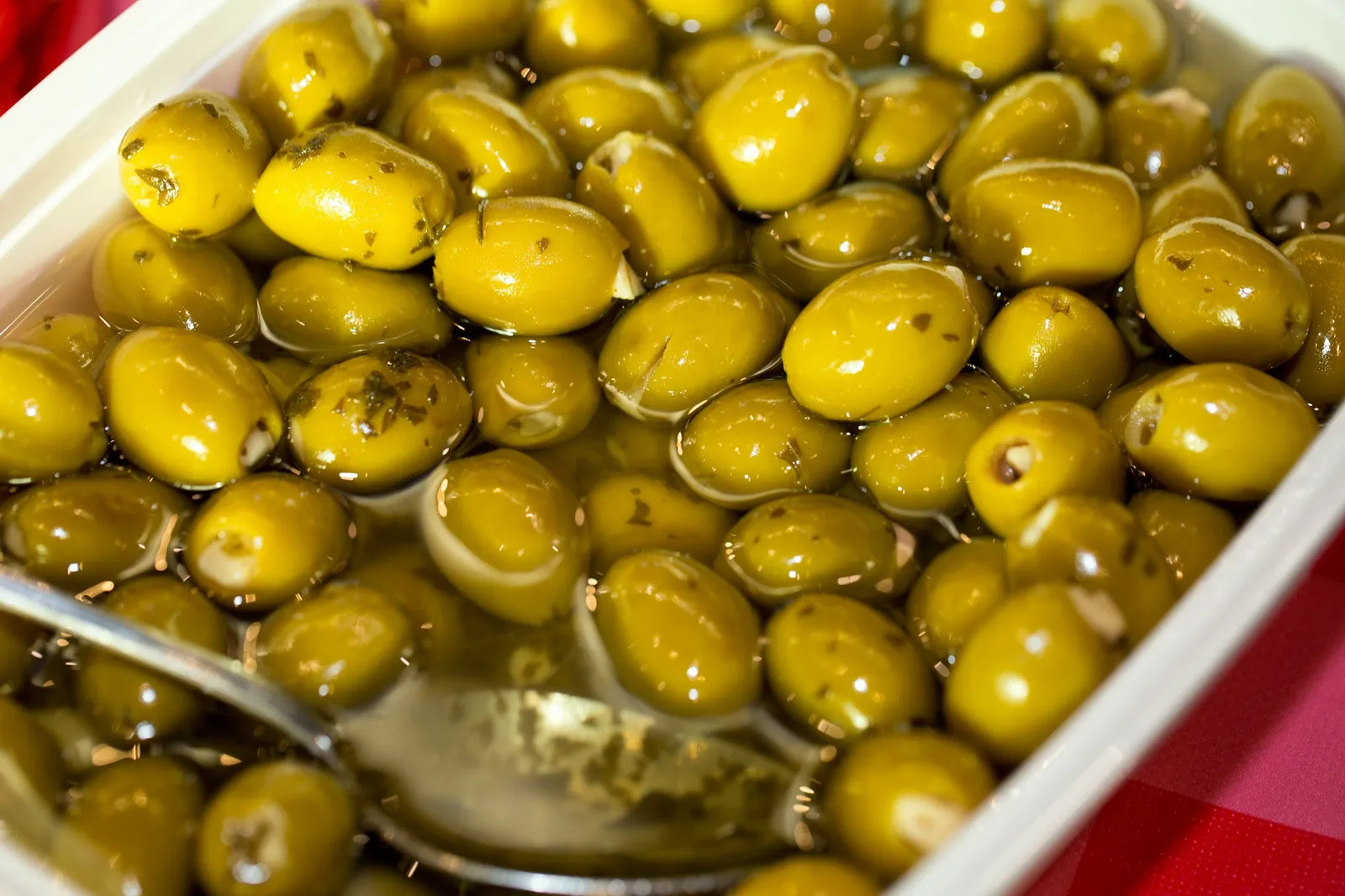
Botulism is rare but serious, and home preserves cause most cases. The Istituto Superiore di Sanità counts 20 to 30 cases a year in Italy, the great majority from food preserved at home, and names olives among the vegetable preserves involved. The bacterium, Clostridium botulinum, grows without air in foods that are not acid enough. Olives are naturally a low-acid fruit, so salt, acid and cold are what keep them safe.
- Keep enough salt in the brine: at least 10% of the water for brined olives, and never dilute a curing brine to make it less salty. Soak olives in fresh water just before eating instead.
- Keep the olives covered with brine at all times, in clean glass or food-grade plastic with tight lids that will not corrode.
- Refrigerate water-cured olives, crushed olives and anything dressed with oil, garlic or herbs.
- Never seal olives in jars in a boiling water bath. UC ANR is explicit that olives are low-acid and can only be canned safely in a pressure canner, and that improperly home-canned olives have caused botulism.
- Throw out olives that are mouldy, soft or smell bad, at any stage, without tasting them. Also discard any jar with a bulging or leaking lid, or contents that are gassy after fermentation should have finished. Do not give doubtful olives to animals either.
For comparison, the international Codex standard for commercial table olives that are not pasteurised requires at least 5 to 6% salt and a pH no higher than 4.3 in the brine. Home cooks cannot easily measure pH, which is one more reason to keep to the stronger salt levels and the fridge. Botulism symptoms include blurred or double vision, drooping eyelids, slurred speech and difficulty swallowing; anyone with them after eating home preserves needs emergency medical help at once.
Frequently asked questions
How long does it take to cure olives?
It depends on the method. Water-cured cracked olives can be eaten after one to two weeks, dry salt cured black olives after five to six weeks, and olives fermented in brine take two to six months, longer for green olives than for black.
Why are fresh olives so bitter?
Fresh olives contain oleuropein, an intensely bitter compound. Curing in water, brine or salt draws it out of the flesh, and fermentation helps break it down. Commercial lye curing breaks it down chemically, which is why lye-cured olives are the mildest.
How much salt do you put in olive brine?
For brine curing, at least 10% of the weight of the water, so around 100 to 120 g of salt per litre. The Italian national institute of health gives 10% as the minimum for brined olives, because lower salt can let harmful bacteria grow.
Can you cure olives without lye?
Yes, and at home it is the safer choice. Water curing, brine curing and dry salt curing all remove the bitterness with nothing more than water and salt. They take longer and leave a little more bitterness, which many people prefer.
Can home-cured olives give you botulism?
They can if they are made or stored badly, which is why the rules matter: enough salt in the brine, olives always covered, refrigeration for water-cured and dressed olives, no water-bath canning, and discarding anything mouldy, soft, gassy or bad smelling without tasting it.
Is the white film on olive brine dangerous?
Not always, but treat it as a warning. A thin white film on brine exposed to air is often a surface yeast, and UC ANR advises airtight containers to keep yeasts and moulds down. Its rule is clear: if the olives themselves become mouldy, soft or bad smelling at any stage, throw them away without tasting them.
What are olive schiacciate?
Sicilian crushed olives: fresh green olives cracked open, soaked in water changed daily for about a week to remove the bitterness, then dressed with salt, garlic, celery, chilli, oregano, vinegar and olive oil. Once dressed they are called olive cunzate and should be kept in the fridge and eaten within a few days.
Do home-cured olives need to be kept in the fridge?
Water-cured olives, crushed olives and dry salt cured olives should be. Properly fermented brine-cured olives in strong brine, in airtight containers, can be kept in a cool dark place for about a year, but move an opened jar to the fridge.
Sources and small print
- Yada and Harris, University of California ANR publication 8267: Olives, safe methods for home pickling
- Istituto Superiore di Sanità: guidelines for preparing preserves safely at home (botulism), 2016
- FAO and WHO Codex Alimentarius: standard for table olives (CXS 66-1981)
- International Olive Council: trade standard applying to table olives
- NHS: botulism symptoms and what to do
Follow tested instructions exactly; if in doubt about a batch of olives, throw it out without tasting it.
Credits
Photo: blackieshoot, Unsplash Licence, via Unsplash.
Photo: Michael Collett, Unsplash Licence, via Unsplash.
 The weekly YouTube series