
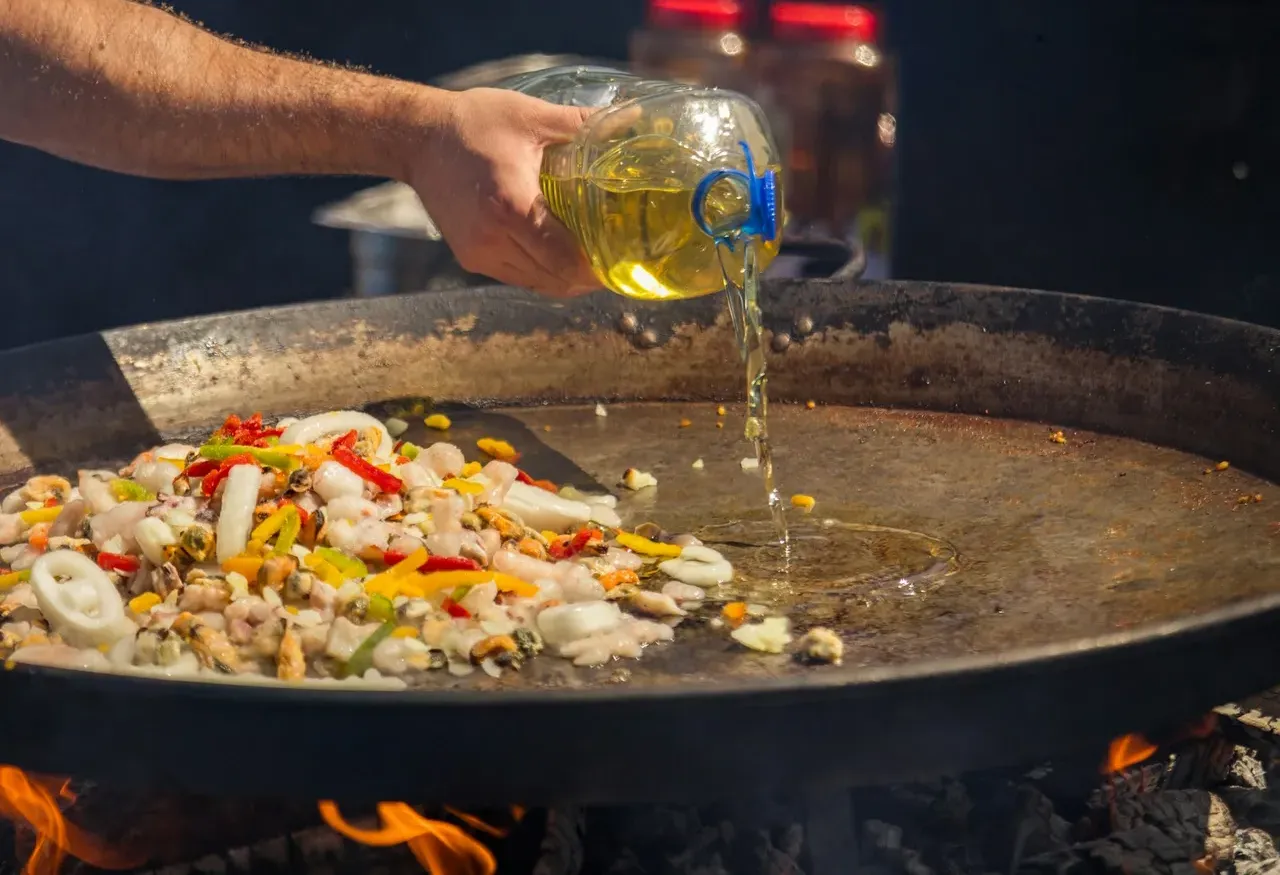
Can you cook with extra virgin olive oil?
Yes. The idea that extra virgin olive oil should never be heated comes mostly from published smoke point charts, which put it lower than refined seed oils. In the Mediterranean it has been the everyday cooking fat for centuries, and the laboratory evidence backs the cooks: in normal home cooking it is stable, and it does not turn into something else when it meets a hot pan.
What heat does change is flavour. The green, grassy aroma and the bitter, peppery notes that make a young oil special fade as it cooks, and largely disappear with long frying. So the real question is not whether you can cook with extra virgin oil but which one you cook with. That is a matter of cost and taste, not safety.
Typical cooking temperatures, for reference:
| Cooking method | Typical oil temperature | Extra virgin olive oil? |
|---|---|---|
| Gentle sweating of onions, garlic, soffritto | About 100 to 130°C | Yes, ideal |
| Pan frying, sautéing | About 120 to 180°C | Yes |
| Shallow and deep frying | 160 to 180°C | Yes, with a thermometer; use an everyday oil |
| Roasting in the oven | Oven 180 to 220°C, oil on the food stays cooler | Yes |
| Searing a steak in a very hot pan | Pan can exceed 200°C | Possible, but a little oil, briefly |
| Finishing, dressing, dipping | Raw | Yes, the best use of your best oil |
What is the smoke point of extra virgin olive oil?
The smoke point is the temperature at which an oil gives off a continuous stream of bluish smoke. For extra virgin olive oil it is usually quoted at around 190 to 210°C, but it is not a fixed number. It depends mainly on the free fatty acids in the oil: a 2025 study of 48 virgin olive oils at the University of Barcelona found free acidity was the main factor, and the lower it is, the higher the smoke point. Fresh oil from sound olives, milled quickly, smokes later than old or poorer oil.
Published smoke points vary from one laboratory to another, partly because the test still depends on someone seeing the first smoke, and refined seed oils are usually given higher figures than extra virgin olive oil. A higher figure does not make an oil better for cooking, though: a 2024 review of frying oils in the journal Foods concludes that smoke point is not a precise guide to how readily an oil breaks down, which is the point of the next chapter.
Why smoke point is not the only thing that matters
Smoke point tells you when the small volatile fraction of an oil starts to evaporate. It does not tell you how fast the oil itself breaks down when it is held hot, which is what affects the taste of your food and how long the oil lasts in a fryer. For that, food scientists look at oxidative stability (how long an oil resists oxidation under heat) and at the build-up of polar compounds, the breakdown products of heated fat.
Two things make extra virgin olive oil stable. Its fat is mostly oleic acid, a monounsaturated fatty acid, which reacts with oxygen far more slowly than the polyunsaturated fats that dominate most seed oils. And unrefined oil keeps natural compounds from the olive, including phenols and tocopherols, that slow oxidation down.
Laboratory frying trials bear this out. A 2010 study by Casal and colleagues in Portugal, published in Food and Chemical Toxicology, deep fried potatoes in several olive oils and in a common vegetable oil blend until each reached the legal limit of 25% polar compounds. The olive oils lasted 24 to 27 hours of frying against 15 hours for the vegetable oil, which was far more susceptible to oxidation than any of the olive oils. The abstract is on PubMed.
Can you fry with extra virgin olive oil?
Yes, and in southern Italy people always have. Shallow frying in olive oil is the starting point of half of Sicilian cooking: the aubergines for caponata and parmigiana di melanzane, fish, courgette flowers, potatoes, the breadcrumbs toasted for pasta. A few practical rules make the difference:
- Control the heat. 160 to 180°C is the frying range. If the oil smokes, it is too hot for any oil: turn it down. A cheap probe thermometer takes the guessing out of it.
- Fry potatoes no hotter than 175°C, and to golden, not brown. This is food safety advice about acrylamide, a substance that forms in starchy foods cooked at high temperatures, whatever the oil. The European Food Safety Authority notes that frying above 175°C can greatly increase it, and the Food Standards Agency gives the same "go for gold" advice.
- Pat food dry. Water spits violently in hot oil and lowers the temperature.
- Do not crowd the pan. Too much food at once drops the temperature, and the food soaks up oil instead of crisping.
- Use an everyday extra virgin. A robust, peppery new season oil is wasted in a frying pan. A milder, cheaper extra virgin, or last year's oil if it still smells clean, does the job.
Frying does take the flavour out of the oil. A 2025 study by Mehany and colleagues found that the fruity, bitter and pungent notes of extra virgin oils dropped steadily with frying time and temperature, and were scored at zero after six hours at 210°C. Fry with it for the way it cooks; pour fresh oil on afterwards for the taste.
Can you deep fry with extra virgin olive oil?
Technically, yes: deep frying at 160 to 180°C sits below its smoke point, and the stability studies above include deep frying. The main argument against it is cost, since a deep pan needs a litre or more. That is why many cooks keep extra virgin for shallow frying, where you need far less, and use a cheaper grade when they fill a deep pan.
If you do deep fry in olive oil:
- Use a deep, heavy pan filled no more than a third to half full, because the oil rises when food goes in.
- Heat it gradually and use a thermometer. Never leave hot oil unattended, and never put water on an oil fire: turn off the heat and smother it with a lid or a fire blanket.
- An everyday extra virgin or the grade sold simply as "olive oil" both work; the second is cheaper and more neutral. The differences between grades are in extra virgin vs olive oil.
- Fry in batches and skim out crumbs, which burn and spoil the oil faster.
Can you reuse olive oil after frying?
Yes, a few times, if you look after it. Every frying session breaks down a little more of the oil, and food particles speed that up.
- Let the oil cool completely in the pan.
- Strain it through a fine sieve lined with kitchen paper or muslin.
- Store it in a clean, sealed jar or bottle in a dark cupboard, labelled with what you fried. Oil used for fish is best kept for fish.
- Reuse it for the same kind of frying within a few weeks.
Throw it away when it has darkened a lot, smells acrid, fishy or stale, has thickened, foams on heating, or starts to smoke at a noticeably lower temperature than before. Those are all signs of advanced breakdown. Commercial kitchens in Italy are held to a legal limit for frying oil, set by a circular of the Italian Ministero della Sanità in January 1991: no more than 25% polar compounds, which is the kind of level reached after many hours of frying, not a couple of batches at home.
Never pour used oil down the sink, where it clogs drains. Take it to a cooking oil collection point (in Italy many comuni have them, and the isola ecologica takes it) or put small amounts, soaked into paper, in the general waste.
Roasting and grilling with olive oil
Roasting is where extra virgin olive oil is at its most useful. The oven may be set at 200 or 220°C, but a thin coating of oil on vegetables or potatoes stays well below that while the food releases moisture. Toss the vegetables in enough oil to coat them, season, spread them out in one layer so they roast rather than steam, and turn them once.
For grilling, brush the oil on the food, not on the grill, so it does not drip and flare. In Sicily grilled vegetables, fish and meat are usually given a second dose of raw oil at the table, often as salmoriglio, a sauce of olive oil, lemon, garlic, oregano and parsley that is the classic partner for grilled swordfish. Cooking oil for the heat, raw oil for the flavour: that rule runs through the whole Sicilian kitchen.
Can you bake with olive oil instead of butter?
Yes, in many recipes. The usual rule is to use about three quarters as much olive oil as butter. The reason is simple: under EU rules butter contains 80 to 90% milk fat, the rest being mostly water, while olive oil is 100% fat. So 100 g of butter carries about the same fat as 75 to 80 g of oil.
| Butter in the recipe | Olive oil instead (about) |
|---|---|
| 50 g | 40 g (3 tablespoons) |
| 100 g | 75 g (about 80 ml) |
| 125 g | 95 g (about 105 ml) |
| 200 g | 150 g (about 165 ml) |
| 250 g | 190 g (about 210 ml) |
| 1 US cup (2 sticks) | 3/4 US cup |
Where it works and where it does not:
- Works well: moist cakes (citrus, almond, chocolate, carrot), muffins, quick breads, focaccia, and many biscuits. Italian and Sicilian home baking uses oil in cakes and biscuits routinely.
- Works less well: anything that depends on solid fat or on creaming butter with sugar to trap air, such as shortbread, puff pastry, croissants, buttercream and some sponges.
- Choose the oil to suit the cake. A mild, ripe-tasting extra virgin disappears into a cake; a robust, peppery one will be noticed, which is lovely with orange or lemon and odd in a vanilla sponge.
Which olive oil should you use for what?
| Job | Best choice | Why |
|---|---|---|
| Finishing, bread, salads, raw on vegetables and fish | Your best, freshest extra virgin | This is where its flavour shows |
| Everyday pan frying, sautéing, roasting | An everyday extra virgin | Stable, flavourful, affordable in larger bottles |
| Deep frying | Everyday extra virgin or "olive oil" | Large volumes; flavour is lost anyway |
| Baking delicate cakes, neutral mayonnaise | A mild extra virgin or "olive oil" | Less assertive taste |
| Heavy-duty, repeated frying | Olive-pomace oil | Cheap and neutral; never for the table |
Freshness matters as much as the grade, and often more than the country on the label: Italian vs Spanish vs Greek olive oil compares the three. An extra virgin oil that has been open for six months in a warm kitchen may already taste stale; the best way to tell is to taste it, as described in how to taste olive oil.
How Sicilians use olive oil every day, and a filo d'olio
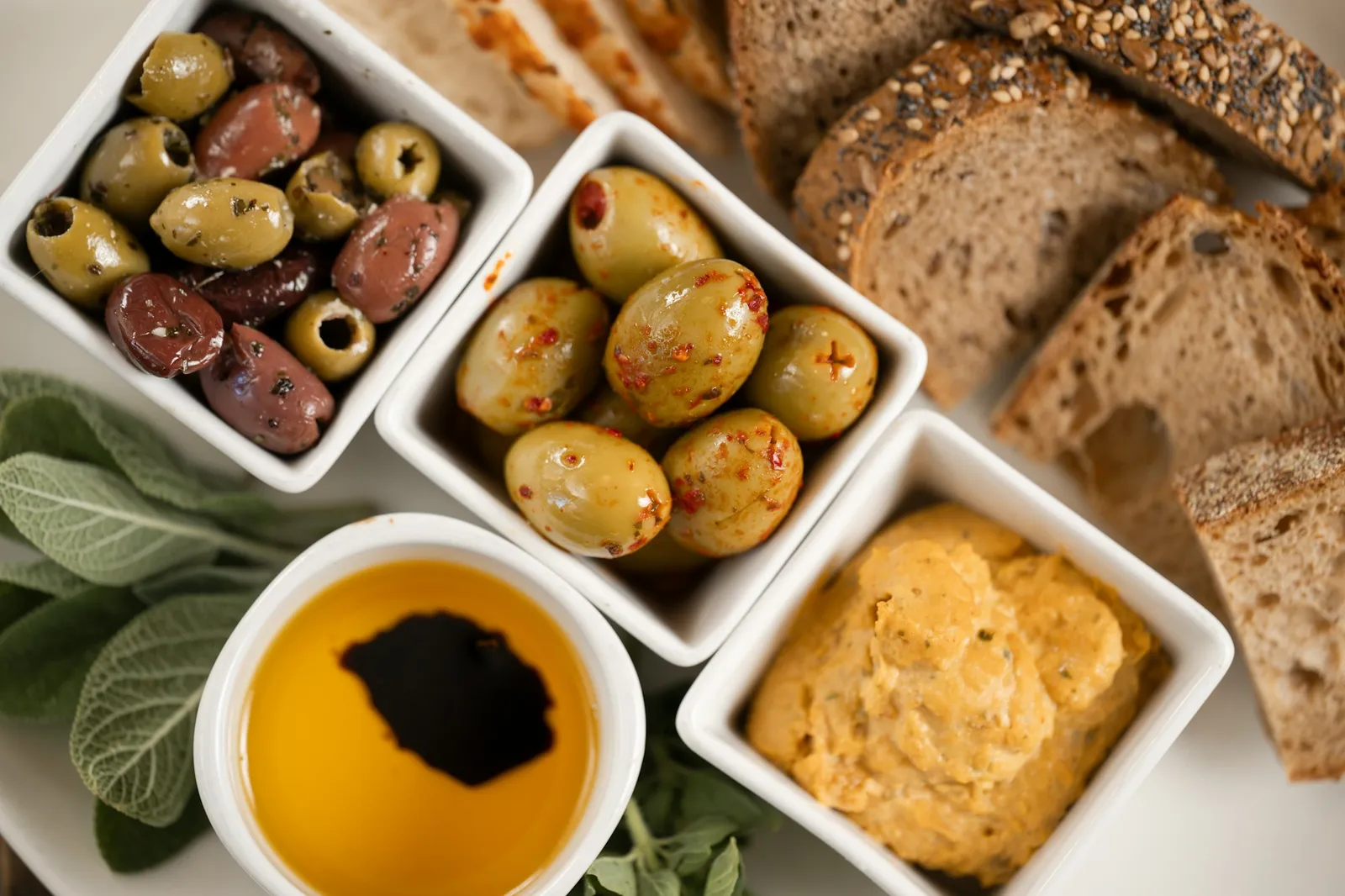
Read any Italian recipe and you will meet the phrase un filo d'olio: literally a thread of oil, the thin stream poured from the bottle over a finished dish. In Sicily it goes on almost everything:
- Bread. Toasted bread with oil and salt, sometimes rubbed with garlic or tomato, is the first taste of the new oil every autumn. In the Trapani area, pane cunzato is bread split and dressed with oil, tomato, anchovies, cheese and oregano.
- Pasta. Aglio, olio e peperoncino is little more than good oil, garlic and chilli; many Sicilian pastas are finished with breadcrumbs toasted in oil, the "poor man's cheese".
- Grilled and roasted vegetables, peppers, aubergines, courgettes and artichokes, dressed with raw oil once they come off the heat.
- Fish, grilled or baked, with raw oil and lemon or salmoriglio.
- Pulses and soups, such as broad bean maccu or lentils, finished with a generous swirl.
The Sicily food guide covers what to eat here more widely, and new season olive oil explains why the autumn's first oil is kept for pouring raw.
One practical lesson from living here: the bottle by the hob suffers. Heat from the cooker is one of the quickest ways to ruin good oil. Early on I came away from a local mill with 10 litres of its Nocellara extra virgin, and a container that size has to live somewhere cool and dark, with only a small bottle kept near the cooker and refilled as needed. How long olive oil lasts covers storage in detail, and Nocellara del Belice olives describes the variety that grows on our land.
Frequently asked questions
Is it safe to fry with extra virgin olive oil?
Yes. Normal frying temperatures of 160 to 180°C are below its usual smoke point of about 190 to 210°C, and studies find it more stable under heat than many seed oils. As with any oil, do not let it smoke, use a thermometer for deep frying and never leave hot oil unattended.
What temperature can you heat extra virgin olive oil to?
Keep it below its smoke point, which for good extra virgin olive oil is usually around 190 to 210°C. For frying, 160 to 180°C is right, and potatoes should be fried at no more than 175°C. If the oil starts to smoke, turn the heat down.
Does cooking ruin extra virgin olive oil?
It does not make it unsafe, but it does remove much of what makes it special. The fresh, fruity aroma and the bitter and peppery notes fade with heat and largely disappear after long frying. Cook with an everyday extra virgin and pour your best oil on raw at the end.
Can you use extra virgin olive oil in cakes?
Yes. It works well in moist cakes such as citrus, almond, chocolate and carrot cakes, and in muffins and quick breads. Choose a mild extra virgin for delicate cakes and a fruitier one where you want the oil to be tasted, such as an orange or lemon cake.
How much olive oil replaces 100 g of butter?
About 75 g of olive oil, which is roughly 80 ml. Butter is 80 to 90% fat and the rest mostly water, while olive oil is all fat, so the usual rule is three quarters as much oil as butter.
How many times can you reuse olive oil for frying?
Usually a few times, if you strain it after each use and store it sealed in the dark. Throw it away when it darkens a lot, smells acrid or stale, thickens, foams, or smokes at a lower temperature than before. Oil used for fish is best kept for fish.
Should you cook with expensive olive oil?
There is no harm in it, but it is a waste of money for long cooking, because heat removes the flavours you paid for. Use an everyday extra virgin for the pan and keep the expensive, fresh oil for finishing dishes, bread and salads.
What does "un filo d'olio" mean?
It is Italian for "a thread of oil": the thin stream of extra virgin olive oil poured over a dish just before serving. It appears in countless Italian recipes and is how Sicilians finish pasta, soups, pulses, grilled vegetables and fish.
Can you roast potatoes in extra virgin olive oil?
Yes. Toss the potatoes in enough oil to coat them, spread them in one layer and roast at around 200°C until golden rather than dark brown. The oil on the potatoes stays cooler than the oven setting, so it does not reach its smoke point in normal roasting.
Can you use extra virgin olive oil in an air fryer?
Yes. Most air fryer recipes use around 180 to 200°C, within the range extra virgin olive oil handles well, and you need only a teaspoon or so tossed with the food or brushed on. As in the oven, the oil on the food stays cooler than the air around it. Use an everyday extra virgin and keep your best oil for pouring on afterwards.
Sources and small print
- Díez-Betriu et al. (2025): smoke point in virgin olive oils, Foods (PubMed Central)
- Vegetable oils and their use for frying: a review of their compositional differences and degradation (2024), Foods (PubMed Central)
- Casal et al. (2010): olive oil stability under deep-frying conditions, Food and Chemical Toxicology (PubMed)
- Mehany et al. (2025): extra virgin olive oil during prolonged deep frying, Foods (PubMed Central)
- European Food Safety Authority: acrylamide
- Food Standards Agency: acrylamide and how to reduce it at home
Temperatures and figures are general guidance from the studies cited; every oil differs, so never let any oil smoke.
Credits
Photo: atelierbyvineeth, Unsplash Licence, via Unsplash.
Photo: Geoffrey Moffett, Unsplash Licence, via Unsplash.
 The weekly YouTube series