
Which is best: Italian, Spanish or Greek olive oil?
The honest answer is that the question is the wrong way round. Each of the three countries makes outstanding oils that win international competitions every year, and each also makes large volumes of everyday oil that is fine for cooking and not much more. A fresh, carefully made Spanish Picual will beat a tired Italian oil every time, and the reverse is just as true.
What decides the quality in your bottle, in roughly this order:
- The grade. Extra virgin is the only grade with no permitted taste defects. Everything else has been refined or is a lower grade; extra virgin vs olive oil explains the differences.
- Freshness. Oil is best in the first year after harvest, and it fades with time, light and heat.
- The variety and the harvest timing. Early picked olives give greener, more bitter and peppery oil; ripe olives give softer, rounder oil.
- How fast and how cleanly the olives were milled.
Country of origin tells you something about which varieties are likely to be in the bottle and nothing at all about the rest. Where the country helps is in choosing a style you like.
| Spain | Italy | Greece | |
|---|---|---|---|
| Production 2024/25 (IOC, provisional) | 1,419,000 t, about 40% of the world | 248,000 t | 250,000 t |
| Main oil olives | Picual, Hojiblanca, Arbequina, Cornicabra | Hundreds, including Coratina, Frantoio, Leccino, Moraiolo, Nocellara del Belice and Biancolilla | Mostly Koroneiki |
| Typical style | From mild, fruity Arbequina to robust Picual | Varies most by region, from delicate to intense | Green and herbaceous, bitter and peppery when young |
| Typical groves | Large, often irrigated, many harvested by machine | Smaller, older, often on hillsides, more hand work | Many small family groves |
| Bulk extra virgin price, December 2025 (IOC) | Jaén: €433 per 100 kg | Bari: €665 per 100 kg | Chania: €465 per 100 kg |
Which country produces the most olive oil?
Spain, by a wide margin. The International Olive Council's figures show how dominant it is, and also how much harvests swing from year to year with drought and heat.
| Country | 2023/24 (tonnes) | 2024/25, provisional (tonnes) | Share of world, 2024/25 |
|---|---|---|---|
| Spain | 854,000 | 1,419,000 | About 40% |
| Türkiye | 215,000 | 505,000 | About 14% |
| Tunisia | About 220,000 | 340,000 | About 10% |
| Greece | 175,000 | 250,000 | About 7% |
| Italy | 328,500 | 248,000 | About 7% |
| Portugal | 160,900 | 177,000 | About 5% |
| World | 2,589,000 | 3,572,000 | 100% |
The 2023/24 country figures come from the IOC's December 2024 release and the revised world total from its December 2025 release; the 2024/25 figures are from its December 2025 release and are still provisional. The IOC did not give a separate 2023/24 figure for Tunisia, so that one is worked back from the 55% rise it reported for 2024/25. Spain's 2023/24 harvest was its second poor one in a row after severe drought, which is why prices across Europe rose so sharply; its 2024/25 crop recovered by about two thirds. Italy's fell by a quarter in 2024/25 after summer heat in the south.
Two other points are worth knowing. Türkiye and Tunisia are now among the biggest producers: in 2024/25 Türkiye made about 505,000 tonnes and Tunisia about 340,000, both ahead of Greece (about 250,000) and Italy (about 248,000), and much of their oil is exported. And Italy is not only a producer but one of the world's largest importers and exporters of olive oil, which is why so many bottles with Italian names contain oil from more than one country. That is legal as long as the label says so, as explained below.
The figures come from the IOC's December 2025 market statistics, which also give a first estimate of 3,440,000 tonnes worldwide for 2025/26.
What olives are used in Spanish olive oil?
Spain grows many varieties, but four account for much of what you will see named on a bottle:
- Picual: the most widely planted olive in Spain, centred on the province of Jaén in Andalusia. It typically makes a robust oil with notes of green tomato, fig leaf and fresh grass, firm bitterness and pepper, and it keeps well because it is naturally stable.
- Hojiblanca: grown mainly in the provinces of Córdoba, Málaga and Seville. Often fruity with a hint of almond and ripe fruit, with moderate bitterness and pepper.
- Arbequina: from Catalonia, now planted worldwide. A small olive that gives a mild, fruity oil, often with apple and banana notes and little bitterness. It suits the dense hedgerow groves harvested by machine, which is one reason it has spread so fast.
- Cornicabra: the olive of Castilla-La Mancha, around Toledo and Ciudad Real. Usually green, bitter and pungent, and very stable.
Spain also has many protected names for olive oil, so a Spanish bottle can be just as specific about its place as an Italian one. A mild Arbequina and a punchy Picual taste further apart than many Spanish and Italian oils do.
What olives are used in Greek olive oil?
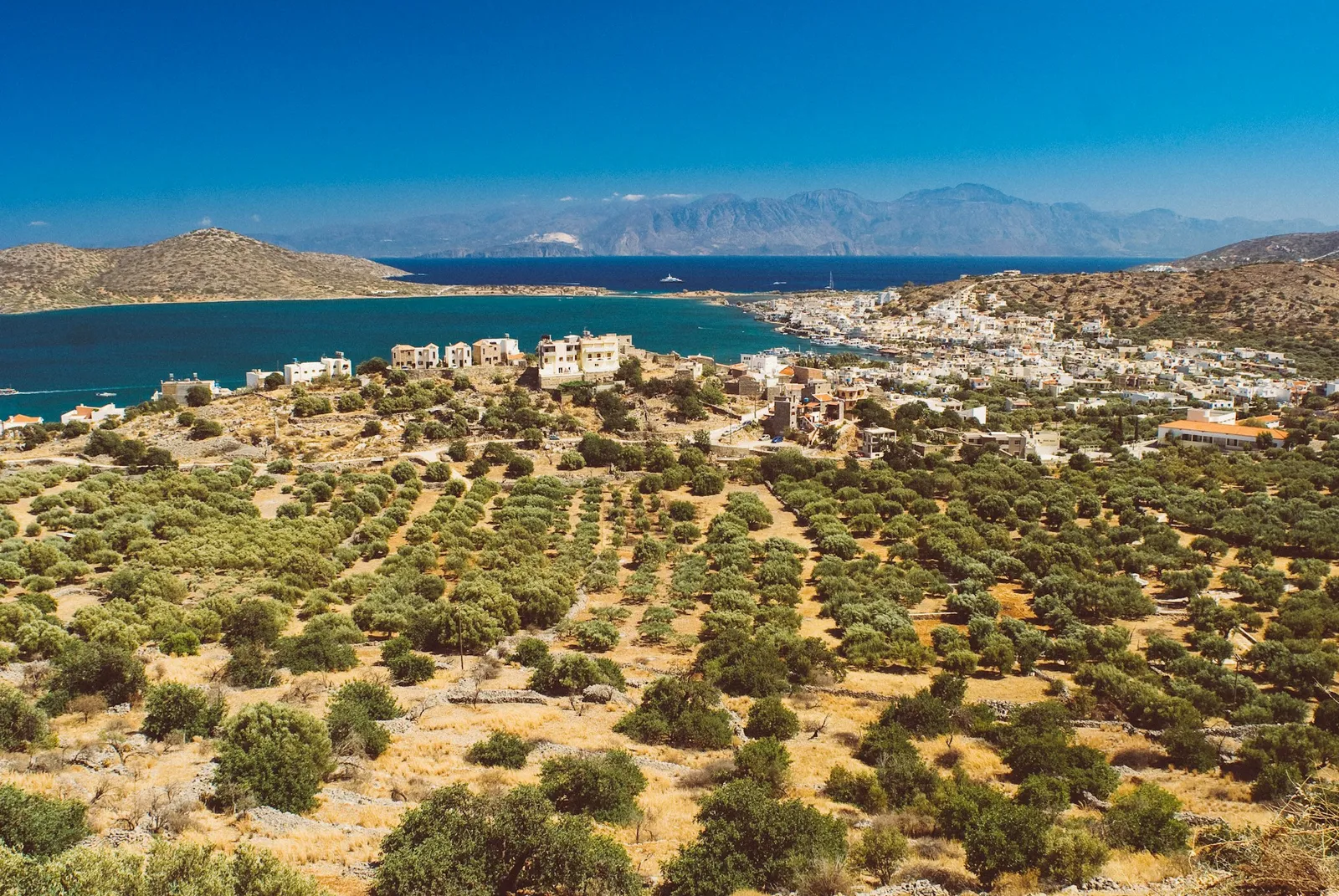
Greece is the most concentrated of the three. Most Greek oil comes from Koroneiki, a small olive grown above all in the Peloponnese and Crete. It yields well, ripens early and typically gives a green, herbaceous oil with a clear bitterness and pepperiness when picked young, softening to something rounder when picked later.
Other Greek oil olives include Manaki and Athinolia in the Peloponnese, and Tsounati in Crete. The Kalamon olive, the famous dark Kalamata table olive, is grown mainly for eating rather than for oil, which confuses a lot of shoppers: a bottle marked Kalamata is about the place, in Messinia, and the oil inside is usually Koroneiki.
Because so much of the country grows one variety, Greek oils can seem more alike than Italian ones. Within that, the harvest timing and the mill still make all the difference.
What olives are used in Italian olive oil?
Italy has more olive varieties than any other country. A 2014 study by Italian olive researchers put the figure at about 600 cultivars, around a quarter of the world's known olive germplasm. Most are local and grown in small amounts, but a handful dominate:
| Variety | Where | Typical style |
|---|---|---|
| Coratina | Puglia, especially around Bari | Intense, very bitter and peppery when young |
| Frantoio | Tuscany, central Italy, now planted widely | Fruity and green, with bitterness and pepper |
| Leccino | Tuscany and central Italy | Milder and softer, often blended with Frantoio |
| Moraiolo | Umbria and Tuscany | Green, bitter and pungent |
| Taggiasca | Liguria | Delicate and sweet, with little bitterness |
| Nocellara del Belice | Western Sicily | Fresh grass, artichoke and tomato, bitter and peppery when early |
| Biancolilla | Western Sicily | Mild, golden and gentle |
The result is more variety within Italy than between many countries. A Ligurian Taggiasca and a young Puglian Coratina are about as different as olive oils get. In Sicily alone there are six DOP oils built on different local varieties, which I describe in Sicilian olive oil DOP, and the olive I know best is the subject of Nocellara del Belice.
Do Italian, Spanish and Greek olive oils taste different?
They can, but as tendencies rather than rules. If you buy a typical supermarket extra virgin from each country, you might find:
- Spanish oils range widely, from mild and fruity Arbequina to robust Picual. Large everyday Spanish blends are often made to be smooth and versatile.
- Greek oils are often green and herbaceous, reflecting Koroneiki.
- Italian oils vary most by region: gentle in Liguria, green and peppery in Tuscany, intense in Puglia, and grassy with artichoke and tomato in Sicily.
Harvest timing cuts across all of these. An early harvest oil from any of the three will be greener, more bitter and more peppery than a late harvest oil from the same grove, and that bitterness and pepper are signs of freshness, not faults. Age flattens everything: after a year or two, oils from different countries start to taste much the same, of very little.
The best way to find out what you like is to taste two or three side by side, out of small glasses or on plain bread. How to taste olive oil explains how, and what makes Sicilian olive oil different goes deeper into variety and place.
What does "Product of Italy" mean on olive oil?
Under EU rules, the origin shown on extra virgin and virgin olive oil has a precise meaning. Article 8 of Delegated Regulation (EU) 2022/2104 says a country of origin must correspond to the place where the olives were harvested and where the mill that extracted the oil is located. So oil labelled as Italian, Spanish or Greek was grown and milled in that country.
If the two happen in different places, or the oil is a blend, the label has to say so:
- "Extra virgin olive oil obtained in Italy from olives harvested in Spain", or similar, when olives cross a border before milling.
- "Blend of olive oils of European Union origin", or a reference to the EU, for oil from more than one EU country.
- "Blend of olive oils of European Union origin and not of European Union origin", or the non-EU equivalent, for wider blends.
- A registered DOP or IGP name, which is also the only way a region rather than a country can appear as the origin.
What the origin rules do not control is everything else on the bottle: an Italian-sounding brand, a picture of Tuscany, or the address of a bottler in Italy. Read the origin line, which must sit in the main field of view next to the name of the oil. I explain what the origin line on an olive oil label means in more detail, and the rest of the label in how to tell if olive oil is real.
Why is Italian olive oil more expensive than Spanish?
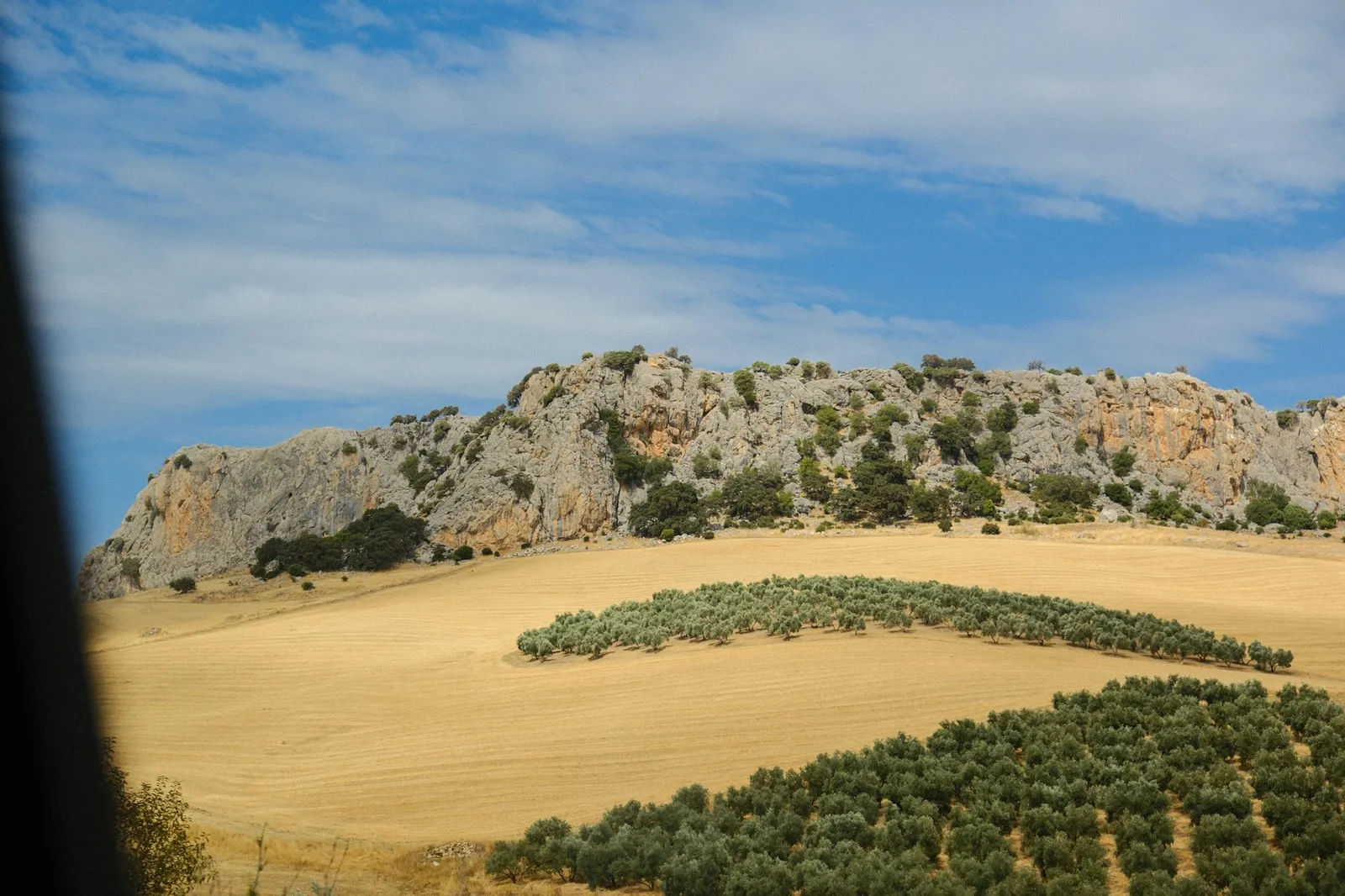
Mostly because it costs more to produce, not because of the name. Much of Spain's oil comes from very large groves on fairly flat land in Andalusia, many irrigated and harvested by machine, and a growing share from dense hedgerow plantings of varieties like Arbequina. That makes each litre cheaper to produce. Much of Italy's oil comes from smaller holdings, older trees and hillside groves where more of the work is done by hand. Greece sits somewhere in between, with many small family groves.
The IOC tracks producer prices for extra virgin oil in bulk at the main markets. In its December 2025 report, the price in Jaén, Spain, was €433 per 100 kg, against €665 per 100 kg in Bari, Italy, with Chania in Crete at €465 per 100 kg in the latest week it reported. That is roughly €4.30, €6.65 and €4.65 a kilo before bottling, transport, tax and the shop's margin. Italy's smaller 2024/25 harvest kept its prices high.
None of this makes cheaper oil bad or dearer oil good. It means a very low price on a bottle claiming 100% Italian extra virgin oil deserves a closer look at the label, and that a well priced Spanish or Greek extra virgin with a recent harvest date can be excellent value. Why prices rose across Europe after the Spanish droughts is covered in supermarket vs single-estate olive oil.
How to choose between them
Whichever country you lean towards, the same checks find the good bottles:
- Extra virgin, with a harvest date or a best before date about 18 months ahead.
- A clear single origin, or a variety, region or protected name, rather than a blend wording, if you want to taste a place.
- Dark glass or a tin, from a shelf away from bright light.
- A style to suit the job: mild Arbequina or Biancolilla for delicate food and baking, robust Picual, Coratina, Koroneiki or Nocellara for bread, beans, soups and grilled vegetables.
Where I live, the oil on our table is local Nocellara. Early on I visited a local mill and came away with ten litres of its Nocellara extra virgin, which is still the simplest way I know to buy oil you can trace. My own five trees, cut back hard in February 2026, flowered and set fruit this year; how that season went is in harvesting olive oil in Sicily. If you visit, the Sicily food guide will help you find it on the table, and how long olive oil lasts will help you keep it at its best once you get it home.
Frequently asked questions
Is Italian olive oil better than Spanish olive oil?
Not as a rule. Both countries make excellent extra virgin oil and both make ordinary oil. The grade, the variety, how fresh the oil is and how carefully it was made matter far more than whether it is Italian or Spanish. Taste them side by side and choose the style you prefer.
Is Greek olive oil better than Italian olive oil?
Neither is better in general. Greek oil is mostly Koroneiki and often green and herbaceous; Italian oil comes from hundreds of varieties and varies widely by region. A fresh, well made extra virgin from either country is a very good oil.
Which country produces the most olive oil?
Spain. The International Olive Council puts Spain's provisional 2024/25 production at 1,419,000 tonnes out of a world total of 3,572,000 tonnes, about 40%. Türkiye and Tunisia came next, with about 505,000 and 340,000 tonnes, ahead of Greece and Italy at around 250,000 tonnes each.
Why is Spanish olive oil cheaper than Italian?
Mainly because of how it is grown. Spain has very large groves, many irrigated and harvested by machine, including dense hedgerow plantings, so each litre costs less to produce. Much Italian oil comes from smaller, older and hillside groves with more hand work. Harvest sizes also move prices.
What olive variety is most Greek olive oil made from?
Koroneiki. It is a small olive grown mainly in the Peloponnese and Crete, and it typically gives a green, herbaceous oil with bitterness and pepper when picked early. The Kalamon olive behind Kalamata table olives is grown mostly for eating, not for oil.
What does Picual olive oil taste like?
Picual, Spain's most widely planted olive, typically gives a robust oil with notes of green tomato, fig leaf and fresh grass, firm bitterness and a peppery finish. It is naturally stable, so it keeps its character well.
What does obtained in Italy from olives harvested in Spain mean?
It means the olives were grown in Spain and taken to a mill in Italy, where the oil was extracted. EU rules require that wording whenever the olives are harvested in one country and milled in another, so the label cannot simply call the oil Italian.
Is Arbequina olive oil mild?
Usually, yes. Arbequina, originally from Catalonia, typically makes a mild, fruity oil with notes such as apple and banana and little bitterness or pepper, which is why it is popular for everyday use and with people new to extra virgin oil.
Sources and small print
- International Olive Council: olive sector statistics, December 2025 and forecasts
- International Olive Council: world market of olive oil and table olives, data from December 2024
- EUR-Lex: Commission Delegated Regulation (EU) 2022/2104, olive oil marketing standards and origin labelling
- Muzzalupo et al., Genetic biodiversity of Italian olives (2014)
- International Olive Council: World Catalogue of Olive Varieties
Production and price figures are the IOC's published estimates for the years shown; flavour notes describe typical styles, and every harvest and producer differs.
Credits
Photo: Alexis Presa, Unsplash Licence, via Unsplash.
Photo: Egor Myznik, Unsplash Licence, via Unsplash.
 The weekly YouTube series