
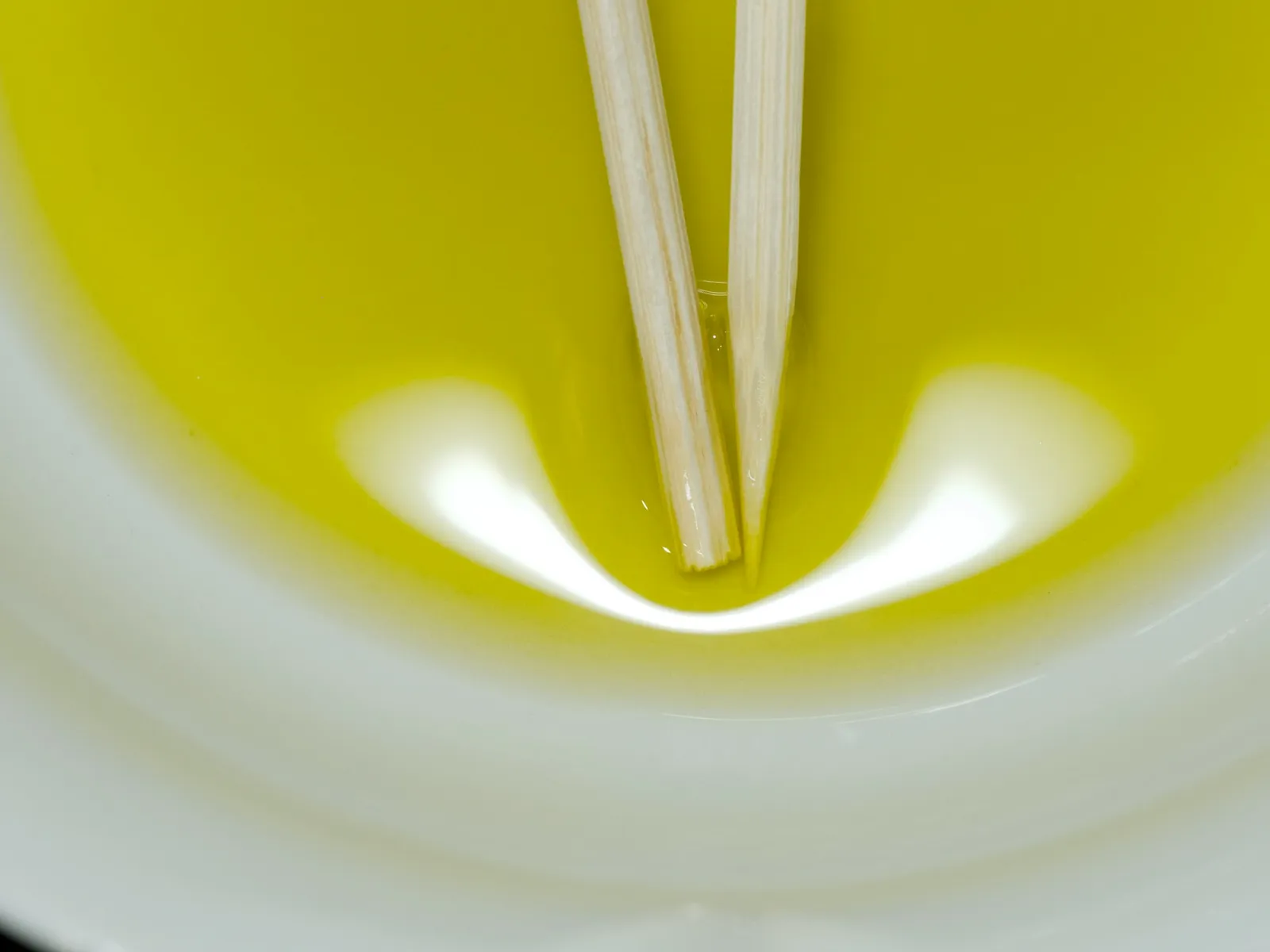
What is the difference between extra virgin and olive oil?
The difference is how the oil was made. Extra virgin oil comes straight from the olives: they are crushed, the paste is stirred, and the oil is separated from the water and solids, all by mechanical means. Nothing is added and nothing is taken out except by washing, settling, centrifuging and filtering. What you taste is the fruit.
A bottle that says only "olive oil" is something else. Its full legal name in the EU and the UK is "olive oil composed of refined olive oils and virgin olive oils", and the label must also say that it is "oil comprising exclusively olive oils that have undergone refining and oils obtained directly from olives". Most of it is refined oil, which starts as virgin oil that was not good enough to sell as it was. Refining strips out the faults, but also nearly all the aroma, colour and bitterness, so a little virgin oil is blended back in for some flavour.
Both are 100% olive oil. One is fresh fruit juice, in effect; the other is an industrial product made to be neutral and cheap. The law does not say how much virgin oil has to go into the blend, which is why some taste of almost nothing.
| Grade (EU legal name) | How it is made | Free acidity limit | Sold to the public? |
|---|---|---|---|
| Extra virgin olive oil | Mechanical means only, no defects, some fruitiness | No more than 0.8% | Yes |
| Virgin olive oil | Mechanical means only, slight defects allowed | No more than 2.0% | Yes |
| Lampante olive oil | Mechanical means, but faulty | Over 2.0% | No: must be refined first |
| Refined olive oil | Refined from virgin oil | No more than 0.3% | No, not on its own |
| Olive oil (refined and virgin olive oils) | Blend of refined oil and virgin oil | No more than 1.0% | Yes |
| Crude olive-pomace oil | Extracted from the leftover paste | No limit | No: must be refined |
| Refined olive-pomace oil | Refined crude pomace oil | No more than 0.3% | No, not on its own |
| Olive-pomace oil | Blend of refined pomace oil and virgin oil | No more than 1.0% | Yes |
Only four of the eight categories may be sold to shoppers in the EU: extra virgin, virgin, olive oil (the refined blend) and olive-pomace oil. The UK uses the same categories under its retained version of the older EU rules.
What does extra virgin olive oil mean?
To be sold as extra virgin, an oil has to pass two kinds of test.
- A chemical analysis. The best known limit is free acidity of no more than 0.8%, but there are others: peroxide value, ultraviolet absorption and ethyl esters show whether the oil has oxidised or came from damaged olives, and a long list of purity checks catches blending with other oils.
- A tasting panel. A panel of trained tasters, following the International Olive Council (IOC) method, must find no defects at all (a median defect score of zero) and at least some fruitiness. One musty, winey or rancid note and the oil drops to virgin or lower.
Free acidity has nothing to do with how sour the oil tastes. It measures how many fatty acids have broken away from the fat molecules, which happens when olives are bruised, left lying around or stored too long before milling. Low acidity is a sign that sound fruit was milled quickly. It is a ceiling, not a target: good fresh extra virgin oil is often far below 0.8%.
The grade is set when the oil is tested, but the oil keeps changing. An extra virgin oil can drift below the standard as it ages, which is one reason a bottle can fail later tests. How to judge what is in front of you, and which home tests are myths, is in how to tell if olive oil is real.
Why is it called extra virgin?
"Virgin" means the oil is untouched: obtained from the olive solely by mechanical or other physical means, under conditions that do not alter it, and not treated in any way other than washing, decanting, centrifuging and filtering. That is the IOC definition, and it is why refined oil can never be virgin, whatever it is blended with.
"Extra" marks the best of the virgin oils. The name comes from Italian, where the oil is olio extravergine di oliva, and Italy wrote the grades into law early. Italian Law 1407 of 13 November 1960 set four classes of virgin oil, each obtained mechanically and with only washing, settling and filtering allowed:
- Extra vergine: acidity no more than 1%.
- Sopraffino vergine (superfine): no more than 1.5%.
- Fino vergine (fine): no more than 3%.
- Vergine: no more than 4%.
The middle classes have gone, the acidity limit for extra virgin has been tightened to 0.8%, and the tasting panel has been added, but the idea is the same: virgin oil is olive juice, and extra virgin is the cleanest, freshest version of it.
Virgin vs extra virgin olive oil: what is the difference?
Virgin olive oil is made exactly the same way as extra virgin. It is the quality that differs. Virgin oil may have free acidity up to 2.0% and slight sensory defects (a median defect score of up to 3.5 on the panel scale), as long as it still has some fruitiness. Typically it comes from olives that were riper, slightly damaged or kept a little too long before milling.
You rarely see it on supermarket shelves in the UK or northern Europe, because most packers either sell their best oil as extra virgin or send the rest to be refined. In olive-growing areas it turns up more often, sometimes sold cheaply for cooking.
Below virgin comes lampante oil, with acidity over 2.0% or obvious defects. The name recalls its old use: oil like this was once burned in lamps. Today it cannot be sold for eating as it is; it goes to a refinery. The IOC standard also has an "ordinary virgin" class between virgin and lampante, with acidity up to 3.3%, but it may not be sold to consumers in the EU.
What is refined olive oil?
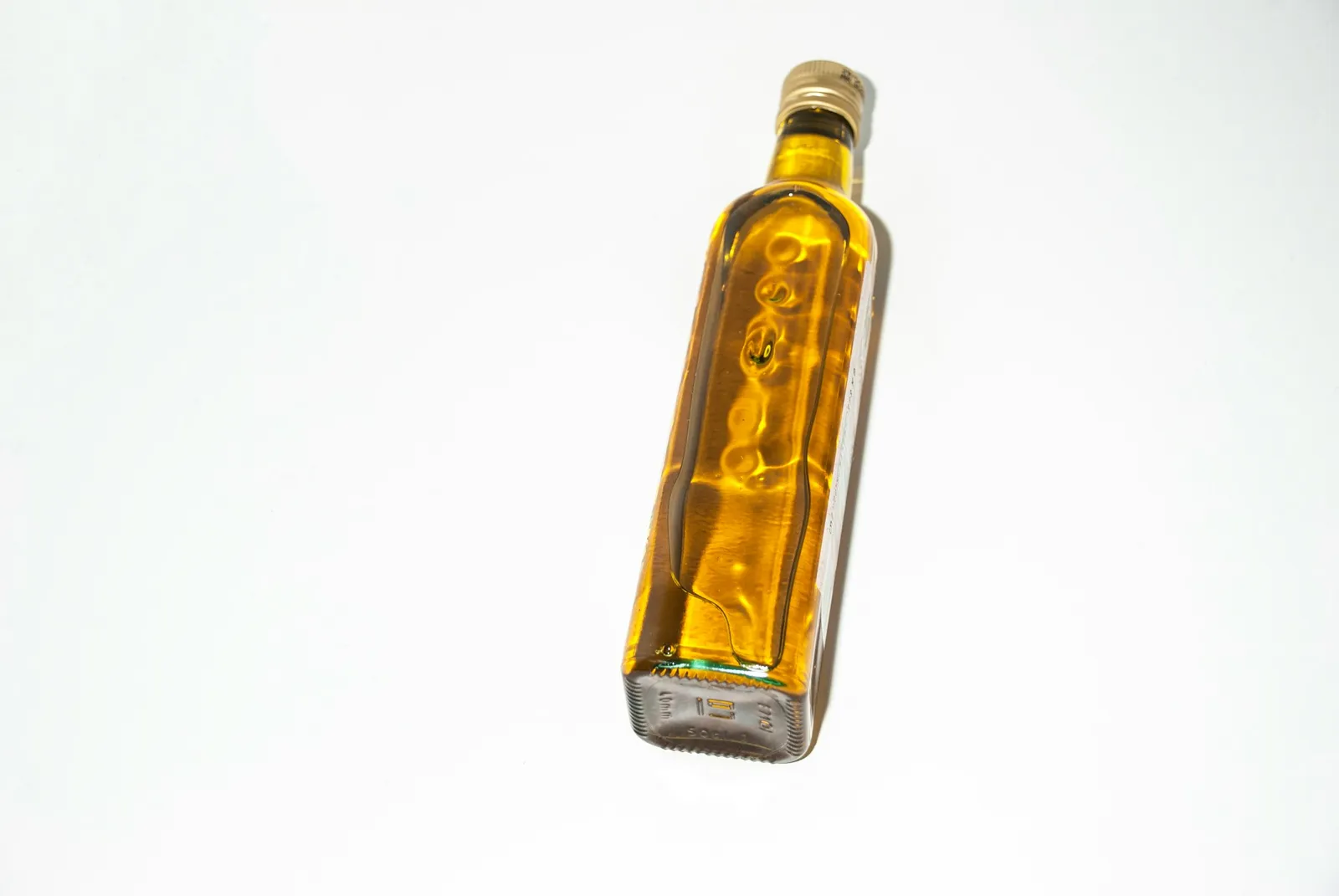
Refining is how the industry rescues faulty oil. Lampante and other poor virgin oil is treated to remove free fatty acids, colour and smells, leaving a pale, almost tasteless oil with acidity of no more than 0.3%. The rules say refining must not change the basic structure of the fat, and refined olive oil is still pure olive oil, but it has lost the fruitiness, bitterness and pepper that make virgin oil worth having.
Refined olive oil is not sold on its own in EU shops. It goes into the blend labelled "olive oil", with acidity of no more than 1.0%. You will also meet it as an ingredient in tins of fish, jars of vegetables in oil and ready meals, where the label may simply say olive oil.
Colour is no guide to grade: a refined blend can be tinted gold by the virgin oil in it, and a perfectly good extra virgin can be pale. The label is what tells you, and in the EU it must state the category in the main field of view.
What is light olive oil, and what is pure olive oil?
Neither is a legal grade in the EU or the UK. Both names are used, mostly in markets outside the EU, for the refined blend that Europe labels "olive oil".
- Light olive oil is light in colour and flavour, not in calories. Every oil has about nine calories per gram, roughly 120 per tablespoon, as UC Davis points out. "Extra light" just means even blander.
- Pure olive oil is pure in the sense that it contains only olive oil and no seed oil. It does not mean better than extra virgin; it is the same refined blend under a more flattering word.
- Classic or mild on a bottle usually means the same thing.
These oils have a place. Because refining removes the compounds that taste of olives, they are neutral, which suits baking, mayonnaise for people who find extra virgin too bitter, and frying where you do not want the oil to taste. They are not a cheaper version of the real thing for eating raw.
What is pomace oil?
Pomace is what is left at the mill after the oil has been separated: a damp paste of olive skins, flesh and crushed stone. It still holds a little oil, which cannot be pressed out. Specialist plants extract it with solvents or other physical treatments, then refine it, and blend it with some virgin oil.
The result must be sold as olive-pomace oil (in Italy, olio di sansa di oliva), with a label saying it comprises oils obtained by treating the product left after extracting olive oil, and oils obtained directly from olives. The IOC is blunt about it: pomace oil can never be sold as "olive oil".
It is widely used in restaurant and takeaway kitchens for deep frying, because it is cheap and stands up to long use. At most mills the pomace stays with the mill, which sends it for further oil extraction or uses it as fuel.
What does cold pressed or first cold pressed mean?
These two phrases are legally controlled in the EU, under Regulation (EU) 2022/2104, and may only appear on extra virgin or virgin oil:
- "First cold pressing": oil obtained below 27°C from a first mechanical pressing of the olive paste, using a traditional system with hydraulic presses.
- "Cold extraction": oil obtained below 27°C by percolation or centrifugation of the paste.
Most oil today, including oil from the mills around Mazara del Vallo, is made in continuous centrifuge systems, not presses, so "cold extraction" is the accurate term and "first cold pressed" strictly applies only to oil from traditional presses. There is no second pressing of the paste in a modern mill, so "first" is a holdover from the days of mats and presses. Every extra virgin oil is, by definition, made without heat treatment, so the phrase adds less than it seems, though the 27°C limit does tell you the paste was kept cool.
Two other label rules worth knowing: taste words such as "fruity" or "bitter" may only be used on virgin grades and only when backed by a panel test, and an acidity figure may only be printed together with the peroxide value, wax content and ultraviolet absorption. How the mill gets from olives to oil, step by step, is in how olive oil is made.
Which grade should you buy for which job?
Each grade has a job. My rule of thumb:
- Extra virgin: anything where you taste the oil, raw on bread, salads, beans, soups and grilled vegetables, and everyday cooking too. Good extra virgin oil copes with ordinary pan frying and roasting; extra virgin olive oil and smoke point goes into frying and heat in detail.
- Virgin: if you find it, a decent cooking oil at a lower price.
- Olive oil, light or pure: when you want olive oil that does not taste of olives, such as baking or a neutral mayonnaise.
- Olive-pomace oil: cheap, heavy-duty frying. Not for the table.
Whatever the grade, freshness matters as much as the name: an old extra virgin can taste worse than a young one of any grade. How long olive oil lasts covers storage, and supermarket vs single-estate oil explains the origin lines and blends you will find on the shelf.
What the grades mean for oil from our own trees

Our five trees are Nocellara del Belice, the main variety of this corner of Sicily, and I pruned them back hard in February 2026. Catching the olives on nets, moving them in ventilated crates and getting them milled quickly is exactly what keeps acidity low, and I go through the process in harvesting olive oil in Sicily.
What I have learned is that nobody can declare an oil extra virgin by looking at it, my own included. The grade is a laboratory analysis plus a panel tasting. Until oil from our trees has been through both, I simply call it our oil. For more on the variety, see Nocellara del Belice olives, and for why fresh oil from the mill looks cloudy, see filtered vs unfiltered olive oil.
Frequently asked questions
Is extra virgin olive oil better than regular olive oil?
For flavour, yes: extra virgin is unrefined oil straight from the olives, with its fruitiness, bitterness and pepper intact, while olive oil is mostly refined oil with a little virgin oil added. For frying or baking where you want a neutral taste, plain olive oil does the job and costs less.
What does free acidity mean on olive oil?
It is the share of fatty acids that have broken free from the fat molecules, expressed as oleic acid. It rises when olives are damaged or wait too long before milling. It has nothing to do with a sour taste. Extra virgin must be no more than 0.8%, virgin no more than 2.0%.
Is light olive oil lower in calories?
No. Light refers to its pale colour and mild flavour, because it is mostly refined oil. All oils have about nine calories per gram, roughly 120 per tablespoon, whether they are labelled light, pure or extra virgin.
What is pure olive oil?
A blend of refined olive oil and virgin olive oil. It is pure only in the sense that it contains nothing but olive oil. In the EU and the UK it is sold under the legal name olive oil composed of refined olive oils and virgin olive oils.
Is olive pomace oil real olive oil?
It comes from olives, but it may not be called olive oil. It is extracted from the paste left after milling, usually with solvents, then refined and blended with some virgin oil, and it must be sold as olive-pomace oil.
What is lampante olive oil?
Virgin oil with free acidity over 2.0% or clear taste defects. It is not fit to eat as it is and must be refined. The name recalls its old use as lamp oil.
Does first cold pressed mean better quality?
Not by itself. In the EU it means the oil was made below 27°C in a traditional hydraulic press. Most oil today is made in centrifuges, where the correct term is cold extraction. Every extra virgin oil is made without heat treatment, so check the grade and the harvest date first.
Why is extra virgin olive oil more expensive than olive oil?
It can only be made from sound olives milled quickly, and the grade has to be proven by laboratory and panel tests. Refined olive oil is made from lower-quality oil that would otherwise be unsaleable, so the blend costs much less to produce.
Sources and small print
- EUR-Lex: Commission Delegated Regulation (EU) 2022/2104 on marketing standards for olive oil
- International Olive Council: designations and definitions of olive oils
- International Olive Council: trade standard applying to olive oils and olive pomace oils
- UC Davis, UC Food Quality: olive oil myths and facts
- GOV.UK: olive oil labelling, packaging and inspections
Limits are those in force in the EU in November 2026; other countries may use different names for the same oils.
Credits
Photo: antonio massara, Unsplash Licence, via Unsplash.
Photo: Jesper Riknie, Unsplash Licence, via Unsplash.
Photo: Operation Sicily®, all rights reserved, via operationsicily.com.
 The weekly YouTube series