
How do you know when honey is ready to harvest?
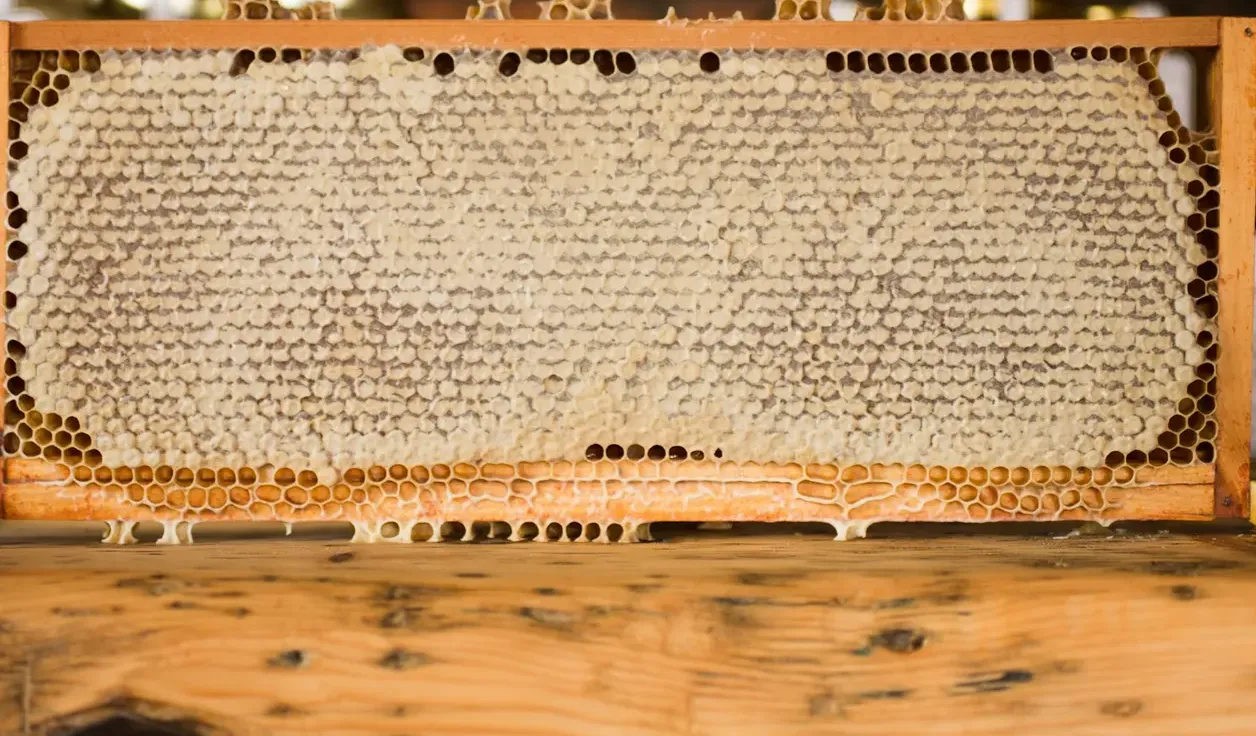
Bees make honey by drying nectar in the comb. When a cell of honey is ripe, they seal it with a thin cap of wax. That capping is the beekeeper's main signal, because sealed honey has been dried enough to keep. I explain the drying process itself in how bees make honey.
Beekeepers use three checks, usually together:
- Capping. The common rule is that a frame is ready when at least about three quarters to 80% of its cells are capped. A frame that is half capped is not ready, however full it looks.
- The shake test. Hold the frame flat over the open hive and give it a sharp downward shake. If nectar rains out of the uncapped cells, it is still too wet. If little or nothing comes out, the open cells are close to ripe too. The BBKA suggests exactly this check on spring honey.
- A refractometer. This small hand-held instrument measures the water content from a single drop. It is the only one of the three that gives you a number, and it is not expensive.
| Sign | Ready | Not ready |
|---|---|---|
| Capping | About 80% or more of the cells sealed | Large patches of open, shiny cells |
| Shake test | Little or nothing drips out | Nectar sprays out of the open cells |
| Refractometer | About 17 to 18% water, and no more than 20% | Above 20% water |
| Colony | Strong, with its own stores below | Light brood box, or bees short of food |
What water content should honey have before harvesting?
Under EU law honey may contain no more than 20% water, or 23% for heather honey (Council Directive 2001/110/EC), and UK rules use the same limit. That is a legal ceiling, not a target. Wild yeasts are present in all honey, and the wetter the honey, the more likely they are to start fermenting it. A widely used rule of thumb from honey research:
- About 17% water or less: very little risk of fermentation.
- About 17 to 19%: the risk depends on how many yeasts are present and how the honey is kept.
- Over about 19%: likely to ferment in time unless used quickly.
So most beekeepers aim for honey at around 17 to 18%. Capped honey is usually in that range, which is why capping is such a good guide. If a refractometer shows a frame at 20% or more, put it back and let the bees finish the job. Fermented honey, and how to spot it in the jar, is in does honey go off?
When should you harvest honey in the UK?
In most of the UK there are up to three honey crops a year, and the timing is set by the flowers rather than the calendar.
- Spring crop (oilseed rape): where bees can reach fields of oilseed rape, the yellow flowers of April and May can fill supers quickly. This honey is high in glucose and crystallises fast, sometimes within days, and once it sets in the comb it cannot be spun out. Take it off as soon as it is ripe, usually late May or early June, often when the fields have turned from yellow to green. Why some honeys set so quickly is in why honey crystallises.
- Main summer crop: clover, bramble, lime, field beans and garden flowers give the main flow in June and July. Most UK beekeepers take this honey in late July to August, once the flow ends.
- Heather: bees taken to the moors gather heather in August and September, harvested in September. Ling heather honey is jelly-like and has to be pressed rather than spun.
There is a second reason not to leave the summer harvest too late. The National Bee Unit points out that varroa treatments cannot be applied while honey supers are on the hive, and that winter preparations, usually starting with a varroa treatment, begin once the last crop is off, normally from early to mid August. Late summer honey from ivy is generally left to the bees.
When is honey harvested in Sicily and the Mediterranean?
The Mediterranean turns the UK year almost upside down. The main flows come in spring, summer is the hungry season, and autumn can bring a second, smaller chance. Around my villa near Mazara del Vallo the timings below are typical, but they shift with altitude, rain and the year, so local beekeepers are the best guide.
| Flow | Main flowering | Usual harvest |
|---|---|---|
| Citrus blossom (zagara) | About March to May | April to May |
| Sulla | About April to May | May to June |
| Wild thyme | About late May to July, later in the hills | July to early August |
| Eucalyptus | Early summer, where planted | July |
| Summer dearth | July to August: little or no nectar | Usually none |
| Carob | About September to November | Autumn, if the bees can spare it |
In a Sicilian summer the countryside dries out and nectar can stop for weeks. In my first year, by early August 2026 the land around the villa had gone two to three months with almost no rain, some days were above 40°C, and the honey boxes on my two strong hives had barely been touched. Warm weather does not make honey; flowers in nectar do. The honeys these flows produce are in orange blossom honey, thyme honey and why Sicilian honey tastes different.
How much honey should you leave for the bees?
The honey in the supers is the surplus. The honey in the brood box is the colony's food, and it should stay there. For UK colonies the National Bee Unit's rule of thumb is around 20 kg of honey in autumn to get a colony through winter, and its starvation fact sheet gives 18 to 22 kg for a good-sized colony.
To judge that by eye, the NBU gives these weights: a full British Standard brood frame holds about 2.3 kg of honey, a super frame about 1.2 kg, and a full super at least 12 kg. A full super plus three full brood frames of honey is about enough on its own. Larger frames such as Langstroth or Commercial hold up to about 3 kg. If a colony is short after the harvest, the balance is fed as thick sugar syrup in early autumn, while the bees can still store it.
In Sicily the winter is mild, but bees fly and rear brood for more of it, so they still eat their stores, and the summer dearth can leave a colony light before autumn even starts. What happens inside the hive over winter is in bees in winter.
How do you get bees off the honey supers?
You cannot carry boxes full of bees into a kitchen, so the supers need clearing first. The usual methods:
- Clearer board: a board with one-way bee escapes, fitted under the supers. Bees go down to the brood but cannot come back up. The BBKA suggests fitting it in the evening and returning early the next day, when the supers will be largely free of bees. Boards with several exits, such as the rhombus type, are quicker than the old two-way Porter escapes, which can take a day or two.
- Shaking and brushing: lift each frame, shake most of the bees off in front of the hive and brush off the rest with a soft bee brush or a handful of long grass. Fast and useful for a few frames, or for oilseed rape that cannot wait.
- Blowers: some larger beekeepers blow bees off with a leaf blower. Rarely needed for a few hives.
Whichever you use, check first that the brood box has room for all the bees from above, and add an empty super if not. Make sure the clearer board and the roof are bee-tight: a gap lets robbing bees and wasps in to empty the supers you have just cleared. In hot weather, work early in the morning. In late summer, in Sicily especially, robbing is a real danger, so never leave honey or wet frames uncovered near the hives.
How do you extract honey from the frames?
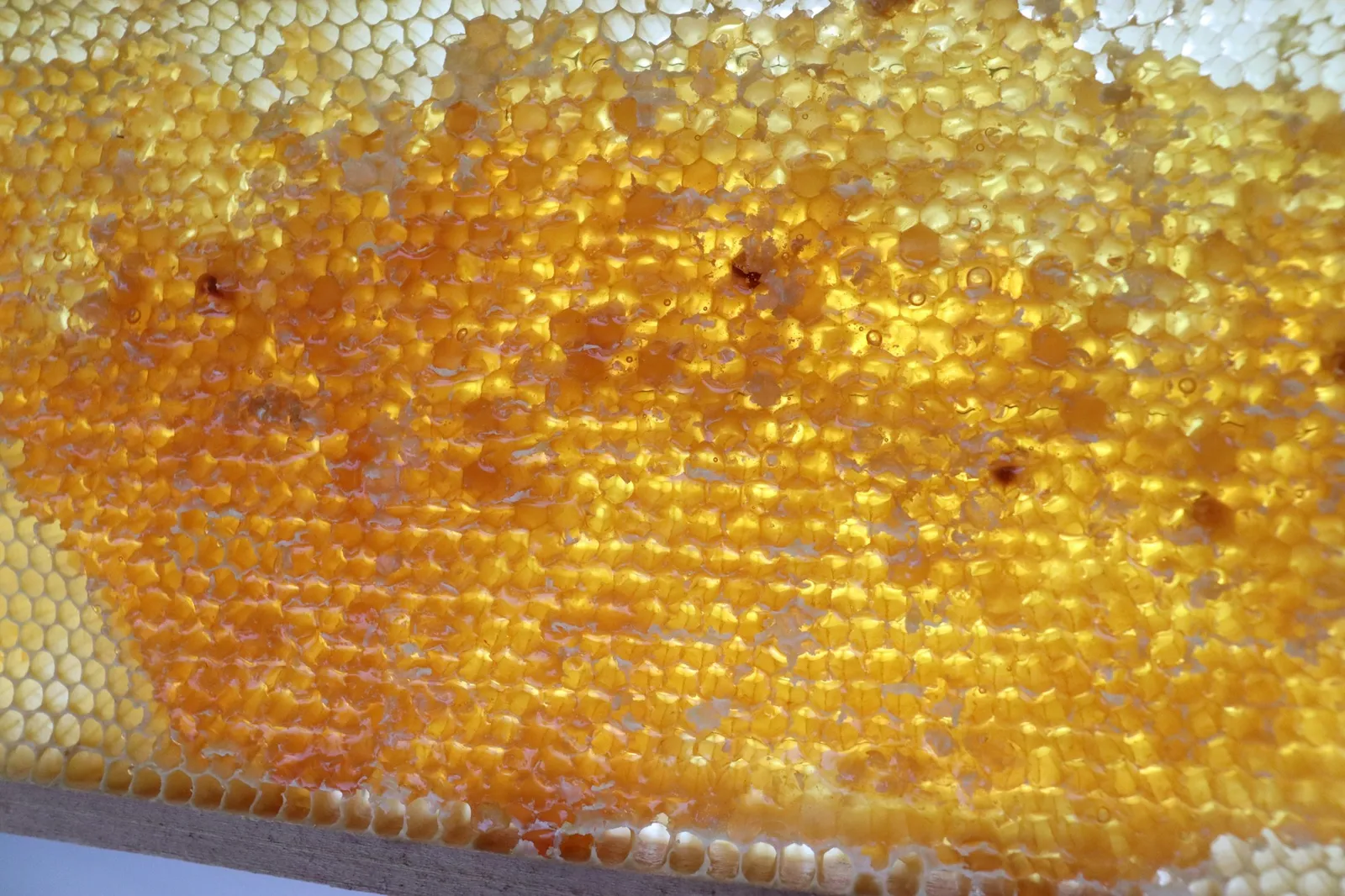
Extracting is simple in principle, and messy in practice. The basic steps for a small apiary:
- Work warm and bee-proof. Extract on the day you clear the supers, in a closed room, while the honey is still warm from the hive. Cold honey is thick and comes out slowly.
- Uncap. Slice the wax cappings off both faces of each frame with an uncapping knife, or lift them with an uncapping fork. Catch the cappings in a tray; they hold a lot of honey that will drain out.
- Spin. Load the frames into an extractor, a drum that spins them so the honey is thrown out of the cells by centrifugal force. Spin one side gently, turn the frames, spin the other, then go faster. Too fast too soon can break full comb.
- Strain. Run the honey through a coarse and then a finer strainer to catch wax and bits of bee. A household sieve or a double strainer is enough; there is no need for fine filtering.
- Settle. Leave the honey in a lidded food-grade bucket, ideally a settling tank with a tap, for a few days. Air bubbles and fine wax rise to the top and can be skimmed off before jarring.
Return the wet, spun frames to the hive in the evening for the bees to clean, above a crown board or clearer, so they do not trigger robbing. Some beekeepers note on each bucket the date, the hive and a refractometer reading, a good habit if you ever need to trace a problem. If you prefer, frames can also be cut out and kept as comb honey, with no extractor at all.
What are the most common honey harvest mistakes?
- Taking uncapped honey. Unripe honey is too wet and can ferment in the jar, turning frothy and sour. If a frame is mostly open, leave it.
- Taking too much. Stripping the brood box or the last super leaves the bees to starve, or to need heavy feeding. The colony's winter food comes first.
- Harvesting syrup. Bees store sugar syrup in the comb just as they store nectar. If syrup is fed while supers are on, it can end up in the jar, and it is not honey. My rule is feed or honey, never both: when a colony needs feeding, the honey boxes come off first. More on why this matters is in how to tell if honey is real.
- Harvesting after treatment. Most varroa treatments must not be used with honey supers on. Follow the instructions on the product and take the honey off first.
- Leaving oilseed rape too long. It sets in the comb within days of capping and then has to be scraped or melted out.
- Causing robbing. Spilled honey, open boxes and wet frames left outdoors can start a robbing frenzy that weakens or kills a small colony. I lost a weak colony to robbing in my first year, and it is a lesson I will not forget.
- Storing the honey damp. Honey takes up moisture from the air. Jar it with tight lids and keep it in a dry place.
Our first honey harvest: why I have not taken one yet
My apiary started in 2026 with a nucleus colony from near Trapani, grew with a swarm that settled in one of our olive trees, and lost a third, weaker colony from a smaller swarm to robbing. Going into winter there are two strong colonies. I have not taken any honey from them. In August the supers had barely been drawn, there was no surplus to take, and the honey the bees stored in the brood boxes is their food for winter.
That is normal. Bees on new foundation spend a great deal of energy making wax before they can store a surplus, and many beekeepers expect little or no honey in a colony's first year. Drawn comb from this year should give the bees a head start next spring. When the first harvest happens I will write about it honestly, including what the refractometer says. The whole first year is in beekeeping in Sicily: my first year, and how beekeeping works in Italy, including registering hives, is in beekeeping in Italy.
Frequently asked questions
What percentage of a frame should be capped before harvesting?
The common rule is at least about 80%, or three quarters, of the cells sealed with wax. If most of the frame is capped and nectar does not shake out of the open cells, the frame is usually ripe enough to take.
Can you harvest uncapped honey?
Only if it is ripe. Uncapped honey that passes the shake test, or reads 18% water or less on a refractometer, is fine. Wet, unripe honey from open cells is likely to ferment in the jar, so leave mostly uncapped frames for the bees to finish.
What month do you harvest honey in the UK?
Most UK beekeepers take their main crop in late July or August, after the summer flow. Oilseed rape honey comes off earlier, usually late May or early June, and heather honey in September.
When is honey harvested in Sicily?
Mainly in spring and early summer, roughly April to early August, after the citrus, sulla and thyme flows. July and August are usually a dearth with little nectar, and some beekeepers take a small autumn crop such as carob if the bees can spare it.
How long does a clearer board take to clear a super?
Usually overnight. Fit it in the evening and the supers are mostly free of bees by the next morning. Older Porter bee escapes are slower and can take a day or two, and leaving any board on too long can let the honey cool or invite robbers.
Should you harvest honey in the first year?
Often not. A colony started on new foundation spends much of its first season building comb and its own winter stores. Many beekeepers take nothing in the first year, or only from a super that is full and capped while the colony is clearly well stocked below.
What happens if you harvest honey too early?
The honey may hold too much water. Above about 19 to 20% water, the natural yeasts in honey can start to ferment it, giving froth, bubbles and a sour or alcoholic smell. Honey with more than 20% water also does not meet the legal definition of honey for sale.
Can you harvest honey in winter?
It is not a good idea. In winter the honey in the hive is the bees’ food, and opening the hive in cold weather chills the colony. Take the surplus in summer or early autumn and leave the winter stores alone.
Sources and small print
- National Bee Unit: preparing honey bee colonies for winter (stores, frame weights, timing)
- National Bee Unit: best practice guideline on feeding sugar to bees
- British Beekeepers Association: May in the apiary (oilseed rape honey, shake test, refractometer)
- British Beekeepers Association: July in the apiary (clearer boards and extracting)
- Council Directive 2001/110/EC relating to honey (composition and water content)
Flowering and harvest times are typical; they vary by place and year, so check with beekeepers near you.
Credits
Photo: Jonathan Farber, Unsplash Licence, via Unsplash.
Photo: Sierk Horn, Unsplash Licence, via Unsplash.
 The weekly YouTube series