
What is thyme honey made from?
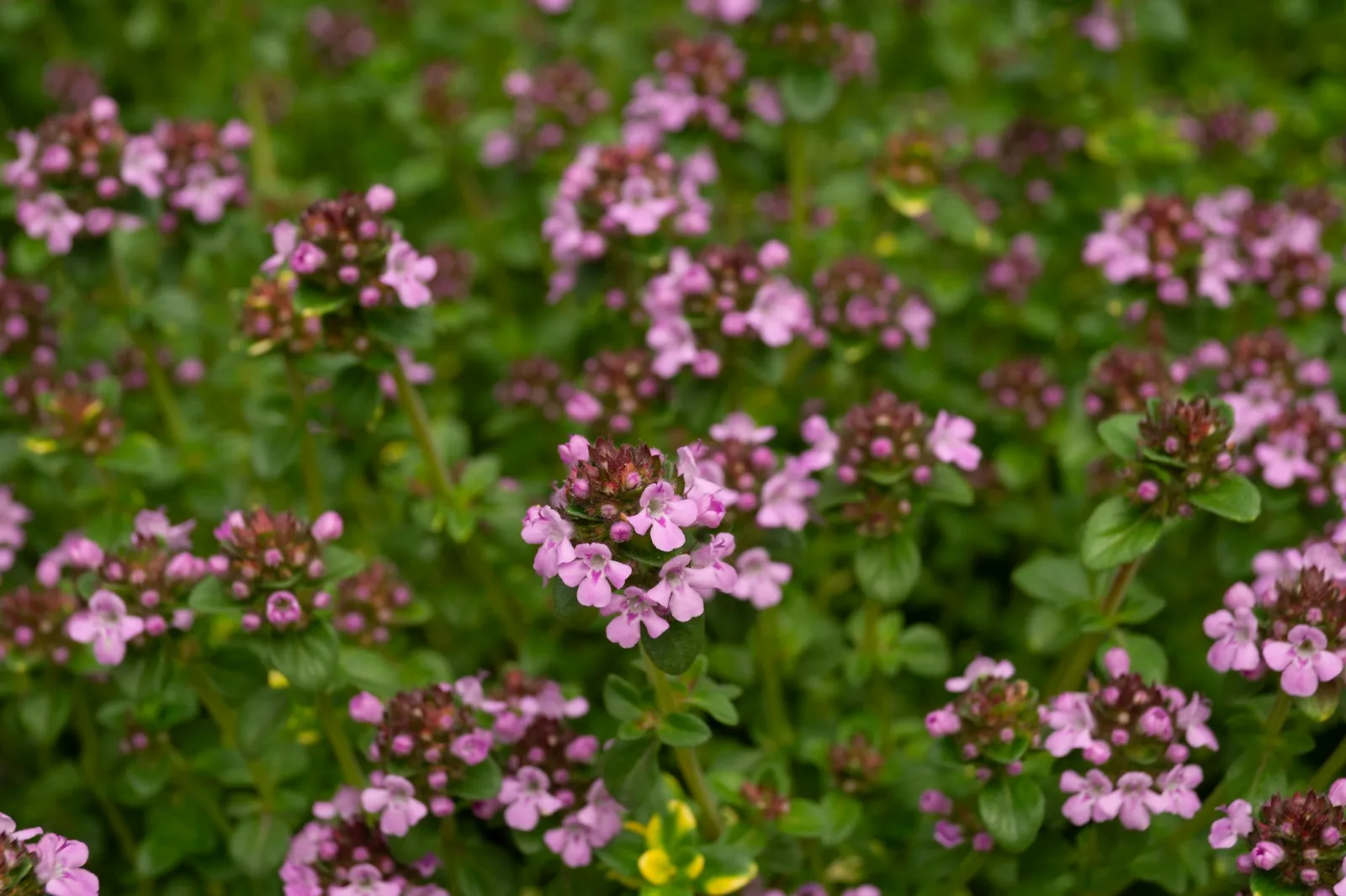
Thyme honey is a single-flower honey made mainly from the nectar of thyme. Which thyme depends on the country. In Italy, and in Sicily above all, the plant is Thymbra capitata, a small woody shrub of dry, stony, sunny ground, with narrow aromatic leaves and dense heads of pinkish-purple flowers. You will still see it called Thymus capitatus or Coridothymus capitatus: botanists have moved it between genera, and Kew's Plants of the World Online currently accepts Thymbra capitata. In English it is sometimes called conehead thyme, and in Sicily satra or satarèdda.
It is native across the Mediterranean, from Portugal and Spain through Italy, Sicily and Greece to Turkey, the Levant and North Africa. Elsewhere, thyme honey can come from other species: in Spain and France mainly from common thyme, Thymus vulgaris, and in Greece from a mix of thyme species and related plants of the mint family. That is one reason thyme honeys from different countries are not identical.
What does thyme honey taste like?
Strong, aromatic and herbal. Thyme honey is not subtle, and it is the honey people tend to remember. The European descriptive sheets (Persano Oddo and Piro, 2004), which describe the Sicilian Thymus capitatus type, give it medium sweetness, medium acidity, no bitterness and a medium to strong aroma, with woody, fresh, floral and fruity notes, plus a sharper note tasters file under "chemical", the kind of smell you get from crushed aromatic leaves. The Slow Food description of Hyblaean thyme honey is sweet, with slightly spicy floral notes and an intense aroma that lasts.
Compared with the pale, delicate orange blossom honey from the same island, it is darker, more savoury and much longer on the palate. A spoonful straight from the jar can feel almost resinous. That intensity is why many people use it like a seasoning rather than a sweetener.
What colour is thyme honey, and does it crystallise?
Thyme honey is amber, from light to fairly dark. The European reference samples averaged about 53 mm on the Pfund colour scale, in the light amber range, well darker than citrus or sulla honey.
It usually crystallises slowly. Thyme honey has noticeably more fructose than glucose, and fructose stays dissolved far more easily, so a jar may stay runny for months before it begins to thicken. When it sets, it goes paler and opaque. Either way it is the same honey, and why does honey crystallise explains how to make set honey runny again.
| Sicilian thyme honey | Greek thyme honey | Orange blossom honey | |
|---|---|---|---|
| Main plant | Thymbra capitata | Thyme species and other mint family plants | Citrus |
| Colour | Amber | Amber | Very pale, sets white |
| Aroma | Strong, herbal, slightly spicy | Strong, herbal | Floral, fresh, delicate |
| Thyme or citrus pollen (average) | About 27% | About 40% | About 19% |
| Crystallisation | Usually slow | Varies with the plants | Moderate, fine and smooth |
| Season | Summer | Summer | Spring |
Hyblaean honey: why Sicilian thyme honey is famous
The Monti Iblei, the limestone uplands of south-east Sicily around Ragusa and Siracusa, take their name from Hybla, a name the Greeks and Romans attached to several places in eastern Sicily, including the Greek colony of Megara Hyblaea on the coast north of Siracusa. In Latin poetry, Hybla and its bees became shorthand for the finest honey.
- Virgil, Eclogue 7: the shepherd Corydon calls Galatea thymo mihi dulcior Hyblae, "sweeter to me than the thyme of Hybla". The honey and the thyme are tied together in a single phrase.
- Virgil, Eclogue 1: the hedge on a farm boundary has its willow blossom grazed by "Hyblaean bees", a way of saying the best bees.
- Others: Hybla honey also appears in Ovid, and the Greek geographer Strabo and the Roman writer Pliny the Elder mention the honey of the area.
Exactly which ancient Hybla the poets meant is still debated, so it is safer to say that the Hyblaean name carried the reputation than to pin it to one hillside. What is certain is that the tradition is alive. The Slow Food presidium for Hyblaean Mountains thyme honey supports a small group of beekeepers mainly in the provinces of Ragusa and Siracusa, with a smaller part in the province of Catania. It also records how hard the honey has become to make: average yields have fallen from about 6 kg per hive in the best years to about 2 kg, with the thyme scrub under pressure from fires, land clearance, pesticides and changes in flowering.
When is thyme honey made?
In summer. According to the Slow Food presidium, Thymbra capitata usually flowers from late May to early August, depending on altitude: earlier near the coast, later in the hills. The honey is taken off at the end of that flow, usually in July or early August. It comes after the citrus and sulla of spring, and in western Sicily it overlaps with the start of the long, dry summer when little else is in flower, which is part of why a thyme crop is so prized and so variable. A dry spring, or a heatwave during flowering, can cut it sharply.
The beekeeper has to judge two things at once: leave the honey on long enough to ripen and to get a real thyme honey, but not so long that the bees start living on it through the summer dearth. Taking too much at that point can leave a colony short in August. The wider timing is covered in when to harvest honey.
Where does Sicilian thyme honey come from?
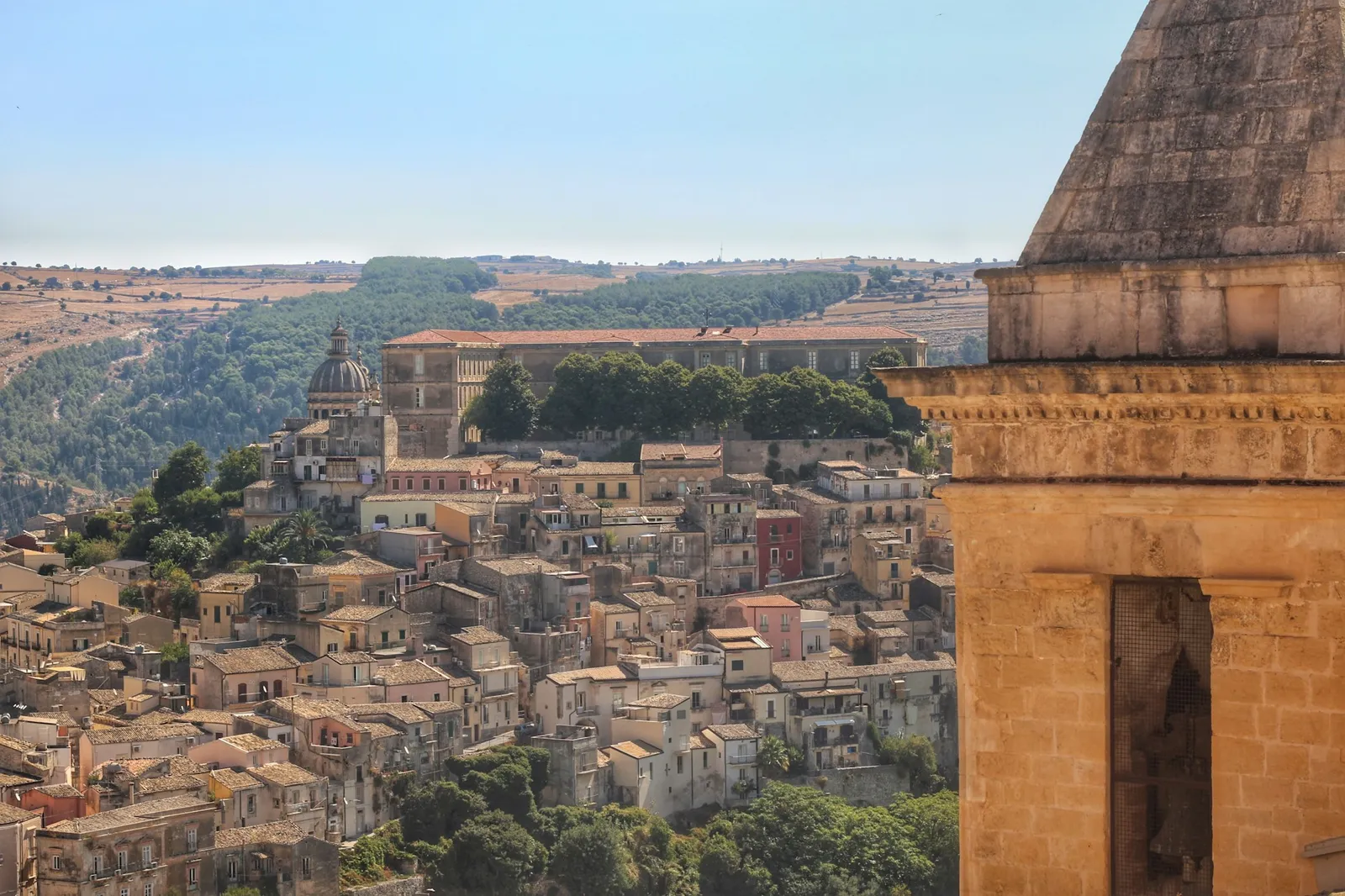
Wherever there is enough wild thyme on dry, open, stony ground. The Monti Iblei are the best known area, but the plant grows on limestone hills and coastal scrub in many parts of the island, including the west. Thyme honey is always a matter of landscape: the bees need a big stand of the plant within their flying range, and that means garrigue that has not been ploughed, built on or burned.
On our land near Mazara del Vallo, wild thyme grows on the drier edges. I have not identified the exact species, and I have not taken a honey harvest from our hives, so I make no claim that our bees have made thyme honey. A small patch of thyme around one villa would in any case only ever be one strand in a mixed summer honey; a true thyme honey needs hillsides of it. For what our bees and I have learned so far, see my first year of beekeeping in Sicily, and for the island's native bee, the Sicilian black bee.
Sicilian vs Greek thyme honey: what is the difference?
Greek thyme honey is the best-known thyme honey abroad, and Greece and Italy supplied most of the samples behind the European descriptive sheet. The two are close relatives in style: amber, aromatic and herbal, though the Sicilian honey is usually the slower of the two to crystallise. The differences are in the detail:
- The plants: Italian thyme honey comes mainly from Thymbra capitata. Greek thyme honey comes from that plant and from a range of other thyme species and related plants of the mint family, so it varies more from place to place.
- The pollen: in the reference data, Greek thyme honeys held more thyme pollen (about 40% on average) and more pollen overall than Italian ones (about 27%), which were described as typical of an under-represented honey.
- The scale: Hyblaean thyme honey is a small, local product; the Slow Food presidium lists only a handful of producers.
Neither is better by definition. A fresh, well-made thyme honey from either country tastes unmistakably of the plant; an old, overheated or blended one from either does not.
How do you recognise real thyme honey?
The flower source of a honey is confirmed in a laboratory by combining a trained tasting panel, physical and chemical measurements, and pollen analysis (melissopalynology), which counts the pollen grains under a microscope. Thyme brings a complication: its pollen is under-represented, meaning the flowers give a lot of nectar relative to the pollen that ends up in the honey. Across the European reference samples thyme pollen averaged 36% of the pollen counted, with a range from 12.5% to 67.6%, and the Italian samples averaged only about 27% (Persano Oddo and Piro, 2004). So a genuine thyme honey can have well under half thyme pollen, and the taste, the smell and the colour carry as much weight as the count.
At home, these are the useful checks:
- The label: under EU rules a honey can only be named after a flower if it comes wholly or mainly from it. Look for miele di timo with a named place and producer.
- The colour: it should be amber. A very pale "thyme honey" is suspect.
- The smell: open the jar and you should smell thyme straight away.
- The price and quantity: Hyblaean thyme honey is scarce, and cheap thyme honey in large quantities deserves a question.
For the wider tests, and why home tricks such as the water test do not work, see how to tell if honey is real and honey labels explained.
How to use thyme honey
Because it is so aromatic, thyme honey works best with food that can stand up to it, and in small amounts.
- With cheese: a drizzle over aged pecorino, a mature caciocavallo or a sharp Ragusano is a classic Sicilian pairing; see Sicilian cheese.
- Yoghurt, nuts and fruit: over thick yoghurt with walnuts, or with fresh figs or pears.
- Savoury cooking: brush it over roast lamb, pork, carrots or squash in the last minutes of cooking, or whisk a little into a vinaigrette. Added late, it keeps more of its aroma.
- Drinks: in tea or a hot lemon drink once it has cooled a little.
- With wine: a little thyme honey and cheese alongside a glass of Marsala or a sweet passito; see the Sicilian wine guide.
Store it closed, at room temperature, out of the sun. Like all honey, it is not for babies under 12 months, because of the risk of infant botulism.
Frequently asked questions
What plant does Sicilian thyme honey come from?
Mainly from Thymbra capitata, a wild Mediterranean thyme still often called Thymus capitatus. It is a small woody shrub of dry, stony ground with dense heads of pinkish-purple flowers, known in Sicily as satra or satarèdda.
What is miele di timo?
Italian for thyme honey. In Sicily it means honey made mainly from the nectar of wild thyme, Thymbra capitata. The best known is miele di timo ibleo, from the Monti Iblei around Ragusa and Siracusa, which has a Slow Food presidium.
What is Hyblaean honey?
Honey from Hybla, the ancient name linked to the Monti Iblei and other places in eastern Sicily. Roman poets used it as shorthand for the finest honey: in his seventh Eclogue, Virgil has a shepherd call his beloved sweeter than the thyme of Hybla.
Does thyme honey crystallise?
Yes, but slowly. Thyme honey has more fructose than glucose, so it often stays runny for months before it starts to thicken. When it sets it turns paler and opaque, and gentle warming makes it runny again.
Why is thyme honey so strong?
Because the nectar carries the aroma of the plant. Thyme is one of the most aromatic Mediterranean herbs, and a honey made mostly from it keeps a strong, herbal, slightly spicy smell and a long finish.
Why is Sicilian thyme honey expensive?
Because there is little of it. It depends on large stands of wild thyme flowering in early summer, and the Slow Food presidium reports that average yields in the Monti Iblei have fallen from about 6 kg per hive in the best years to about 2 kg, against an average of about 25 kg for orange blossom or wildflower honey in a normal year.
Is Greek thyme honey the same as Sicilian thyme honey?
They are similar in style, amber and strongly herbal, but not the same. Greek thyme honey comes from several thyme species and related plants and usually has more thyme pollen; Sicilian thyme honey comes mainly from Thymbra capitata and is made in much smaller amounts.
What goes well with thyme honey?
Strong cheeses such as aged pecorino and caciocavallo, thick yoghurt with walnuts, figs and pears, and roast lamb, pork or root vegetables brushed with it at the end of cooking. Use it in small amounts, because it is very aromatic.
Sources and small print
- Persano Oddo and Piro (2004), Main European unifloral honeys: descriptive sheets, Apidologie 35, Thymus sheet
- Slow Food Foundation: Hyblaean Mountains thyme honey presidium
- Royal Botanic Gardens, Kew, Plants of the World Online: Thymbra capitata
- The Internet Classics Archive (MIT): Virgil, Eclogue 7, in English
- EUR-Lex: Council Directive 2001/110/EC relating to honey
Figures are averages from reference samples. Every thyme honey varies with the year, the hillside and the beekeeper.
Credits
Photo: Nadin Nandin, Unsplash Licence, via Unsplash.
Photo: Valerio Giannattasio, Unsplash Licence, via Unsplash.
 The weekly YouTube series