
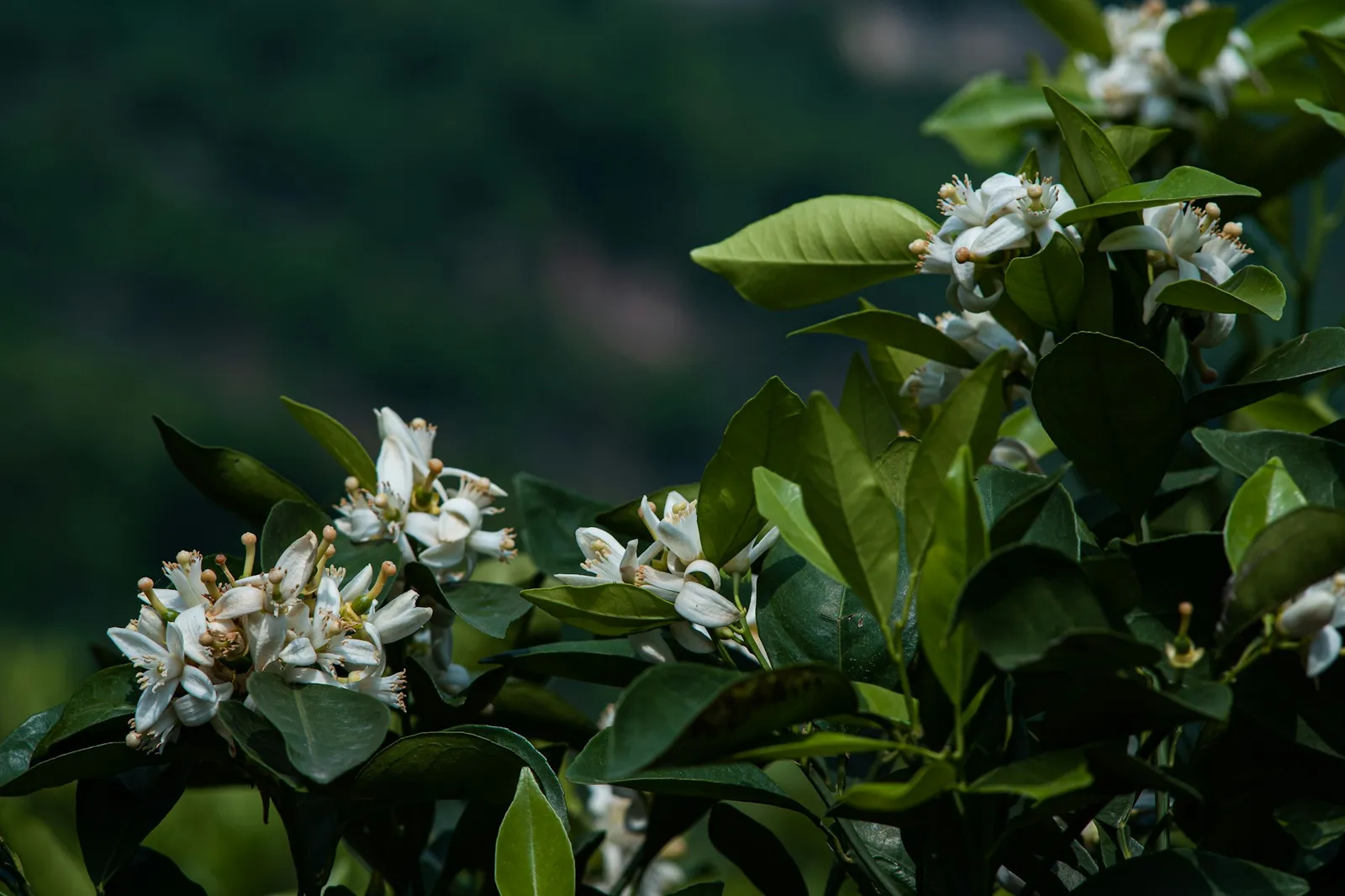
What is orange blossom honey?
Orange blossom honey is a single-flower (unifloral) honey: the bees made it mostly from the nectar of citrus flowers. Citrus trees flower heavily in spring, the flowers are rich in nectar, and in a big grove the bees will work little else for a few weeks. A beekeeper who moves hives into the groves, or keeps them nearby, and takes the honey off as soon as the flowering ends, gets a honey with a clear citrus character.
In practice it is citrus honey rather than strictly orange honey. Bees do not sort oranges from lemons, mandarins or clementines, and the scientific descriptive sheets for European honeys treat all citrus honey as one type because the different species give similar results. In Italy you will see it as:
- Miele di zagara: zagara is the Sicilian word for citrus blossom, from the Arabic for flower. This is the name you will hear most in Sicily.
- Miele di agrumi: citrus honey, the standard Italian term used on labels and in competitions.
- Miele di arancio: orange honey, used when the source is mainly orange groves.
Under EU law a honey may only carry a flower name if it comes wholly or mainly from that source and has the matching taste, chemistry and pollen. That rule is in the EU Honey Directive 2001/110/EC, and honey labels explained covers what else a jar must say.
What does orange blossom honey taste like?
Good orange blossom honey smells the way a citrus grove does in April: floral, fresh and sweet, with the scent of the flowers rather than of the fruit. It does not taste of orange juice or peel. The European descriptive sheets (Persano Oddo and Piro, 2004) describe it as medium in sweetness, weak in acidity, with no bitterness, and an aroma that is floral and fresh, with a note that tasters compare to anise. The flavour is fairly short; it does not linger like a dark honey.
The smell comes partly from a compound called methyl anthranilate, which is also found in the flowers themselves and is one of the chemical markers for citrus honey. As the honey ages, that fresh floral note fades and the honey can take on a fruitier, more jammy smell, which Italian tasting sheets compare to orange marmalade. So the freshest jar, from the most recent spring, is the one to taste if you want the true character.
Compared with other Sicilian honeys, it is one of the gentlest. Thyme honey is darker and much more aromatic; sulla honey is similarly pale but more neutral. For the broader picture of why honeys from the island differ, see why Sicilian honey tastes different.
What colour is orange blossom honey, and why does it turn white?
Runny orange blossom honey is among the palest honeys there are: from almost colourless to pale straw yellow. On the Pfund scale beekeepers use to grade colour, the European reference samples averaged about 15 mm, which counts as very light.
It does not stay runny for long. Citrus honey holds a fair amount of glucose, the less soluble of the two main honey sugars, so it crystallises at a moderate pace, usually within a few months of extraction. The crystals are normally fine, and the set honey is smooth, creamy and white, sometimes with a pearly sheen, turning light beige with age. A jar that looked like clear liquid in May may be a white spread by the autumn. That is normal, not a sign that anything is wrong, and the reasons are in why does honey crystallise.
| Feature | Orange blossom (citrus) honey | Source |
|---|---|---|
| Colour, runny | Almost colourless to pale straw | Italian tasting sheets |
| Colour, set | White, sometimes pearly, to light beige | Italian tasting sheets |
| Pfund colour | About 15 mm (very light) | Persano Oddo and Piro, 2004 |
| Smell | Floral, fresh, orange blossom; fruitier with age | Both |
| Taste | Medium sweet, weak acidity, not bitter | Persano Oddo and Piro, 2004 |
| Fructose / glucose | About 38.7 g / 31.4 g per 100 g | Persano Oddo and Piro, 2004 |
| Crystallisation | Moderate pace, fine and smooth | Persano Oddo and Piro, 2004 |
| Citrus pollen | Often low: average 18.6%, range 2.3 to 42.2% | Persano Oddo and Piro, 2004 |
When is orange blossom honey made in Sicily?
Citrus flowers in spring. In Sicily the main orange flowering is in April, starting in March in warm, low spots and running into May higher up or in cooler years. Lemons are different: Sicilian lemon trees can flower more than once a year, which is why there is lemon blossom about at odd times, but the big spring flowering is the one that makes honey.
That timing makes orange blossom honey hard work for a beekeeper. The colonies have to be strong very early in the year to fill supers in April, and the honey has to come off promptly once the petals drop, before the bees start bringing in the next flowers and the citrus character gets diluted. After that comes sulla and the other spring flowers, then thyme, and then the long summer dearth in July and August that I describe in when to harvest honey.
Around our land the citrus flowers at roughly the same time as the first wild flowers of spring. I have not yet taken a honey harvest from our hives, so I cannot tell you what a spring crop from this patch of western Sicily tastes like. When there is one, I will write about it.
Where is orange blossom honey made in Sicily?
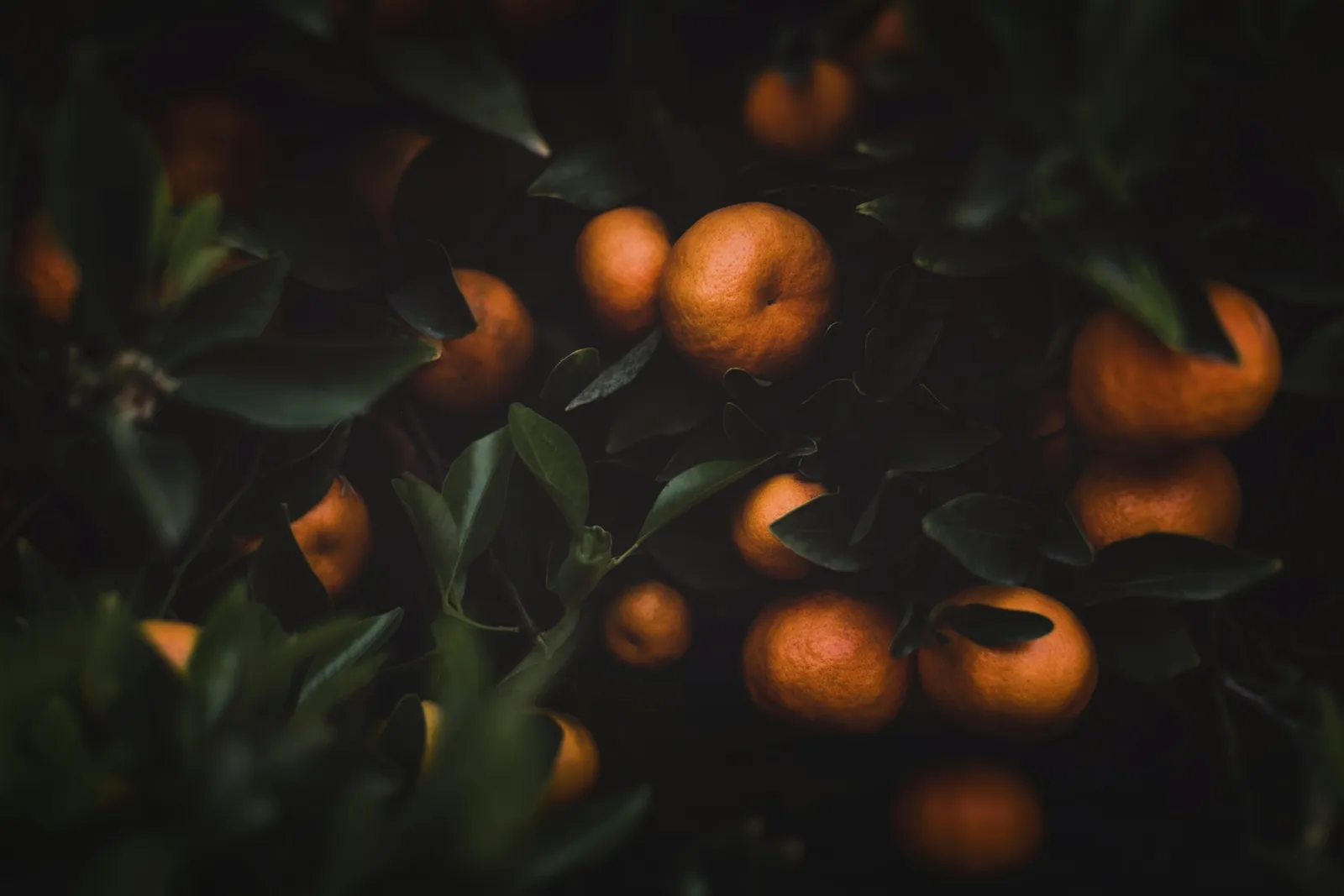
Wherever there are large citrus groves, and Sicily has a lot of them. The main areas are:
- The east: the Piana di Catania and the country around Lentini and Francofonte, the heart of the blood orange area. The Arancia Rossa di Sicilia IGP covers parts of the provinces of Catania, Siracusa and Enna. This is where the largest citrus plantings, and much of Sicily's orange blossom honey, are.
- The south-west: the valleys around Ribera, Sciacca and Menfi in the province of Agrigento, the area of the Arancia di Ribera DOP (which also takes in Chiusa Sclafani in the province of Palermo). Many of the oranges grown here are navel types, which matters for pollen analysis, as explained below.
- Around Palermo: the Conca d'Oro, the plain around the city, was famous for its citrus groves, and there are still groves on its edges.
- The far west: around Mazara del Vallo and Marsala, citrus groves sit in a farmland mix of vineyards, olives and vegetables. Here citrus is one spring flower among many, so a spring honey is more often a mixed one.
Spain, especially around Valencia, is the other big producer of orange blossom honey in Europe. Outside Europe it is also made in quantity in places such as the USA (California), Mexico, Brazil and Israel. For the towns mentioned here, see the guide to Sicilian towns and the page on Mazara del Vallo.
Orange blossom honey vs wildflower (millefiori) honey
Millefiori, a thousand flowers, is the Italian name for multifloral or wildflower honey: honey from whatever the bees found, with no single source dominating. It is not a lesser honey, just a different one, and in a varied landscape like ours it is what most hives make most of the time.
- Source: orange blossom honey comes mainly from citrus; millefiori from a mix that changes with the place and the month.
- Taste: orange blossom is consistent, floral and delicate; millefiori can be anything from pale and mild to dark and strong.
- Colour: orange blossom is very pale; millefiori varies.
- Proof: to be sold as orange blossom honey, the honey must match the citrus profile in taste, chemistry and pollen. A spring millefiori from near citrus groves may smell faintly of orange blossom without qualifying.
A spring honey from western Sicily, where citrus, sulla, wildflowers and herbs flower close together, is often a millefiori with a citrus note rather than a true citrus honey. That is not a fault; it is simply what the land gives.
How do you know orange blossom honey is real?
Laboratories confirm the flower source of a honey with three checks together: a tasting panel, physical and chemical measurements, and pollen analysis (melissopalynology), where the pollen grains in a sample are counted under a microscope. For most single-flower honeys, a high share of the matching pollen is part of the proof. Citrus honey is a known exception.
Citrus pollen is under-represented in honey. Many citrus cultivars produce little pollen, and seedless types such as navel oranges produce little that is viable, so the honey can be almost entirely citrus nectar while holding only a modest share of citrus pollen. In the European reference samples, citrus pollen averaged 18.6% of the pollen counted, with a range from 2.3% to 42.2% (Persano Oddo and Piro, 2004). Italian production rules describe citrus pollen as very variable, mostly above 10%, and lower where sterile cultivars grow. So a citrus honey with 10% citrus pollen can be perfectly genuine, while a meadow honey with the same figure would not pass.
Because pollen alone is weak evidence here, laboratories also look at methyl anthranilate. German laboratories treat at least 2 mg per kg as typical of a genuine citrus honey. Add the colour, which should be very light, and the tasting, and the picture is usually clear.
At home you cannot run these tests. What you can do: check that the jar names the flower and a specific place, expect a very pale honey that sets white, and smell for blossom rather than fruit. A dark, runny "orange blossom honey" that never sets is worth questioning. For the wider checks, see how to tell if honey is real.
How to use orange blossom honey
Its delicacy is the point, so use it where you can taste it. Heat drives off the floral aroma quickly, which makes it a waste in a long bake or a hot pan.
- With fresh cheese: spooned over fresh sheep's ricotta it is a simple Sicilian dessert. It also goes with young pecorino and soft goat's cheese. See Sicilian cheese for what to pair it with.
- Breakfast: set orange blossom honey spreads like butter on bread or toast, and stirs into yoghurt.
- Drinks: stir it into tea once the tea has cooled a little, rather than into boiling water, to keep the scent.
- Dressings and fruit: a little in a lemon or orange vinaigrette, or over strawberries, figs or a citrus salad.
- Sweets: it suits almond biscuits and ricotta desserts; the Sicilian desserts guide has the classics.
Keep it in a closed jar at room temperature, away from the hob and the sun. If you prefer it runny, warm the jar gently in water below about 40°C. As with all honey, do not give it to babies under 12 months, because honey can carry the spores that cause infant botulism.
Frequently asked questions
What is zagara honey?
Zagara is the Sicilian word for citrus blossom, so miele di zagara is citrus blossom honey: made by bees mainly from the nectar of orange, lemon, mandarin and other citrus flowers in spring. It is very pale, floral and mild, and sets into a fine white cream.
Does orange blossom honey taste of oranges?
Not of the fruit. It smells and tastes of the flowers: floral, fresh and sweet, with a light acidity and a note some tasters compare to anise. Older jars can turn fruitier, closer to orange marmalade, as the fresh floral note fades.
Is orange blossom honey flavoured with orange?
Genuine orange blossom honey has nothing added. The citrus scent comes from the nectar, including a natural compound called methyl anthranilate. Under EU law, honey cannot contain added flavourings or any other added ingredient.
Why has my orange blossom honey turned white?
It has crystallised. Citrus honey contains a fair amount of glucose, which comes out of solution as fine crystals, usually within a few months, leaving a smooth white or pale beige honey. It is still good to eat, and gentle warming makes it runny again.
What is miele di agrumi?
Italian for citrus honey, the standard label name for honey made mainly from citrus blossom. In Sicily the same honey is often called miele di zagara, and miele di arancio when it comes mainly from orange groves.
Is lemon blossom honey the same as orange blossom honey?
Close enough that the European reference sheets treat all citrus honey as one type. Bees work whichever citrus is in flower, and the results from different species are very similar. A honey from mainly lemon groves may be sold as citrus or lemon honey.
When is orange blossom honey harvested in Sicily?
Soon after the citrus flowering ends, usually late April or May. The beekeeper takes it off promptly so it is not mixed with the next flowers, which would dilute the citrus character.
Why is there so little citrus pollen in orange blossom honey?
Citrus is under-represented: many cultivars make little pollen, and seedless navel oranges make little viable pollen, while the flowers give plenty of nectar. In European reference samples citrus pollen averaged 18.6%, and Italian rules accept it as variable, mostly above 10%.
Sources and small print
- Persano Oddo and Piro (2004), Main European unifloral honeys: descriptive sheets, Apidologie 35, Citrus sheet
- EUR-Lex: Council Directive 2001/110/EC relating to honey
- EUR-Lex: Directive (EU) 2024/1438, amending the Honey Directive
- Regione Emilia-Romagna: production rules for honey, including unifloral honey descriptions (Italian)
- NHS: foods to avoid giving babies, including honey
Figures are averages from reference samples. Every honey varies with the year, the groves and the beekeeper.
Credits
Photo: 高 长华, Unsplash Licence, via Unsplash.
Photo: Tim Mossholder, Unsplash Licence, via Unsplash.
 The weekly YouTube series