
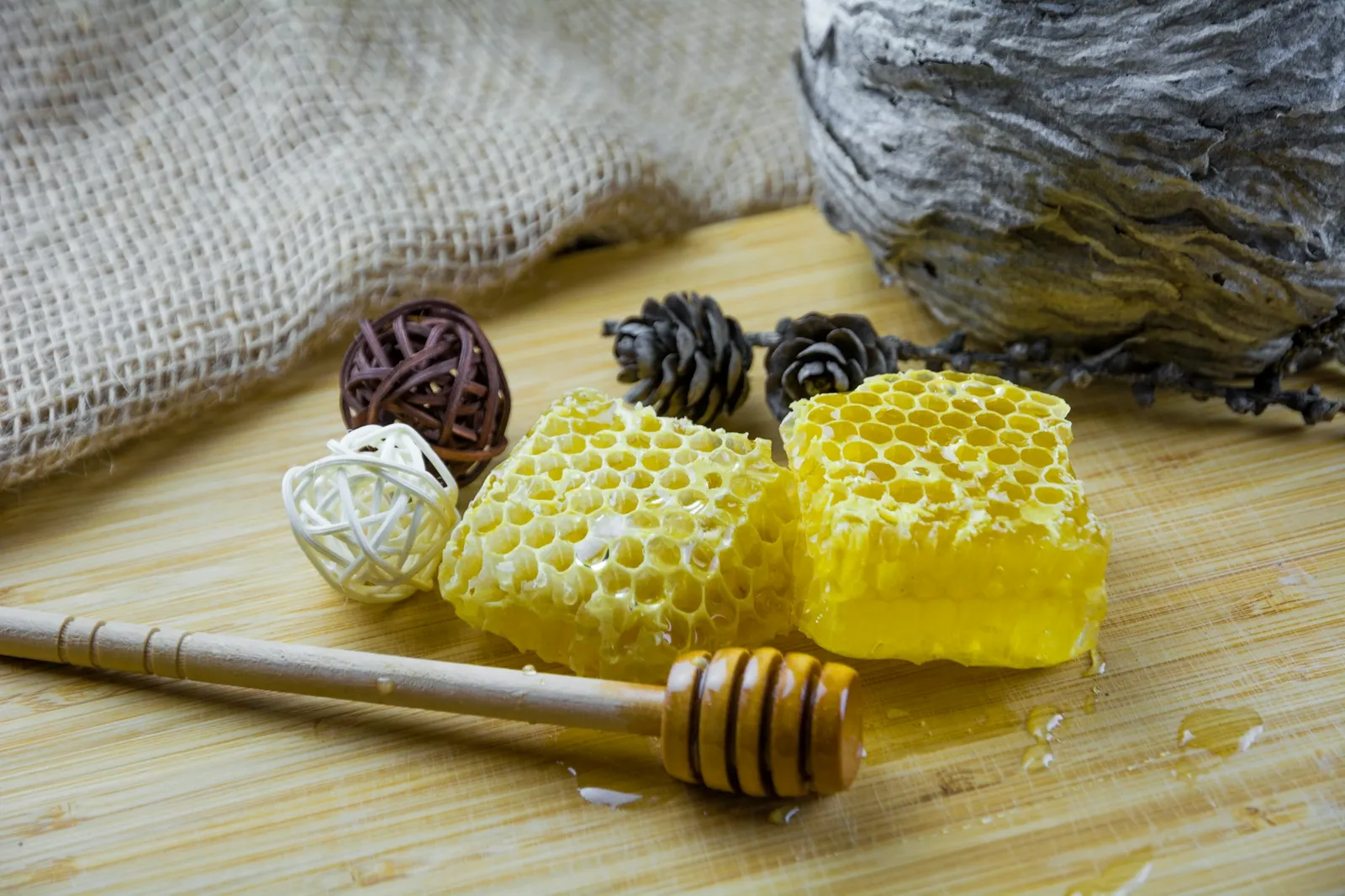
Why does honey crystallise (or crystallize)?
Honey is mostly two sugars, fructose and glucose, dissolved in a small amount of water: typically around 17 to 18% water and about 80% sugar. That is far more sugar than the water could normally hold. Honey is what chemists call a supersaturated solution, and supersaturated solutions are unstable. Sooner or later some of the sugar comes back out.
Glucose is much less soluble than fructose, so it is glucose that comes out, forming tiny crystals. Each crystal gives others something to grow on, and the crystals spread through the jar until the honey is thick and grainy or completely set. The fructose stays dissolved in the liquid around the crystals.
Anything that gives the crystals a starting point speeds it up: grains of pollen, tiny bits of wax, air bubbles, or a few crystals left in the jar from before. Raw honey is full of those, which is one reason it sets sooner than honey that has been heated and finely filtered.
Is crystallised honey still good to eat?
Yes. Crystallisation changes the texture, not the safety or the flavour. Honey has kept for years in jars for exactly the reasons it crystallises: it has so much sugar and so little free water that microbes cannot grow in it.
Many people prefer it set. In much of Europe, set or creamed honey is sold on purpose, and it spreads on toast without dripping. Some Sicilian honeys are almost always sold set, because of the flowers they come from.
The one thing to watch is a thin liquid layer on top of a set honey, with a sour or yeasty smell, or bubbles and froth. When honey crystallises, the liquid left between the crystals is slightly wetter than before, and if a honey was harvested too wet to start with, that liquid can begin to ferment. Fermented honey tastes boozy or sour. It is a sign of honey with too much water, not of crystallisation itself. Kept in a closed jar at room temperature, good honey with a normal water content does not ferment.
Does crystallised honey mean it is real or fake?
Neither, on its own. This is one of the most common honey myths, in both directions. Some people believe real honey never crystallises; others believe only real honey does.
- Real honey can stay runny for a long time if it is naturally high in fructose (acacia, chestnut and many honeydew honeys), or if it has been warmed and finely filtered to remove the crystal starting points.
- Adulterated honey can crystallise too, depending on what it has been mixed with and how it was handled.
What is true is that raw, unheated honey from flowers high in glucose will usually set within a few months, so if a honey sold as raw never sets at all, it is worth knowing why. How to tell if honey is real explains which checks work and which do not.
Which honeys crystallise fastest?
It depends mainly on the ratio of glucose to fructose, which depends on the flowers the bees visited, and on the water content.
| Honey | How fast it sets | Why |
|---|---|---|
| Oilseed rape, dandelion, sunflower, ivy | Days to a few weeks, often very hard | High in glucose |
| Clover, heather blends, many wildflower honeys | Weeks to months | Moderate glucose |
| Citrus (orange blossom), thyme, sulla | Usually within a few months, often fine and creamy | Moderate to high glucose |
| Acacia (robinia), chestnut, tupelo, many honeydew honeys | Can stay runny for a year or more | High in fructose |
Several of the classic Sicilian honeys, such as citrus blossom (zagara), sulla and wild thyme, tend to set into a fine, pale cream within months. I describe them in why Sicilian honey tastes different.
Why does honey crystallise in the fridge?
Temperature matters a lot. Research on crystallisation kinetics finds honey sets fastest at around 10 to 15°C, roughly the temperature of a cool larder or an unheated winter kitchen. Warmer than that, the sugars stay dissolved more easily. Much colder, the honey becomes so thick that the crystals grow slowly.
A fridge, at around 4 to 5°C, is cold enough to make honey thick and set it over time, and there is no need to keep honey there. Normal room temperature, around 20°C, in a closed cupboard is best for honey you want to stay runny. Freezing almost stops crystallisation, which is why beekeepers sometimes freeze honey they want to keep liquid for a long time.
How to make crystallised honey runny again
Gently. Heat too hard and you lose the delicate aromas that make good honey worth buying.
- Take the lid off, or loosen it, and stand the glass jar in a pan or bowl of warm water. The water should feel hot to the touch but not scald you, around 40°C.
- Leave it for 15 to 30 minutes, then stir. Top up the warm water as it cools.
- Repeat until the crystals have dissolved. A large or very hard jar can take a couple of hours.
- Let it cool and put the lid back on.
Things to avoid:
- The microwave. It heats unevenly and can overheat parts of the honey, damaging the flavour and, in plastic jars, the container.
- Boiling water or direct heat. Overheating darkens honey and spoils its aroma. Professionally, heat damage shows up as a rise in a compound called HMF, which EU rules limit in honey.
- Plastic squeezy bottles in hot water. Decant into glass first.
Expect it to set again in time, often faster than the first time, because a few crystals always remain. Only warm what you will use in the next few weeks.
How to stop honey crystallising
You cannot stop raw honey crystallising for ever, but you can slow it down:
- Store it at room temperature, around 20 to 25°C, in a closed cupboard, not in the fridge or a cold larder.
- Keep the lid tight so it does not absorb moisture or pick up crumbs, which act as seeds for crystals.
- Use a clean, dry spoon every time.
- If you like runny honey, choose naturally slow-setting types such as acacia or chestnut.
Or embrace it. If a honey is going to set anyway, the best texture comes from making it set fast and fine. Beekeepers make creamed (set) honey by stirring a little finely crystallised honey into runny honey and keeping it cool, which gives a smooth, spreadable texture instead of coarse grains. It is the same honey, just guided into small crystals.
What happens with honey from our own hives
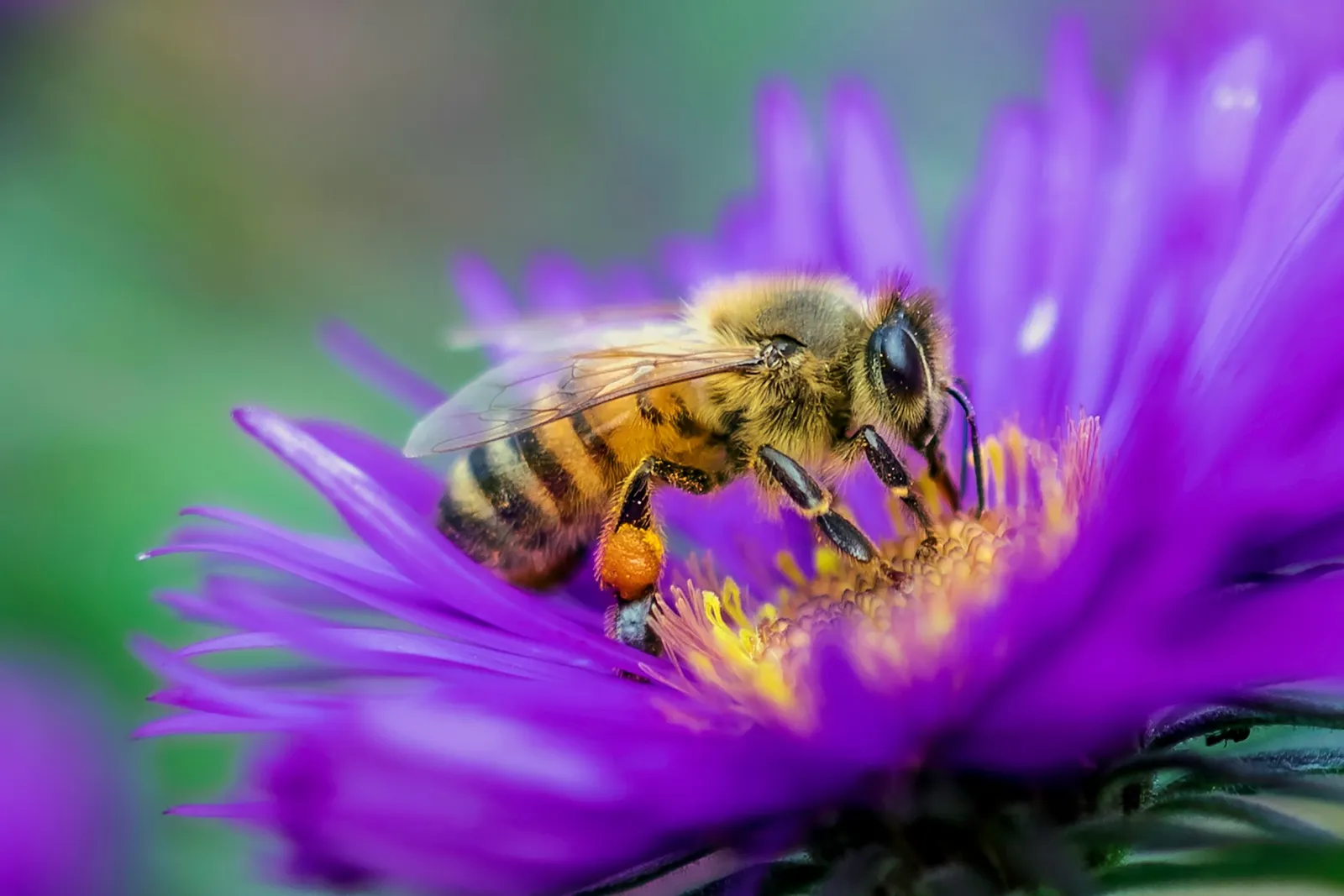
Our hives at the villa near Mazara del Vallo sit among olive, citrus, almond and fig trees, with wild flowers and herbs on the land around. Honey from flowers like those tends to set naturally within months. That is not a fault to fix. It is what honey does when nobody has heated or filtered it.
My first year of keeping bees in Sicily, from the first colony to a swarm in an olive tree and a robbed hive, is in beekeeping in Sicily: my first year, and the difference between raw and heavily processed honey is in raw honey vs supermarket honey.
Frequently asked questions
Why is my honey crystallising?
Because honey holds more sugar than its water can keep dissolved. Glucose, the less soluble of its two main sugars, slowly comes out as crystals, helped by pollen, wax and air bubbles. It is natural and happens faster in raw honey, in honeys high in glucose and at cool temperatures around 10 to 15°C.
Is crystallised honey safe to eat?
Yes. Crystallisation changes the texture, not the safety. The only thing to watch for is a sour or yeasty smell, froth or bubbles, which would mean a honey with too much water has started to ferment.
Does real honey crystallise?
Most raw honey crystallises sooner or later, but whether a honey crystallises does not prove it is real or fake. Some genuine honeys, such as acacia and chestnut, stay runny for a long time, and adulterated honey can crystallise too.
How do you decrystallise honey?
Stand the open glass jar in warm water, around 40°C, for 15 to 30 minutes at a time, stirring and topping up the warm water until the crystals dissolve. Avoid the microwave, boiling water and direct heat, which damage the flavour.
Should I keep honey in the fridge?
No. The fridge makes honey thick and can set it over time, although honey sets fastest at around 10 to 15°C, a little warmer than a fridge. Keep it in a closed cupboard at normal room temperature, with the lid on tight.
Which honey does not crystallise?
Honeys high in fructose crystallise very slowly, sometimes staying runny for a year or more. Acacia (robinia) honey is the best-known example, along with chestnut, tupelo and many honeydew honeys.
Why does supermarket honey stay runny?
Many runny supermarket honeys are blends that have been warmed and finely filtered, which dissolves existing crystals and removes the pollen and particles that crystals grow on, so they stay liquid for longer. Some are also from naturally slow-setting flowers.
What is set honey or creamed honey?
Honey that has been encouraged to crystallise quickly into very fine crystals, usually by stirring in some finely set honey and keeping it cool. It gives a smooth, spreadable texture. It is the same honey, not a different product.
Why has my honey separated into layers?
Usually because it has started to crystallise unevenly: the glucose crystals sink and a runnier layer stays on top. Stir it, or warm the jar gently in water at about 40°C. If the top layer smells sour or yeasty, the honey has started to ferment.
Sources and small print
- Foods (2025): physicochemical and rheological characteristics of monofloral honeys, including crystallisation kinetics
- Council Directive 2001/110/EC relating to honey (composition, water content and HMF)
- British Beekeepers Association: honey and beekeeping guidance
Times and temperatures are typical; every honey and every jar is different.
Credits
Photo: Bermix Studio, Unsplash Licence, via Unsplash.
Photo: Bastian Alexander-Coleman, Unsplash Licence, via Unsplash.
 The weekly YouTube series