
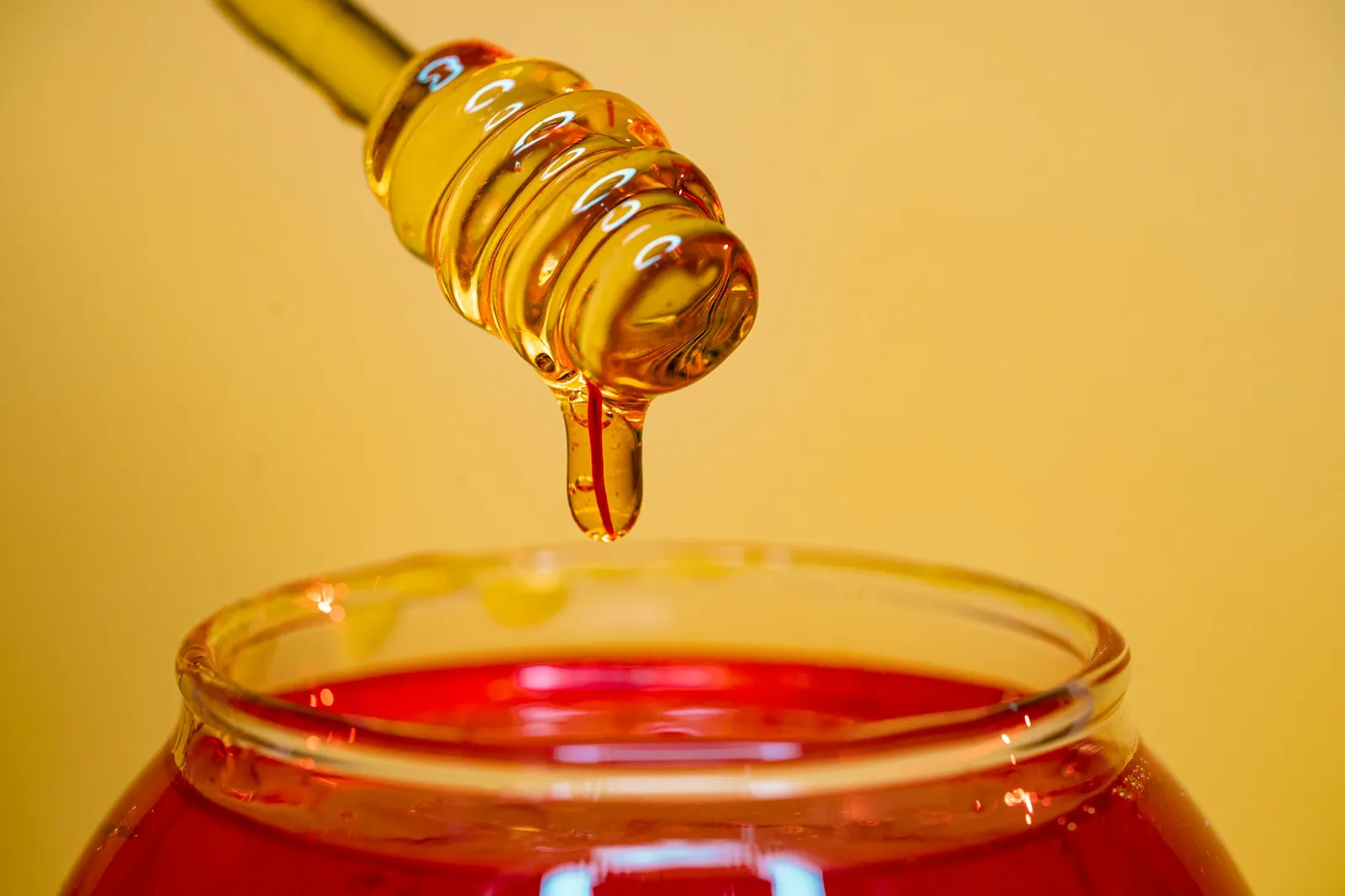
Does honey expire?
Not in the way milk or meat does. Properly ripened honey in a closed jar does not become unsafe with age. What it does do, slowly, is change: it darkens, its aroma fades, and most honeys crystallise. A jar that has sat in a cool cupboard for several years is usually still perfectly good to eat, just less fragrant than when it was fresh.
You may have read that edible honey has been found in ancient Egyptian tombs. It is a widely repeated story, but I have not found an archaeological report I would rely on for it, so I treat it as a good story rather than proof. The real reasons honey keeps are well understood, and they are in the next section.
There is one honest qualification. "Honey lasts forever" only holds while it stays honey: ripe, sealed and dry. Add water, leave the lid off in a damp kitchen, or start with honey taken from the hive too early, and it can ferment.
Why does honey last so long?
This is food chemistry, and it is the same reason jam and dried fruit keep. Several things work together:
- Very little water. Ripe honey is usually about 17 to 18% water, and EU law caps it at 20% for most honey. The rest is mostly sugar.
- Sugar holds on to that water. With so much dissolved sugar, there is almost no free water for microbes to use. Scientists measure this as water activity: honey sits at about 0.5 to 0.65, far below the level most bacteria need to grow. Microbes that land in honey lose water to it and cannot multiply.
- Acidity. Honey is acidic, typically around pH 3.2 to 4.5, mainly because of gluconic acid.
- An enzyme from the bees. Bees add an enzyme, glucose oxidase, to nectar. It turns a little glucose into gluconic acid and, in the process, small amounts of hydrogen peroxide. The enzyme is mostly inactive in ripe honey and becomes active when honey is diluted, which is part of what protects nectar while bees are still drying it.
The UK Food Standards Agency's honey risk profile describes these same factors: high sugar lowering water activity, low pH and hydrogen peroxide. None of this is a reason to treat honey as anything other than a food. It simply explains why a jar keeps. How bees turn watery nectar into this stable store is in how bees make honey.
What does the best before date on honey mean?
Honey sold in the UK and EU carries a best before date, not a use by date. A use by date is about safety; a best before date is about quality. Packers choose the date themselves, and for honey it is often set around two years after packing, sometimes longer.
Honey a few months or even years past its best before date, kept closed and dry, is generally fine to eat. Check it the same way you would any jar: look at the surface, smell it, and taste a little. If it looks and smells like honey, it is honey. If it is frothy, sour or mouldy, throw it away. Honey labels explained covers what else the label must and need not say.
How can you tell if honey has gone bad?
When honey does spoil, it is almost always by fermentation. Honey naturally contains a few sugar-tolerant yeasts. In dry honey they stay dormant. If the water content rises, from unripe honey, from damp air getting in, or from a wet spoon, they wake up and start turning sugar into alcohol and carbon dioxide. The signs:
- Foam or froth on the surface, or a layer of small bubbles.
- A sour, yeasty, beery or vinegary smell, and a sharp, fizzy taste.
- A thin, watery layer separating on top of the honey.
- A lid that bulges or hisses when opened, from the gas.
- Rarely, mould on the surface, usually where water or crumbs got in.
| Water content | Fermentation risk | What it means |
|---|---|---|
| About 17% or less | Very low | Typical of well-ripened, capped honey |
| About 17 to 19% | Depends on yeast levels and storage | Keep it sealed, dry and not too warm |
| Above about 19% | High | Likely to ferment in time; use it soon |
| Above 20% | High | Over the legal limit for most honey |
The EU honey directive says honey must not have begun to ferment, and honey that has may only be sold as baker's honey, for cooking in industry. At home, I would not eat honey that smells sour or shows mould; throw it away. Beekeepers avoid the problem by only taking ripe, capped honey, which I explain in when to harvest honey.
Is crystallised honey a sign it has gone off?
No. Crystallisation, when honey turns thick, grainy or solid, is natural and is not a sign that honey has gone off. It happens because honey holds more glucose than can stay dissolved, and it is faster in raw honey and in cool rooms. White streaks or a frosty look against the glass are part of the same process.
The one exception is a partly set honey that was already on the wet side: the liquid left between the crystals holds a little more water, so it can start to ferment, and a sour smell or froth on top is the sign. To make set honey runny again, and to see why some honeys set in days, read why honey crystallises.
Do some honeys keep better than others?
Yes, a little. All ripe honey keeps well, but a few differences are worth knowing:
- Raw and heated honey. The FSA notes that honey may be heated to eliminate the yeasts that cause spoilage. Warmed, finely filtered honey is therefore slightly less prone to ferment and stays runny for longer. Raw honey keeps its yeasts and pollen, so it relies more on being ripe and kept dry, and it usually sets sooner.
- Heather honey. EU rules allow it up to 23% water rather than 20%, so it needs a little more care to keep it from fermenting.
- Creamed or set honey. Honey crystallised on purpose into fine crystals keeps just as well as runny honey. Keep it cool enough that it does not partly melt and separate.
- Comb honey. Sealed comb keeps well in a closed box. Cut comb can weep honey and dry at the edges, so keep it covered.
- Honey with added ingredients. Honey with fruit, nuts, herbs or garlic stirred in is no longer just honey. Bits of food bring in water, so follow the label, and treat homemade infusions with care.
Does honey need to be refrigerated after opening?
No. Honey keeps perfectly well at room temperature once opened, and the fridge does it no favours: it becomes stiff and hard to spoon, and over time cool storage helps it crystallise. The two things that matter after opening are moisture and cleanliness.
- Keep the lid on tight. Honey is hygroscopic, which means it draws moisture from the air. Left open in a steamy kitchen it can take up enough water to ferment. It also picks up strong smells.
- Use a clean, dry spoon. Water, butter, toast crumbs and drips of tea are the usual way spoilage gets started.
- Do not top up an old jar with new honey. Finish one jar before starting the next.
Freezing is harmless for honey and comb, and some people freeze spare comb to keep it from setting.
How should you store honey?
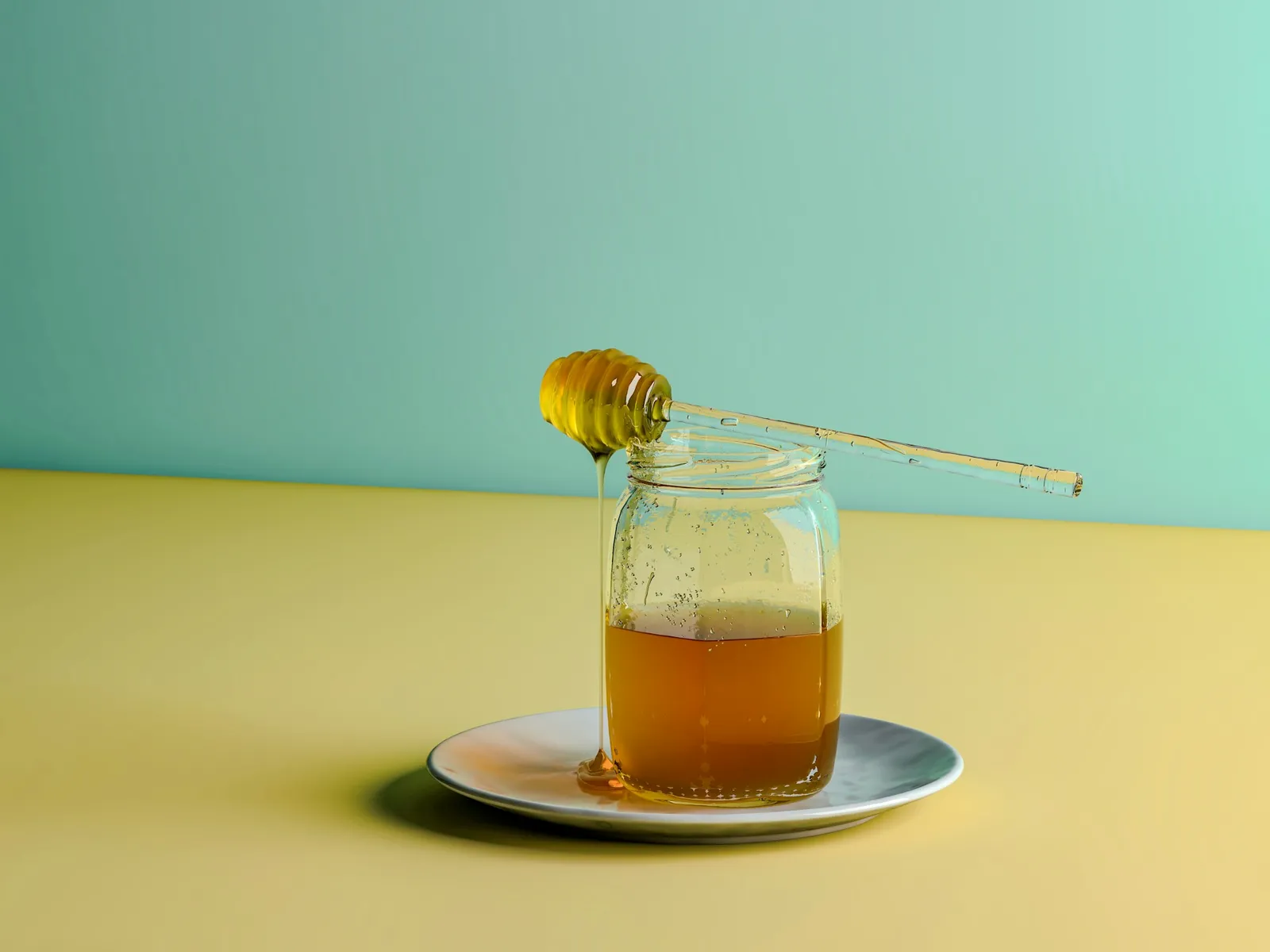
- Container: glass jars or food-grade plastic tubs with a tight lid. Honey is acidic, so avoid storing it for long in unlined metal containers that can react with it.
- Temperature: a normal cupboard, ideally below about 20 to 25°C. Steady is better than hot and cold.
- Light: out of direct sun, which warms the jar.
- Away from heat: not on a shelf above the hob, next to the oven or on a sunny windowsill.
| Situation | How long it keeps | Notes |
|---|---|---|
| Sealed jar, cool cupboard | Years | Flavour and colour slowly change |
| Opened jar, lid on, room temperature | Many months to years | Use a clean, dry spoon |
| Jar left open or in a damp place | May ferment | Honey draws in moisture |
| Kept in the fridge | Keeps, but stiff and sets sooner | Not needed |
| Kept above about 30°C for months | Safe, but loses quality | Darkens; aroma fades; HMF rises |
Does honey go off in hot weather?
Heat does not make honey unsafe, but it does age it quickly. Warmth darkens honey, dulls its aroma and slowly raises a compound called hydroxymethylfurfural (HMF). The FSA notes that HMF is not present in fresh honey but forms when honey is stored for a long time or heated. Because of that, HMF is used as a measure of freshness: EU rules allow no more than 40 mg/kg in most honey, and 80 mg/kg for honey from tropical climates.
Inland western Sicily, where my villa is, reaches 40°C in July and August, and a room without air conditioning can stay above 30°C for weeks. In heat like that, the advice is to keep honey in the coolest place in the house, ideally below about 25°C: a thick-walled ground floor room or a cellar out of the sun, never a hot car or a shed. Living off grid, we rely on the house itself to stay cool, which I describe in living off grid in Sicily. The same storage logic applies to olive oil, covered in how long olive oil lasts.
Heat is also used deliberately: much supermarket honey is warmed during packing to keep it runny for longer, which affects its flavour and enzymes. The difference is covered in raw honey vs supermarket honey.
Can babies have honey?
Not until they are over 12 months old. The NHS advises not to give honey to a child until they are over one year old, because honey can occasionally contain spores of the bacteria that cause botulism. In a baby's immature gut the spores can grow and produce toxin, causing infant botulism, which is rare but serious. The FSA gives the same advice.
This has nothing to do with honey going off: the spores can be present in fresh, perfectly good honey, raw or processed, and honey's low water activity stops them growing in the jar but not in an infant's gut. So do not add honey to baby food, drinks or dummies for a child under 12 months. From one year old, honey is fine as part of a normal diet. See the NHS guidance on foods to avoid giving babies for the full list.
Frequently asked questions
Does honey expire?
Not in terms of safety. Ripe honey kept sealed and dry stays safe to eat for years. Its flavour, aroma and colour slowly change, and most honey crystallises, so the best before date reflects quality rather than safety.
Can you eat honey past its best before date?
Usually, yes. A best before date is about quality. If the honey has been kept closed and dry and still looks, smells and tastes like honey, it is fine. If it is frothy, smells sour or shows mould, throw it away.
How do you know if honey has gone bad?
Look for froth or bubbles on the surface, a watery layer on top, a lid that bulges, or a sour, yeasty or alcoholic smell. Those are signs of fermentation. Mould is rare. Crystallisation alone is not a sign of spoilage.
Why is my honey fizzy or foaming?
It is probably fermenting. Honey with too much water, from being harvested unripe or from moisture getting in, lets natural yeasts turn sugar into alcohol and gas. A thin white froth on freshly packed raw honey can also be harmless air bubbles and fine wax rising, so smell it: sour means fermented.
Is it safe to eat honey that has fermented?
Fermented honey can no longer be sold as table honey in the EU or UK, only as baker's honey for industry. At home the cautious rule is simple: if honey smells sour or alcoholic, fizzes or shows mould, throw it away rather than eat it.
How long does honey last once opened?
Many months to years, as long as the lid goes back on tightly and only clean, dry spoons go in. Honey absorbs moisture from the air, so an open jar in a damp kitchen is the most common way it starts to ferment.
Can you freeze honey?
Yes. Freezing does no harm to honey or honeycomb and stops it setting while frozen. Let the jar come back to room temperature with the lid on so no condensation gets in.
Does heat spoil honey?
It does not make honey unsafe, but long periods above about 25 to 30°C darken it, dull its aroma and raise its HMF level, a measure of age and heating. Keep honey somewhere cool and out of the sun, especially in hot climates.
At what age can a child eat honey?
From 12 months. The NHS and the Food Standards Agency advise not giving honey to babies under one year old, because it can occasionally contain spores of the bacteria that cause infant botulism.
Why does honey not go mouldy?
Because it holds so little free water. Ripe honey is about 17 to 18% water, bound up by sugar, and it is acidic, so moulds and bacteria cannot grow in it. Mould only appears if water, crumbs or other food get into the jar.
Sources and small print
- Council Directive 2001/110/EC relating to honey (water content, HMF limits, fermented and baker's honey)
- Food Standards Agency: Honey Risk Profile (2024)
- NHS: foods to avoid giving babies and young children
- NHS: botulism
- GOV.UK: understanding food labelling, including best before and use by dates
- Infant botulism: in search of Clostridium botulinum spores (review, including honey water activity)
Storage times are general guidance for ripe honey kept well; if a jar smells sour or shows mould, throw it away.
Credits
Photo: Benyamin Bohlouli, Unsplash Licence, via Unsplash.
Photo: Abhishek Tiwari, Unsplash Licence, via Unsplash.
 The weekly YouTube series