
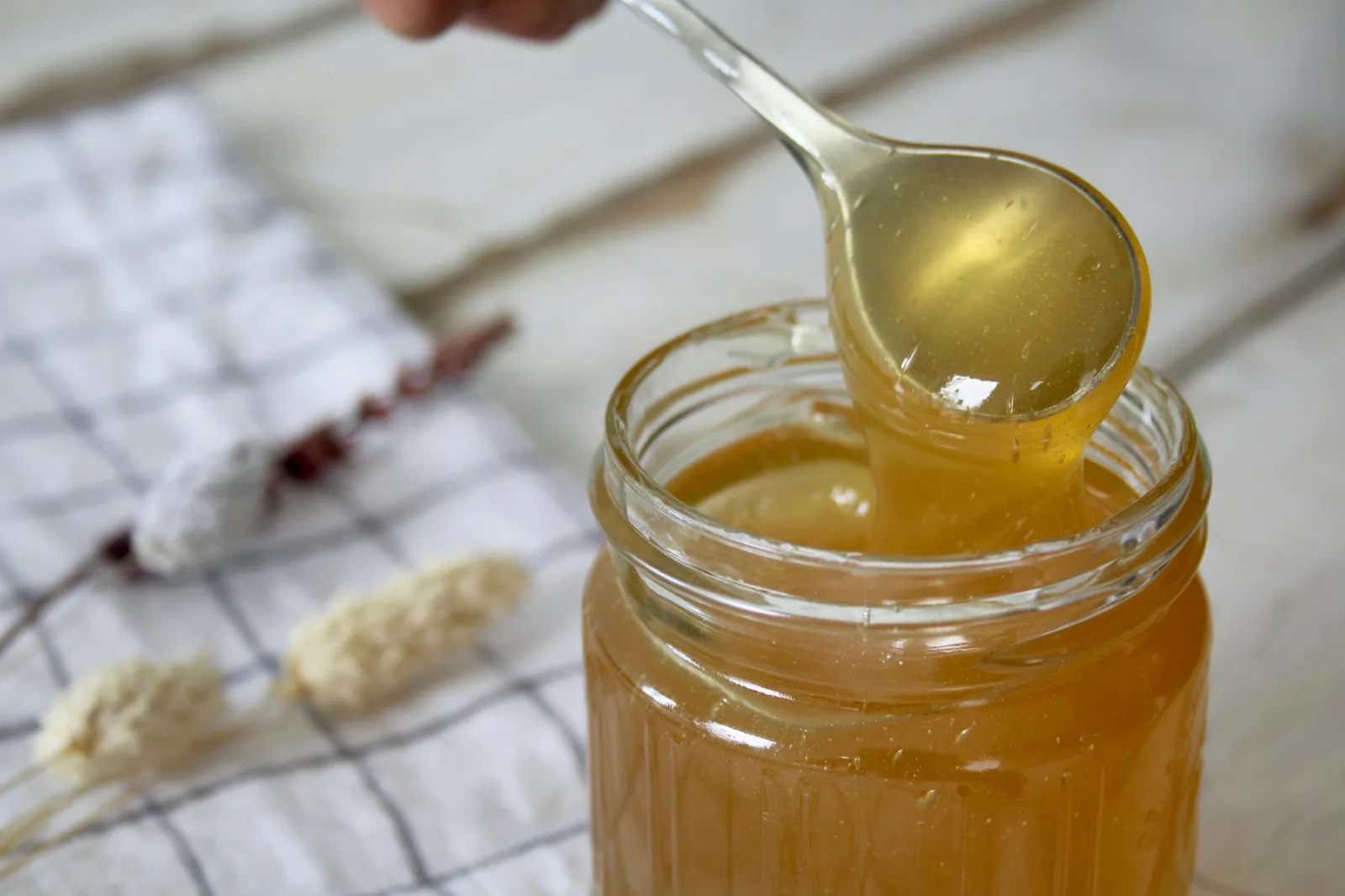
What is fake honey?
Under EU and UK law, honey is the natural sweet substance bees make from nectar or honeydew, and nothing may be added to it or taken from it, apart from removing wax and debris. "Fake" honey usually means one of these:
- Diluted with syrup: honey stretched with cheap sugar syrups made from rice, corn, beet, cane or other sources. This is the most common fraud.
- Harvested unripe and dried: honey taken from the hive before the bees have finished drying it, then dried by machine. It is quicker and cheaper, but it is not what the law calls honey.
- Feed honey: bees fed on sugar syrup during a nectar flow, so the syrup ends up in the honey.
- Mislabelled origin or flower: cheap honey sold as a more valuable origin or variety, such as a single-flower honey that is really a blend.
Real honey can still be heavily processed, heated and finely filtered, which is legal. That is a different question, which I cover in raw honey vs supermarket honey.
How common is fake honey?
More common than most shoppers would guess. In the European Commission's coordinated action "From the Hives", carried out in 2021 and 2022 and published in 2023, 320 samples of honey imported into the EU were tested by the Commission's Joint Research Centre. 147 of them, 46%, were suspected of breaking the EU Honey Directive because at least one marker of added sugar was found.
That does not mean half the honey on your local shelf is fake: the samples were imports chosen for checking, and suspicion is not the same as a conviction. But it shows why cheap blended honey from several countries carries more risk than honey from a known beekeeper.
Why the home tests for fake honey do not work
| Test | The claim | Why it fails |
|---|---|---|
| Water test | Real honey sinks and stays in a lump in a glass of water; fake honey dissolves | Thick honey sinks and dissolves slowly whatever it is; thick syrups behave the same. Runny real honey dissolves faster |
| Thumb test | Real honey stays put on your thumb; fake honey runs | This measures thickness, which depends on water content, flower and temperature, not purity |
| Flame or match test | Real honey lets a dipped match light; fake honey has water that stops it | Only shows how wet the honey is. Dried syrup passes; wetter genuine honey fails |
| Paper or tissue test | Real honey does not soak through paper | Again only thickness and water content |
| Vinegar or iodine test | Fake honey foams with vinegar or turns blue with iodine | Iodine only finds starch, which modern syrups do not contain; vinegar foaming proves nothing |
| Crystallisation | Real honey crystallises, or real honey never does | Both are false. Crystallisation depends on the flowers, storage and processing |
| Ants or bees | Insects will not touch fake honey | Insects eat sugar syrup happily |
| Heat or microwave test | Real honey caramelises when heated; fake honey bubbles or foams | Sugar syrups caramelise too, and wetter genuine honey foams as its water boils off |
| Fridge test | Real honey sets in the fridge; fake honey stays runny | Setting depends on the flowers and their glucose, not on purity: some genuine honeys stay runny for months |
The deeper problem is that honey fraud has moved on. Syrups sold to adulterate honey are made to match honey's thickness and sugar profile, and some are designed specifically to slip past laboratory tests, never mind kitchen ones. Laboratories now use several methods together, including isotope analysis to detect sugars from plants such as corn and cane, and more advanced methods for rice and beet syrups.
Crystallisation deserves its own explanation, because it is the most common worry. It is covered in why honey crystallises.
What the honey label can tell you
The label cannot prove honey is genuine, but it tells you a lot about risk. The key line is the country of origin.
From 14 June 2026, new EU rules (the revised "Breakfast Directive") require honey blends sold in the EU to list every country of origin, in descending order of weight, with the percentage from each, instead of the old vague phrases. Some small shares can be grouped under the new rules, but a typical blend now has to say where most of it came from. The full rules, with the exceptions, are in honey labels explained.
- One named country, region or place: the lowest risk on the shelf.
- A blend with several countries: legal and common, but you are buying a mix from wherever was cheapest.
- "Blend of EU and non-EU honeys" with no breakdown: the older wording, still seen in the UK and on stock made before the change.
- A named flower (orange blossom, acacia, thyme) should mean that flower is the main source. It is easy to claim, so a named producer makes it more believable.
- "Raw" is not legally defined in the EU or UK. It usually means not heated beyond hive temperatures and only coarsely strained, but ask what the producer means.
Signs a honey is worth trusting
- A named beekeeper or producer, with an address, ideally one who keeps the bees themselves.
- A single origin: a country, better a region, best a place.
- A batch or lot number and a harvest season, showing the honey can be traced to one extraction.
- Variation between jars and years. Real honey changes with the season and flowers. A honey that is identical every time is almost certainly a blend.
- A believable price. Keeping bees and extracting honey takes time and equipment. Honey much cheaper than the local beekeepers' price is a warning sign.
- Taste. Not proof, but genuine single-flower and wildflower honeys taste of something: floral, herby, malty or bitter. A honey that tastes of plain sugar and nothing else is worth questioning.
Where to buy real honey
The surest way is to buy from a local beekeeper you can talk to. In the UK, local beekeeping associations often list members who sell honey, and many farm shops and markets sell from named local apiaries. In Italy, look for honey sold by the beekeeper (apicoltore) at markets, at the farm, or under a protected name.
Here in Sicily, honey is sold at markets, roadside farms and delicatessens across the island, often labelled with the flower: zagara (citrus blossom), sulla, timo (thyme), carrubo (carob), castagno (chestnut) or millefiori (wildflower). There is also the rare Sicilian black bee honey, from the island's native bee. I describe the island's honeys in why Sicilian honey tastes different.
Why I never feed bees on the honey boxes
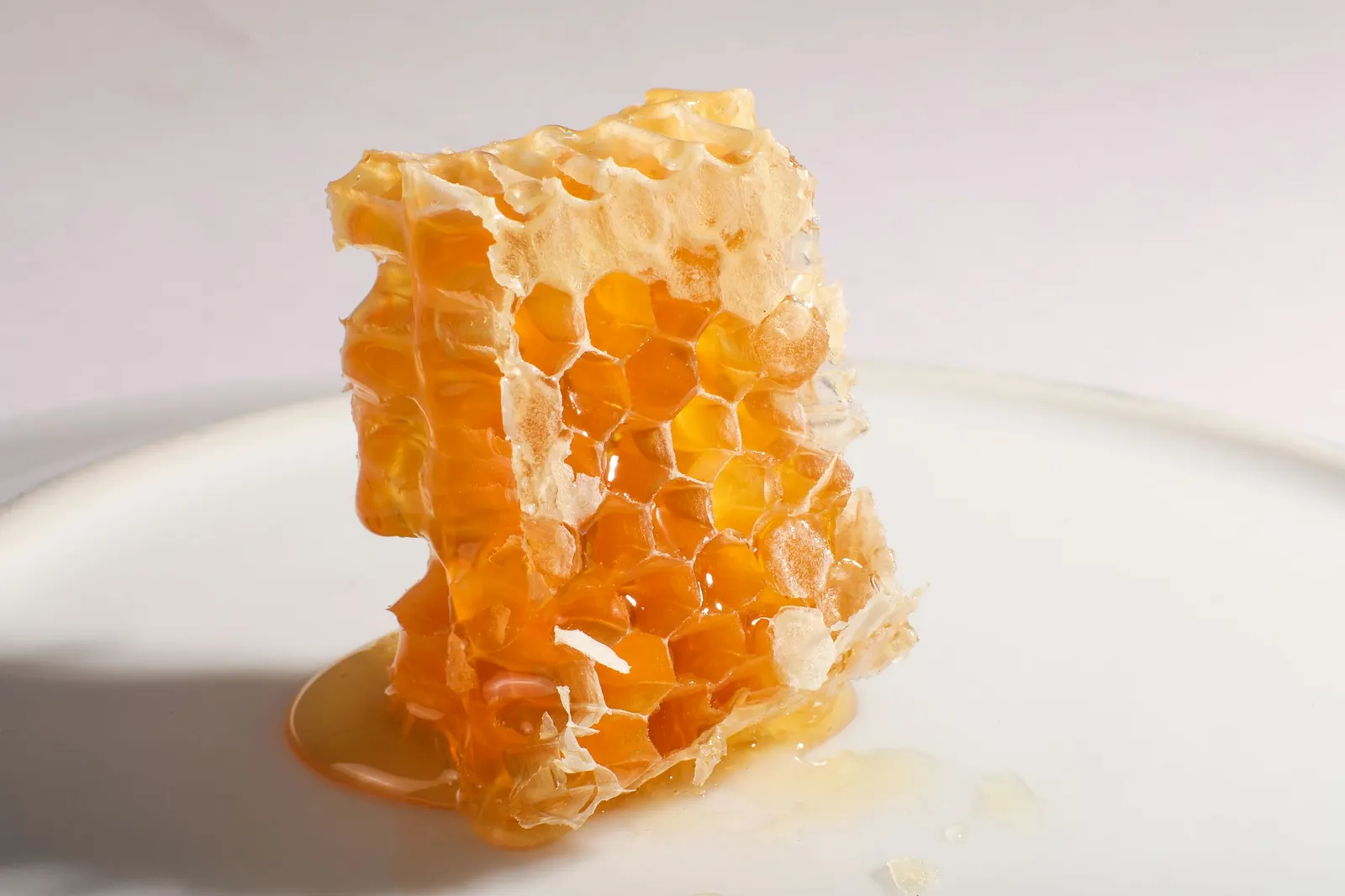
We keep bees at the villa near Mazara del Vallo. The rule I set myself in the first year is simple: bees can be fed when they need it, but never while they are filling the honey boxes (supers), so that no sugar syrup can end up in honey we take. I explain that rule, and everything else I learned that year, in beekeeping in Sicily: my first year.
Honey from a small apiary like ours changes with the season and the flowers, sets in its own time, and can be traced to the hive it came from. That is what to look for in any honey.
Frequently asked questions
Does the water test show if honey is real?
No. Whether honey sinks and dissolves slowly in water depends on how thick it is, which depends on its water content, flowers and temperature. Thick syrups behave the same way, and runny genuine honey dissolves faster. The test cannot detect added syrup.
Does crystallisation prove honey is real?
Most raw honey crystallises sooner or later, but crystallisation does not prove a honey is real or fake. Some genuine honeys, such as acacia, stay runny for a long time, and adulterated honey can crystallise too.
How can you test if honey is pure?
Only in a laboratory. Methods such as isotope analysis and more advanced chromatography can detect added sugar syrups; no kitchen test can. At home, judge the risk instead: origin, producer, batch number and price.
How much honey is fake?
In the European Commission's "From the Hives" action, published in 2023, 46% of 320 imported honey samples tested were suspected of containing added sugars. The samples were imports chosen for checks, so this does not mean half of all honey on sale is fake.
Is honey from a local beekeeper always real?
Usually, but not automatically. Bees fed sugar syrup while the honey supers are on can store some of it with their honey, so even a small producer can end up selling honey that is not pure. Ask where the hives are and when the bees are fed.
Is raw honey always real honey?
Not necessarily. "Raw" is not a legally defined term in the EU or UK and says nothing on its own about purity. It usually means the honey was not heated much or finely filtered. Look for a named producer and a single origin as well.
Is cheap supermarket honey fake?
Not necessarily, but very cheap blended honey from several countries carries the highest risk, because added syrup is cheaper than honey. Honey from a single named country, region or beekeeper is a safer choice.
Can a laboratory prove honey is fake?
Often, but not always. Laboratories use methods such as NMR profiling, sugar isotope tests and pollen or DNA analysis, and they usually combine several and compare the results with reference databases of authentic honey. Some sugar syrups are hard to detect with a single test, which is why one method on its own is not enough.
Sources and small print
- European Commission: EU coordinated action "From the Hives" (honey 2021 to 2022)
- Council Directive 2001/110/EC relating to honey
- Food Safety Authority of Ireland: honey legislation, including origin labelling under Directive (EU) 2024/1438
- NHS: foods to avoid giving babies and young children
This guide is general information for shoppers. It names no brands and makes no claim that any product is or is not genuine.
Credits
Photo: Sophie N., Unsplash Licence, via Unsplash.
Photo: Giorgio Trovato, Unsplash Licence, via Unsplash.
 The weekly YouTube series