
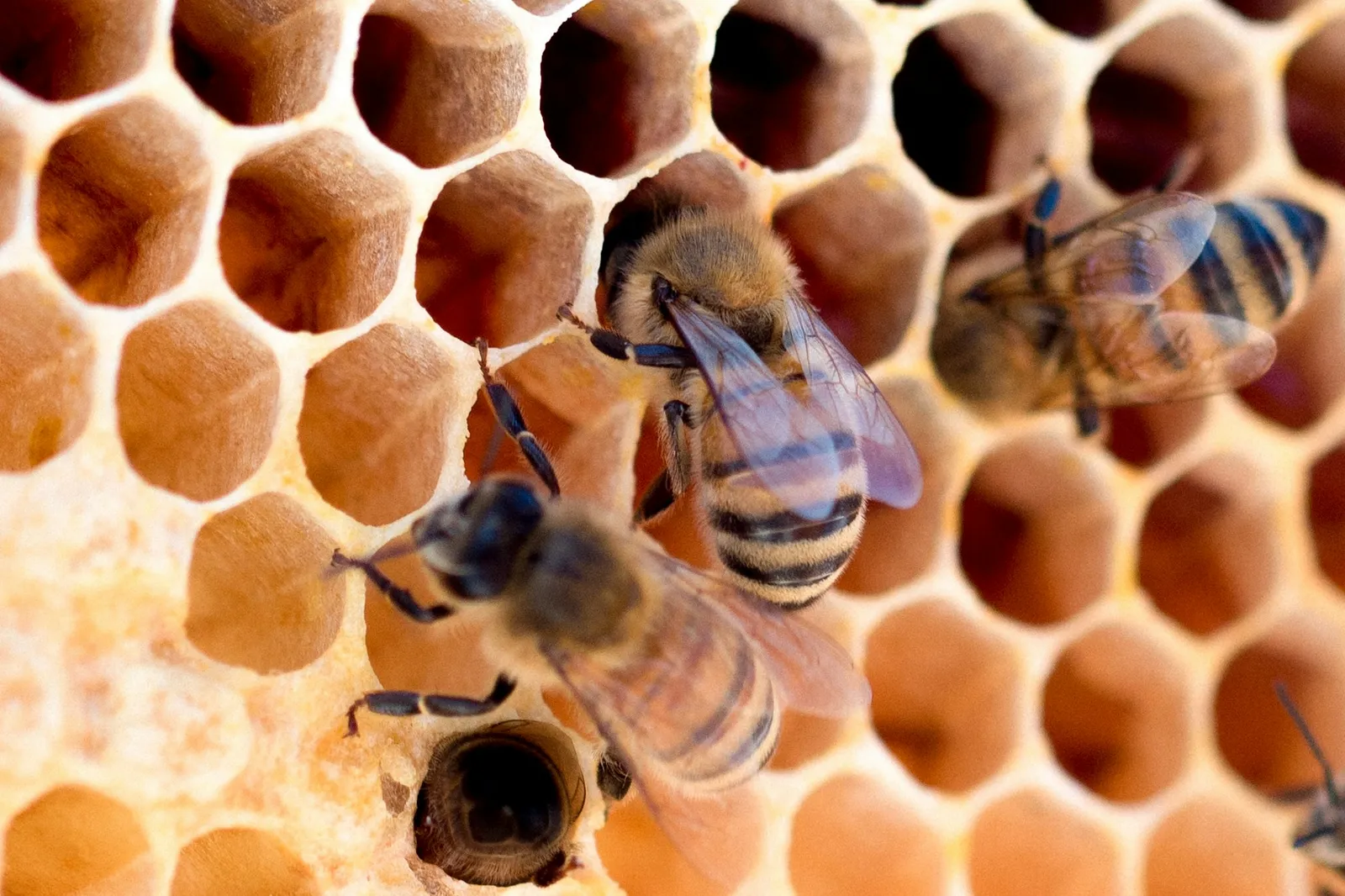
Where do bees go in winter?
It depends on the bee. Of the many kinds of bee, only honey bees keep a whole colony alive through the winter.
- Honey bees stay in the hive all winter as a colony of many thousands, living on stored honey.
- Bumblebees: the colony dies off in autumn, and only newly mated queens survive, hibernating alone in the soil or leaf litter until spring.
- Solitary bees, such as mason and mining bees, spend the winter as larvae or pupae sealed in their nest cells, and emerge as adults in spring.
This guide is about honey bees, the bees in a beekeeper's hive.
How do honey bees survive the winter?
When the air around the hive falls below roughly 14°C, the bees draw together into a cluster, a ball of bees spread over several combs, with the queen at its warm heart. The bees inside shiver their flight muscles without moving their wings, which burns sugar and makes heat. The bees on the outside pack tightly, heads inward, to make an insulating shell.
The colony does not heat the whole hive, only the cluster. When there is brood to rear, the core is kept at around 34 to 35°C, the same as in summer. Without brood the core can be cooler, while the outer shell may fall to around 8 to 10°C before those bees push inwards to warm up. Bees constantly change places between the cold outside and the warm middle.
As the winter goes on, the cluster slowly moves through the combs, eating the honey around it. A colony can starve with honey only a few centimetres away if a cold spell stops the cluster from moving to it.
What do bees eat in winter?
Honey, mostly, and stored pollen (bee bread) for rearing brood towards the end of winter. Honey is the colony's fuel: making heat all winter takes a lot of it. As a common rule of thumb for UK colonies, the National Bee Unit suggests each colony should have around 20 kg of honey in autumn to come through winter safely, and more in a long, cold spring.
Beekeepers check this in autumn by "hefting": lifting the back of the hive to feel its weight. A light hive is fed thick sugar syrup in early autumn, while the bees can still process and store it, and fondant or candy (solid sugar) later in winter if needed, because cold bees cannot handle liquid feed.
Do bees fly in winter?
On sunny, still days, yes, if it is warm enough, roughly 10°C and above. Honey bees do not defecate inside the hive, so on mild days they make short cleansing flights to relieve themselves, and you may see small brown spots on cars and washing near a hive afterwards.
In mild winters they may also forage on winter flowers. In the UK that might be ivy in late autumn, then winter heather, mahonia, winter honeysuckle and early hazel and snowdrops. Bees out on a cold day can get chilled and fail to get home, so dead bees outside the hive in winter are normal in small numbers.
How long do bees live in winter?
Much longer than in summer. A worker bee born in summer works itself out in about five to six weeks. Bees reared in late summer and autumn are different: "winter bees" are physically adapted to live for several months, carrying the colony from autumn to spring. The queen lives for years.
That is why the health of the colony in late summer matters so much. If varroa mites or disease damage the autumn brood, the winter bees are weak, and the colony can dwindle and die before spring even with plenty of honey.
Winter in Sicily vs the UK
| UK | Western Sicily (coast and low hills) | |
|---|---|---|
| Typical winter days | Often 2 to 8°C, frosts, long cold spells | Often 12 to 17°C by day, cooler nights, frost rare |
| Bees flying | Only on mild, sunny days | Many days through the winter |
| Brood rearing | Mostly stops from late autumn to midwinter | Often slows rather than stops |
| Winter forage | Ivy, then little until early spring | Carob and ivy in autumn, then rosemary, early almond blossom from late January |
| Main risks | Starvation, damp, long cold springs | Running through stores while active, varroa with no broodless break, wasps and robbing in autumn |
Sicily's mild winter sounds easy, and in many ways it is. But active bees eat more, and a colony that keeps rearing brood all winter gives varroa mites no break. In my first year I learned that warm does not mean easy: by August 2026 the land around my villa had gone two to three months with almost no rain, the supers were barely touched, and the bees had enough to live on but nothing spare. The autumn rains, when they come, give a Sicilian colony its second chance to build stores before winter.
A beekeeper’s winter jobs
- Leave enough honey, and heft the hives through the winter. Feed fondant if one feels light.
- Treat for varroa when there is least brood. In the UK that is usually midwinter, often with an oxalic acid treatment, as most mites are then on the adult bees. Follow the product instructions and local rules.
- Fit mouse guards at the entrance in autumn; mice move into warm hives.
- Keep the hive dry and ventilated. Damp kills more colonies than cold. Tilt the hive slightly forward so rain runs out, and make sure air can move.
- Secure the roof against wind, and in some areas protect against woodpeckers.
- Do not open the hive on cold days. Breaking the cluster chills the bees. Quick checks of the entrance and weight are enough.
- Clean and repair kit, store spare frames safely from wax moth, and plan for spring.
Our hives going into winter
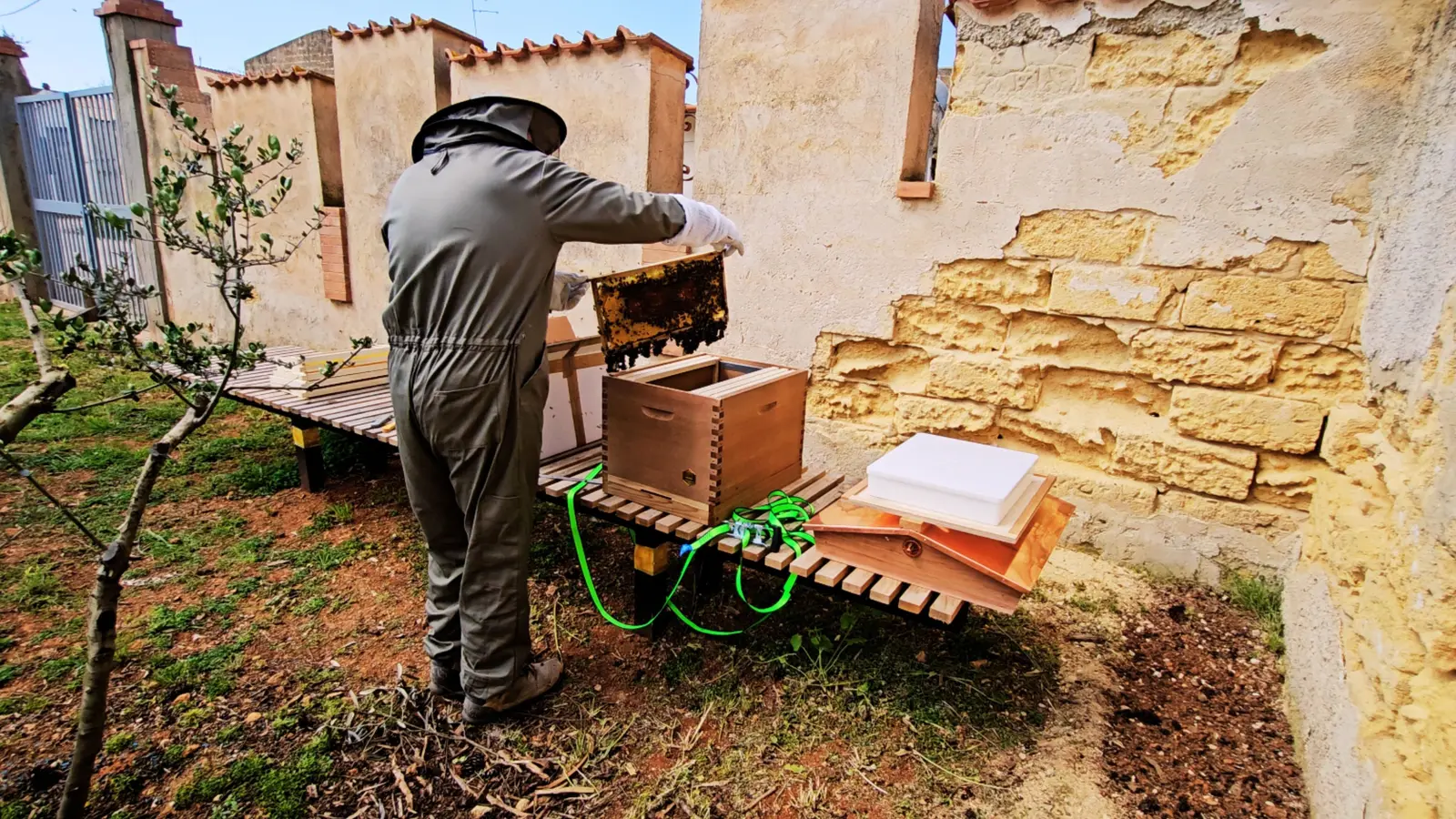
We came out of the first summer at the villa near Mazara del Vallo with two strong colonies, after a swarm caught from an olive tree and a weak colony lost to robbing. In episode 91 I inspect the hives as they head towards winter. Because I spend part of the year in the UK, hives that can look after themselves through the cooler months matter: plenty of stores, a sound, dry hive and a protected entrance.
The full story of the first year, including the equipment mistakes and the robbed hive, is in beekeeping in Sicily: my first year, and Sicily's own native bee, adapted to this climate, is in the Sicilian black bee.
Frequently asked questions
What do bees do in winter?
Honey bees stay in the hive and form a tight cluster around the queen. Bees in the cluster shiver their flight muscles to make heat and keep the centre warm, living on honey stored in summer and autumn. On mild days they make short cleansing flights.
Do bees hibernate?
Honey bees do not. The colony stays active all winter, clustering and making heat. Bumblebee queens do hibernate, alone in the soil, and solitary bees spend the winter as larvae or pupae in their nest cells.
How do bees stay warm in winter?
By clustering together and shivering their flight muscles to burn honey and make heat. The cluster core is kept around 34 to 35°C when there is brood, while bees on the outside form an insulating layer and swap places with bees inside.
How much honey do bees need for winter?
As a rule of thumb for UK colonies, around 20 kg of honey in autumn, according to the National Bee Unit, and more in a long cold spring. In warmer climates such as Sicily, needs vary because bees stay more active.
Should I feed bees in winter?
Only if they are short of stores. Beekeepers feed thick sugar syrup in early autumn, while bees can still store it, and fondant or candy later in winter, because cold bees cannot take liquid feed. Never feed while bees are filling honey boxes meant for harvest.
At what temperature do bees stop flying?
Honey bees rarely fly much below about 10°C and start to cluster when the air around the hive drops below about 14°C. On sunny, still days they may fly at slightly lower temperatures.
Why are there dead bees outside my hive in winter?
A few dead bees outside a hive in winter is normal: old bees die and are carried out, and some get chilled on short flights. Large numbers, or bees crawling and unable to fly, can mean a problem such as disease or starvation and are worth checking.
Do bees in Sicily rest in winter?
Less than in northern Europe. With mild days of 12 to 17°C, bees in western Sicily often fly through much of the winter and may keep rearing some brood, which uses more stores and gives varroa mites less of a break.
How can I help bees in winter if I am not a beekeeper?
Grow or keep plants that flower in the cold months, such as ivy, winter heather, mahonia and winter honeysuckle, and let ivy flower in autumn. If you find a bee grounded on a cold day with no flowers nearby, the Bumblebee Conservation Trust says a little white sugar dissolved in water can be offered as a last resort. Never put out honey for bees, as it can spread bee diseases.
Sources and small print
- British Beekeepers Association: seasonal guidance, winter stores and feeding
- National Bee Unit (UK): preparing honey bee colonies for winter
- National Bee Unit (UK): varroa management and colony health
- Istituto Zooprofilattico Sperimentale delle Venezie: Italy's national reference centre for bee health
- Bumblebee Conservation Trust: should I feed bumblebees sugar water?
Temperatures and amounts are typical figures; colonies, hives and winters vary. Always follow the instructions on any varroa treatment.
Credits
Photo: Meggyn Pomerleau, Unsplash Licence, via Unsplash.
Photo: Operation Sicily®, all rights reserved, via operationsicily.com.
 The weekly YouTube series