
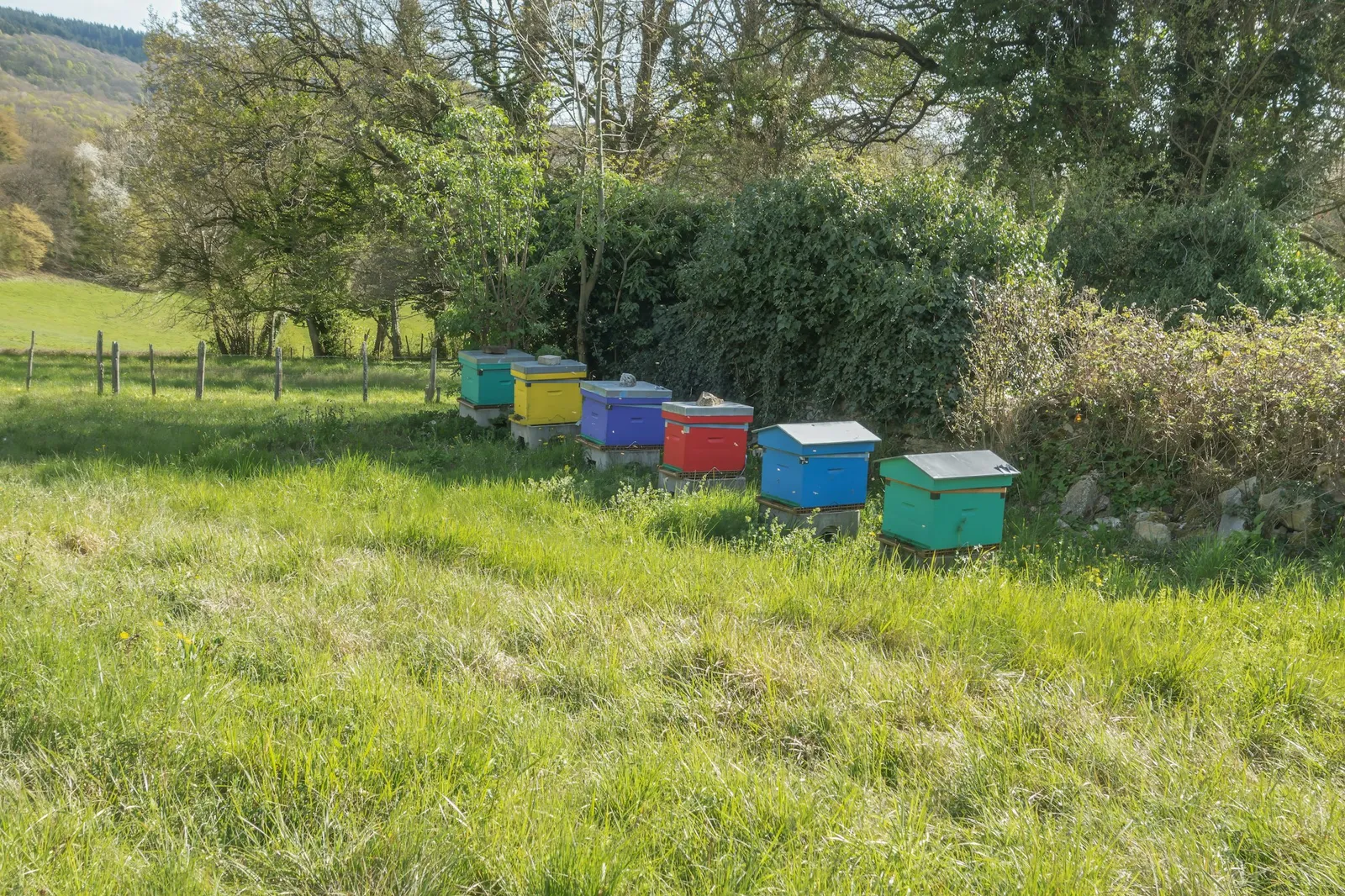
Do you need to register beehives in Italy?
Yes. Italy has a national beekeeping register, the Anagrafe apistica nazionale, held in a national database, the Banca dati apistica (BDA), on the Ministry of Health’s veterinary portal, vetinfo.it. The operating rules are in a ministerial decree of 11 August 2014. Every owner of hives must register, whether they have one colony for their own honey or a thousand. There is no hobby exemption.
- When: within 20 days of starting to keep bees.
- How: directly in the BDA with a digital identity, or through a delegate, usually your local beekeepers’ association or the veterinary service of your ASL (the local health authority).
- What you get: a beekeeper code of 10 characters, made up of IT, a three-digit code for your municipality, the two letters of your province and a progressive number.
- What you register: you as the beekeeper, each apiary with its location, and the number of colonies.
Each apiary must also carry a sign: weatherproof, at least A4 size, white with black letters at least 4 cm high, showing the words “anagrafe apistica nazionale” and your code. It tells the veterinary service and your neighbours who the bees belong to.
What is the annual beehive census in Italy?
Every registered beekeeper must update the BDA once a year, between 1 November and 31 December, with the number of colonies they have and where each apiary is. It applies to hobby beekeepers just as much as to professionals, and it is required even if numbers have not changed. If you are starting now, in November, the census window is open, and it is worth asking your ASL or association to make sure both registration and census are done.
The census matters for disease control. When American foulbrood or small hive beetle turns up, the veterinary service uses the register to find every apiary in the area. For the same reason, colonies are counted as they really are going into winter, which in Sicily is a time of year when the bees are still flying; bees in winter explains why.
Hobby beekeeping or selling honey: does it change the rules?
When you register, you say whether you keep bees for your own consumption (autoconsumo) or to sell honey and other hive products (commercializzazione). The animal health rules in this guide, registration, census, sign, treatment and disease reporting, apply in both cases.
Selling honey, even a few jars, brings in the extra rules for food businesses on top of that, from hygiene to labelling. They are outside this guide; your ASL and your local beekeepers’ association can tell you what applies. For what goes on a jar, see honey labels explained.
How far must beehives be from roads and neighbours in Italy?
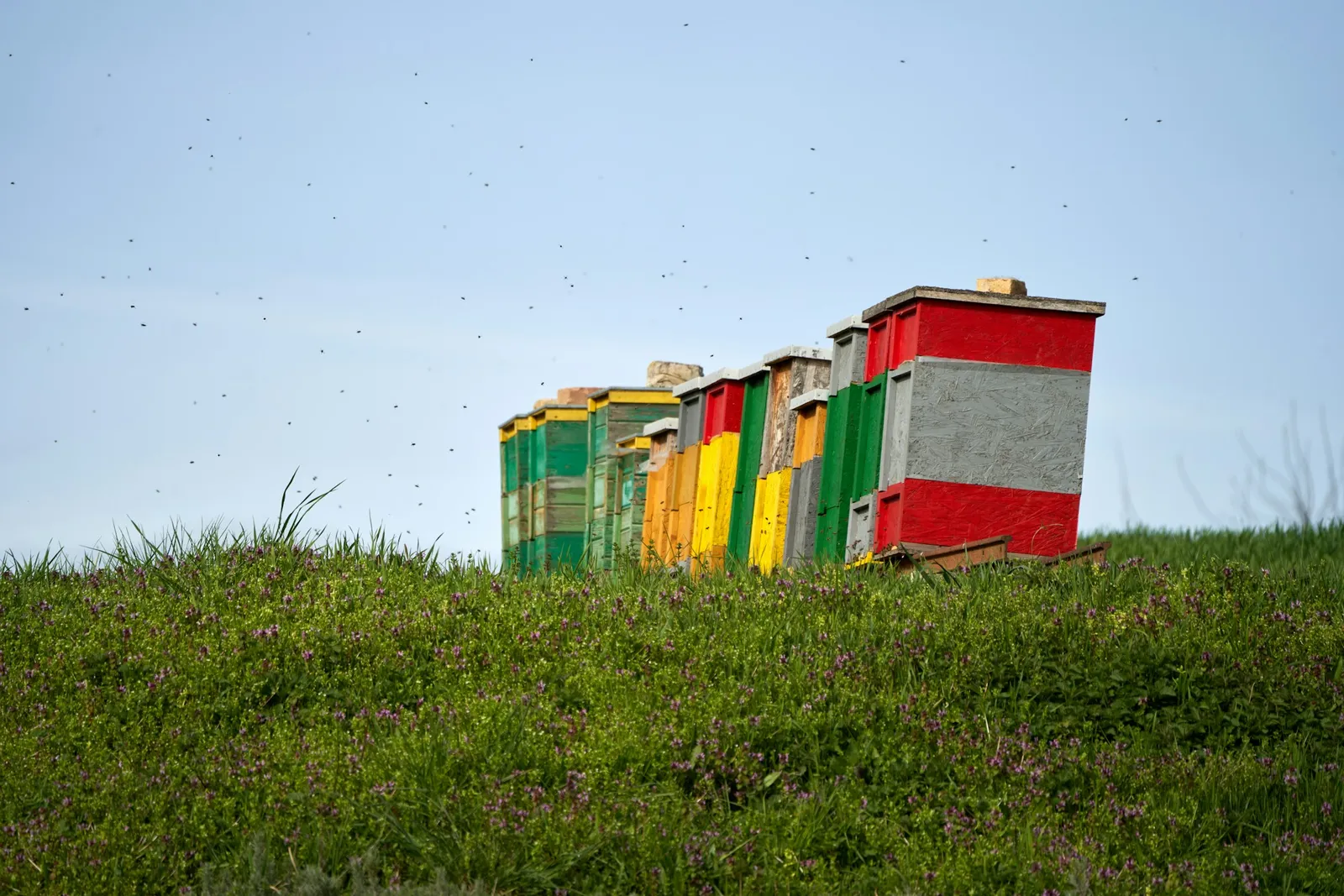
The minimum distances are in the Civil Code, article 896-bis, added by Italy’s beekeeping law (Law 313 of 2004):
| From | Minimum distance | Exceptions |
|---|---|---|
| Roads open to public traffic | 10 m | Not needed if there is a height difference of at least 2 m, or an unbroken wall, hedge or other barrier at least 2 m high that bees cannot pass through |
| Boundaries of public or private property | 5 m | Same exceptions, and any agreement between the neighbours |
| Sugar factories | 1 km | None |
A barrier works because it makes the bees fly up and over, well above head height, instead of straight across a path or a neighbour’s terrace. Regions and some municipalities add their own rules, so check with your comune before you choose a site.
Beyond the law, think about water (in a Sicilian summer bees need a reliable source, or they will find your neighbour’s pool), afternoon shade and a clear flight path. My hive stand runs along the orchard in the front garden, placed for a clear flight path and shade from the worst of the afternoon sun. Pesticide spraying is the other neighbourly issue: Italian law asks the regions to restrict spraying products toxic to bees on crops in flower.
Is varroa treatment compulsory in Italy?
In practice, yes. The Ministry of Health issues national guidelines on the varroa mite every year, and the regions and ASLs turn them into local plans. The 2025 guidelines say that, in Italian conditions, beekeepers should treat at least twice a year: once straight after the main honey harvest in summer, and once before or during winter, ideally when the colony has little or no brood. Coordinated treatment across an area is encouraged, so that one untreated apiary does not reinfest its neighbours.
- Only authorised veterinary medicines may be used. Home-made mixtures of the same active substance are not equivalent and are not allowed as a substitute.
- Every treatment must be recorded in the treatment register within 48 hours, and the register is subject to official checks.
- Treat with no honey supers on. Treatments go on when the honey to be eaten has been taken off.
My own approach is to count mites before deciding, using an alcohol wash on a sample of 300 bees, and to plan an oxalic acid treatment in December, when the colonies have the least brood. I explain why monitoring matters in my first year of beekeeping in Sicily.
Which bee diseases must be reported in Italy?
Several bee diseases are notifiable in Italy, meaning a beekeeper who suspects one must report it to the ASL veterinary service. They include American foulbrood and European foulbrood (bacterial diseases of the brood), nosema, acarine (tracheal mites), varroosis, and the two exotic pests the EU most wants to keep out: the small hive beetle, Aethina tumida, and the Tropilaelaps mites.
The small hive beetle matters most in the south. It was found in Europe for the first time in September 2014, near Gioia Tauro in Calabria, and later the same year in an apiary in Sicily linked to hives moved from Calabria. Calabria still has protection zones with movement restrictions, and Sicily is under surveillance, with sentinel colonies checked by the veterinary services. The national reference laboratory at IZS Venezie publishes the current map. Small, fast-running dark beetles in a hive, or slimy, fermenting comb, are reasons to call the vet, not to wait.
How do you move hives or buy bees in Italy?
Movements are recorded in the BDA. Buying or selling live bees, whether hives, nuclei, packages or queens, must be recorded at the time of the transfer. Moving hives, even temporarily, in a way that opens a new apiary or closes an old one (for example taking hives to the citrus or the sulla in flower, known as nomadismo) needs an accompanying document generated in the BDA, at the time of the move or within 7 days depending on the case. Sicily’s own beekeeping law (Regional Law 65 of 1995) also has notification rules, so ask your ASL which steps they expect.
Some practical points from buying my own bees:
- Buy locally, from a registered beekeeper, who should record the sale in the BDA. My first colony was a nucleus (nucleo) from a beekeeper near Trapani, and local bees are used to local conditions.
- Check the frame size before you buy. My nucleus came on frames about two inches shallower than my hive, and the bees built wild comb underneath them. Match the nucleus to the hive you will use.
- Buy in spring. Most nuclei are sold in spring, when colonies build up fast and have the season ahead of them.
- Do not bring bees from abroad casually. Moving bees and queens between countries needs official health certification.
- Swarms are free bees, and catching one is legal, but the colony then has to be counted and registered like any other. I caught one that settled in an olive tree five metres from my first hive, and it went into an Italian hive and became one of my two strong colonies; a bee swarm in your garden explains what to do if one lands near you.
What beehives are used in Italy, and how do they differ from UK hives?
The standard hive in Italy is the Dadant-Blatt, usually with 10 or 12 frames in the brood box (nido) and shallower honey supers (melari) on top. In the UK the most common hive is the British National, with smaller frames, and Langstroth hives are also used in both countries. The systems do not mix: frames, boxes and foundation from one will not fit another.
| Italy | UK | |
|---|---|---|
| Most common hive | Dadant-Blatt, 10 or 12 frames | British National, 11 frames |
| Frames | Larger brood frames, usually sold made up and wired | Smaller frames, often assembled by the beekeeper |
| Frame spacing | Metal end spacers are common | Hoffman self-spacing frames or plastic ends |
| Where to buy | Local suppliers everywhere, cheap, delivered to Sicily | UK suppliers; costly to ship to Italy |
I learned this the expensive way. My first hive was a well-made Langstroth-style hive from the UK; alongside it I bought Italian 12-frame Dadant-style hives locally. The Italian frames came ready wired, the metal spacers made inspections easy, and spares cost little. The UK frames stuck together, needed nailing, and every extra part had to be shipped. If you are starting in Italy, buy Italian equipment from day one and use one frame size for everything. My plan is to move the UK colony across in spring 2027.
Are there special beekeeping rules in Sicily?
The national rules apply in Sicily, with a few island specifics. The most important is the Sicilian black bee, Apis mellifera siciliana, the island’s native honey bee. Sicily’s regional beekeeping law (Regional Law 65/1995) protects it. Article 14-bis, added by Regional Law 3/2024 in January 2024, lets registered breeders of the black bee ask for conservation zones of up to 10 km radius around their breeding apiaries. Separately, protection zones (zone di rispetto) can be set up around collective mating stations, and inside those only the Sicilian subspecies may be kept. If you plan hives near a black bee breeder or a mating station, ask the ASL or the regional agriculture department whether a zone applies before you buy Italian or other queens.
The other Sicilian points are practical. The island is under surveillance for small hive beetle, so inspections and movement records matter. The climate means a long active season, a fast spring, and a summer dearth in July and August when little or nothing yields nectar, which I describe in why Sicilian honey tastes different. My own colonies came from a local beekeeper, and I do not know their subspecies.
Italian beekeeping words worth knowing
Suppliers, the ASL and other beekeepers will use these. Learning them early saved me a lot of pointing.
| Italian | English |
|---|---|
| Apicoltore / apicoltura | Beekeeper / beekeeping |
| Apiario | Apiary, the site with your hives |
| Arnia / alveare | Hive (the box) / hive or colony |
| Nido / melario | Brood box / honey super |
| Telaino / foglio cereo | Frame / wax foundation |
| Nucleo / sciame | Nucleus colony / swarm |
| Regina / fuco / operaia | Queen / drone / worker |
| Covata | Brood |
| Escludiregina | Queen excluder |
| Affumicatore / leva | Smoker / hive tool |
| Smielatura | Honey extraction, the harvest |
| Nomadismo | Moving hives to follow a flow |
| Anagrafe apistica / censimento | Beekeeping register / annual census |
Local beekeepers’ associations (associazioni apicoltori) run courses, often handle registration for members, and are the best place to find a mentor. For how the bees themselves turn nectar into honey, see how bees make honey.
Frequently asked questions
Do I need to register just one beehive in Italy?
Yes. Every owner of hives in Italy must register in the national beekeeping register within 20 days of starting, even with one colony kept only for their own honey. You receive a beekeeper code that goes on a sign at the apiary.
When is the beehive census in Italy?
Every year between 1 November and 31 December. Registered beekeepers must update the national database with the number of colonies they hold and where each apiary is, even if nothing has changed.
Can I keep bees in my garden in Italy?
Yes, if you register and respect the distances: at least 10 m from roads open to the public and 5 m from property boundaries, unless a wall or hedge at least 2 m high or a 2 m drop separates the hives, or your neighbour agrees. Check local rules with your comune too.
Do you need a licence or a course to keep bees in Italy?
No licence or compulsory course is needed for a hobby beekeeper. You must register, display the apiary sign, do the yearly census, treat for varroa with authorised medicines and keep a treatment register. A course with a local association is strongly worth doing.
Is varroa treatment mandatory in Italy?
The Ministry of Health guidelines expect at least two treatments a year, after the main harvest and in the low-brood period of autumn or winter, using only authorised veterinary medicines. Each treatment must be written in the treatment register within 48 hours.
What is Aethina tumida?
The small hive beetle, a pest of honey bee colonies from Africa. It was first found in Europe in Calabria in 2014 and later that year in Sicily. It is notifiable: a beekeeper who suspects it must contact the ASL veterinary service.
What is a Dadant hive?
The Dadant-Blatt is the standard beehive in Italy and much of continental Europe, with large brood frames, usually 10 or 12 to a box, and shallower honey supers. Its frames do not fit UK National or Langstroth hives.
Can I keep Italian bees in Sicily?
In most of Sicily, yes. The regional law allows conservation zones of up to 10 km around registered black bee breeding apiaries, and protection zones around mating stations where only the Sicilian subspecies may be kept. Ask the ASL or the region whether your land is affected.
Sources and small print
- Ministry of Health veterinary portal (vetinfo.it): Anagrafe apistica nazionale and the BDA
- Decree of 11 August 2014: operating manual for the national beekeeping register (registration, census, sign, movements)
- Ministry of Health: guidelines for the control of Varroa destructor, 2025
- IZS Venezie: Aethina tumida in Italy, the epidemiological situation
- Sicilian Regional Law 65/1995, article 14-bis: protection of Apis mellifera sicula (added by Regional Law 3/2024)
- Italian Civil Code, article 896-bis: minimum distances for apiaries
- Slow Food Foundation: Sicilian black bee presidium
Rules are summarised as of November 2026 and regional details vary; your ASL veterinary service has the final word.
Credits
Photo: snap wander, Unsplash Licence, via Unsplash.
Photo: Barnabas Davoti, Unsplash Licence, via Unsplash.
 The weekly YouTube series