
In this episode
- Thick stone walls hold the cold, and cold can mean damp and mould
- A socket for a large electric towel heater in the bathroom
- Log burner or dining table: a trade off in the lounge
- Overgrown prickly pear pads turned into compost
- Every opening measured for window and door quotes
What rented homes taught me
This week is about designing a home for the Sicilian climate. Since starting this renovation, I have stayed in a lot of rented homes, with different budgets, different locations and different standards, and it has shown me what actually works and what does not. I always knew air conditioning was essential here. What I had not really thought about was winter.
Interestingly, I have never known the temperature here drop below about 10 degrees. But these thick stone buildings hold the cold, and where there is cold, there can be damp. Where there is damp, mould is not far behind. So I have made some practical decisions. I have installed extractor fans in both the kitchen and the bathroom, in episode 48 and episode 50, and today I am fitting a power point for a large towel heater. It might sound like a small detail, but warm, dry towels and a dry bathroom make a huge difference to everyday comfort.
Heat or layout?
Longer term, I would love a log burner in the lounge for the winter months. The obvious position would be along the external wall where the current window is, perfect for a flue. But that is exactly where I picture a small dining table, somewhere to sit and eat in the cooler months when it is too cold to eat outside. So it becomes a trade off: heat or layout. What would you do?
Underfloor heating would have been another fantastic solution, but if I am completely honest, it is not in the budget. So I am thinking more practically: large rugs and layered textures, simple ways to take the cold edge off the tiles. I have already seen some beautiful rugs in the local second hand shops. My article on Sicily in winter describes the colder months here.
Sun, shade and airflow
Staying in other people's homes has made me notice things I probably would not have considered otherwise:
- Sun pouring straight through the windows at 6 in the morning, long before I am ready to wake up. Not much of an issue in the UK, but here it definitely is.
- How quickly rooms heat up in the afternoon without proper shade.
- How cold tile floors feel first thing in the morning.
- How important airflow is to whether a space feels fresh or just stuffy.
They might seem like small things, but they shape how a home feels every single day, and I am factoring all of them into this renovation. Yes, staying in rentals has cost me money, but it has also given me something far more valuable: clarity. This villa is not just being renovated to look good. It needs to function properly all year round. If you live in a climate like this, what have you learned the hard way? My guide to the seasons in Sicily shows what each one is like.
A socket for the towel heater
In the bathroom, I install the new plug socket for the future electric towel heater. It goes in now, while the walls are still open, because as I said in episode 50, once the walls are plastered, adding cables becomes almost impossible.
Compost from the prickly pears
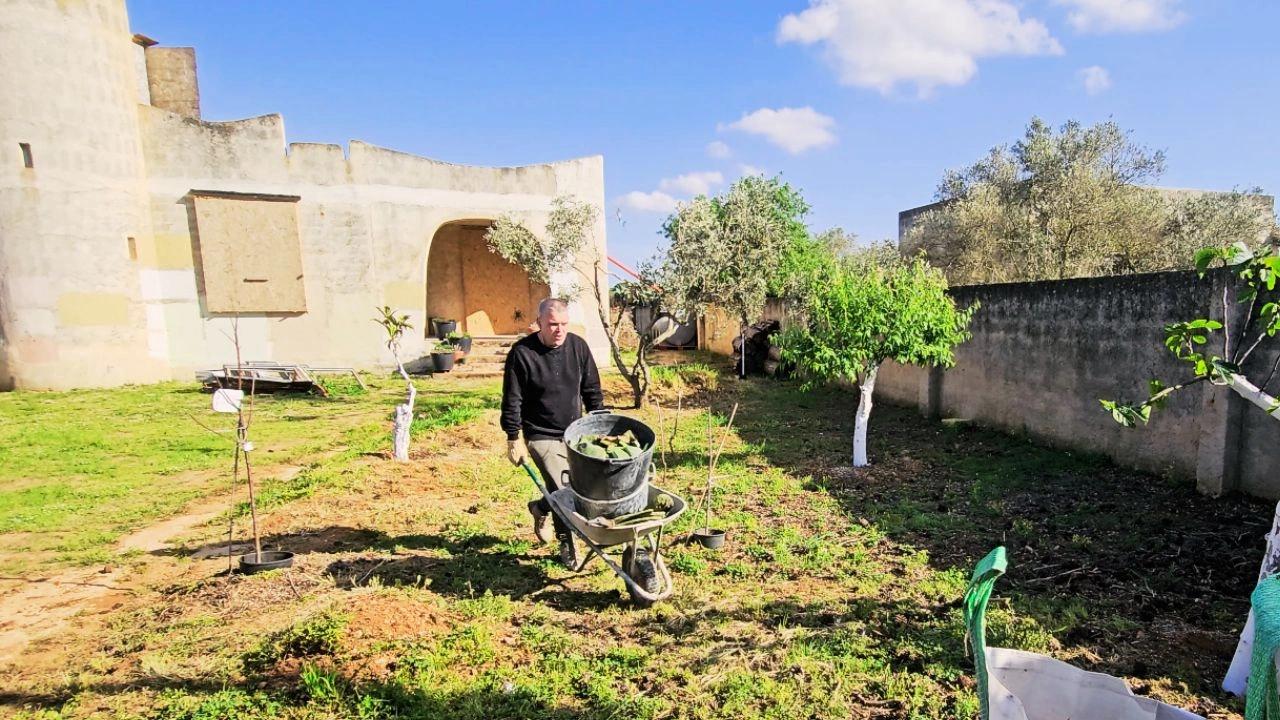
Outside, one of my boys helps me set up a one tonne compost bag. We cut back the overgrown prickly pear pads, the ones the rats were feeding on in episode 64, and turn them into compost for the garden. On the veranda, I pot up some wild fennel I rescued from the garden. My article on growing your own food in Sicily follows the garden.
Rebuilding the kitchen door frames
The temporary boarding comes off the kitchen doors, which I boarded up in episode 60. I strengthen the timber framing, then apply Mapei Primer G to the reveals ready for rendering, as I did in episode 62.
We also move the generator and the solar ducting so the plasterers will have clear access to the walls. Then I smooth the bathroom reveals with mortar to finish them.
Measuring for new windows
Now that the windowsills are in and all the reveals are rendered, the next stage is getting new windows. I measure up every opening, and from those measurements I start emailing manufacturers in Italy and elsewhere in Europe for quotes on new aluminium windows and doors. They are fitted in episode 88, and my real world renovation cost breakdown covers what jobs like this cost.
A strimmer upgrade after dark
Finally, I have bought a crazy looking contraption from the DIY store for the strimmer, because I am sick of getting my feet wet walking through the long grass. I normally use the metal blade, because the normal string head is too much of a headache, with the line breaking all the time, but the blade is quite small. This heavy duty metal head is much faster.
It is fantastic. It has broken once, and I have done most of the garden, hitting walls and rocks and all sorts. The line it came with is probably not great, but I have a whole spool of tougher line to use instead. Nothing beats a bit of strimming in the dark with your head torch on.
Frequently asked questions
Does it get cold in Sicily in winter?
I have never known it drop below about 10 degrees at the villa, but thick stone buildings hold the cold, and where there is cold there can be damp.
How do you stop damp in a stone house in Sicily?
I have installed extractor fans in my kitchen and bathroom and a socket for a large towel heater, to keep the rooms and towels warm and dry.
Is underfloor heating worth it in Sicily?
It would have been a fantastic solution, but it was not in my budget, so I am planning large rugs and layered textures to take the cold edge off the tiles.
What should you design for in a Sicilian home?
From staying in rentals I learned to plan for early morning sun, afternoon heat without shade, cold tile floors and good airflow, as well as air conditioning.
More episodes on the same job: Air con and ventilation

 The weekly YouTube series