
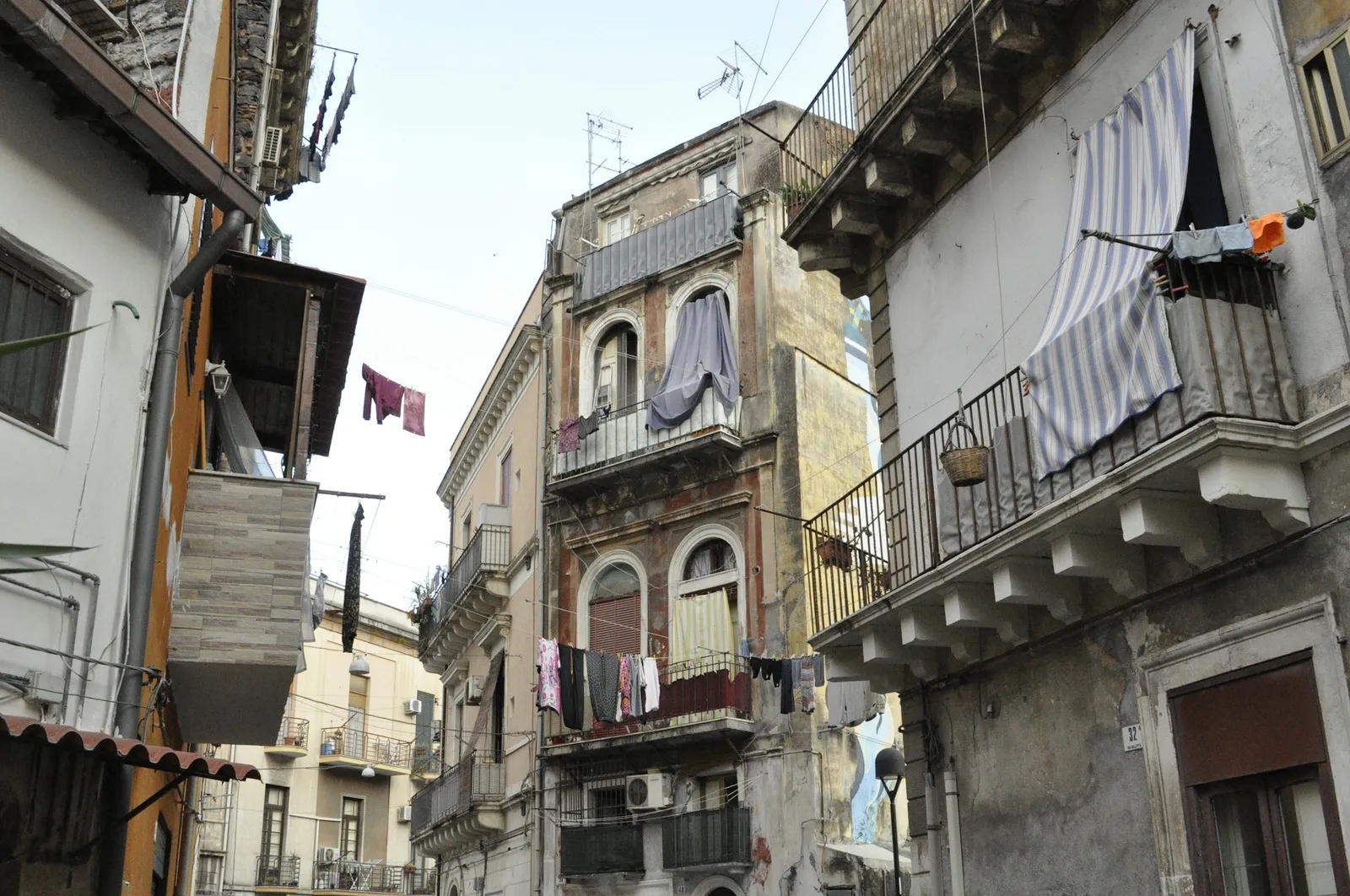
Sicilian language or dialect?
Both labels are in use, and they mean different things. In Italian, dialetto is the normal word for the local Romance speech of a region, and Treccani's encyclopedia of the Italian language treats Sicilian under that heading, together with the dialects of Calabria and Salento. That does not make Sicilian a corrupted form of Italian: like Italian, it descends from Latin. Internationally, Sicilian has its own ISO 639-3 code, scn, and SIL International lists it as an individual living language.
Its legal status in Italy is modest. Law 482 of 1999 protects twelve historic minority languages, among them Sardinian, Friulian, Albanian and Greek, but not Sicilian. Sicily's own regional law no. 9 of 31 May 2011 promotes the teaching of Sicilian history, literature and linguistic heritage in the island's schools.
In practice, almost everyone I meet in western Sicily switches between the two, often in the same sentence. I wrote about what that means for learning Italian here in Learning Italian when you live in rural Sicily; this page is about the Sicilian itself.
What Sicilian sounds like
A few features make Sicilian easy to recognise, even if you only know a little Italian. All of these come from Treccani's description of the Sicilian dialects:
- Five vowels instead of seven: where Italian has e and o, Sicilian often has i and u, so Italian neve (snow) is nivi, tela (cloth) is tila, sole (sun) is suli and croce (cross) is cruci.
- The double l becomes a thick dd, said with the tip of the tongue curled back: Italian bello is beddu, and cavalli (horses) is cavaddi.
- Words very often end in u where Italian ends in o: carusu, picciriddu, travagghiu.
- It varies from place to place. Palermo turns some vowels into diphthongs, so cosa (thing) sounds like kwosa, and some central dialects turn l into n before another consonant, so alto (high) is antu.
The German linguist Gerhard Rohlfs, quoted by Treccani, called Sicilian "the least southern dialect of the South".
Where Sicilian words come from
Sicily's rulers left their words behind. Treccani gives these examples, and they are a good way to see the island's history in its vocabulary:
| Sicilian | Meaning | From |
|---|---|---|
| caddu | a bucket | Arabic qādūs |
| casirìa | a flowerpot | Arabic qasrīya |
| cona | a roadside shrine | Greek eikon (image) |
| grasta | a plant pot | Greek gastra |
| custureri | a tailor | Old French costurier |
| racina | grapes | French raisin |
| criata | a maid (now old-fashioned) | Spanish criada |
Treccani notes that Arabic loanwords are especially common in western Sicily, where we live, while cona and grasta are typical of the northeast, around Messina. For the history behind them, see my guide to Sicily's history.
Sicilian words you will hear
These are words I hear every week. The meanings come from Antonino Traina's Nuovo vocabolario siciliano-italiano, a Sicilian to Italian dictionary of 1868 that is free to read online, with the everyday sense where it has shifted (for babbiari, I have used Wiktionary as a backup).
| Sicilian | Meaning | Italian |
|---|---|---|
| picciriddu, picciridda | a little child | bambino, bambina |
| carusu | a boy, a lad | ragazzo |
| picciottu, picciotta | a young man, a girl | giovane, ragazza |
| beddu, bedda | beautiful; "Bedda!" is said in admiration | bello, bella |
| mischinu | poor thing! (pity), or unlucky | poverino, meschino |
| taliari, talè | to look; talè! is said to call someone's attention | guardare, guarda! |
| camurrìa | a real nuisance (its old literal meaning is a venereal disease) | seccatura |
| babbiari | to play the fool, to joke around | scherzare, fare lo sciocco |
| travagghiu | work | lavoro |
| ciatu | breath; also strength | fiato |
| zitu, zita | fiancé, fiancée | fidanzato, fidanzata |
| cumpari | godfather at a baptism or confirmation; also a friendly word between close friends | compare |
| vossìa | the respectful "you", short for vossignorìa (your lordship) | vossignoria |
A word on camurrìa: Traina gives its first meaning as gonorrhoea, and only then the figurative one, something deeply annoying. Today it just means a pain in the neck, and you will hear "chi camurrìa!" about traffic, paperwork and the weather.
Sicilian phrases and slang
Sicilian slang is mostly ordinary Sicilian used with feeling. A handful of short phrases go a long way:
- Talè! Look! Also used to get someone's attention before telling them something.
- Mischinu! or Mischina! Poor thing! You will hear it about anyone who has had bad luck.
- Chi camurrìa! What a pain!
- Bedda! Beautiful! An exclamation of admiration.
For greetings, Traina gives bongiornu (or bonciornu), the way to wish someone good day, and bonanotti, the evening greeting, which can also send someone on their way: good night. Bonasira, good evening, he treats as the same as bonanotti.
You will also hear words like mizzica and amunì everywhere. I could not find either in Traina's dictionary or in another source I trust, so I have left them out rather than guess at their meanings.
Sicilian sayings
Sicilian is rich in proverbs. These all appear in Traina's dictionary, with their meanings:
| Sicilian | In English |
|---|---|
| Nun è bedda chidda chi è bedda, ma chidda chi piaci. | Beautiful is not what is beautiful, but what you like. |
| Cu' beni simina, beni ricogghi. | Whoever sows good, reaps good. |
| Lu beni si canusci quannu si perdi. | You only know what is good when you lose it. |
| Fa beni e nun guardari a cui. | Do good, and do not look at who to. |
| Li picciriddi su comu l'acidduzzi, ogni tanticchia aprinu la vucca. | Children are like little birds: every few minutes they open their mouths (to be fed). |
| Murìu lu figghiozzu, nun semu cchiù cumpari. | The godchild has died, so we are no longer cumpari: when the tie is gone, so are the obligations. |
The last one shows how much the cumpari relationship mattered. Traina also records farisi cumpari, to become cumpari, meaning to become close friends.
Sicilian literature: a short history
Sicilian has a longer written history than most people expect. At the court of the emperor Frederick II in the 13th century, probably from the 1220s, the poets of the Sicilian School wrote love poetry in a refined Sicilian, and one of them, Giacomo da Lentini, is credited with inventing the sonnet. Dante, in his book on the vernacular languages, called the poetry of that school Sicilian.
Later writers in Sicilian include the poet Giovanni Meli (1740 to 1815), Domenico Tempio, Nino Martoglio and Ignazio Buttitta, who won the Viareggio prize in 1972. Luigi Pirandello wrote some of his work in the dialect of Girgenti, today's Agrigento, and Andrea Camilleri's Inspector Montalbano novels mix Sicilian into their Italian.
Should you learn Sicilian?
Learn Italian first. Every Sicilian I deal with understands Italian, and it is the language of every form you will fill in. Sicilian is what you pick up afterwards, a word at a time, and every word you use will earn you a smile. My guide to learning Italian in rural Sicily explains what has worked for me.
If you want to go further, Traina's dictionary is a wonderful thing to browse, and Sicilian surnames echo the same words: Caruso looks just like carusu, and a dictionary of American family names links the surname to close-cropped hair and to work in the sulphur pits. There is more on that in Sicilian surnames and what they mean.
Frequently asked questions
Is Sicilian a language or a dialect?
Both terms are used. Sicilian grew from Latin on the island, alongside Italian rather than out of it, and has its own ISO 639-3 code (scn). In Italy it is usually called a dialect, the normal Italian word for a regional Romance language, and it is not protected as a minority language by Italian law.
Do people in Sicily speak Italian?
Yes. Italian is the official language and, in my experience, almost every Sicilian speaks it. Many also speak Sicilian and switch between the two.
How do you say beautiful in Sicilian?
Beddu for a man or a thing (masculine) and bedda for a woman or a feminine noun. The Italian bello becomes beddu because Sicilian turns the double l into a dd sound. "Bedda!" on its own is an exclamation of admiration.
How do you say good morning in Sicilian?
Bongiornu, also spelt bonciornu. Traina's Sicilian dictionary of 1868 gives it as the way of wishing someone good day. In the evening the greeting is bonasira or bonanotti, and bonanotti also means good night.
What does picciriddu mean?
Picciriddu (feminine picciridda) is Sicilian for a little child. Traina's dictionary of 1868 gives it as a child between infancy and adolescence, bambino or fanciullo in Italian.
What does mischinu mean in Sicilian?
Mischinu (feminine mischina) means poor thing. It is used as an exclamation of pity, much like the Italian poverino, and can also describe someone poor or unlucky.
What does camurrìa mean?
Camurrìa means a nuisance, something really annoying, and "chi camurrìa!" means what a pain! Traina's dictionary records that its original literal meaning was gonorrhoea.
What language did they speak in Sicily before Italian?
Sicily has been ruled by speakers of Greek, Latin and Arabic, among others, and Sicilian borrowed words from all of them as well as from French and Spanish. Sicilian itself was already a written literary language in the 13th century, at the court of Frederick II.
Sources and small print
- Antonino Traina, Nuovo vocabolario siciliano-italiano (Palermo, 1868), on Wikisource: entries for picciriddu, picciottu, carusu, beddu, mischinu, taliari, camurrìa, babbiari, travagghiu, ciatu, zitu, cumpari, vossìa, bongiornu, bonasira and bonanotti, and the proverbs
- Treccani, Enciclopedia dell'Italiano: siciliani, calabresi e salentini, dialetti (sounds, loanwords, writers)
- Treccani, Enciclopedia dell'Italiano: scuola poetica siciliana
- SIL International: ISO 639-3 code scn, Sicilian
- Parlamento italiano: law no. 482 of 15 December 1999
- Centro di studi filologici e linguistici siciliani: regional law no. 9 of 31 May 2011
- Wiktionary: babbiari (the modern sense, to joke around)
Credits
Photo: Kristin Snippe, Unsplash Licence, via Unsplash.
 The weekly YouTube series