
The most common Sicilian last names
These are the fifteen most common surnames in Sicily, with the number of people bearing each one on the island, from the surname site Forebears:
| Rank | Surname | People in Sicily |
|---|---|---|
| 1 | Russo | 42,109 |
| 2 | Messina | 31,566 |
| 3 | Caruso | 27,404 |
| 4 | Lombardo | 25,923 |
| 5 | Marino | 24,060 |
| 6 | Rizzo | 22,239 |
| 7 | Grasso | 19,017 |
| 8 | Greco | 18,454 |
| 9 | Romano | 17,062 |
| 10 | Amato | 16,013 |
| 11 | Di Stefano | 15,378 |
| 12 | Parisi | 14,831 |
| 13 | Puglisi | 14,542 |
| 14 | Pappalardo | 14,068 |
| 15 | Costa | 13,871 |
Several of these are common all over southern Italy. Treccani's encyclopedia of the Italian language lists Amato, Caruso, Catalano, Greco, Lombardo and Russo among the typically southern surnames, and ranks Russo third in the whole of Italy (Forebears puts it second).
What Sicilian surnames mean
I have only given a meaning where a published source gives one. Most come from Elsdon C. Smith's Dictionary of American Family Names (1956), as quoted by Forebears, or from Behind the Name. Where I found no meaning, I say so.
| Surname | Meaning | Source |
|---|---|---|
| Russo | Red-haired, from Latin russus, red; a variant of Rossi | Behind the Name |
| Messina | One who came from Messina | Smith, via Forebears |
| Caruso | One with shorn or close-cut hair; one who worked in the sulphur pits | Smith, via Forebears |
| Lombardo | One from Lombardy; also a shopkeeper, because many from Lombardy set up shop in Sicily | Smith, via Forebears |
| Marino | From Latin marinus, of the sea | Forebears |
| Rizzo | One who had wavy or curly hair | Smith, via Forebears |
| Grasso | Fat: a nickname for a stout person, from Latin crassus | Behind the Name |
| Greco | From Greece, a Greek | Behind the Name |
| Romano | One who came from Rome, or from within its sphere; one who had visited Rome | Smith, via Forebears |
| Amato | From the given name Amato (Latin Amatus) | Behind the Name |
| Parisi | One who came from Paros, in Greece (but see below) | Smith, via Forebears |
| Catalano | One who came from Catalonia, in Spain | Smith, via Forebears |
| Esposito | "Exposed": a child abandoned and taken in | Behind the Name |
| Di Stefano, Puglisi, Pappalardo, Costa, Trovato | No meaning given in the sources I checked |
Sources do not always agree. For Parisi, Smith's dictionary says "from Paros", the Greek island, while the Italian Wikipedia's list of Sicilian surnames explains it as Parigi, Paris. I cannot tell you which is right, and you should be wary of any website that gives a single confident answer for a surname like this.
The four kinds of Sicilian surname
Looking at the table, Sicilian surnames fall into a few clear groups:
- Nicknames for how someone looked: Russo (red hair), Rizzo (curly hair), Grasso (stout), Caruso (cropped hair).
- Where a family came from: Messina, Lombardo, Greco, Romano, Catalano and, perhaps, Parisi.
- A first name passed down: Amato, and names built on a given name such as Di Stefano.
- Names given to foundlings: Esposito, "exposed", was given to abandoned children, though Treccani notes that it is above all a name of Campania, around Naples. In Sicily, the State Archive of Catania, for one, keeps foundling births ("proietti") in separate registers, which is where to look if an ancestor was a foundling.
Surnames and Sicilian words often look alike: the surname Caruso, for example, is spelt almost exactly like carusu, the Sicilian for a boy. I explain more Sicilian words in The Sicilian language: words and phrases.
When Sicilian surnames began
According to Treccani, Italian surnames began to appear in the 12th century, settled in the 13th and 14th, and became fixed between the late 16th and the 18th centuries. The turning point was the Council of Trent, which in 1563 required parishes to keep baptism registers, so that every child was written down with a family name.
That matters if you are tracing a family: before the parish registers, there is often no fixed surname to follow. Civil registers in Sicily start in 1820, and I explain how to search them in Tracing your Sicilian ancestry.
Sicilian surnames in America
Sicilian surnames are very common in the United States, a legacy of the great emigration between 1880 and 1920. Forebears' figures show how many of the world's bearers of some of these names live in the US:
| Surname | Share in the US |
|---|---|
| Caruso | About 26% |
| Trovato | About 25% |
| Lombardo | About 24% |
| Marino | About 23% |
| Rizzo | About 19% |
| Puglisi | About 15% |
If your family name is on this page, it is worth reading Sicilian vs Italian for the background, and Italian citizenship by descent if you are thinking about a passport. Be aware that since 2025 a great-grandparent is no longer enough, and if your grandparent became American and kept that citizenship until they died, the grandparent route is usually closed.
Is my last name Sicilian?
A name that is concentrated in Sicily is a strong hint. Forebears finds about 85% of Italy's Puglisis in Sicily, and Treccani says that half of all Italians named Di Stefano, and more than half of those named La Rosa, live on the island. Rizzo is more widespread, with about 29% of Italian Rizzos in Sicily.
But be careful:
- Many common Sicilian surnames, such as Russo, Romano and Marino, are just as common elsewhere in southern Italy.
- A surname tells you about a family line many centuries ago, not where your great-grandparents were born.
- Spellings changed. Records written in Sicily, in Italian, may spell your name differently from the one your family used in America.
The only way to be sure is the paper trail: a passenger list or naturalisation record that names the town, then the town's birth and marriage records. My guide to tracing your Sicilian ancestry walks through it, archive by archive.
Frequently asked questions
What are the most common Sicilian last names?
According to Forebears, the most common surnames in Sicily are Russo, Messina, Caruso, Lombardo, Marino, Rizzo, Grasso, Greco, Romano and Amato, followed by Di Stefano, Parisi, Puglisi, Pappalardo and Costa.
What does the surname Russo mean?
Russo is a variant of Rossi, originally a nickname for a red-haired person, from the Latin russus, red. It is the most common surname in Sicily and, according to Treccani, the third most common in Italy (Forebears puts it second).
What does Caruso mean in Sicilian?
As a surname, Elsdon C. Smith's Dictionary of American Family Names explains Caruso as one with shorn or close-cut hair, or one who worked in the sulphur pits. In the Sicilian language, carusu means a boy.
How can I tell if my last name is Sicilian?
Check how concentrated it is in Sicily: Puglisi, Di Stefano and La Rosa, for example, are mostly found on the island. But many Sicilian names are common across southern Italy, so a surname is only a clue. Birth, marriage and immigration records are the proof.
What is the most common last name in Sicily?
Russo. According to Forebears, about 42,109 people in Sicily are called Russo, ahead of Messina (31,566) and Caruso (27,404). Russo began as a nickname for a red-haired person, from the Latin russus, red, and it is common across southern Italy too.
When did Sicilians start using surnames?
According to Treccani, Italian surnames appeared from the 12th century and became fixed between the late 1500s and the 1700s, after the Council of Trent required parishes to keep baptism registers in 1563.
Sources and small print
- Forebears: most common surnames in Sicily, and the pages for Caruso, Messina, Lombardo, Marino, Rizzo, Romano, Parisi, Catalano, Puglisi and Trovato (quoting Elsdon C. Smith, Dictionary of American Family Names, 1956)
- Behind the Name: Russo, Rossi, Grasso, Greco, Amato and Esposito
- Treccani, Enciclopedia dell'Italiano: Cognomi
- Wikipedia (Italian): Cognomi siciliani, for the alternative meaning of Parisi
- Antenati, Archivio di Stato di Catania: description of its records
Credits
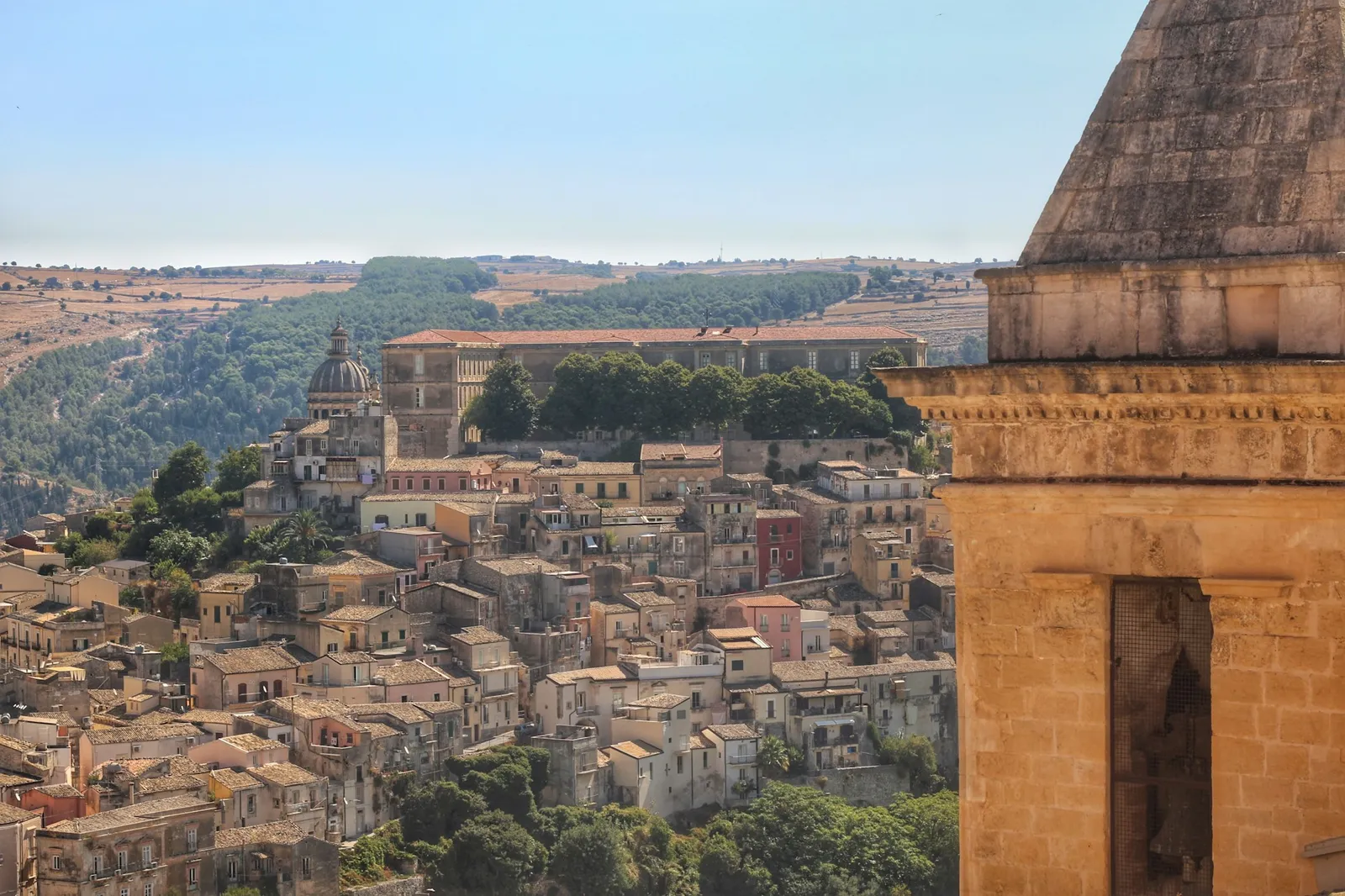
Photo: Valerio Giannattasio, Unsplash Licence, via Unsplash.
 The weekly YouTube series