
Ethnicity vs race: what we are actually asking
Many of the questions Americans search about Sicilians mix up three different things, so it helps to separate them first.
- Ancestry is where your forebears lived, and it is what DNA studies measure. It is always a mixture, and it changes gradually across a map rather than stopping at borders.
- Ethnicity is a shared culture: language, food, religion, family customs, a sense of belonging. Sicilian is an ethnicity in this sense, and my guide to Sicilian vs Italian is about that identity.
- Race is a social category. The National Human Genome Research Institute puts it plainly: "Race is a social construct", and "There is more genetic variation within self-identified racial groups than between them."
So a DNA study can tell you how Sicilians relate genetically to Greeks, Tunisians or northern Italians. It cannot tell you what race Sicilians are, because race is not something genes define.
Who came to Sicily: the peoples behind Sicilian ancestry
Sicily sits in the middle of the Mediterranean, and almost everyone who sailed it left people behind. This is the outline, from Britannica's history of the island and the dates used by a 2026 study of medieval Sicilian DNA:
| When | Who | What happened |
|---|---|---|
| Before the Greeks | Sicani, Elymians, Siculi | The island's earliest recorded peoples; the Siculi gave Sicily its name |
| From the 8th century BCE | Phoenicians | Trading settlements in the west, such as Motya |
| 8th to 6th century BCE | Greeks | Colonies along the east and south coasts |
| 3rd century BCE | Romans | Sicily became Rome's first province |
| 535 CE | Byzantines | Eastern Roman rule |
| 827 to 1091 | Arabs (Aghlabids, then Fatimids) | Conquest began in 827 and the last Byzantine stronghold fell in 965; Arab rule lasted until the Norman conquest |
| 1061 to 1091 | Normans | Conquest from the north: Palermo fell in 1072 and the last Arab stronghold in 1091 |
| 1194 and 1266 | Swabians, then Angevins | German and then French dynasties |
| 18th century | Bourbons | Rule from Naples |
| 1861 | Italy | Sicily became part of the new Kingdom of Italy |
My history of Sicily tells the story in more detail, and is Sicily part of Italy? covers 1861 and the island's autonomy since 1947. The genetic question is how much each of these arrivals actually changed the population, and the answer, study after study, is: less than the list of rulers suggests.
What the DNA studies found
These are the main peer-reviewed studies that include Sicily. Each looked at different markers and different people, so their numbers are not directly comparable, but their conclusions point the same way.
| Study | What it looked at | Key finding for Sicily |
|---|---|---|
| Di Gaetano et al. 2009, European Journal of Human Genetics | Y chromosomes (the paternal line) across Sicily | Greek contribution estimated at about 37%, North African at about 6%; east and west Sicily differ, but not by much |
| Sarno et al. 2014, PLOS ONE | 326 people from eight provinces of Sicily and southern Italy, paternal and maternal lines | No significant genetic sub-structure within Sicily or between Sicily and southern Italy; North African contributions "almost negligible" |
| Fiorito et al. 2016, European Journal of Human Genetics | Genome-wide data from about 300 Italians | Southern Italians share more DNA segments with North African and Middle Eastern populations; a mixing event about 1,000 years ago, around the Norman conquest |
| Sarno et al. 2017, Scientific Reports | 511 people from 23 populations in Sicily, southern Italy, Greece and Albania | A "shared Mediterranean genetic continuity, extending from Sicily to Cyprus"; mainly Neolithic background with Bronze Age additions from the Caucasus and Levant |
| Raveane et al. 2019, Science Advances | 1,616 Italians from all 20 regions | Sicily groups with southern Italy, near Middle Eastern populations; Caucasus-related ancestry highest in the south |
| Fernandes et al. 2020, Nature Ecology and Evolution | Ancient DNA from Sicily and other western Mediterranean islands | Steppe ancestry reached Sicily by about 2200 BCE, Iranian-related ancestry by the mid-second millennium BCE |
| Monnereau et al. 2026, PLOS ONE | 111 people buried at 18 Sicilian sites, 5th to 15th century | North African ancestry present long before the Arab conquest; modern Sicilians from Siracusa and Trapani show "a remarkably consistent profile" |
Three things stand out. First, Sicilians are genetically close to southern Italians: the 2014 study found a "lack of significant genetic sub-structures both within Sicily, as well as between Sicily and Southern Italy", and called the island "an ancient Mediterranean melting pot".
Second, the deepest layer is old: early farmers of the Neolithic, followed by Bronze Age migrations by sea that brought ancestry linked to the Caucasus and the Levant, thousands of years before the Arabs or Normans. Third, there is real variety within the population: the 2014 study found "high levels of within-population variability", and the 2019 study found that Italy has more genetic structure within one country than anywhere else in Europe.
Are Sicilians Arab?
No. Sicily was ruled by Arab dynasties for about two centuries, and that period left a deep mark on the island's farming, food, place names and the Sicilian language. But the genetic studies do not find that Sicilians are Arab by descent.
What they find is smaller and more interesting. The 2014 study of paternal and maternal lines found that Near Eastern and Balkan sources mattered most, and that "Northern African contributions seem to be almost negligible". The 2009 Y-chromosome study estimated the North African contribution to Sicilian men's paternal lines at about 6%.
Genome-wide studies, which look at all of a person's ancestry, find a little more: the 2016 study found southern Italians share more DNA with North African and Middle Eastern populations than northern Italians do, and the 2019 study modelled North African contributions of 3.8% to 14.5% across Italian clusters, appearing only in the south and in Sardinia.
The newest study adds a twist. Looking at people buried in Sicily between the 5th and 15th centuries, Monnereau and colleagues found North African ancestry already present before the Islamic conquest, as far back as the Middle Bronze Age at Motya, the Phoenician island off Marsala. People of the Islamic period were genetically diverse, and how someone was buried, as a Muslim or a Christian, generally did not match their genetic group. By the late medieval period, ancestry had shifted toward that of modern Europeans.
In other words, people moved between Sicily and North Africa in both directions for thousands of years, and religion and DNA did not line up neatly.
Are Sicilians Greek? And what about the Normans?
Partly, and more than most Americans expect. Greek colonists founded cities such as Siracusa, Naxos and Agrigento from the 8th century BCE, and the genetic evidence of that is clear. The 2009 Y-chromosome study estimated the Greek contribution to Sicilian paternal lines at about 37%. The 2017 study found that people in southern Italy and Sicily are genetically closer to the Greek-speaking islands, such as Crete and Cyprus, than to people on the Greek mainland, which fits a long shared history around the sea rather than one single migration.
The 2016 study argued that the Middle Eastern ancestry found in the south "most likely originated at the time of the Greek colonization and, with a smaller percentage, of the subsequent Arabic domination". The same study dated a mixing event to about 1,000 years ago, coinciding with the Norman conquest, which brought not only Normans but people from across the Mediterranean world they ruled. The 2026 study of medieval burials also found a few people with Northern European ancestry.
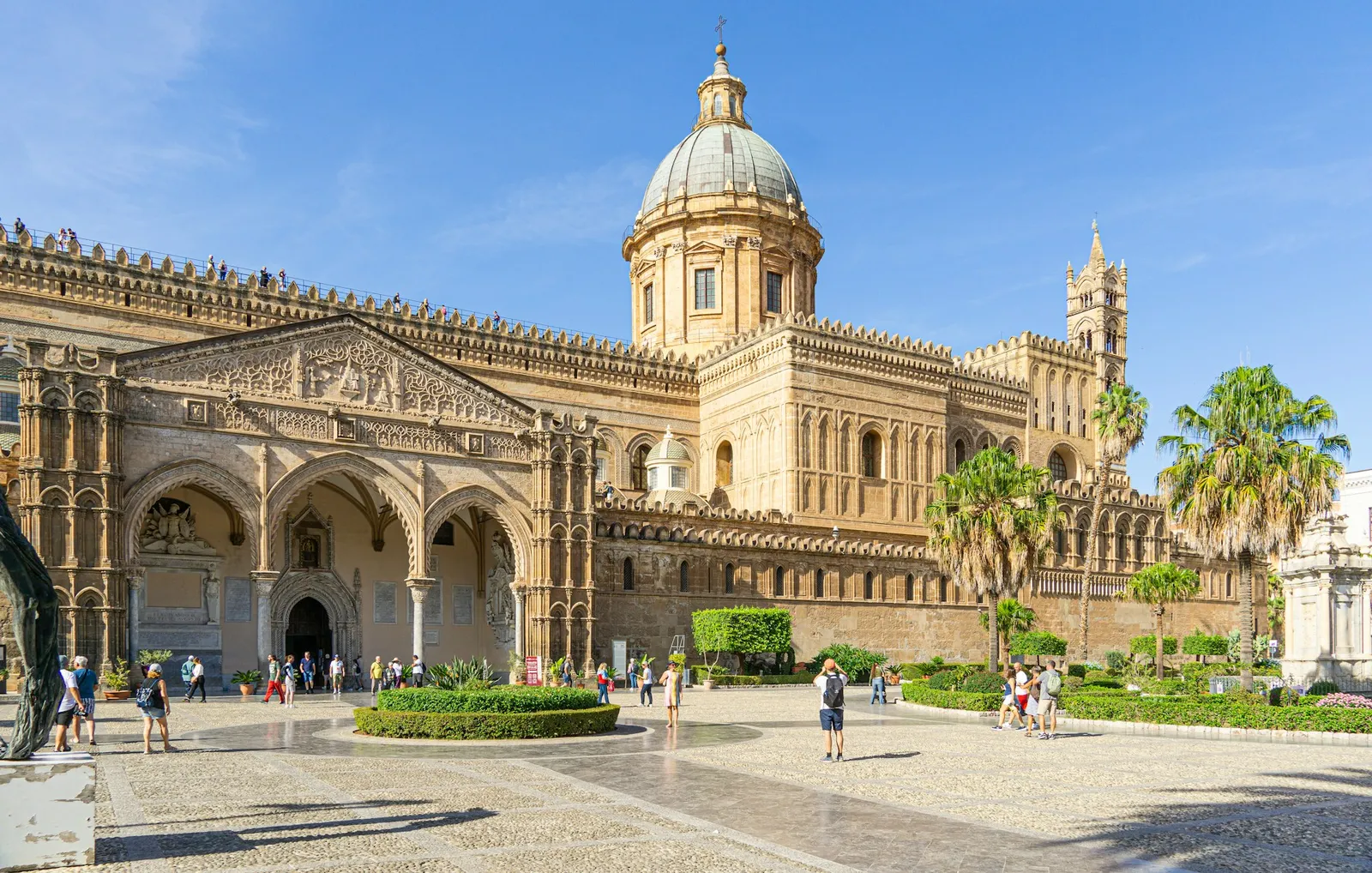
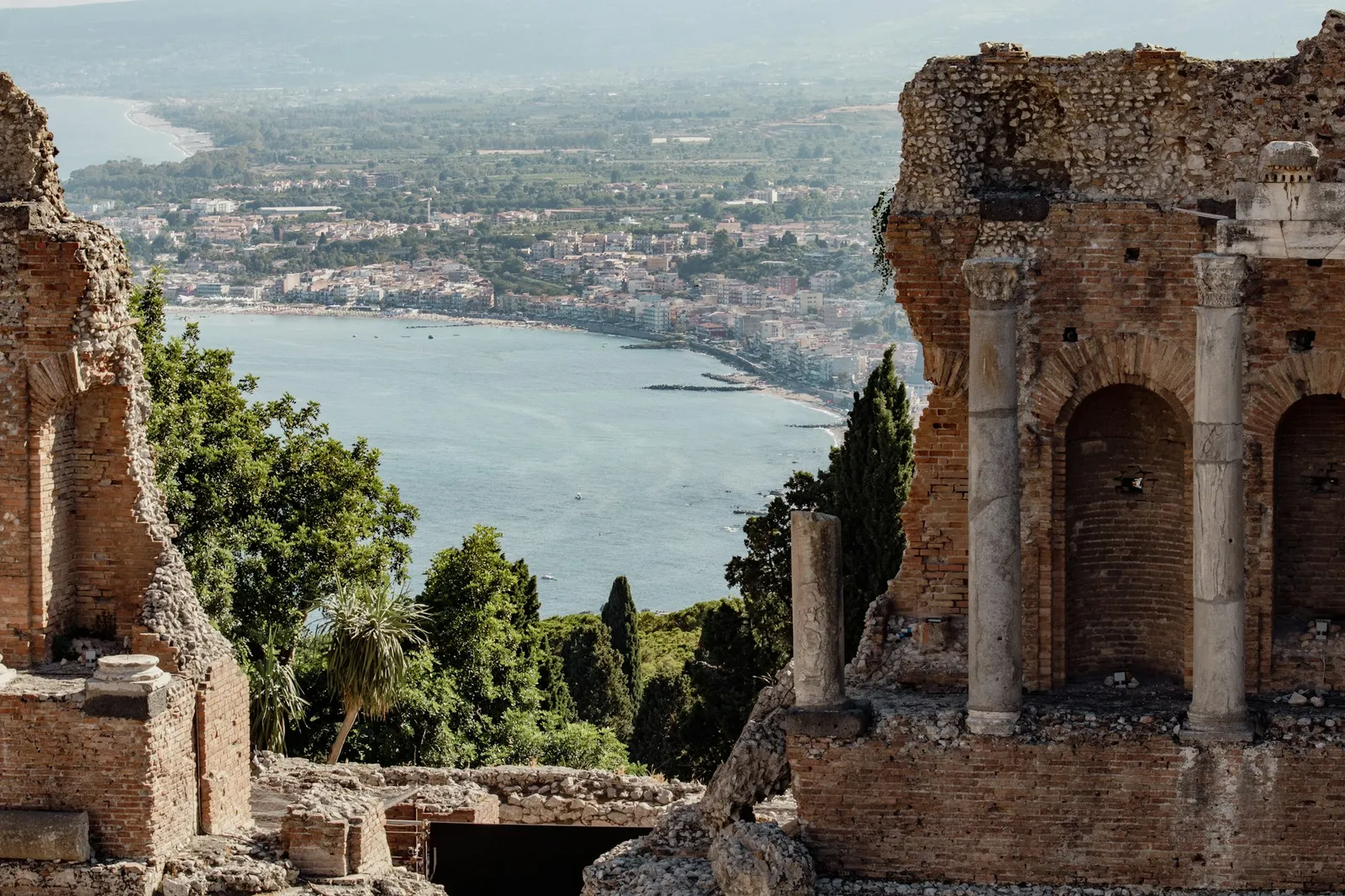
So the honest answer to "are Sicilians Greek, Arab, Norman or Italian?" is that they are Sicilian: a population built from all of these, and older peoples besides, mixed over thousands of years. The ancient theatre of Taormina, the Arab-Norman churches of Palermo and the Phoenician remains of Motya are the visible version of the same story.
Are Sicilians white?
In the official US sense, yes. The Census Bureau has long defined White as "A person having origins in any of the original peoples of Europe, the Middle East, or North Africa." The federal race standards revised in 2024 (SPD 15) define White as "Individuals with origins in any of the original peoples of Europe, including, for example, English, German, Irish, Italian, Polish, and Scottish", and add a separate Middle Eastern or North African category. Sicilians, as Italians and Europeans, fall under White.
The Census Bureau is careful to say that its categories "reflect a social definition of race" and are "not an attempt to define race biologically, anthropologically, or genetically." That matters, because the reason Americans ask this question is history, not biology.
When Sicilians arrived in the US in large numbers around 1900, many Americans did not treat them as fully white. The Library of Congress describes how pseudo-scientific theories of the time ranked "Mediterranean" peoples as inferior, and how more than 20 Italians were lynched in the 1890s.
The worst case was New Orleans in 1891: after Sicilian Americans accused of murdering the city's police chief were not convicted, a mob of thousands lynched 11 Italian Americans, most of them Sicilian. That history is why the question still gets asked, and why the answer is about how American society has drawn its lines, not about DNA.
Sicilian features, skin tone and looks: there is no single Sicilian look
Searches for "Sicilian features", "Sicilian skin tone" or "Sicilian vs Italian looks" assume there is a typical Sicilian appearance. The genetic studies do not describe one, and the evidence points the other way.
- Variation within the population is high. The 2014 study found "high levels of within-population variability" in Sicily and southern Italy.
- Individual ancestry varies. The medieval study found people with very different ancestries living in the same places and periods, including outliers with West African and Northern European ancestry.
- Groups overlap. As NHGRI puts it, there is more genetic variation within self-identified groups than between them.
Walk down any street in Sicily and you will see fair and dark hair, light and olive skin, blue and brown eyes. Stereotypes about a "Sicilian nose" or a "Sicilian look" come from films and caricature, and some of them from the same prejudice the Library of Congress describes. They are not something the science supports, so I will not repeat them here.
Sicilian DNA test results: how to read them
If you have Sicilian grandparents and a consumer DNA test, your results may show a mix of Italian, Greek, Balkan, Middle Eastern or North African ancestry. That is entirely consistent with the studies above. MedlinePlus, the US National Library of Medicine's health site, gives some useful warnings about these tests:
- Each company compares your DNA with its own reference populations, so results can differ from one company to another.
- Because people have always moved, populations overlap genetically, which makes it hard to pin ancestry to one modern country.
- A DNA test does not tell you about your culture or identity.
A DNA test can confirm Sicilian roots in broad strokes, but it will not tell you which town your family came from. For that you need records, and my guide to tracing your Sicilian ancestry explains how to find them on Antenati and FamilySearch. My page on Sicilian surnames can also give you clues, and if your aim is an Italian passport, see Italian citizenship by descent: DNA plays no part in that, only documents. The language your grandparents spoke is in the Sicilian language.
Frequently asked questions
What ethnicity are Sicilians?
Sicilians are a southern European people, Italian citizens with a distinct Sicilian culture and language. Genetically they are closest to southern Italians and the Greek-speaking islands of the eastern Mediterranean, with ancestry built from early Neolithic farmers and later arrivals from the Caucasus, Iran, the Middle East and, in smaller amounts, North Africa.
Are Sicilians white?
Under US federal standards, yes: White covers people with origins in the original peoples of Europe, and the 2024 standards name Italians as an example. The Census Bureau stresses that these categories are a social definition, not a genetic one. Sicilian immigrants faced serious prejudice in the US around 1900, which is why the question is still asked.
Are Sicilians Arab?
No. Arab dynasties ruled Sicily from 827 until the Norman conquest was completed in 1091, but genetic studies find North African ancestry in Sicilians at low levels, from almost negligible in paternal and maternal lines to a few percent or more in genome-wide estimates. Some of it predates the Arab period entirely.
Are Sicilians Greek?
Partly. One Y-chromosome study estimated the Greek contribution to Sicilian paternal lines at about 37%, and a 2017 study found Sicilians and southern Italians genetically close to the Greek-speaking islands of the eastern Mediterranean.
What is Sicilian DNA made of?
Mostly ancestry from the Neolithic farmers who settled the Mediterranean, with Bronze Age additions linked to the steppe, the Caucasus and Iran, and later contributions from Greek, Middle Eastern, North African and other peoples. Studies find little difference between Sicily and southern Italy.
Is there a typical Sicilian look?
No. Studies find high genetic variation within the Sicilian population, and individuals range widely in hair, eye and skin colour. Stereotypes about Sicilian features are not supported by the science.
Why does my DNA test say I am part Greek or Middle Eastern if my family is Sicilian?
Because Sicilian ancestry genuinely includes those layers, and because each company compares your DNA with its own reference populations, which overlap across the Mediterranean. Results can differ between companies.
What is the difference between ethnicity and race?
Ethnicity is shared culture and ancestry, such as being Sicilian. Race is a social category; the National Human Genome Research Institute calls it a social construct and notes there is more genetic variation within racial groups than between them.
Sources and small print
- Di Gaetano et al. 2009, Differential Greek and northern African migrations to Sicily are supported by genetic evidence from the Y chromosome, European Journal of Human Genetics
- Sarno et al. 2014, An ancient Mediterranean melting pot: investigating the uniparental genetic structure and population history of Sicily and southern Italy, PLOS ONE
- Fiorito et al. 2016, The Italian genome reflects the history of Europe and the Mediterranean basin, European Journal of Human Genetics
- Sarno et al. 2017, Ancient and recent admixture layers in Sicily and Southern Italy trace multiple migration routes along the Mediterranean, Scientific Reports
- Raveane et al. 2019, Population structure of modern-day Italians reveals patterns of ancient and archaic ancestries in Southern Europe, Science Advances
- Fernandes et al. 2020, The spread of steppe and Iranian-related ancestry in the islands of the western Mediterranean, Nature Ecology and Evolution
- Monnereau et al. 2026, Genetic histories of individuals from multi-faith medieval Sicily, PLOS ONE
- National Human Genome Research Institute: Race
- US Census Bureau: About the topic of race
- SPD 15 (2024): Race and ethnicity categories and definitions
- Library of Congress: Italian immigration, Under Attack
- Britannica: Sicily, History
- MedlinePlus: What is genetic ancestry testing?
Credits
Photo: Vincenzo Inzone, Unsplash Licence, via Unsplash.
Photo: Stepan Dudycha, Unsplash Licence, via Unsplash.
 The weekly YouTube series