
In this episode
- A round OSB cover cut with a jigsaw to fit the well opening
- Old metal bed frames cut up as reinforcement for the concrete
- Porous stone blocks that drink the water out of the mortar in the heat
- The rainwater butt sealed to stop lizards falling in
- Copper fungicide sprayed on every fruit tree as prevention
If you think renovating abroad is easy
This week is about building the terrace walls around the old water well, and getting the well itself ready to be part of the off grid water system. With no mains water, it will feed the pressure system alongside the rainwater tank I planned in episode 30. So before the walls can go up around it, the well has to be made sound.
Why the well matters to the water plan
The plan, as I explained in episode 28, is for water from the well to run to an outbuilding on the rear terrace that will house the pressure tanks and filtration, and from there into the bathroom and kitchen. Originally I was going to rely solely on the well. I still do not know how much water it can give year round, which is why the underground rainwater tank is going in as a backup. I find out more about what is down there when I lower a camera into it in episode 41. My article on off grid versus mains water sets out the thinking behind it all.
A cover and a clean rim for the well
First I measure the round opening of the well and mark out a cover on a sheet of OSB. On the veranda, with the board resting on log supports, I cut out a circular lid with the jigsaw. It fits snugly into the opening.
Then the old casing has to go. With the angle grinder and a masonry disc I cut, level and clean around the concrete rim, then break out the old casing.
A reinforced concrete base from old bed frames
The new base around the well needs reinforcement, and I have just the thing. The two metal bed frames saved from the rubbish pile in episode 31, along with some wire mesh, are laid over the area and cut to size with the grinder.
The concrete is mixed and wheeled out of the house in the wheelbarrow, then spread and levelled with a shovel over the reinforcement. The temperature is really picking up now, and summer is coming.
Laying porous stone blocks in the heat
With the base down, the terrace walls go up around the well, using the same precast stone blocks that arrived in episode 36 and the string line and profile method from episode 37. Each block is bedded in mortar, tapped down with a mallet and checked with the spirit level, and the loose mortar is brushed off as I go.
Laying these porous blocks is more challenging than it looks. In the rising heat, the blocks absorb moisture from the mortar and the sun dries it out fast, so it is a constant battle to keep everything wet enough to bond properly. The lesson for anyone building in the heat is to keep the blocks and the mortar wet. Afterwards, more loads of concrete are wheeled round and spread around the well base and the new stone edge. My article on mortar and Sicilian stonework has more on working with stone here.
Sealing the rainwater tank for the lizards
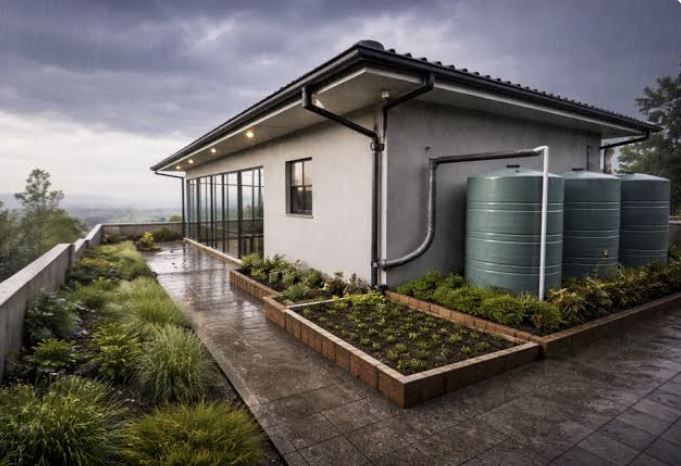
Next I turn to the rainwater butt against the house wall, the tank from episode 25. Lizards are curious creatures but terrible swimmers, and some have been getting in and drowning. After rescuing two from the old bath recently, I cover the gaps with stone slabs over the top and mesh and tape around the downpipe, so they cannot get inside. My rainwater harvesting guide covers screening tanks properly.
Then a big tidy of the site before the landscaping. Firewood and rubble are cleared and the leftover stone blocks are stacked. They will go towards building up the underground water tank.
Soil for the ducting, fungicide and the kittens
As the light goes, I work on by head torch in the rear garden, digging out weeds, roots and rocks and spreading soil so it is level and ready for the ducting that will bring water and power to the outbuilding. That ducting goes in during episode 44.
Then it is time to suit up. Some of the fruit trees are showing early signs of infection, so I spray them all with copper fungicide as a preventative measure, in a respirator and with a backpack sprayer. The week ends on the veranda with the two kittens I rescued in episode 38, fed, cuddled and tucked in with warm water bottles, and a huge thank you for the generous support after last week's video.
Frequently asked questions
Why are my stone blocks not bonding to the mortar in hot weather?
Porous blocks soak the water out of the mortar, and the sun dries it fast. Laying them in rising heat at the villa was a constant battle to keep everything wet enough to bond.
Can you use old bed frames as concrete reinforcement?
I cut up two old metal bed frames, with some wire mesh, and laid them in the concrete base around the well instead of buying new reinforcement.
How do you stop lizards drowning in a water butt?
I covered the gaps over my rainwater butt with stone slabs and taped mesh around the downpipe, so lizards could no longer climb in.
When should you spray fruit trees with copper fungicide?
I sprayed all of mine when a few showed early signs of infection, as prevention for the rest, wearing a respirator and using a backpack sprayer.
More episodes on the same job: Water and plumbing · The garden terrace

 The weekly YouTube series