
In this episode
- Water pumped from the 500 litre side tank into the 2000 litre tank
- Two dual split air con systems, each feeding two indoor units
- Outdoor units on the side walls to keep them off the roof terrace
- 25m+ lengths of copper pipe and ducting fitted solo
- The caught swarm turns out to have come from my own hive
Pumping water between the tanks
This week I cut the air conditioning pipe chases and inspect the bees. First, water. I connect a dirty water pump and hose to the small 500 litre tank at the side of the house, the one I cleaned out in episode 77, and pump the stored water across into the 2000 litre tank from episode 72. It is part of the wider off grid water system. My article on off grid versus mains water explains the thinking.
Then I clear a big pile of olive branches from around the manholes and move them over to the garden wall.
Planning the air conditioning
On the outside wall, with aluminium straight edges and the ladder, I mark out the route for the air con pipework and ducting. The house will use two dual split air con systems, each feeding two indoor units. I have chosen to mount the outdoor units at the side of the house, because I do not want the roof terrace dominated by air con equipment. The unit on this side will feed the small bedroom and the living room.
The old bath that has been holding water and plants beside the wall is dismantled and moved, along with its blocks and boards, and the ground underneath is cleared and levelled. The tomato plants get some fertiliser and the pots are watered.
Cutting the chases
The main job is cutting large chases into the side walls for the copper air con pipes and the electrical ducting. With the angle grinder and the SDS, I cut and chisel the grooves along the marked lines, then tidy the rubble at the base of the wall into the wheelbarrow. The indoor back boxes for the air con went in back in episode 27.
One of the bird boxes was in the way of the air con pipework, so it needs relocating. Luckily, it is still empty. I take it down from the ladder and remount it lower, away from the chase. The trail camera soon shows sparrows perching on it in its new spot.
Fitting the copper pipes and ducting
I uncoil the insulated copper pipes and conduit on the ground. These two insulated copper pipes carry refrigerant between the indoor and outdoor units. As the refrigerant circulates, it absorbs heat from inside the house and releases it outside, which is what lets the air conditioning cool the rooms. The brown and blue conduit will hold the electrical cables connecting the indoor and outdoor units.
Fitting lengths of 25 metres or more of pipe and ducting on my own is no easy task. I size and feed the conduit on top of the wall, then from the ladder fit the copper pipes and conduit into the chases and secure them with brackets and screws. I also fit press fittings to the hot and cold pipework, ready for pressure testing, as I did in episode 63. The chases are mortared in episode 80.
Lavender and a privacy screen
On the veranda, I repot French lavender into larger pots with fresh compost and sweep the tiles, with one of the cats watching. Then, from painted pallets levelled on blocks and screwed to the wall, I put up a privacy screen for the beehives.
The full beehive inspection
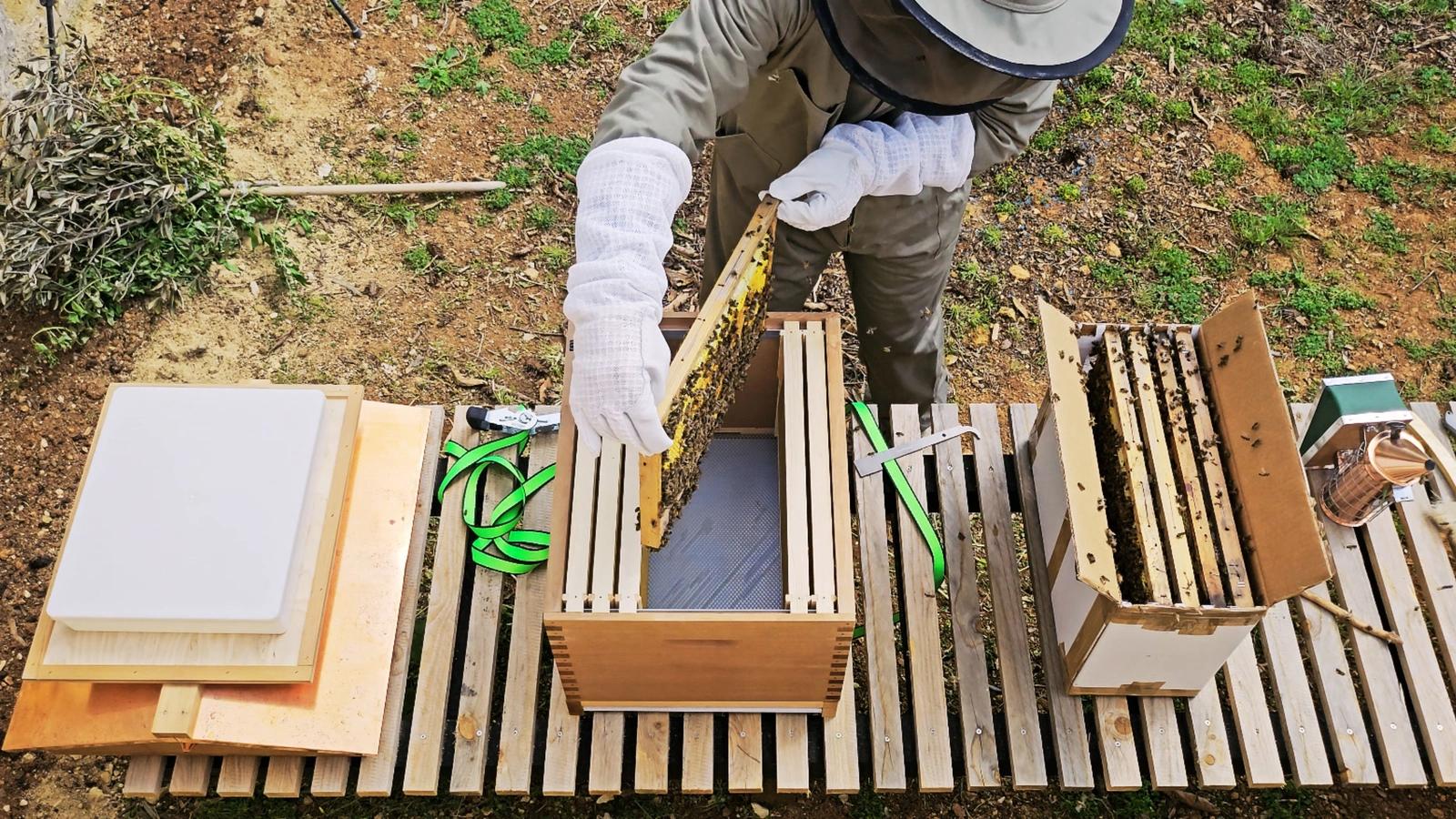
In the full suit, with the smoker and hive tool, I inspect all three hives for brood, capped honey, queen cells and queens. I caught the swarm in episode 76, so I check how well it has settled. Its queen has been marked with a white dot, so she is easier to find. And this is the queen from the colony I bought, which means the swarm I caught actually came from my own hive.
The original hive is still active, which could mean the colony split, leaving the bees left behind potentially queenless. Sure enough, it now has several queen cells. Bees build these larger hanging cells when they need to raise a new queen. They select young larvae and feed them a special diet of royal jelly, so they develop into queens instead of workers.
- I remove all but one of the queen cells, to reduce the chance of several queens emerging and causing more swarms or fighting.
- I fit a sugar feeder.
- I leave them alone and check back in a few weeks, as it is best not to disturb the hive too much at this stage.
With a bit of luck, that queen will emerge and lead the colony, but only time will tell. It was not what I expected, but it is not necessarily a bad thing. If everything goes to plan, I could end up with two colonies for the price of one. My article on my first year of beekeeping follows what happened, and my utilities guide covers the services side.
Frequently asked questions
Where should you put air conditioning units on a Sicilian house?
I chose to mount my outdoor units on the side walls of the house, because I did not want the roof terrace dominated by air con equipment.
What do air conditioning copper pipes do?
The two insulated copper pipes carry refrigerant between the indoor and outdoor units. It absorbs heat inside the house and releases it outside.
What are queen cells in a beehive?
They are larger hanging cells bees build to raise a new queen. Young larvae chosen for them are fed royal jelly, so they develop into queens instead of workers.
Why remove extra queen cells?
I removed all but one of the queen cells in my hive to reduce the chance of several queens emerging and causing more swarms or fighting.
More episodes on the same job: Air con and ventilation · Beekeeping


 The weekly YouTube series