
In this episode
- A cedar Langstroth hive: brood box, honey supers, frames and wax foundation
- Why the hive has to go in now if there is to be honey this year
- The mystery stand from the last two weeks revealed as the hive stand
- A 2000 litre rainwater tank with a tap, overflow and insect mesh
- A two bedroom house on 2000m² of olive trees, for an asking price of €12,000
Something I have wanted to do for years
This week I start beekeeping by building a Langstroth hive. It is something I have wanted to do for a very long time, but I never had the opportunity or the location. Over the past few months I have been researching everything there is to know about bees, so while I build the hive, I walk you through how it all works. I have come a long way since first buying the house and mistaking a wasp nest for a beehive. Bees are fascinating and incredibly intelligent creatures.
Why is this a priority now? A colony needs time to build its population before it produces surplus honey, so if I want honey this year, this needs to be done now. I did a lot of research before choosing my first hive, and settled on a Langstroth hive made in the UK from high quality cedar, which is naturally durable and weather resistant, so it should last well. My article on my first year of beekeeping in Sicily follows what happened next.
How a Langstroth hive works
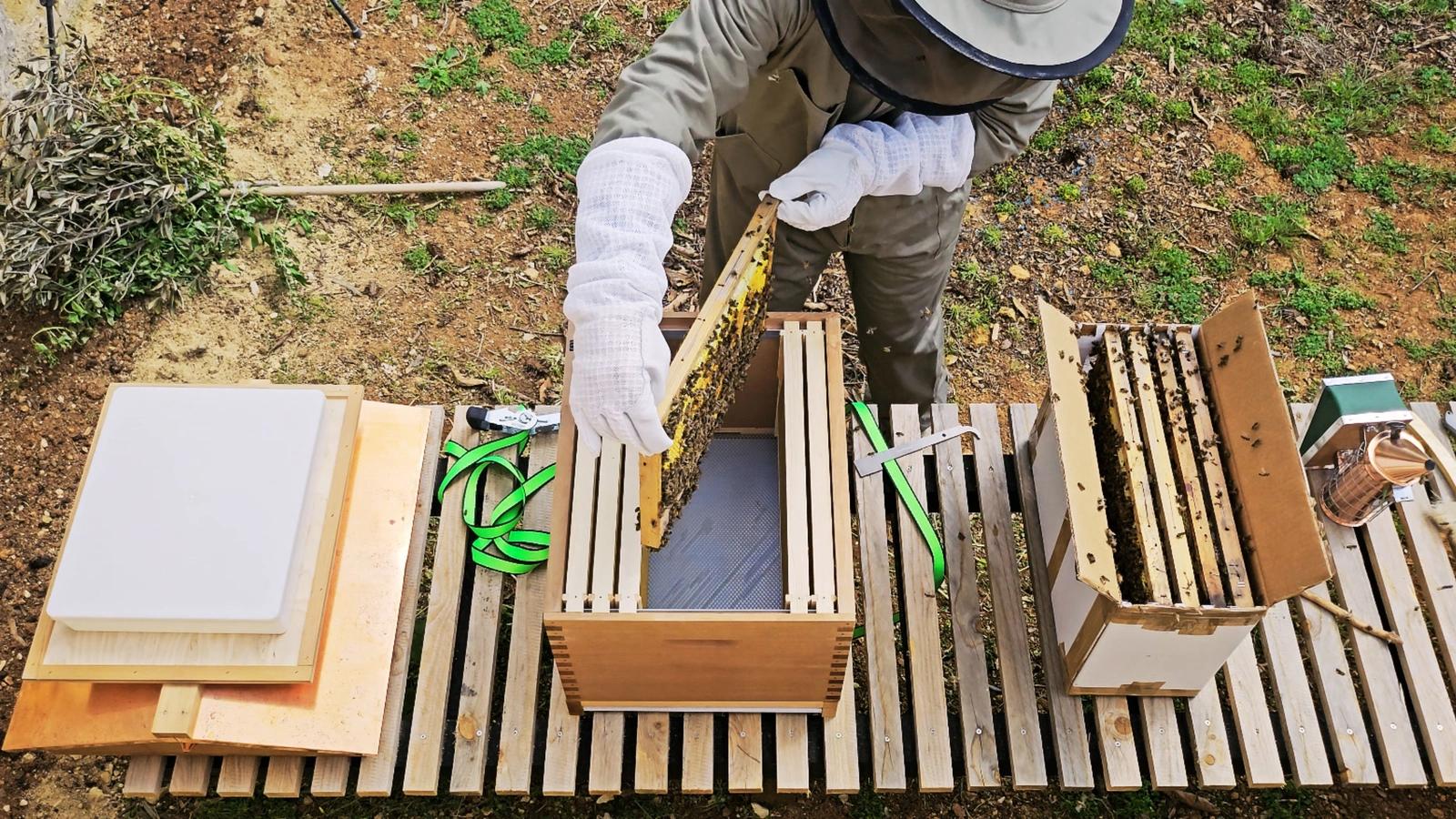
- The brood box is the big box, the heart of the hive. The queen lays her eggs here and the worker bees raise the young. After just one mating flight, the queen returns and spends most of her life laying up to 2,000 eggs a day.
- The honey super is the smaller box. Once the brood box is full, the bees move up to store surplus honey. Without enough space the hive can become overcrowded, and the colony may swarm, when part of it leaves with a new queen to start a new hive elsewhere.
- The frames are where the worker bees build comb to raise their young and store honey. They make wax from glands on their abdomen, chew it to warm it and shape it into comb.
Bees build perfect hexagons because they use the least amount of wax and space. I assemble the brood box, the supers and the frames, fit the natural beeswax foundation sheets, which smell amazing, and finish the hive with its copper roof, stopping for a quick lunch along the way.
The mystery stand revealed
I bet you have all been wondering, over the last couple of weeks, what on earth I was making. This is it: the hive stand I built in episode 68 and set in concrete in episode 69. It is quite a big stand, just in case I want more hives, and it gives me space for the different boxes and supers. It has a slight slope for water run-off, and because it is slatted, the water can drain through.
The hive goes on top, with sheep passing the gate while I work. At the base is the entrance, where the bees come in and go up into the brood box, with an entrance reducer I will keep on until the hive is established and growing. The brood box holds ten frames of natural beeswax. For now I do not need the supers, because I want the bees to concentrate on building a really strong colony. Once that is done, the supers go on so they can start producing honey. I am absolutely blown away with how it looks.
Next week I collect the colony from a local beekeeper, in episode 73. I am super excited, but also slightly terrified. The idea of over 10,000 bees in a box in the back of the car is a bit mad.
A 2000 litre rainwater tank
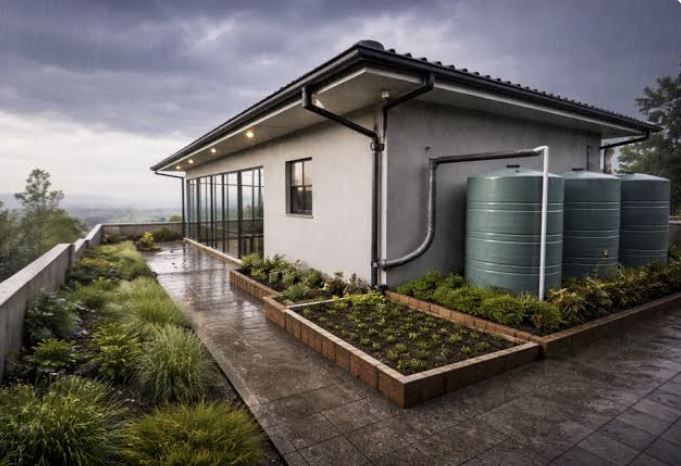
Next, a 2000 litre rainwater tank to catch the runoff from the roof:
- Prepare a level base for the tank.
- Fit the tap and an overflow pipe.
- Find a leak at one of the fittings and seal it with PTFE.
- Drill the tank for the rainwater inlet pipe.
- Fit mesh over the inlet to keep insects out of the water.
- Connect the roof pipework so the rainwater runs into the tank.
It is a step on from the barrels and the bath overflow in episode 54, while the big underground tank waits for its dig. My rainwater harvesting guide covers tanks, roofs and filters, and the rainwater harvesting calculator shows how quickly a roof can fill a tank like this.
A €12,000 house down the road
I have had a message from the geometra letting me know a property not far from here has just come on the market, so I go and find it. It is a two bedroom house, 80 square metres inside, on a total plot of 2,000 square metres. All the land is behind it, flat and full of mature olive trees, with irrigation pipes already on the trees, so there must be water.
The asking price is €12,000, which I think means somewhere between €8,000 and €10,000. Does anyone want a project? My article on the truth about Sicily's €1 homes covers cheap houses like this, and my guide to what a geometra does explains their role.
Frequently asked questions
What is the difference between a brood box and a honey super?
The brood box is the big box where the queen lays eggs and the young are raised. The smaller honey super is where the bees store surplus honey.
When should you start a beehive?
A colony needs time to build its population before it produces surplus honey, so if I wanted honey that year, my hive had to be set up straight away.
Why do bees swarm?
If a hive becomes overcrowded, part of the colony can leave with a new queen to start a new hive elsewhere. Honey supers give the bees more space.
How much do old houses cost in rural Sicily?
One I viewed near my villa had two bedrooms, 80 square metres inside and 2,000 square metres of olive trees, with an asking price of €12,000.
More episodes on the same job: Beekeeping

 The weekly YouTube series