
In this episode
- A kitchen floor with hollow spots, movement and cracks broken out completely
- Grease on the hive stand legs and citrus trees to stop the ants
- A nuc of around 10,000 bees and a mated queen on five frames
- Frames moved into the hive in exactly the same order
- Sugar syrup in a feeder tray while the colony settles in
A kitchen floor that could not be saved
This week I collect my first bee colony in Sicily, but first, the kitchen floor. The plan was always to tile over the existing tiles, and in episode 64 I started lifting the bouncing sections. But the kitchen floor had other ideas. Hollow spots, movement, cracks: it all has to be dug up and levelled.
With the pickaxe, the breaker and a shovel, I break up the old tiles and the screed underneath, barrow the rubble out to the garden and sweep the base clean. Then I set the cement mixer up inside, carry water in by the bucket from the outdoor tap and shovel gravel and sand from the piles outside. The base is wetted with the sprayer, and the fresh concrete is poured in sections, spread with a trowel and levelled with a long screed bar.
Stopping the ants
After feeding the stray cats on the veranda, I wrap tape around the legs of the hive stand and the potted citrus trees and coat it with grease, to stop the ants climbing up. The hive is the one I built in episode 72.
Collecting 10,000 bees
Then I drive off to collect 10,000 bees. I am super excited, but also super nervous. I hope they do not escape in the car while I am driving. The pickup is at a fuel station, and the colony comes in a cardboard transport box, strapped down in the boot with a ratchet strap.
I have just picked up my first colony: around 10,000 bees and a mated queen, all packed onto just five frames. In a few months, this could grow into a hive of over 50,000 bees, so this is just the beginning. On the way back down the dirt track, a few dogs bark at the car from behind a wall.
Lighting the smoker
Back at the villa, I unbox a new copper smoker. It keeps the bees calm while I work. Smoke makes them think there is a fire, so they gorge on honey, and it blocks their alarm signals, so they cannot tell the others to attack.
Some beekeepers do not wear full suits, or even gloves. Gloves sound safer, but they make you clumsy, and crushing just one bee releases a scent that can turn the whole hive defensive. I am not brave enough to go without a suit just yet, so on goes the full suit, veil and gloves.
Moving the bees into the hive
At the hive, I open the transport box and use the smoker gently. Somewhere in here is the queen. She is slightly bigger than the rest, and she controls everything. At her peak she can lay more than her own body weight in eggs every day.
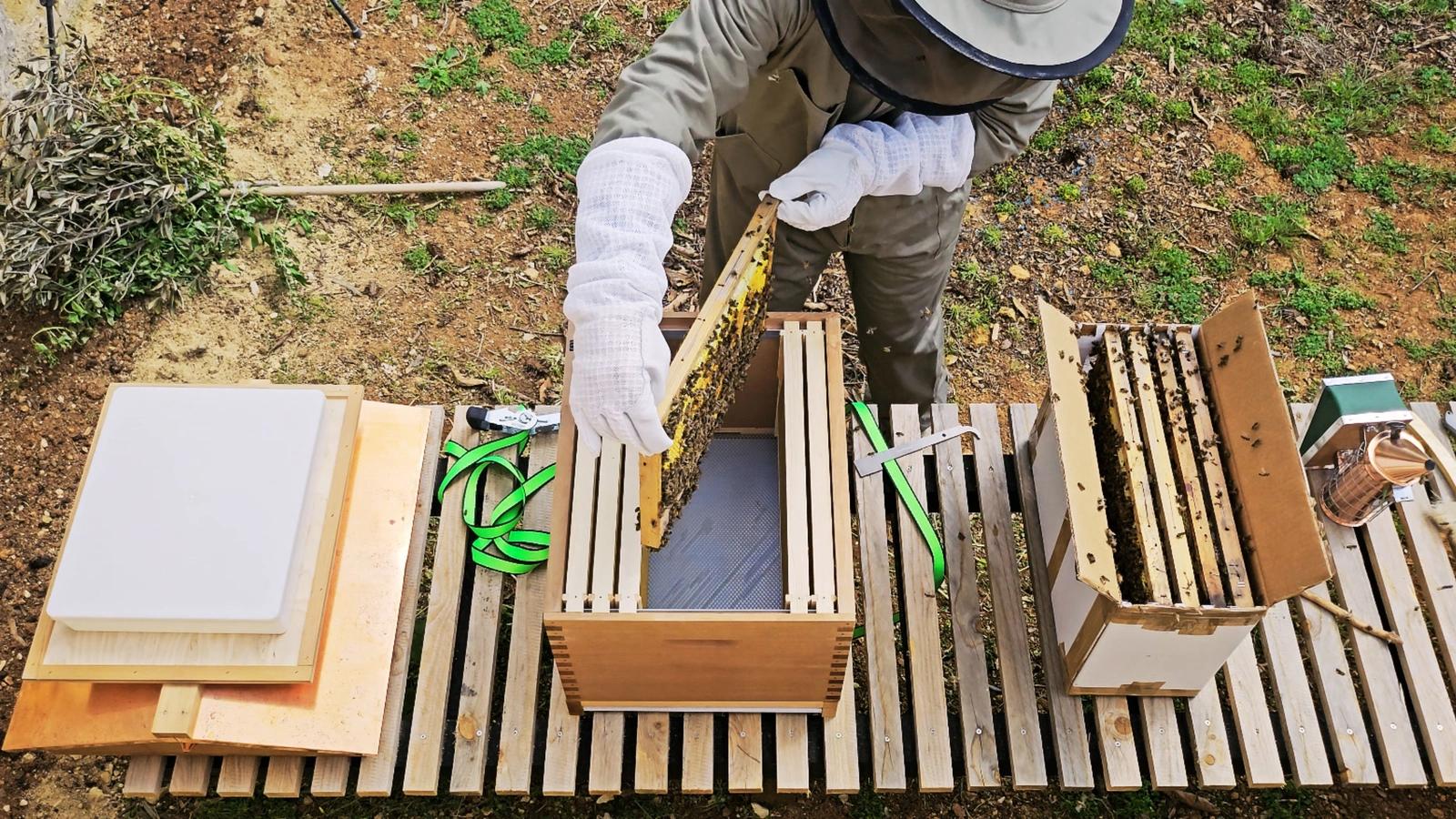
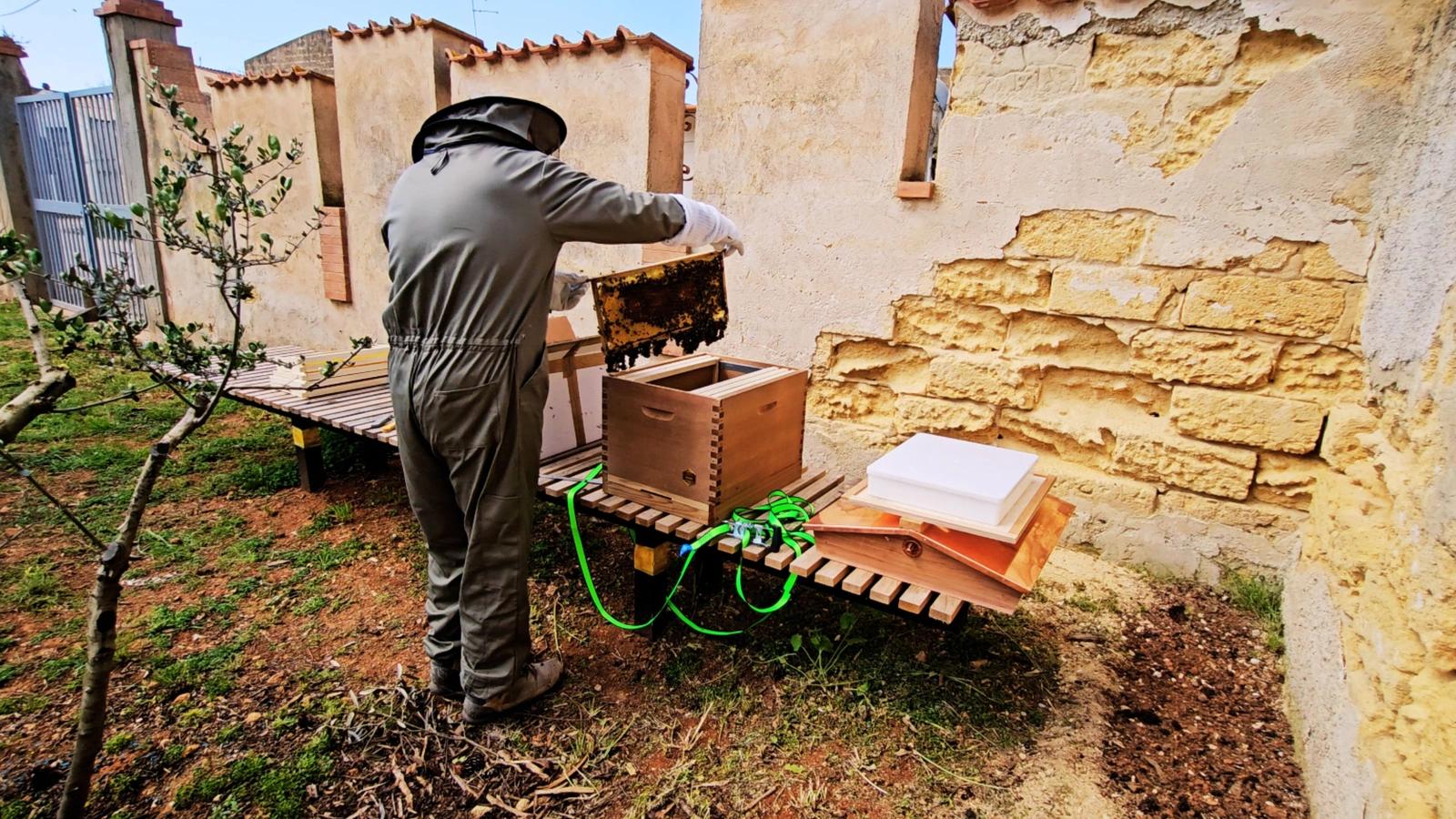
- Lift the five frames, covered in bees, out of the box one at a time.
- Place them in the hive in exactly the same order. Brood goes in the centre, food on the outside, and getting that wrong can throw the whole colony off.
- Fit a feeder tray above the frames and pour in sugar syrup. Building wax burns a lot of energy, and without help a new colony can struggle to get established.
- Close the roof and strap the hive down with a ratchet strap.
- Lay olive branch clippings around the entrance to help with orientation flights.
And just like that, they are in their new home. If they are happy, they will start orientation flights, circling the hive to lock in its location, like resetting their internal GPS. One of the cats watches from below. Now we wait to see if they stay. My article on my first year of beekeeping tells the rest of the story.
Lunch, and finishing the floor
Lunch is a simple baguette with cured ham on the veranda bench. Then, with the concrete cured, I scrape the rough edges and excess mortar, sweep the kitchen floor and check it with a long level and straight edge.
It is certainly not perfect, but it is now solid, and a good base to tile on. With the old tiles, there was so much movement and so many cracked tiles that it just was not suitable. So I ripped up all the tiles and the screed, and the floor has been concreted in sections. I have one more section to do, then a bit of touching up, and it should be good to go. The rest of the house is tiled over the old floor, starting in episode 86.
The kitchen door and extractor vent
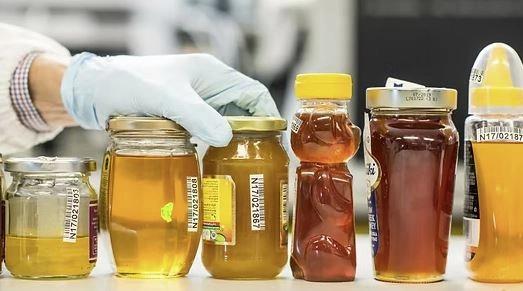
To finish, the kitchen door is rehung, a white door carried in and fitted to its opening. Then, up the ladder, I fit the round vent grille and mesh over the kitchen extractor fan hole I core drilled in episode 48, sealing it in place. In episode 74 I sit by the hive and watch the bees bringing in pollen. My articles on why Sicilian honey tastes different and raw versus supermarket honey cover what makes local honey special.
Frequently asked questions
How many bees are in a starter colony?
My first nuc was around 10,000 bees and a mated queen on five frames. In a few months it could grow into a hive of over 50,000 bees.
Why do beekeepers use smoke?
Smoke makes the bees think there is a fire, so they gorge on honey, and it blocks their alarm signals so they cannot tell the others to attack.
Why keep frames in the same order when moving bees?
Each frame has a job, with brood in the centre and food on the outside. Getting the order wrong can throw the whole colony off.
How do you stop ants getting into a beehive?
I wrapped tape around the legs of my hive stand and coated it with grease, which stops the ants climbing up. I did the same on my citrus trees.
More episodes on the same job: Beekeeping
 The weekly YouTube series