
Why Sicily has so many Greek ruins
From the eighth century BC, Greek cities sent out settlers who founded new cities along the Sicilian coast. Corinthians founded Syracuse on the island of Ortigia, settlers from Megara Hyblaea founded Selinunte, and Akragas, today's Agrigento, followed in 582 BC. These colonies grew rich on grain, trade and war, and they spent their money on stone: temples, theatres and city walls on a scale that rivalled anything in Greece itself. Cicero, writing centuries later, called Syracuse the greatest and most beautiful of the Greek cities.
Not everyone in ancient Sicily was Greek. The Elymians lived in the west, around Segesta and Erice; the Phoenicians, and later Carthage, held the far western tip around Mozia and Lilybaeum, today's Marsala. The wars between them, and later with Rome, are the reason so many of these cities ended up as ruins. Carthage destroyed Selinunte in 409 BC, and by the time Rome took the whole island in the third century BC, the age of the great temples was over.
For the longer story of who ruled Sicily, from the Greeks to the Normans and beyond, see my piece on Sicily's history.
Segesta: the temple, the theatre and the hilltop city
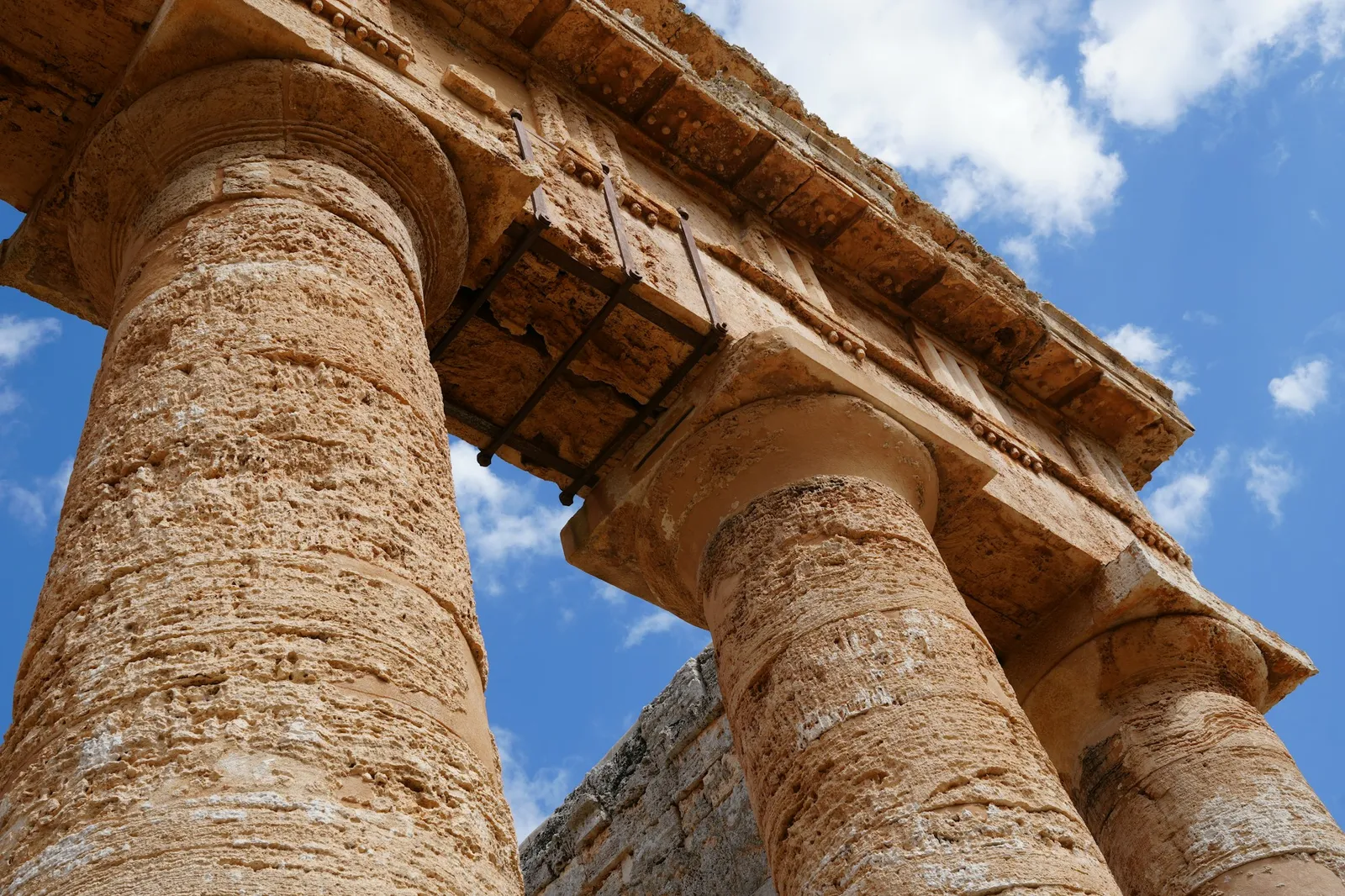
Segesta is the one people remember. The temple sits alone on a low hill in open country near Calatafimi-Segesta, in the province of Trapani, about 2 miles (3 km) northwest of the town, and you see it from the motorway long before you arrive. It is a Doric temple with six columns across each end and fourteen down each side, built between about 430 and 420 BC outside the walls of the city.
The strange thing about it is that it was never finished. The Regione Siciliana, which runs the site, notes that work probably stopped because of the events of 409 and 408 BC, when Carthage swept through western Sicily. Nobody knows which god it was meant for, and no altar has been found. That gives it an odd, slightly unreal feel: a perfect outline of a temple that may never have held a service.
Who built Segesta?
Segesta was not a Greek city. It was the chief city of the Elymians, a people the Greek historian Thucydides said were descended from refugees from Troy. Culturally, though, it was thoroughly Greek in its buildings, and it was in a long feud with Selinunte over their shared border from around 580 BC. Segesta allied with Athens and helped draw it into the disastrous Sicilian Expedition, which ended in 413 BC, then sided with Carthage, and later with Rome. Britannica notes the city had been abandoned by the late second century AD.
The theatre on Monte Barbaro
The city itself was higher up, on Monte Barbaro, and that is where the theatre is, looking out over the hills towards the sea. The Regione dates it to the middle of the second century BC. On the same hill are the remains of the agora and the council house (bouleuterion) on the northern acropolis, and, a reminder of how long people lived here, the traces of a medieval Muslim village with its mosque, a Norman and Swabian castle, and a church of 1442. In summer the theatre is used again for plays and concerts in the Segesta Teatro Festival.
The theatre is a proper climb above the temple, so plan for it in the heat. My advice is to see the temple first, while you are fresh, and then decide whether the walk up is for you.
Visiting Segesta: hours, tickets and tips
| Segesta archaeological park | |
|---|---|
| Where | Calatafimi-Segesta, province of Trapani |
| Ticket | About €14 full, €7 reduced (more when an exhibition is on) |
| Opens | 9am all year |
| Winter | Last entry 3:30pm, closes 5pm |
| Summer | Last entry 6pm, closes 7:30pm (late March to September) |
| Tickets sold by | CoopCulture, at the gate or online |
Times change with the season and in shoulder months there are in-between hours, so check the park's own website before you set off. The temple has almost no shade. In July and August I go first thing in the morning or in the last two hours before closing, when the light turns golden and the coach groups have gone.
You need a car to see Segesta properly. Buses reach Calatafimi but not usefully the site, and the countryside around it is the point. My guide to renting a car in Sicily covers the practical side. Segesta is an easy half day from Trapani or Palermo, and pairs well with the beaches at Scopello and Castellammare del Golfo on the north coast.
Selinunte: a whole Greek city by the sea
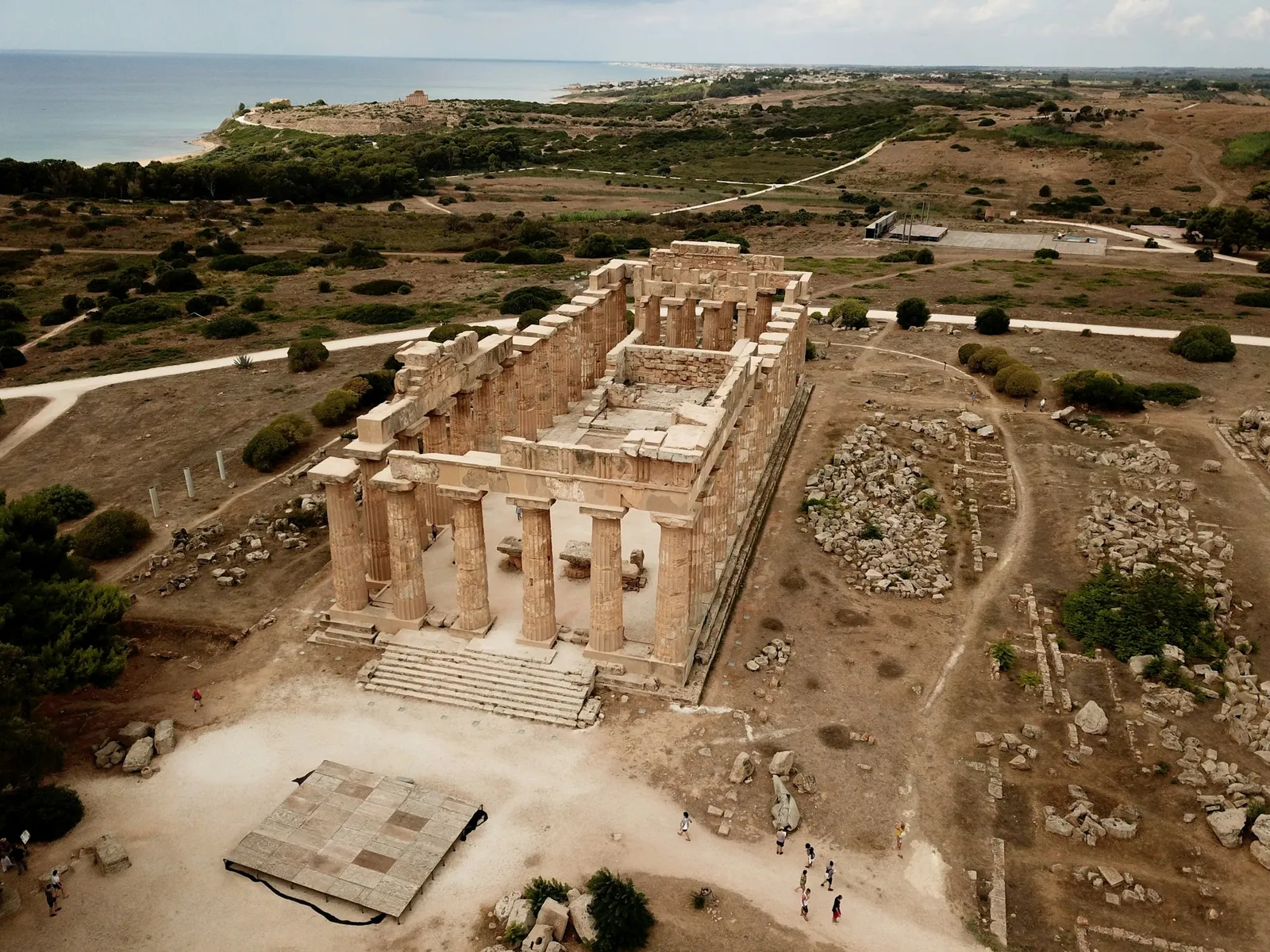
Selinunte is my favourite, and not only because it is the closest to home. It is a whole Greek city on low hills above the sea, about 8 miles (13 km) southeast of Castelvetrano, and its archaeological park and the outlying sites that belong to it cover about 377 hectares, which the Regione describes as one of the largest archaeological sites in the Mediterranean.
Selinus, as the Greeks called it, was founded in the seventh century BC (the ancient sources give 651 or 628 BC) by settlers from Megara Hyblaea, a Greek city on the east coast. Its name comes from selinon, the wild celery that grew here. It was the westernmost Greek colony in Sicily, which put it right on the frontier with Carthage. Carthage destroyed it in 409 BC; the city recovered in a smaller way, and in 250 BC the Carthaginians razed it for good and moved its people to Lilybaeum, today's Marsala. The ruins were rediscovered in 1551 by the Sicilian historian Tommaso Fazzello.
What to see at Selinunte
- The eastern hill. Three temples, known by letters because nobody is sure who they were for: Temple E, the one with standing columns in most photographs, and the collapsed heaps of Temples F and G. Britannica notes the temples were probably toppled by earthquakes.
- The acropolis. The fortified heart of the city, on a rise above the sea, with the remains of five temples. Temple C, from about 560 BC and probably dedicated to Apollo, has a row of fourteen columns that were raised again in 1926 and 1927.
- The Gaggera. On the far side of the site, the sanctuary of Demeter Malophoros, with shrines to Zeus Meilichios and Hera nearby.
- Baglio Florio. An old farm building near the entrance, now used to display finds from the site.
The distances are real: from the entrance to the acropolis and back is a long walk in the sun. The park runs an electric shuttle to the acropolis, sold through CoopCulture, which I would take in summer. Allow three hours if you want to see all three areas without rushing.
Selinunte hours, tickets and the beach
| Selinunte | Cave di Cusa | |
|---|---|---|
| Ticket | About €17 full, €10 reduced, including a €3 supplement while the exhibition runs, listed until the end of 2026 (otherwise about €14 and €7) | About €4 full, €2 reduced |
| Hours, winter | From 9am, last entry 4pm (late October to February) | 9am to 1pm; afternoons by booking only |
| Hours, summer | From 9am (8am from mid June to mid September), last entry 7pm (late March to mid September) | 9am to 1pm; afternoons by booking only |
The village beside the ruins, Marinella di Selinunte, has a long sandy beach, the Marinella di Selinunte beach, right below the eastern hill. On a summer day there is nothing better than walking among the temples in the morning, swimming at lunchtime and eating fish by the sea. Further west, Tre Fontane and Triscina are quieter.
The Cave di Cusa: where the temples were quarried
If you have time for one more stop, make it the Cave di Cusa, the ancient quarries near Campobello di Mazara. This is where the stone for Selinunte's temples was cut, including the huge column drums and capitals for Temple G. The quarries were in use from the sixth century BC, and work stopped suddenly when Carthage attacked Selinunte. The masons simply walked away, leaving drums half cut from the rock, others lying ready to be moved, and the channels they dug around them still sharp.
It is quiet, green and very little visited, and it explains how the temples were built better than any museum. It is part of the same archaeological park as Selinunte, with its own small ticket.
The same park also runs the Museo del Satiro in nearby Mazara del Vallo, home of the bronze Dancing Satyr. My Mazara guide has more.
Agrigento and the Valley of the Temples
The most famous Greek ruins in Sicily are at Agrigento, on the south coast: a ridge of temples, including the Temple of Concordia, one of the best-preserved Greek temples in the world, inside a UNESCO World Heritage park of about 1,300 hectares. It deserves a day of its own, and it has a page of its own: my guide to Agrigento, the Valley of the Temples and the Scala dei Turchi covers the temples, tickets and the white cliffs nearby. From Selinunte it is a straightforward drive east along the coast, so the three great western sites make a natural route.
Greek theatres in Sicily: Segesta, Syracuse and Taormina
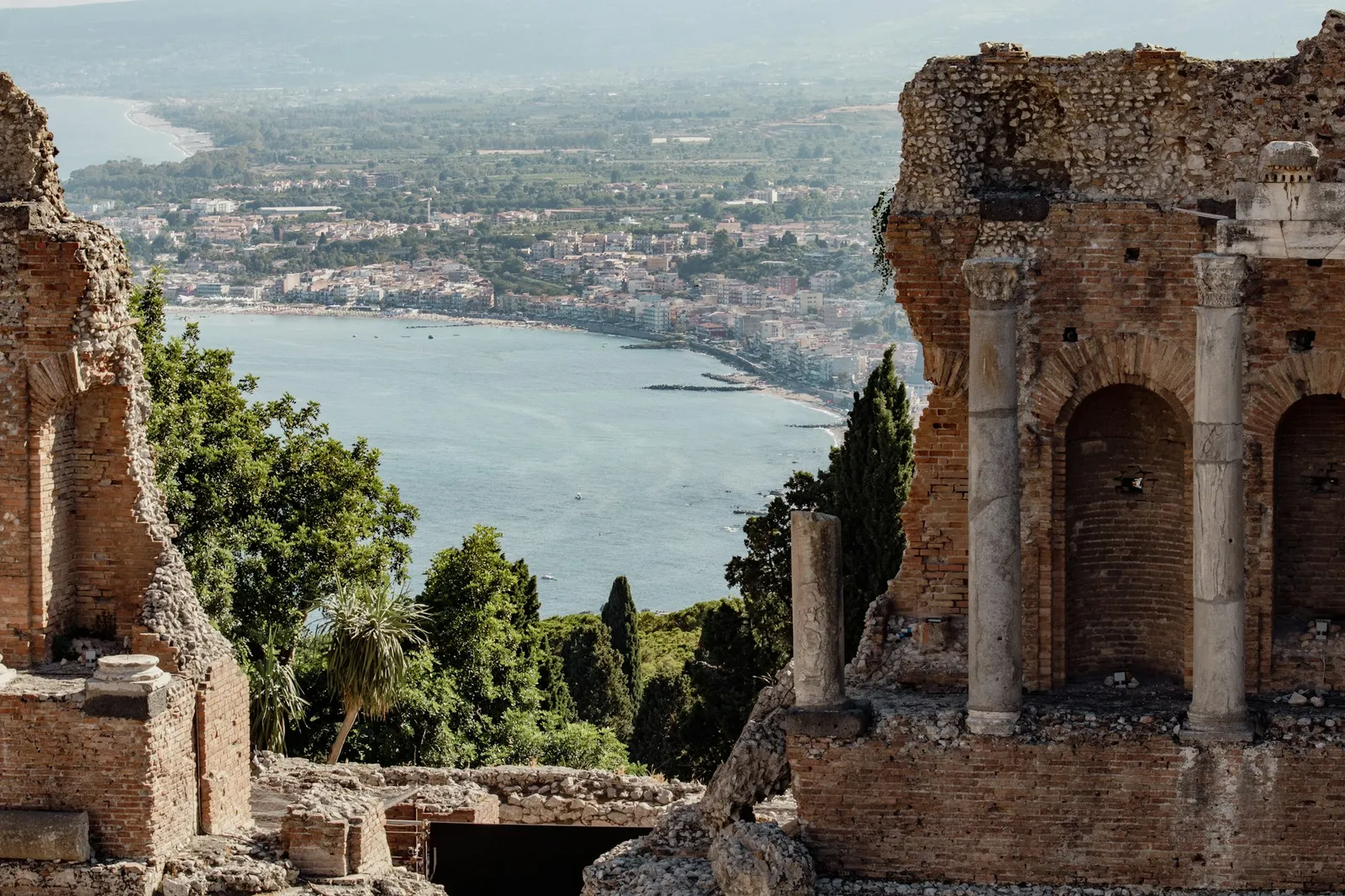
Sicily has three great ancient theatres, and each feels completely different.
- Segesta is the wild one: a hilltop theatre with nothing around it but hills and sky, still used for summer performances.
- Syracuse is the big one. Its Greek theatre is in the Neapolis archaeological park, part of the UNESCO World Heritage site of Syracuse, alongside a Roman amphitheatre.
- Taormina is the famous one, for the view of the sea and Etna through its ruined stage. The Parco Naxos Taormina says its seating bowl is 109 metres across, making it the second-largest ancient theatre in Sicily after Syracuse. It was first built in the third or second century BC, but what you see is almost all a Roman rebuilding of the second century AD.
Taormina's theatre is covered in my guide to things to do in Taormina, and Syracuse, the Neapolis and the island of Ortigia in my guide to Syracuse and Ortigia. On Ortigia, look out for the cathedral: it was built into the Temple of Athena of the fifth century BC and still carries its columns.
Roman ruins in Sicily
Rome took Sicily in the third century BC and ruled it for centuries, but it left fewer great monuments than the Greeks. The finest by far is the Villa Romana del Casale near Piazza Armerina, a late Roman country house with the best floor mosaics still in place anywhere in the Roman world. Beyond that, look for the Roman rebuilding of the theatre at Taormina and the Roman amphitheatre in the Neapolis at Syracuse.
In the middle of the island, Morgantina, near Aidone, is a Greek and Roman town on a ridge with very few visitors. Its museum in Aidone holds the statue known as the Goddess of Morgantina, returned to Sicily by the Getty Museum in 2011, and a silver treasure that came back in 2010. It shares a combined ticket with the Villa Romana del Casale.
How to see Segesta and Selinunte in one day
This is the day I plan for friends who are staying in the west. It works from Trapani, Marsala, Mazara or Castelvetrano.
- Early morning, Segesta. Arrive for opening at 9am. See the temple first, then the theatre if you have the legs for it. Allow two hours.
- Late morning, drive south. Take the A29 motorway towards Mazara del Vallo and Castelvetrano. It is roughly an hour.
- Lunch, Marinella di Selinunte. Fish by the sea, and a swim in summer.
- Afternoon, Selinunte. The eastern hill first, then the shuttle to the acropolis. In the late afternoon the stone turns honey coloured.
- If there is time, the Cave di Cusa. A short drive inland, and best in the soft light before closing.
If you have more days, add Agrigento to the east, and the salt pans and Mozia to the west: my guide to the Trapani salt pans covers those. For longer routes around the island, see my Sicily itineraries.
When is the best time to visit the Greek ruins?
April, May, late September and October are ideal: warm, green or golden, and much quieter. In spring the ground around Selinunte is covered in wild flowers. July and August are hot, with little shade at any site, so go at opening or in the last two hours. Winter is perfectly possible; the sites open every day with shorter hours, the light is clear and you may have Selinunte almost to yourself. My Sicily month by month tool shows the weather, rainfall and crowds for each month.
A few practical points: wear proper shoes, because the paths are rough stone and dust; carry water and a hat, and go early or late in the day; and remember that some state museums and parks in Italy are free on the first Sunday of the month, which makes them busy that day.
Frequently asked questions
What are the best Greek ruins in Sicily?
The five most important are the Valley of the Temples at Agrigento, the temple and theatre at Segesta, the ruined city of Selinunte, the Neapolis and Ortigia in Syracuse, and the theatre at Taormina. Segesta and Selinunte are in western Sicily and can be seen in one day. Agrigento is on the south coast, and Syracuse and Taormina are in the east.
Is Segesta worth visiting?
Yes. The temple at Segesta, built around 430 to 420 BC and never finished, is one of the most complete Greek temples anywhere, and it stands alone in open countryside. Add the hilltop theatre for the view. Allow two hours, about €14 for the ticket, and a car to get there.
How do you get to Segesta?
Drive. Segesta is near Calatafimi-Segesta in the province of Trapani, just off the A29 motorway, about 2 miles (3 km) northwest of the town. It is an easy half day from Trapani or Palermo. Public transport does not usefully reach the site, so without a car a tour is the practical option.
How long do you need at Selinunte?
Allow about three hours to see the eastern hill, the acropolis and, if you have time, the sanctuary across the river. With its outlying sites the park covers about 377 hectares, so take the electric shuttle to the acropolis in hot weather. Add an hour for the Cave di Cusa quarries nearby.
Can you visit Segesta and Selinunte in one day?
Yes, by car. Start at Segesta when it opens at 9am, then drive south on the A29 for roughly an hour, have lunch by the sea at Marinella di Selinunte, and spend the afternoon at Selinunte. It is a full day, best outside the heat of July and August.
Why are there Greek temples in Sicily?
From the eighth century BC, Greek cities founded colonies along the Sicilian coast, including Syracuse, Selinunte and Akragas, today's Agrigento. They grew rich and built temples and theatres as grand as those in Greece. Wars with Carthage and the arrival of Rome ended that age, leaving the temples as ruins.
What is the largest Greek theatre in Sicily?
The Greek theatre of Syracuse, in the Neapolis archaeological park. The theatre at Taormina, with a seating bowl 109 metres across, is the second largest, according to the Parco Naxos Taormina. Segesta has a smaller hilltop theatre with a famous view, still used in summer.
Are there Roman ruins in Sicily?
Yes, though fewer than Greek ones. The finest is the Villa Romana del Casale near Piazza Armerina, with its UNESCO-listed floor mosaics. There is also the Roman amphitheatre in Syracuse, and the Roman rebuilding of the Taormina theatre.
How much does it cost to visit Selinunte?
An adult ticket for the Selinunte archaeological park is about €17, or about $19, with a reduced ticket of about €10. Both include a €3 supplement for the Pericolo estinzione exhibition, which is listed until the end of 2026; without it the prices are about €14 and €7. The Cave di Cusa quarries cost about €4. The electric shuttle to the acropolis is extra. Check the park or CoopCulture before you go, as prices can change.
Sources and small print
- Parco di Segesta: opening hours and tickets
- Regione Siciliana: the archaeological area of Segesta and tickets
- Regione Siciliana: the archaeological area of Selinunte and the Cave di Cusa
- Ministero della Cultura, Art Bonus: Parco archeologico di Selinunte
- Britannica: Segesta and Selinus
- Parco archeologico Naxos Taormina: the ancient theatre
- UNESCO: Syracuse and the Rocky Necropolis of Pantalica
- UNESCO: Archaeological Area of Agrigento
- CoopCulture: tickets for Segesta and Selinunte
- Parco archeologico di Selinunte: opening hours, the Cave di Cusa and the exhibition supplement and CoopCulture: Selinunte prices and last entry times
Prices and opening hours are the parks' published figures for 2026 and change with the seasons; dollar amounts are rough, at about $1.10 to the euro. Check each park before you go.
Credits
Photo: Dmitry Romanoff, Unsplash Licence, via Unsplash.
Photo: Freysteinn G. Jonsson, Unsplash Licence, via Unsplash.
Photo: Stepan Dudycha, Unsplash Licence, via Unsplash.
 The weekly YouTube series