
In this episode
- A concrete company booked for the terrace and the underground tank base
- Three inches scraped off the entire terrace by hand
- Ground baked rock solid after four weeks without rain
- Ducting from the roof to the outbuilding for future solar cabling
- Old water tank pillars removed from the roof before it is sealed
Good news, and a catch
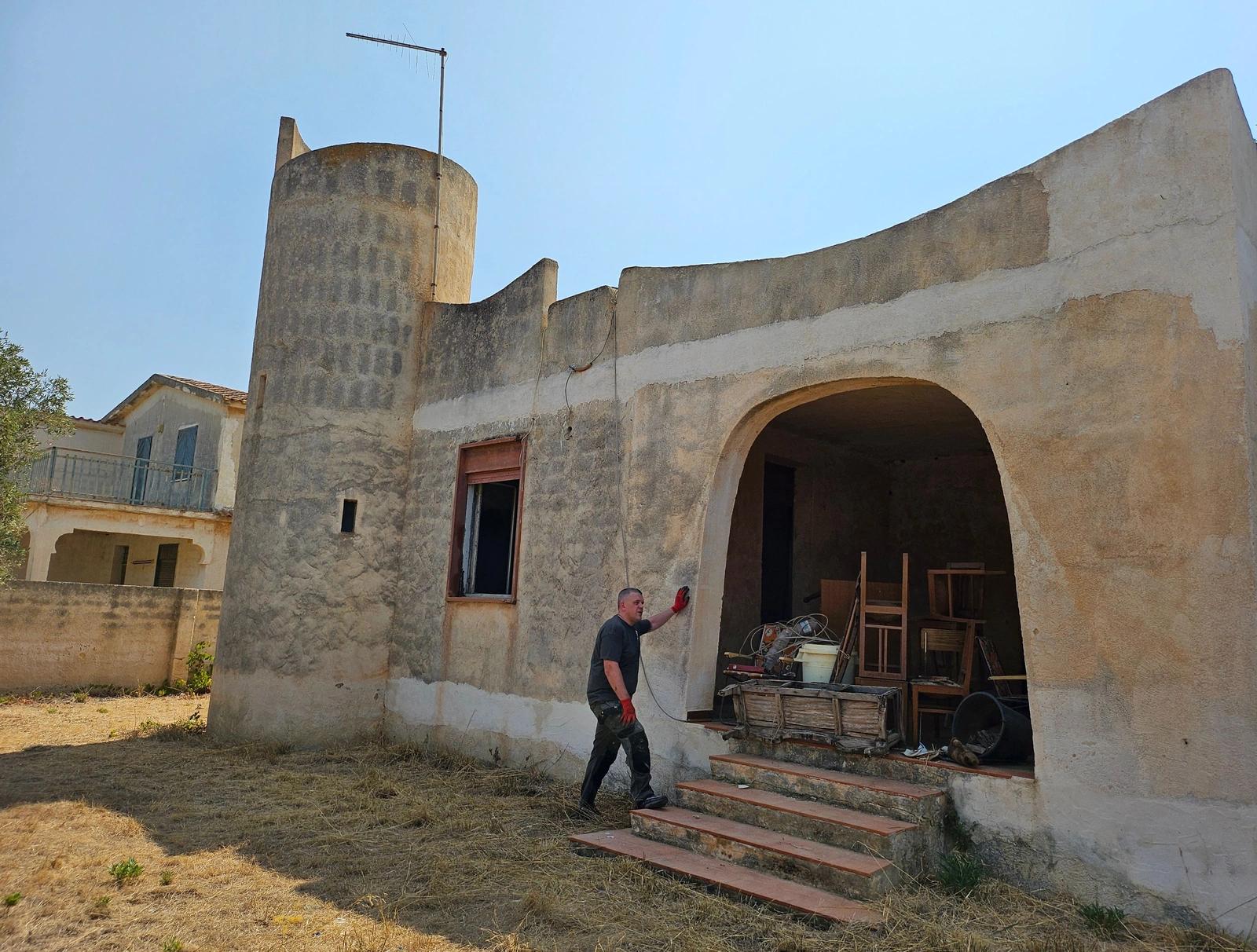
This week I am scraping back the terrace, ready for concrete. I have just had a concrete company out to look at concreting the whole rear terrace, and also the base for the underground rainwater tank. The good news is that they can start in a few weeks.
The bad news is that I have backfilled this terrace too much with rubble. Back in episode 76, the rubble from the tank dig went onto the terrace and was compacted in layers with a whacker plate. Now I need to scrape three inches off the entire surface, which is going to be a proper, backbreaking job. It has not rained here in four weeks, and with all that compaction the ground is absolutely solid. I cannot think of any other alternative, so it is headphones in, and crack on.
Taking three inches off by hand
The process is the same across the whole terrace:
- Break up the baked surface with the SDS breaker and a hand hoe.
- Rake and shovel the loose material into buckets and the wheelbarrow.
- Carry every load across to the pile in the corner by the back garden wall.
Along the edge of the terrace, I lower the timber shuttering with the drill and a tape measure, so it matches the new, lower surface. The terrace levels were first set with timber battens in episode 75.
It takes days. Eventually all of the terrace is scraped off, down an extra three inches, and it is now a good depth for concreting. Doing it all manually, with a hoe, the breaker on the SDS, then shovelling it, taking it in buckets and wheelbarrows over to the corner, has been absolutely backbreaking. I do not know if you can see the pile over there, but it is a pretty big pile. Still, it is all done, and that is the main thing.
What comes next
The next job is to run some ducting up the side of the house and round into the orange pipe, coming through at the top where the water pipes are. That ducting is for when I get solar panels on the roof. All the cabling for the panels will go into the outbuilding on the terrace, where the batteries and the inverters will be. The outbuilding was marked out in episode 76, and I first laid ducting towards it back in episode 44. My article on solar power for an off grid home in Sicily goes through the costs and setup.
After that, in the next couple of days, I have to scrape the whole bottom of the underground tank, square off all the edges and get the base level, ready to be concreted. That is going to be another long, laborious, backbreaking job, up and down the ladder hundreds of times with buckets. Unfortunately, all these jobs do need doing, and you just have to get your head down and get them done. I explained how the hole becomes the tank in episode 77.
Four chicks in the bird box
All the while, the birds have been chirping away above my head. I put the ladder up against the wall beneath one of the bird boxes, and inside there are four little baby chicks, huddled together. They are super cute, and they have been chirping all day. Sparrows were building a nest in these boxes in episode 77.
Drilling through the parapet, and clearing the roof
Up on the flat roof, I fit a long masonry bit to the SDS and drill a hole straight through the parapet wall. This is where the solar ducting will come off the roof and start its run down the side of the house.
There are also two stone pillars up here that were used to support the old water tank. As I am already up on the roof with the drill, I remove them now, in preparation for sealing the roof later. I break them up with the chisel on the SDS and drop the larger pieces over the parapet to the ground below. The roof waterproofing system arrived in episode 75, and the roof has to be done before any solar panels go up.
Chasing the wall for the solar ducting
Back on the ground, with the respirator on, I cut a vertical chase into the outside wall with the angle grinder and diamond blade, working up the extension ladder from ground level to roof height. I chisel out the groove with the hammer and chisel and brush out the dust and debris. At the bottom, I pull a string line across the terrace towards the tank pit, to set out the route for the ducting underground.
Then the flexible conduit goes into the chase, and I fill over it with wet mortar using the hawk and trowel, starting at the bottom and working my way up the ladder until the whole chase is flush with the wall.
A helper on the roof
One of my boys comes to watch, then climbs a second ladder to join me. Up on the roof, where the old pillars stood, there are hollows left in the surface. I spray them with water from the pump sprayer, then trowel in fresh mortar to bring them level with the rest of the roof. He takes a small trowel and helps spread and flatten the mortar, and I ask whether he thinks he can flatten it now. He does it just how I did it, and finishes with a “like and subscribe” to the camera.
The concrete arrives in episode 82. My guides on rainwater harvesting and living off grid in Sicily show where the tank and the solar fit in, and my renovation timeline shows how long jobs like this really take.
Frequently asked questions
What happens if you backfill a terrace too high?
I backfilled my rear terrace about three inches too high with rubble, so I had to scrape that much off the whole surface by hand before it could be concreted.
How do you break up compacted rubble by hand?
After four dry weeks my terrace was rock solid. I broke it up with the breaker on the SDS and a hoe, then shovelled it into buckets and wheelbarrows.
How do solar panel cables get from the roof to the batteries?
I drilled through the roof parapet and ran ducting down a chase in the outside wall and across the terrace to the outbuilding, where the batteries and inverters will go.
Why remove old water tank supports from a flat roof?
The stone pillars that held my old water tank were removed and the hollows filled with mortar, in preparation for sealing the roof later.
More episodes on the same job: The garden terrace
 The weekly YouTube series