
In this episode
- Wall cracks opened up, and thankfully only in the mortar joints
- The original metal gates sanded and primed with a solvent based primer
- Restore or replace? The solid metal door frames and mortice locks
- Floor channels chased through the house for the water pipes
- Red and blue insulated pipes strapped down and concreted in
Chasing out the wall cracks
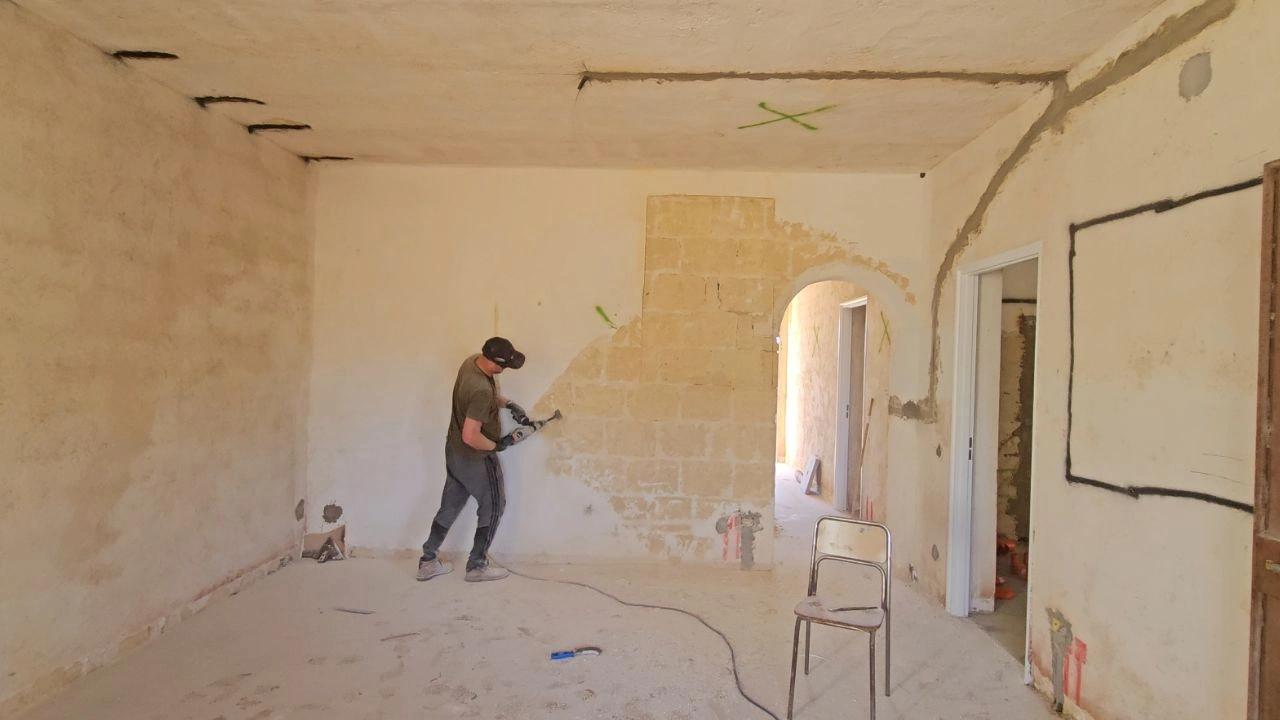
This week I restore the original metal gates and lay the insulated water pipe through the floors of the house. First, though, the walls. There are minor cracks along the mortar joints on a few internal walls, in the lounge, the hallway and around the archway. I am stripping back the plaster to see what is going on and fix any issues before they get worse.
With the SDS hammer drill fitted with a chisel head, and the angle grinder to cut out rectangular sections, I expose the stone blocks underneath. Thankfully, the cracks are only in the mortar joints. The repairs to cracks like these, stitched with steel bar across the joints, come in episode 71, and my article on mortar and Sicilian stonework explains why old joints crack.
Restoring the original metal gates
After feeding the cats, I head out to the front gates. The old lock box is rusted solid, so I cut it off with the cordless grinder and a hammer. Then I sand the gates, working along the top hinges and frame, as a flock of sheep and a lamb wander past on the road outside.
With the gates sanded, I apply a solvent based primer to protect them from rust and the elements. I still have not decided on the final colour, so I ask for suggestions in the comments. These are the same gates whose security chain I shortened in episode 28.
Restore or replace the internal doors?
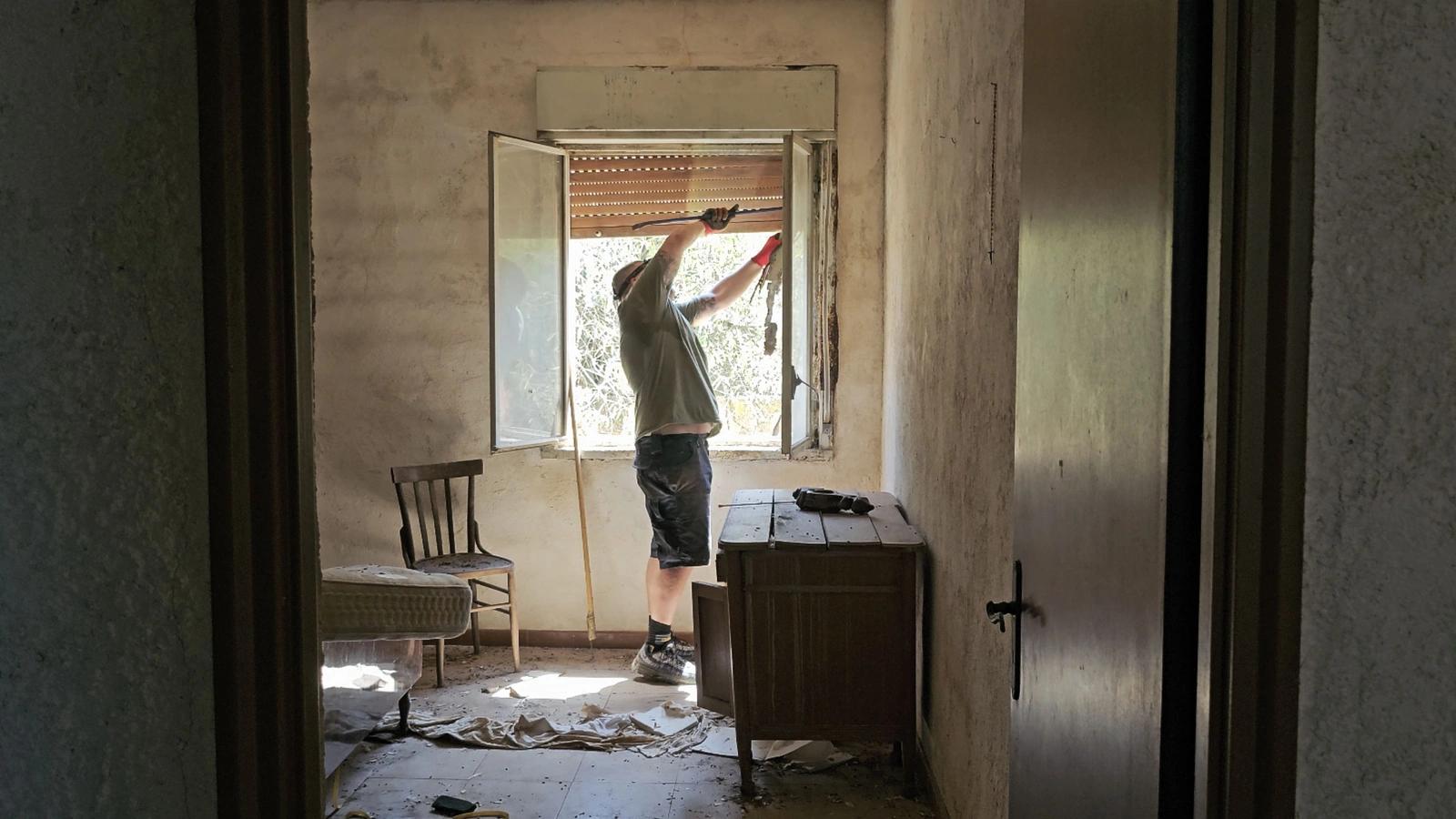
A few plasterers have been out to quote for skimming, as I prepared for in episode 29, and several think I should replace the doors and door frames. I am thinking of keeping them. The frames are metal and really solid, there are no holes in the doors, they all close properly, and every one has a mortice lock with a key.
There is a little rust and corrosion at the bottom of some frames. My plan would be:
- Sand back the damaged areas and fill them with a fibreglass body filler suitable for metal.
- Sand the rest of the frames down and apply a metal primer.
- Give the doors a good sand and a primer too.
- Swap the handles for something more modern, perhaps chrome, but keep the mortice locks.
I ask what you would do in the comments. Back in episode 30 I had already said I wanted to keep them, with fresh paint, new hinges and handles.
Chasing the floors for the water pipes
Then the big job. Building on the channels I started in episode 29, I cut channels in the floor for the hot and cold water pipes with the angle grinder and chip out the tiles with the hammer drill, through the hallway and the main rooms and round the corner into the future bathroom. It is noisy, dusty work, so the respirator, safety glasses and ear defenders stay on throughout.
Outside, at the corner of the patio foundation wall, I break an opening through the wall. This is where the water pipes will enter the house: cold water from the well, and hot water from a boiler that will sit in the outbuilding on the patio. The rubble is cleared and every channel is swept and vacuumed out.
Laying, strapping and concreting the pipes
The pipes are multilayer, with insulation around them. I lay the blue cold pipe first along the channel, through the hallway and the main rooms into the bathroom, then feed it into the bathroom corner and cut it to length. Next, a roll of red pipe goes in alongside it for the hot water.
Both are secured with perforated metal strapping. I drill into the concrete subfloor, put in wall plugs and screw the straps down, with one of my boys handing me the plugs and asking you to like and subscribe. Finally, I mix mortar and fill the channels flush with the tile floor using a trowel and a straight edge.
Getting the channels flush matters because I am not digging up the old floors. The plan is to tile straight over the existing tiles, so any channel left proud or hollow would show through, or crack the new tiles later. You can see the new floor going down over the old in episode 86.
My guide to setting up utilities in rural Sicily covers how the water, from the well and the rain, comes together, and the water usage planner helps size a supply.
Frequently asked questions
How do you restore old metal gates?
I cut off the rusted lock box, sanded the gates back, then brushed on a solvent based primer to protect them from rust and the weather before choosing a top coat colour.
Should you replace old metal door frames when renovating?
Mine were solid, with working mortice locks, so I planned to fill the rusted spots with a metal body filler, prime everything and only change the handles.
How do you lay water pipes in a floor?
I chased channels in the floor, laid insulated multilayer pipe, strapped it down with perforated metal straps screwed into the subfloor and filled the channels with mortar.
Are cracks in old stone walls serious?
Not always. When I stripped the plaster back at the villa, the cracks were only in the mortar joints between the stone blocks, which can be repaired.
More episodes on the same job: Water and plumbing · Windows and doors

 The weekly YouTube series