
In this episode
- A tiny wild kitten found hiding in a bush in 40 degree heat
- A small swarm colony lost to robbing while I was away
- Two front hives booming, checked for honey in the supers and queen cells
- Young fruit trees through the summer on drip irrigation and thick mulch
- The first lounge tiles back buttered and laid with a 13mm notched trowel
A kitten in the bush
This week I rescue a wild kitten and lay the first floor tiles. I have just got back after a few weeks in the UK, and almost straight away I hear a noise I cannot place. You are not going to believe what I found: a tiny wild kitten, hiding in a bush, abandoned in the 40 degree heat.
So this is the situation, and it is the story of my life out here in Sicily. I cannot just walk away from this. Could you leave the kitten in the bush? What is the right thing to do, leave it, or rescue it and give it food and water? The poor little thing is absolutely terrified, completely wild and has never been handled. I get it somewhere safe, then give it food and water.
A colony lost to robbing
Then some bad news, and I am gutted about it. This hive was originally kept in the back garden, and inside was a small swarm colony I caught from the olive trees. While working in the back garden a while ago, I noticed a lot of aggressive activity around the front of the hive: bees fighting at the entrance, chaotic and aggressive. Something was not right.
After doing some research, I realised what was happening. It is called robbing, where bees from other hives raid a weaker colony to steal its honey stores. Because this was just a small swarm colony, it was basically helpless, too small and weak to defend itself against a full robbing attack. The robbers had a free for all, with complete access to the honey stores and no resistance.
What I did as soon as I realised:
- Closed the hive entrance completely, so no robber bees could get inside and keep stripping the honey.
- Moved the hive round to the side of the villa, to try to break the robbing pattern.
- Covered it completely with branches and cardboard, to try to disguise it from the robbers.
Ideally, you need to move a robbed hive miles away, to a completely different location, but I just do not have that option here. I have now uncovered everything and checked the hive, and the whole colony is dead. All the bees are dead, and the hive has been completely ransacked. Insects, worms and ants have eaten through all the drawn foundation and damaged the frames. I am absolutely devastated. It is a really tough loss. My article on my first year of beekeeping looks back on lessons like this one.
The two front hives
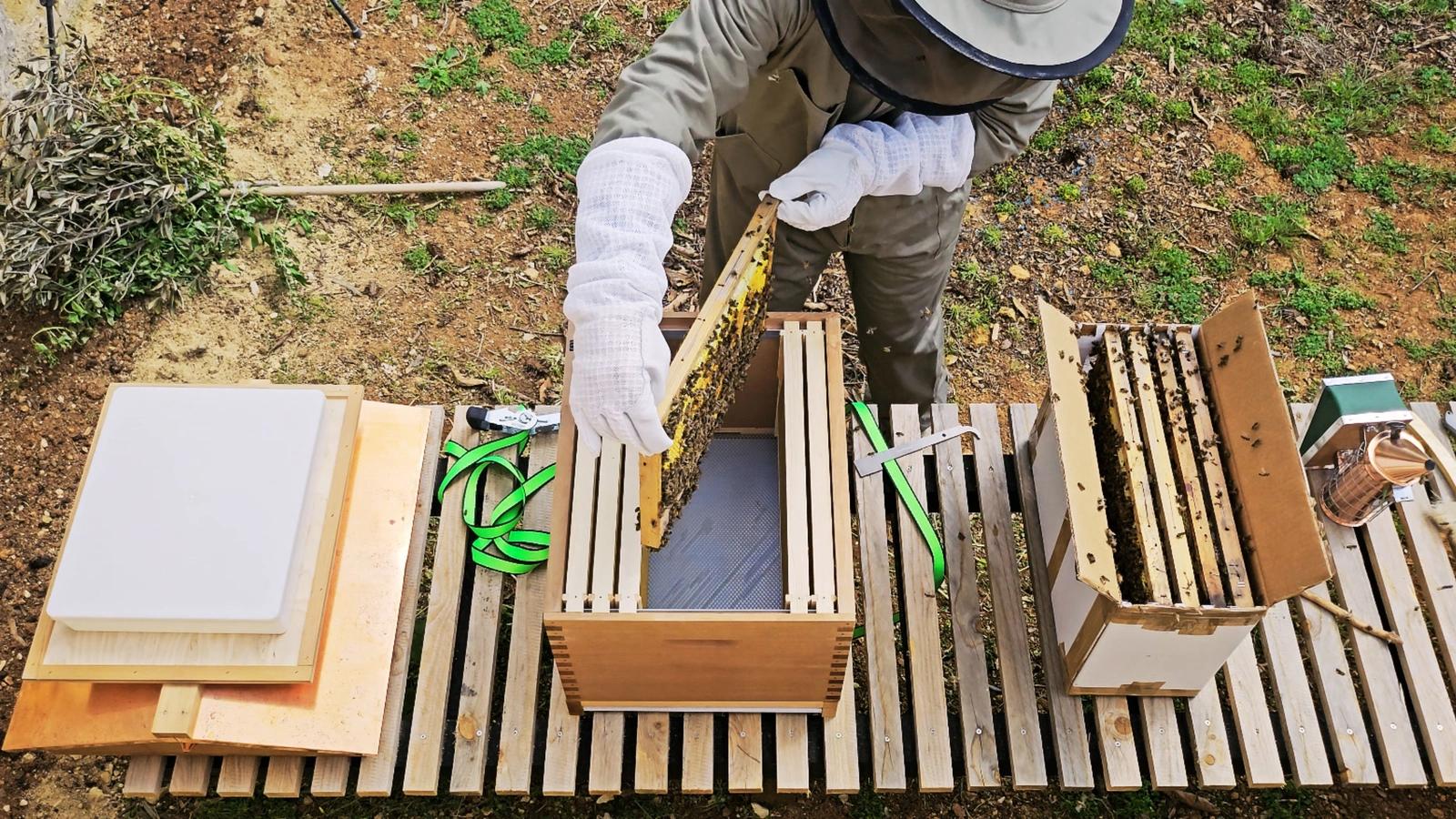
Next, I check the two healthy hives in the front garden, and both are absolutely booming. There are thousands of bees and tons of activity at both entrances. Back in episode 80, the next step for these two was adding supers, so I check the supers to see whether the bees have started storing honey in the super frames yet. I also check the brood frames carefully for queen cells, because the last thing I want is for either of these strong colonies to swarm. Both have full brood frames and are thriving. I explained what queen cells are in episode 78.
Mulch, water and the fruit trees
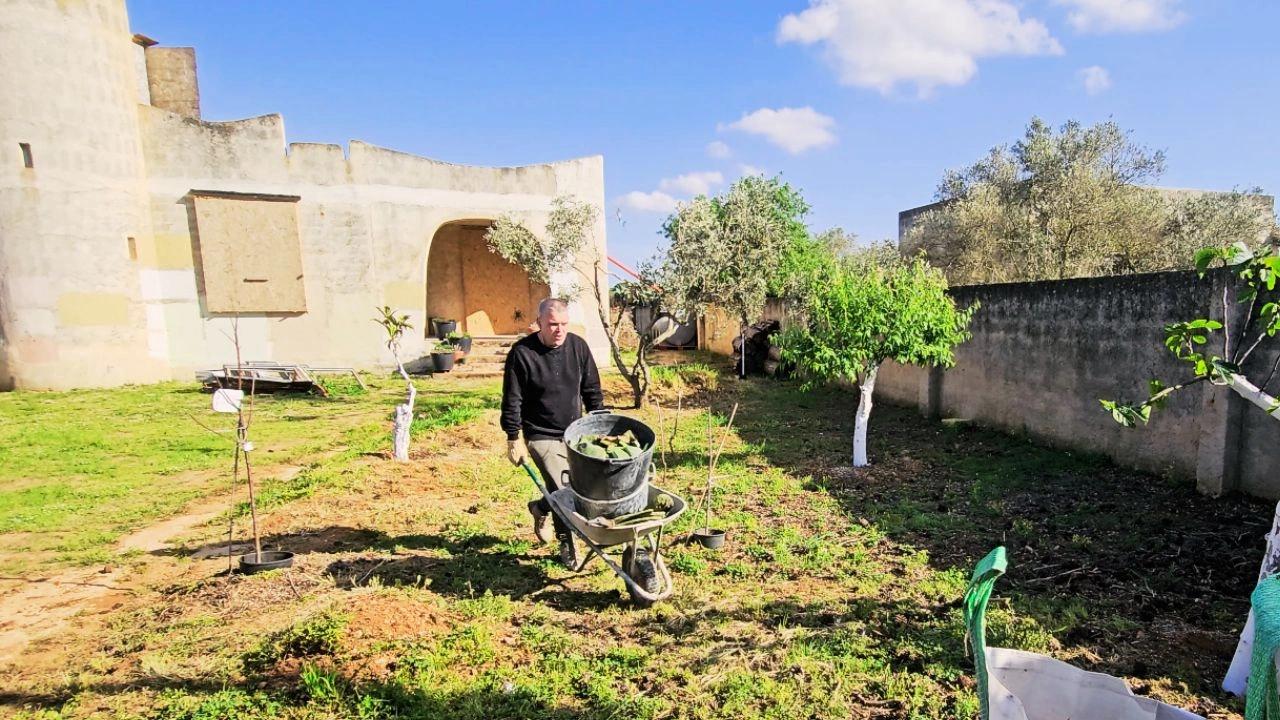
The young fruit trees have survived the summer, thanks to the drip irrigation system I installed in episode 83 and episode 84, and a thick layer of mulch around each one. I top up the mulch around the trees, then a water delivery tops up the tank, and I give the fruit trees a deep watering. Last year, the fruit trees in pots nearly all died from lack of water in the summer heat. My article on growing your own food in Sicily covers what thrived.
Then a quick update on the kitten.
Laying the first floor tiles
Inside, I finalise the tile layout for the lounge, then lay the first floor tile in the villa. Everything gets set out from here, and I work the entire lounge layout off this starting point. The floors were cleaned and primed in episode 84, and the adhesive was delivered in episode 79.
It would have been ideal to start right at the entrance door, but the door bottom needs dealing with first, so the door can swing open cleanly over the new floor tiles. Starting where I do means the door still opens freely, and I can get a large section of the lounge tiled today.
- Spread it on the floor with a 13mm notched trowel.
- Back butter each tile with adhesive.
- Lay each tile to the layout lines, working out from the first one.
The kitten meets Fang
Out on the front veranda, the kitten meets Fang, and I watch the terrified little thing from the bush transform. Fang got an outdoor bed back in episode 71. My article on what it is really like living in rural Sicily covers daily life out here.
Reversing the lounge door
To finish, I reverse the entrance door to the lounge, so it clears the new floor tiles. It was one of my hardest days at the villa, but it ended perfectly. My practical guide to renovating in Sicily covers the tiling stage and everything around it.
Frequently asked questions
What is robbing in beekeeping?
Robbing is when bees from other hives raid a weaker colony to steal its honey stores. My small swarm colony was too weak to defend itself and was lost.
What do you do if a beehive is being robbed?
I closed the entrance, moved the hive to the side of the villa and disguised it with branches and cardboard. Ideally a robbed hive moves miles away.
Why check supers and brood frames on a strong hive?
I checked my supers to see if the bees were storing honey yet, and the brood frames for queen cells, because I did not want either strong colony to swarm.
What size notched trowel do you use for floor tiles?
I laid the first lounge floor tiles at the villa with a 13mm notched trowel, back buttering each tile with adhesive as well.
More episodes on the same job: Tiling the floors

 The weekly YouTube series