
In this episode
- A solid limestone tank base levelled and squared by hand
- Terrace and tank base reinforced with 8mm steel mesh
- Fibre mixed concrete for strength and crack resistance
- The pump arm stretched over the neighbour’s garden to reach ours
- Potatoes grown from leftovers that were heading for the bin
Levelling the tank base by hand
This week the concrete is pumped for the rear terrace and the underground rainwater tank. Before the truck can come, the bottom of the tank has to be ready. Last week, in episode 81, I scraped three inches off the whole terrace, and I said the next job was to scrape the base of the tank, square off all the edges and get the bottom level. This is that job.
The hole is cut into solid limestone. I put the aluminium ladder down into the pit and climb in with a heavy iron digging bar and a pickaxe, breaking down the high spots on the base and trimming the sides square. Every bit of loose stone goes into buckets and up the ladder, over and over, in the summer heat. It is slow, but the base and walls have to be right before the concrete goes in, because the hole itself becomes the tank, as I explained in episode 77.
Concrete day
The concrete company arrives with a mixer truck and a pump. There is one problem: the truck cannot fit through the gates. So the pump sets up outside the perimeter wall, and its arm stretches right over the neighbour’s garden to reach ours.
The terrace and the tank base are both reinforced with 8mm steel mesh, the mesh that was delivered by crane in episode 79. The concrete itself is fibre mixed, for extra strength and crack resistance. Timber formwork boards frame the edges of the slab, sitting around the mesh.
- The pump arm swings over the wall and the hose is guided across the terrace.
- The crew pump the concrete onto the terrace over the mesh.
- It is raked and spread out to the formwork edges.
- The surface is levelled and finished with a bull float.
- The boom is repositioned over the garden wall and lowered into the pit to pour the base of the tank.
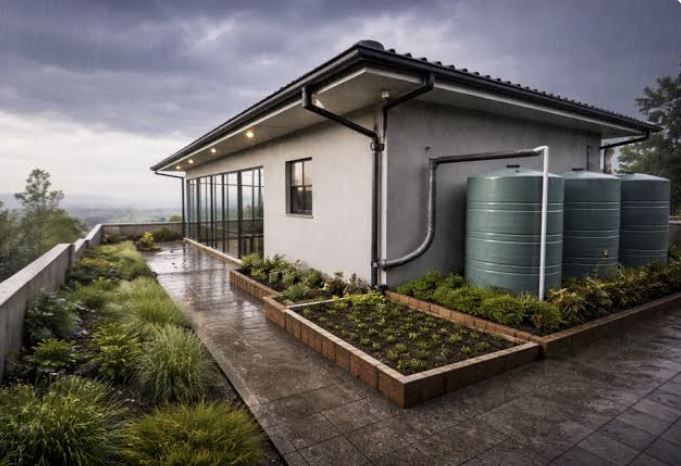
The drone shows the scale of it: the whole terrace, which a few weeks ago was a rubble heap that was perfect for twisting an ankle, is now one continuous slab. I backfilled and compacted it in episode 76, and the slab will also be the floor of the outbuilding. My rainwater harvesting guide covers how a tank like this fits into the wider system.
Fitting a recessed shower shelf
Between pours, I head back inside to the bathroom. I bought a nice little black stainless steel shower shelf in the UK and brought it over in a suitcase, and today I am cutting out the opening for it. Once the bathroom is all tiled, I think it will be a really nice addition, and convenient for storing shower gels, shampoo and things like that.
My Stihl saw is out of action with carburettor issues, so I am having to do it the hard way:
- Mark out the dimensions of the shelf on the wall.
- Cut the outline with a small angle grinder.
- Break out the blockwork inside the outline with the SDS and a chisel bit.
- Clean up the edges with a hammer and bolster chisel.
- Test fit the shelf, trim, and test fit again, until it sits flush.
- Clear all the debris into buckets.
The bathroom pipework and valves around it were set against a mock tile in episode 79 and mortared in during episode 80.
The terrace, before and after
A timelapse shows the fresh slab drying in the sun, and I share some before pictures of the garden next to how it looks now. Now there is a flat, solid terrace, and the base of the underground tank is in. My renovation timeline shows how long it took to get here.
Digging up homegrown potatoes
A few months ago, I planted a handful of sprouting potatoes in two large tubs, leftovers I was going to throw out. Now it is time to see how they have done. I tip the first tub out onto the veranda tiles to find them. I had lined the bottoms of the tubs with rocks for drainage, but later realised I had probably overthought it, because potatoes like plenty of moisture.
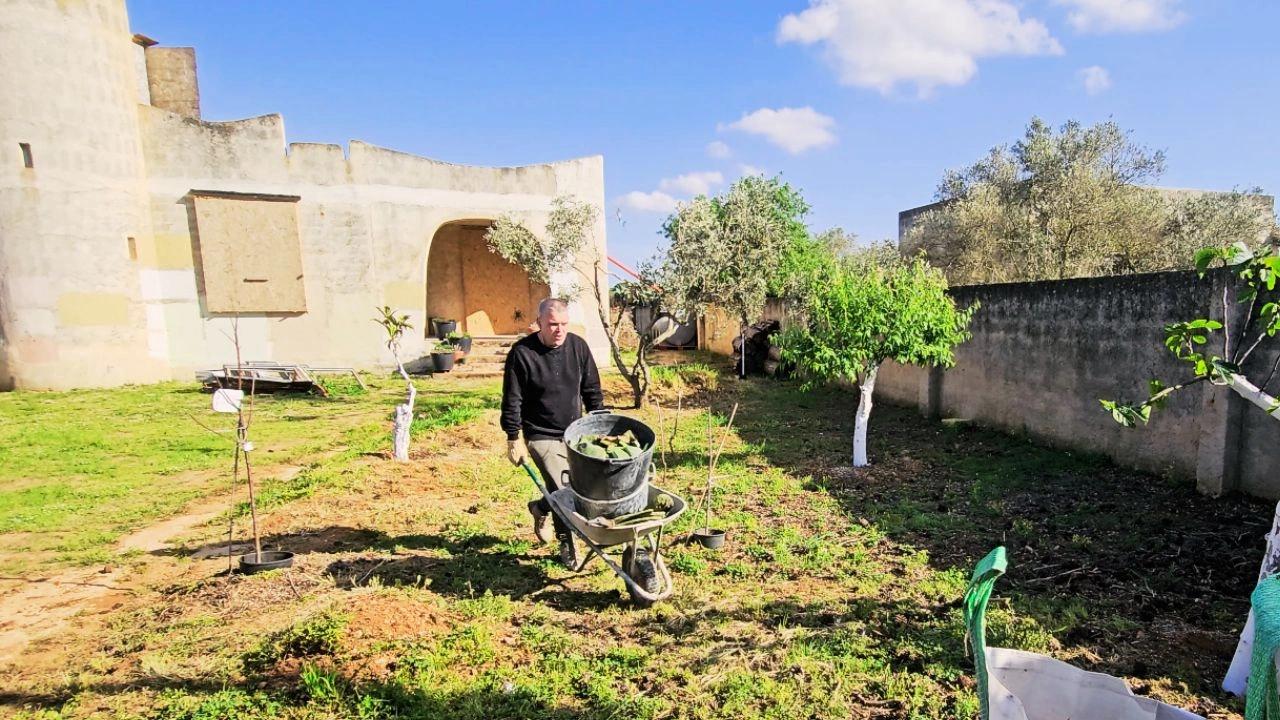
There was not really enough in one bucket for my lunch, so I ended up emptying both. That is my potato yield from the two, and I do not think it is that bad, from potatoes that were heading for the bin. I mix dry organic material from around the garden into the used soil, so it will break down and give extra nutrients for future planting, then shovel it back into buckets and sweep the veranda. More garden waste goes into compost bag number two by the perimeter wall. Everything in these bags will eventually become compost for the raised planter beds. My article on growing your own food in Sicily covers what has thrived and what has failed.
A simple Sicilian potato salad
I light a small fire on the veranda grill, wash the potatoes with water from a jerrycan, scrub them, slice them and boil them in a pot over the fire. At the same time, a red and a yellow pepper roast on the grill grate. The salad is simple:
- Boiled new potatoes
- Fresh parsley
- Red onion
- Garlic
- Diced roasted red pepper
- Olive oil and black pepper
- Grated Parmigiano-Reggiano
Everything is chopped and combined in a bowl, the warm potatoes are tossed through, and I sit down against the veranda wall to eat it. My Sicily food guide has more on eating well here.
Frequently asked questions
How do you get concrete to a site the truck cannot reach?
The concrete truck could not fit through my gates, so the pump set up outside the wall and its arm stretched over the neighbour’s garden to reach ours.
What reinforcement goes into a terrace slab and a tank base?
Both my terrace and my underground tank base were reinforced with 8mm steel mesh and poured with fibre mixed concrete, for strength and crack resistance.
Do potatoes in containers need drainage rocks?
I lined the bottoms of my potato tubs with rocks for drainage, but later realised I had probably overthought it, because potatoes like plenty of moisture.
How do you fit a recessed shower shelf?
I marked out the shelf on the wall, cut the outline with an angle grinder, broke out the blockwork with the SDS and test fitted it until it sat flush.
More episodes on the same job: Water and plumbing · The garden terrace

 The weekly YouTube series