
In this episode
- Water pipe routes sprayed onto the floors with a laser level
- Why the planter footings must be in before the mains cable
- Squaring footings that weeks of rain had partly filled
- Timber posts at about €1,600 against under €500 for blocks
- A duct tape and kitchen roll fix for shovelling blisters
Marking the water pipe routes
This week the planter bed footings get prepared before the mains power cable goes in, and I explain why the order matters. First, inside, I mark out the routes for the water pipes in red spray paint, using my laser level to keep the lines straight. The pipes will come in from the rear garden terrace and run through several rooms to the kitchen. Channels will be cut into the tiled floors, the pipes laid, and then everything set in concrete.
After feeding the stray cat in the front garden, I trim the excess expanding foam from the electrical ducting I fixed in episode 20.
Why the footings come before the power cable
You might wonder why I am working on planter bed footings instead of finishing the electrics. There are two reasons. First, the conduit is securely in place, and I want the electrician to inspect it before I cement everything in. Until he gives it a final check, I am holding off.
Second, the mains power cable will run from the kitchen through a trench and into the footings to reach the meter on the roadside. Before the cable goes in, the wall foundations have to be laid. Running the cable under concrete without planning for it would make it completely inaccessible and a nightmare to fix if anything went wrong. It may have looked odd to prioritise planter beds with no power or water at the property, but there is a clear plan behind it. The trench for the mains cable is dug in episode 30, and how the supply itself works is in my guide to setting up utilities in rural Sicily.
Squaring and levelling the planter bed footings
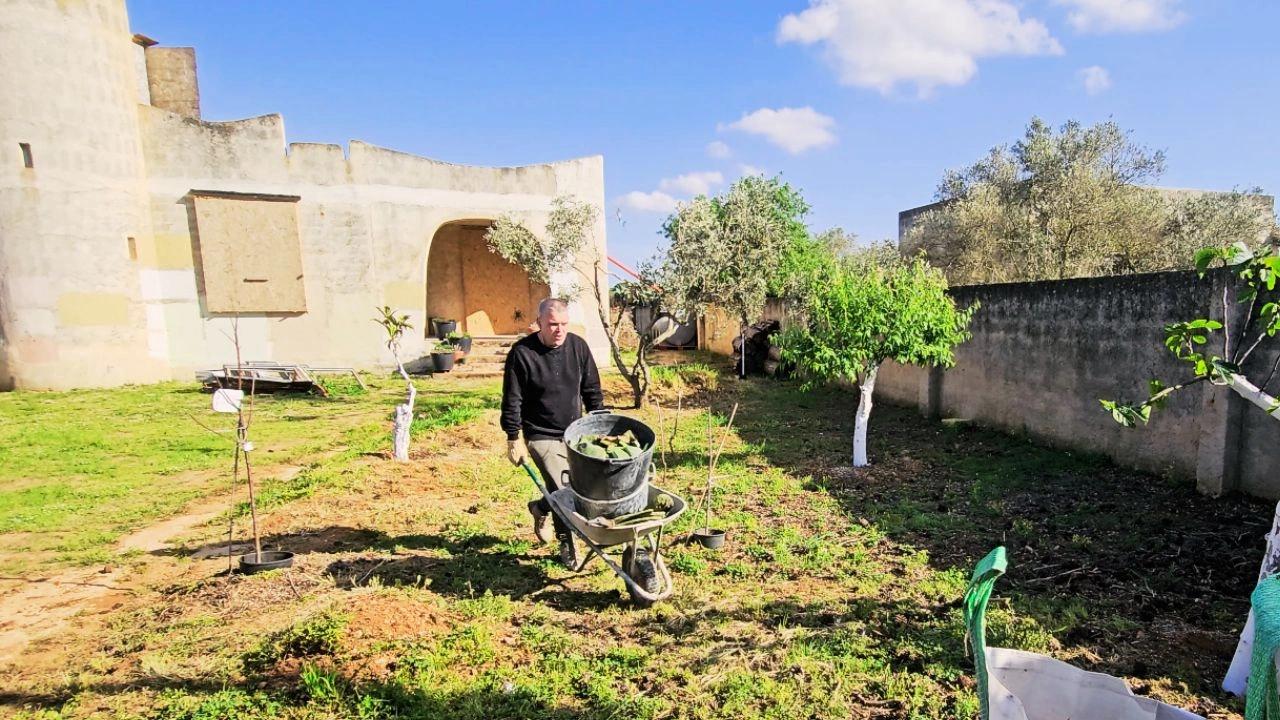
In the front garden I strim the edges and keep battling the footings. Over the past weeks it has rained quite a bit, pushing soil back into the trenches, so I square them off again so heavy rain will not wash the soil in before the concrete goes in. Then I level them, ready for concrete. The footings were first dug by the landscaper I mentioned in episode 16.
All the shovelling leaves me with serious blisters. The fix is a makeshift bandage of kitchen roll held on with duct tape.
Timber posts or blocks for the planter beds?
While prepping the footings, I talk through what the planter bed walls will be made from. My plan is large wooden posts rather than stone blocks and render. I have seen them at the timber merchant I visited in episode 15. They are 16 cm square and pressure treated, which should help against rot, and I am thinking of painting the bottoms with something like bitumen before they sit on the footings, just to be safe.
The posts would be cut to about 50 cm, so they rise only a little way out of the ground. I do not want a wall, just a defined edge between the driveway and the planter beds that you can easily step over.
The catch is cost. A full pallet of blocks is €140. The timber for the planter beds would cost about €1,600, against probably less than €500 for cement, sand and blocks. But the house and garden walls are all block and render, and I think timber would look far better as a contrast. The renovation materials calculator is useful for comparing options like this.
Treating the fruit trees and a DIY store run
Before the end of the week I treat the fruit trees and clean the veranda. Then it is off to the DIY store for broom handles to help level the footings, a lump hammer and more expanding foam. The broom handles become footing markers in episode 26, when I set the concrete heights with a laser level.
Why planning ahead matters on a renovation
I have said it before, and this week shows why: preparation is everything on a project like this. Cables, pipes and drains all need to be in the right place before concrete, tiles or plaster cover them, because getting to them afterwards means breaking things out again. Doing the planter footings now, before the mains cable, is one small example of working out the order of the whole job in advance. My article on what a renovation in Sicily really costs puts the bigger costs in context.
And if you are enjoying the videos, it turns out 98% of people watching are not subscribed. Hitting that button, and leaving a comment with ideas or feedback, really helps.
Frequently asked questions
Why lay footings before the mains power cable?
At the villa the mains cable runs from the kitchen through a trench and into the planter footings to the roadside meter. The footings had to be laid first, so the cable would not end up buried and inaccessible under concrete.
How much does a pallet of blocks cost in Sicily?
A full pallet of blocks was €140. Building the planter beds in block would have cost less than €500 in cement, sand and blocks, compared with about €1,600 for timber posts.
What timber posts work for raised planter edges?
I looked at 16 cm square pressure treated posts, cut to about 50 cm, with the bottoms painted with something like bitumen for extra protection against rot.
Why wait for the electrician before cementing conduit in?
So he can inspect the conduit runs first. Once the chases are cemented over, changing anything means breaking them out again.
More episodes on the same job: Rewiring and electrics · The garden terrace

 The weekly YouTube series